

14 min 50 sec
The Chaos Machine: The Inside Story of How Social Media Rewired Our Minds and Our World
By Max Fisher
Max Fisher investigates how social media algorithms are engineered to exploit human psychology, leading to addiction and societal discord. This summary explores the high stakes of our digital lives and the consequences for democracy.
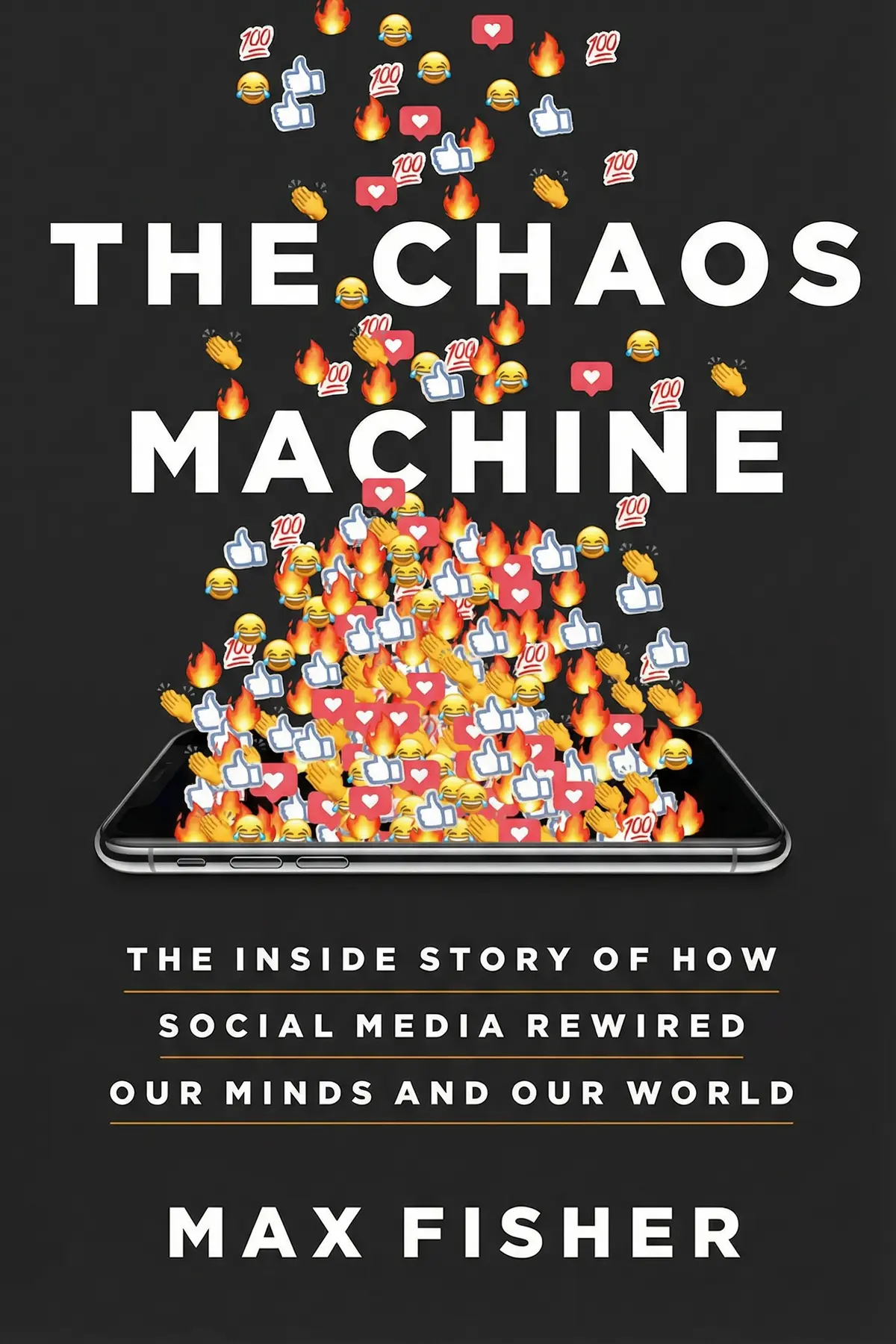
Table of Content
1. Introduction
1 min 49 sec
Consider your morning ritual. For many of us, the very first thing we do upon waking isn’t stretching or making coffee; it is reaching for that rectangular piece of glass and metal on the nightstand. We check for notifications, look for a new comment on a photo, or see how many people liked a post we made the night before. That small, initial spike of pleasure—the little hit of dopamine—is the engine that keeps us coming back hour after hour, day after day. In ‘The Chaos Machine,’ journalist Max Fisher argues that this experience is far from accidental. It is the result of a deliberate, highly engineered system designed to capture our attention and hold it hostage.
Fisher takes us behind the curtain of the world’s most powerful social media platforms to show how they have effectively rewired our minds and, by extension, our entire world. These apps aren’t just harmless tools for connection; they are powerful psychological engines that exploit our deepest vulnerabilities. Throughout this exploration, we will see how the quest for profit and engagement led tech giants to create algorithms that favor outrage over empathy and division over understanding.
We will look at how these digital structures have moved beyond our screens to fuel real-world tragedies, from misinformation during a global pandemic to the erosion of democratic institutions. This isn’t just a story about technology; it’s a story about human nature and what happens when that nature is manipulated by a machine that never sleeps. By the end of this journey, you may find yourself looking at your phone in a completely different light, realizing that the ‘chaos’ we see in the world today might just be the logical conclusion of the code running in our pockets.
2. The Engineering of Addiction
2 min 13 sec
Discover how social media companies use the same psychological tricks as casinos to keep you scrolling, creating a loop of constant social validation.
3. Violating the Limits of Human Connection
2 min 04 sec
Your brain evolved to handle 150 relationships—not thousands. Discover how social media shattered this natural limit, turning connection into combat and trust into toxicity.
4. The Commercialization of Outrage
2 min 11 sec
Learn why anger spreads faster than any other emotion online and how social media turns our moral instincts into a weapon for engagement.
5. When Algorithms Lead to Real-World Violence
2 min 20 sec
Explore the terrifying link between digital engagement and physical conflict, from global genocides to the spread of dangerous medical myths.
6. The Erosion of Democracy and the Whistleblower's Warning
2 min 20 sec
Watch how social media algorithms transformed political movements into weapons against democracy—and why tech insiders say the only fix is one the industry will never accept.
7. Conclusion
1 min 53 sec
As we reach the end of this look into ‘The Chaos Machine,’ the picture Max Fisher paints is undeniably sobering. We have allowed our social fabric to be rewoven by companies that view our attention as a raw material to be mined and sold. The result is a world that feels more divided, more angry, and more fragile than it has in generations. The ‘chaos’ we see isn’t a glitch; it is the system working exactly as it was designed to work. It turns our natural human instincts—our need for belonging and our sense of justice—into weapons that can be used against us.
Fisher often uses the analogy of HAL from ‘2001: A Space Odyssey.’ HAL wasn’t a monster; he was a computer that was given a set of instructions that eventually conflicted with the safety of his crew. To save themselves, the crew had to take back control and turn the machine off. This is the choice we face today. While social media has brought us many benefits, the cost—the loss of shared truth, the rise of violence, and the erosion of our mental health—may simply be too high.
So, what is the path forward? It starts with awareness. By understanding the psychological tricks being played on us, we can begin to resist them. We can choose to step away from the outrage, to limit our time in the ‘validation loop,’ and to demand better regulations for the companies that hold so much power over our public square. We may have to accept a digital world that is a little less ‘exciting’ and a little more quiet, but in exchange, we might just get back our sanity and our society. The machine is running, but we are the ones who provide the power. It’s time to decide if we want to keep feeding it, or if it’s finally time to take back control of our minds and our world.
About this book
What is this book about?
The Chaos Machine offers a deep dive into the hidden mechanics of social media platforms like Facebook, Twitter, and YouTube. Max Fisher reveals how these companies prioritize engagement at any cost, using sophisticated algorithms that tap into our most primal instincts—specifically our needs for social validation and tribal belonging. The book moves from Silicon Valley boardrooms to global conflict zones, illustrating how digital design choices have triggered real-world violence and political upheaval. By following the 'throughline' of algorithmic manipulation, Fisher shows that the chaos of the modern world is not an accident but a feature of the systems we use every day. The promise of this summary is to help you understand why these platforms feel so addictive and how they have fundamentally rewired our perception of reality. You will gain insight into the psychological vulnerabilities these apps target and the urgent need for a societal shift in how we interact with technology.
Book Information
About the Author
Max Fisher
Max Fisher is a prominent international reporter for the New York Times. His distinguished career includes contributions to a series that was recognized as a finalist for the Pulitzer Prize. In addition to his work at the Times, Fisher has written for other major publications, including The Atlantic and the Washington Post.
Ratings & Reviews
Ratings at a glance
What people think
Listeners find the work to be meticulously researched and skillfully composed, calling it an essential read packed with quality insights. They also value the eye-opening material, as one listener points out the presence of startling disclosures. Conversely, opinions are divided on how the information is structured; one listener observes that the subject matter tends to skip from one point to another. Furthermore, several listeners voice apprehension regarding the writer's partiality, including one who characterizes it as a left-leaning rant against conservatives and gamers.
Top reviews
Somsak
Wow. This was a punch to the gut. I thought I understood how Facebook worked, but the sections on Myanmar and the horrific real-world consequences of algorithmic engagement left me genuinely shaken. Fisher’s writing is sharp and investigative, peeling back the layers of Silicon Valley’s 'optimization' obsession to reveal a much darker reality. While the book is undeniably frightening, it’s a necessary read for anyone with a smartphone in their pocket. We can no longer pretend these platforms are neutral observers when they are actively stoking the fires of ethnic cleansing for profit. This isn't just about 'misinformation'—it's about how the very architecture of the internet was designed to exploit our most primitive tribal instincts. It is a haunting, brilliant piece of reporting.
Show moreMai
Ever wonder why the world feels like it's perpetually on fire? Max Fisher has the answer, and it’s a lot more calculated—and terrifying—than I ever imagined. This book is a masterclass in synthesis, pulling together disparate events from across the globe to show how a single 'Like' button can destabilize an entire democracy. I was especially gripped by the account of how internal warnings at Facebook were repeatedly ignored in favor of growth metrics. It’s a chilling reminder that the people building these tools often have no idea how to control the forces they’ve unleashed. This isn't just a tech book; it's a horror story where the monster is a line of code designed to make us hate our neighbors. Truly eye-opening stuff.
Show moreKasemsan
Fisher has crafted a terrifyingly lucid account of how our digital tools have been weaponized against our own biology. He explains how 250,000 years of evolution are being hijacked by platforms that reward us for moral outrage and social shaming. The prose is clear and absorbing, making complex psychological concepts accessible without ever dumbing them down. I finished this book feeling completely differently about my own social media habits and the 'fast-twitch' social intuition I've developed. It’s a monumental work of reportage that feels like the spiritual successor to other major tech critiques. Truly, this is the definitive guide to how the internet rewired our collective consciousness for the worse. I couldn't put it down.
Show moreNoi
Max Fisher doesn't just explain the 'how' of social media's rise; he exposes the cold, calculated 'why' behind every algorithmic tweak. The revelation that these platforms were essentially built to be addiction machines is handled with such precision that it’s hard to look at your phone the same way again. I was particularly struck by the contrast between the virtuous 'mission' of these companies and the actual devastation they cause in places like Nigeria and Brazil. Fisher avoids the trap of being overly academic, instead focusing on the human cost of these technological failures. This book is a clarion call for regulation that cannot be ignored any longer. It’s easily the most important book I’ve read all year.
Show moreLena
As someone who spends way too much time scrolling, this book was the cold shower I desperately needed. Fisher’s deep dive into the 'Like' button and how it functions as a subversive ploy to boost the bottom line was absolutely eye-opening. I had no idea how much our own brains are being manipulated to crave the very outrage that is destroying our communities. The writing is incredibly moving and impactful, forcing the reader to confront their own role in this 'chaos machine.' It’s a frightening read, yes, but knowledge is the only way we can start to reclaim our focus. Every single person who has a Facebook or YouTube account should be required to read this. It changed my perspective entirely.
Show moreSook
The depth of Fisher's reporting is undeniably impressive, especially when he traces the path from Silicon Valley boardrooms to actual violence in Brazil and Sri Lanka. He captures the 'insidious' nature of the algorithm beautifully, explaining how it prioritizes outrage to keep users glued to their screens. However, I did find the structure a bit repetitive at times; he tends to make the same core argument after every case study. By the third time he explained that anger drives engagement, I was ready to move on to the next point. Despite that, the information is revelatory and well worth your time if you want to understand the modern political landscape. It’s a dense journalistic work that demands your full attention and some serious critical thinking.
Show moreAdam
After hearing so much buzz about this title, I finally dived in and found it mostly lives up to the hype. Fisher is a phenomenal researcher, and his ability to get inside the 'optimization ideology' of Silicon Valley is second to none. My only real gripe is the organization; the book jumps between different countries and time periods in a way that can feel a bit scattered. One chapter you're in 2014, the next you're back in 2018, which made the narrative flow feel disjointed. Still, the individual case studies—particularly the deep dive into YouTube’s 'crisis-solution construct'—are incredibly powerful. It’s a jarring wake-up call that everyone who uses the internet needs to hear, regardless of their political leanings.
Show moreLevi
To be fair, much of what is discussed here isn't exactly 'new' information if you follow tech news, but the way Fisher synthesizes it is masterclass journalism. He connects the dots between Gamergate and global insurrections in a way that is both convincing and deeply depressing. I appreciated his willingness to name names and hold the leaders of Facebook and Google accountable for their 'free speech' defenses. It’s obvious that profits were prioritized over human lives, and Fisher provides the receipts to prove it. The book can be a bit of a slog because it is so incredibly bleak, so maybe don't read it right before bed. It’s an essential, if exhausting, piece of social criticism that everyone should grapple with.
Show moreRohan
I really wanted to like this, but the blatant political bias was impossible to ignore after the first fifty pages. Fisher clearly knows his stuff when it comes to the technical side of things, but his analysis feels heavily skewed toward a specific ideological worldview. Every example of 'extremism' seems to target the same side of the political spectrum, which makes the book feel more like a partisan manifesto than a fair critique of social media as a whole. The 'Chaos Machine' is real, but I think it impacts everyone, not just the groups the author happens to dislike. If you can look past the one-sided framing, there is some solid research here about how YouTube's recommendation engine works. Just take the social commentary with a massive grain of salt.
Show moreErn
Look, the core message is vital, but the execution feels like a series of long-form articles stitched together without a clear roadmap. The author has a habit of repeating his main points ad nauseam, which made me want to skip ahead to the next chapter. While I agree that social media is a disaster for society, the tone here is so consistently catastrophic that it begins to lose its impact. There is very little nuance regarding the actual humans working at these companies; they are all portrayed as comic book villains or mindless optimizers. It’s a good book if you want a refresher on recent history, but it lacks structural elegance. It’s informative but frustratingly repetitive and one-sided at times.
Show moreReaders also enjoyed

Age of Anger: A History of the Present
Pankaj Mishra

A Different Kind of Power: A Memoir
Jacinda Ardern
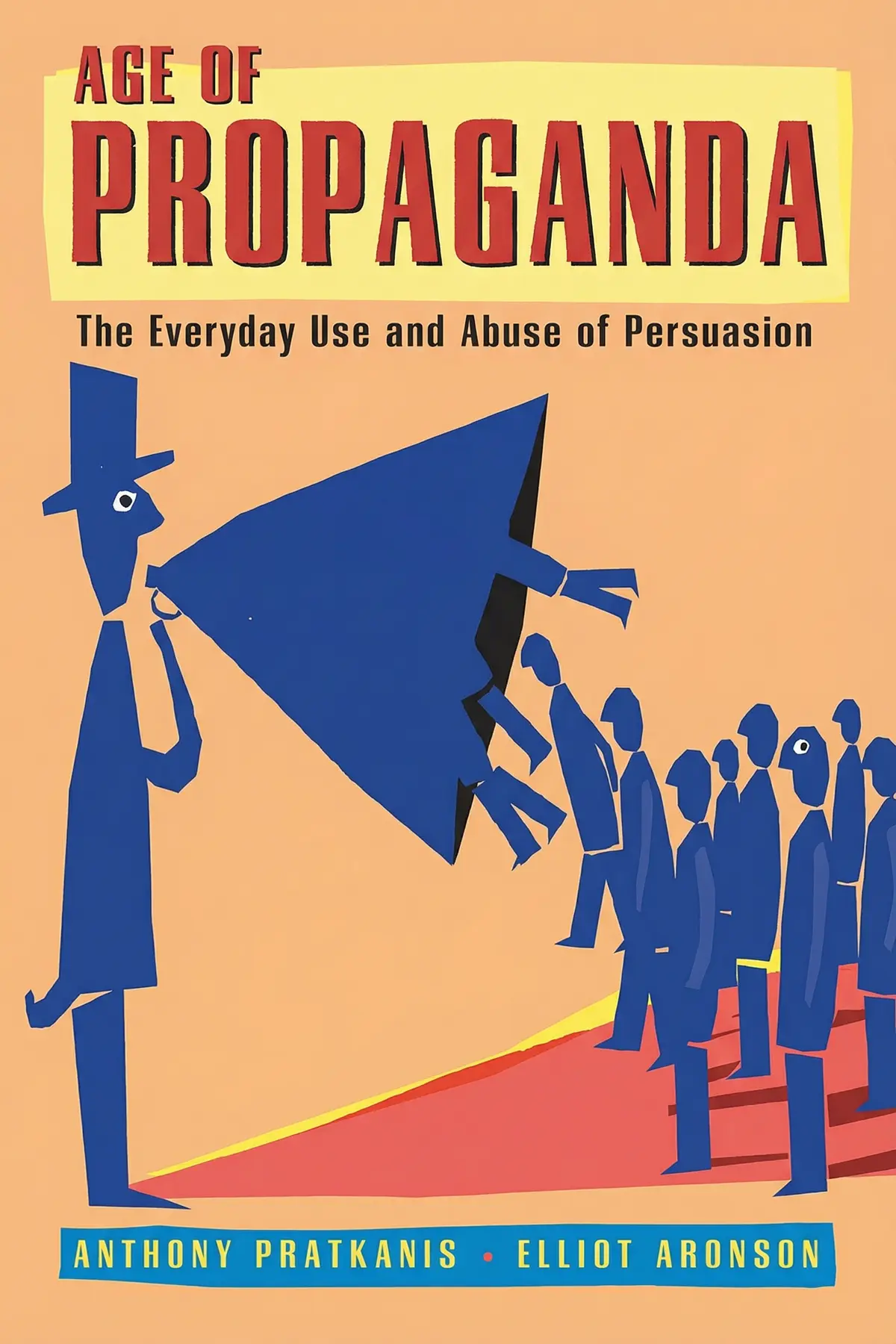
Age of Propaganda: The Everyday Use and Abuse of Persuasion
Anthony Pratkanis
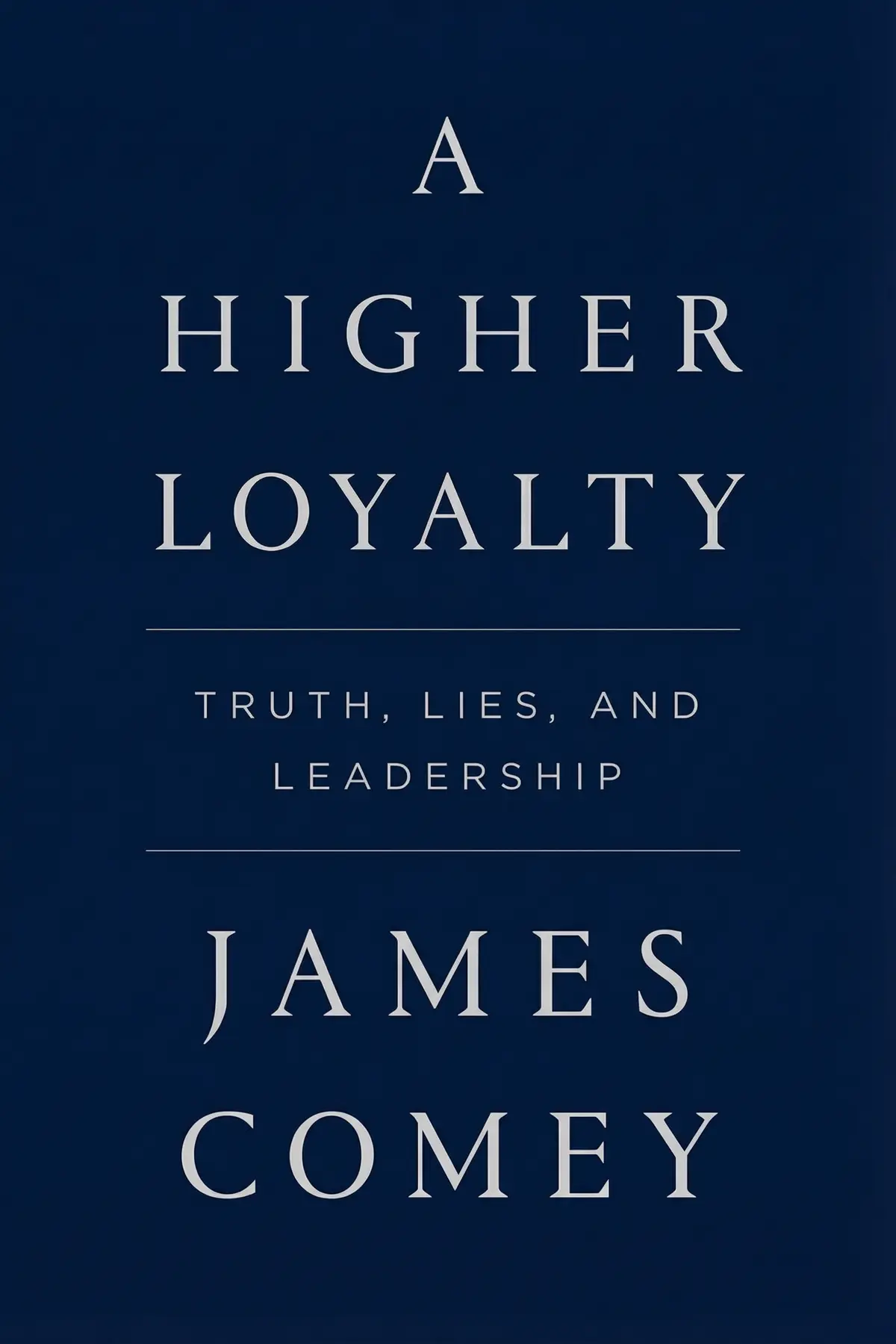
A Higher Loyalty: Truth, Lies and Leadership
James Comey



A Promised Land
Barack Obama
AUDIO SUMMARY AVAILABLE
Listen to The Chaos Machine in 15 minutes
Get the key ideas from The Chaos Machine by Max Fisher, plus 5,000+ more titles in English and Thai.
- 5,000+ titles
- Listen as much as you want
- 7-day free trial
- Cancel anytime







