
14 min 29 sec
The CIO Paradox: Battling The Contradictions of IT Leadership
The CIO Paradox explores the contradictory expectations placed on modern technology leaders, offering a roadmap for navigating the tension between maintaining infrastructure and driving strategic business innovation.
Table of Content
1. Introduction
1 min 38 sec
Imagine a role where your greatest successes make you completely invisible, yet your smallest mistakes turn you into the villain of the executive suite. This is the reality for the modern Chief Information Officer, a position defined by what Martha Heller calls a series of fundamental paradoxes. In the early days of corporate computing, the job was relatively straightforward: keep the machines running and the data flowing. But as technology has migrated from the basement to the very heart of the business strategy, the expectations for those who lead IT have become increasingly complex and, at times, entirely contradictory.
In this exploration of the role, we are going to look at why the CIO position is perhaps the most misunderstood and difficult seat at the board table. We will see how these leaders are expected to be both the cost-cutters and the innovators, the technical experts and the business visionaries, the risk-takers and the risk-avoiders. The goal isn’t just to point out these frustrations, but to provide a clear path forward.
Through this summary, we will uncover a framework for balancing these competing demands. We’ll look at how the best in the business shift their focus from the technology itself to the value it generates, how they bridge the communication gap between the server room and the boardroom, and how they build teams that are as comfortable discussing quarterly profits as they are discussing software architecture. If you’ve ever felt like your IT department is a separate island within your company, or if you’re a leader struggling to make your strategic voice heard, this journey through the contradictions of the IT landscape will offer the clarity you need to transform the role from a back-office utility into a front-line strategic powerhouse.
2. The Visibility Paradox
2 min 13 sec
Explore why the most effective technology leaders often go unnoticed and how to transition from being a silent utility provider to a visible strategic partner.
3. The Strategic vs. Operational Tension
2 min 14 sec
Learn how to manage the constant pull between day-to-day maintenance and the need to drive long-term digital transformation.
4. The Cost Center vs. Value Creator Conflict
2 min 13 sec
Understand the challenge of being asked to innovate while under pressure to cut costs, and how to prove IT’s return on investment.
5. The Communication Gap and the Language of Business
2 min 07 sec
Discover why ‘speaking tech’ is a barrier to leadership and how to translate complex digital concepts into boardroom-ready strategies.
6. Hiring for the Future and the New Talent Profile
2 min 21 sec
Shift your recruitment strategy to find professionals who possess both technical depth and the soft skills required for modern business.
7. Conclusion
1 min 43 sec
The journey of a Chief Information Officer is one of navigating constant, overlapping contradictions. We have seen how the role requires a delicate balance between being invisible when things go right and taking the heat when things go wrong. We’ve explored the tension between the immediate needs of the daily operation and the long-term vision of a digital future. We’ve looked at the struggle to prove value while being treated as a cost, the necessity of translating technical jargon into business strategy, and the shift toward hiring for adaptability rather than just static skills.
What ties all of these ideas together is the need for a fundamental shift in identity. To be a successful CIO in the modern era, one must stop seeing themselves as a ‘technology leader’ and start seeing themselves as a ‘business leader who happens to specialize in technology.’ This distinction is subtle, but it changes everything. It changes how you spend your time, how you speak to your peers, and how you build your team. It moves the IT department from the periphery of the organization to its very core.
The paradoxes of the role will never truly disappear—the nature of technology and business ensures that new contradictions will always arise. However, by embracing these tensions rather than fighting them, you can turn them into a source of strength. You can use the operational foundation to build strategic credibility. You can use financial constraints as a catalyst for proving ROI. And you can use the communication gap as an opportunity to become an indispensable bridge for the rest of the executive team. The CIO Paradox isn’t a problem to be solved; it’s a reality to be mastered. For those who can navigate these waters, the reward is a role that is not only vital to the survival of the company but is also at the very forefront of shaping the world of tomorrow.
About this book
What is this book about?
The role of the Chief Information Officer is often defined by a series of impossible contradictions. On one hand, the CIO is expected to be a visionary leader who drives the company into the digital future. On the other, they are frequently treated as the person in charge of the plumbing, blamed whenever a server goes down or a printer fails. This book dives into the heart of these paradoxes, explaining why they exist and how the most successful leaders overcome them. Martha Heller provides a comprehensive look at the evolution of IT leadership. She moves beyond technical expertise to focus on the soft skills, financial acumen, and relationship-building strategies necessary to earn a seat at the executive table. Readers will learn how to shift the perception of IT from a necessary cost center to a vital value creator, ensuring that technology becomes a core pillar of the organization’s competitive advantage rather than just a background utility.
Book Information
About the Author
Martha Heller
Martha Heller is the president of Heller Search Associates, a premier executive recruiting firm that specializes in placing high-level IT leaders. Beyond her work in recruitment, she is a well-known voice in the technology community, contributing a regular column to CIO magazine. Her expertise is further recognized through her role as a judge for the magazine's prestigious CIO 100 Awards, which celebrate excellence and innovation in the field.
Ratings & Reviews
Ratings at a glance
What people think
Listeners find that the book provides useful perspectives from seasoned international CIOs, making it a superb choice for those in IT leadership roles. The prose is skillfully written, and listeners value how it tackles the intricate challenges of managing IT.
Top reviews
Chaiwat
Ever wonder why the CIO role feels like a constant tug-of-war between keeping the lights on and driving innovation? Martha Heller masterfully deconstructs these contradictions through a series of real-world interviews that feel incredibly authentic to the daily grind. She highlights how we are expected to be both the company's futurist and its archivist, a duality that is rarely acknowledged in standard management literature. The prose is sharp and moves quickly, avoiding the usual corporate buzzwords that plague these types of books. Truth is, the book provides a much-needed vocabulary for the frustrations many of us face but can't quite articulate to our CEOs. It’s a solid resource for those looking to bridge the gap between technical excellence and genuine business influence. Even if you aren't in the C-suite yet, understanding these dynamics is vital for career growth.
Show morePranee
This book should be required reading for anyone aspiring to the C-suite, regardless of their technical background. Heller manages to distill the essence of IT leadership into a series of manageable challenges that feel both daunting and solvable. I was particularly impressed by the chapter summaries, which I know I will be revisiting often when I need a quick sanity check. The real-world stories from the field provide a level of authenticity that you just don't get from academic textbooks. It paints a picture of a true business leader who happens to specialize in technology, rather than a technician trying to do business. Every chapter felt like a mentoring session with a seasoned pro. If you want to understand why IT projects fail despite great technical talent, the answers are likely within these pages.
Show moreRung
Heller’s background as a journalist shines through in the way she weaves together dozens of direct quotes from global technology leaders. Instead of a dry academic study, you get a vibrant tapestry of real-world experiences. Not gonna lie, I was skeptical about another leadership book, but this one actually felt useful. It addresses the 'CIO paradox' by looking beyond the server room and into the heart of business strategy. The writing is clear, engaging, and remarkably free of the usual fluff. I especially liked the mini case studies used to illustrate the practical application of her suggested approaches. It’s one of the few books that actually goes beyond a well-articulated description of the problem and starts offering real solutions. This is an excellent summary of the modern IT experience that every aspiring leader should have on their shelf.
Show moreSaengdao
Martha Heller brings a unique recruiter’s perspective to a field often dominated by dry technical manuals. By drawing on her extensive background in executive search, she identifies the specific traits that separate successful IT leaders from those who remain stuck in the basement. The focus on how a CIO must influence the entire organization rather than just managing a department is a crucial takeaway. My only minor gripe is that some of the specific technology mentions feel a bit anchored in the early 2010s. However, the human element of leadership is timeless, and the case studies provided here are still highly relevant. Personally, I found the advice on communicating technical value to non-technical stakeholders to be the most practical part of the entire volume. It is a well-crafted guide for anyone looking to navigate the complexities of modern IT leadership.
Show moreNannapat
Finally got around to finishing this, and the 'futurist vs. archivist' section really hit home for me. As a developer, I often feel the weight of maintaining legacy systems while being pressured to implement the latest AI trends. Heller’s background as a journalist shines through in the way she weaves together dozens of direct quotes from global technology leaders. This isn't just one person's opinion; it is a collective wisdom from the field that feels grounded and actionable. I appreciated that the chapters were digestible and didn't require a massive time commitment to extract value. To be fair, a few of the strategies felt a little intuitive, but seeing them framed as 'paradoxes' helps in explaining these challenges to my own management. This is a great read for anyone who wants to understand the high-level stresses of IT.
Show moreWipada
As someone who has navigated the murky waters of corporate IT for two decades, I found the case studies remarkably accurate. Heller captures the nuanced relationships between situations, roles, and context with the anecdotes she provides for each paradox. It is rare to find a book that addresses the 'archivist' side of the job—the burden of legacy tech—with such empathy. Most authors just want to talk about the shiny new things, but she understands the reality of the budget. Look, the job is hard, and having a book that validates that struggle while offering a path forward is incredibly helpful. The section on building an innovative mindset within a traditional team was particularly thought-provoking. I’ve already recommended this to several of my direct reports who are looking to move into management roles.
Show moreChee
Look, the reality of the CIO position is that you are often blamed for failures but rarely credited for quiet successes. Martha Heller nails this dynamic perfectly. Her background in recruiting gives her a unique vantage point on what CEOs are actually looking for in a technology partner. I found the self-assessments included in the text to be a nice touch, offering a bit of interactivity to the reading experience. The focus on instilling an innovative mindset across the whole team, rather than just in a silo, is excellent advice. While the book is a decade old, the fundamental struggle for 'a seat at the table' remains a daily reality for many. It is an informative and thought-provoking read that I would recommend to any leader in IT. It’s worth the time just for the networking and board advice alone.
Show moreEye
To be fair, much of what Heller discusses here has become common knowledge in IT circles since the book first hit shelves. While the writing is clear and engaging, I didn't find many of the 'paradoxes' to be particularly groundbreaking in today’s environment. For instance, the idea that IT should be a business enabler is now the standard expectation rather than a radical shift. That said, the interviews with global CIOs offer some interesting historical context on how the role has evolved. I'd suggest reading the conclusion first to see which specific chapters align with your current professional hurdles. The book is a fine collection of anecdotes, but it might lack the innovative spark needed for those already well-versed in modern management theory. It is a decent primer for new managers, but seasoned vets might find it a bit repetitive.
Show moreKiattisak
The chapter on board membership felt a bit disconnected from the core paradoxes, though it was still an interesting peek behind the curtain. I enjoyed the author's journalistic style, but at times the sheer number of quotes made the narrative feel a bit disjointed. It felt more like a compilation of columns than a cohesive, singular argument. In my experience, some of the advice even contradicted itself, which I suppose is the point when discussing a paradox, but it can be frustrating if you’re looking for a straight answer. It’s a solid 'fine' for me; I learned a few things but wasn't blown away. I think it serves best as a conversation starter for leadership teams. It did talk about the right things, but it just didn’t spark many new thoughts for me personally.
Show morePetch
Not what I expected given the high praise from my peers. Frankly, the advice provided here felt fairly elementary for anyone who has actually held a leadership position in a mid-to-large scale enterprise. I found the anecdotes to be repetitive after the first few chapters, often echoing the same 'IT must align with business' sentiment we've heard for decades. While Heller’s writing style is clear and accessible, the lack of truly innovative frameworks makes it feel more like a historical artifact than a current roadmap. It’s not a bad book, but it lacks the depth required to solve the very paradoxes it identifies. If you are a seasoned executive, you might find yourself skimming through most of the case studies looking for meat that just isn't there. I was hoping for more concrete data and less anecdotal storytelling.
Show moreReaders also enjoyed
A Year with Peter Drucker: 52 Weeks of Coaching for Leadership Effectiveness
Joseph A. Maciariello


Acting with Power: Why We Are More Powerful Than We Believe
Deborah Gruenfeld
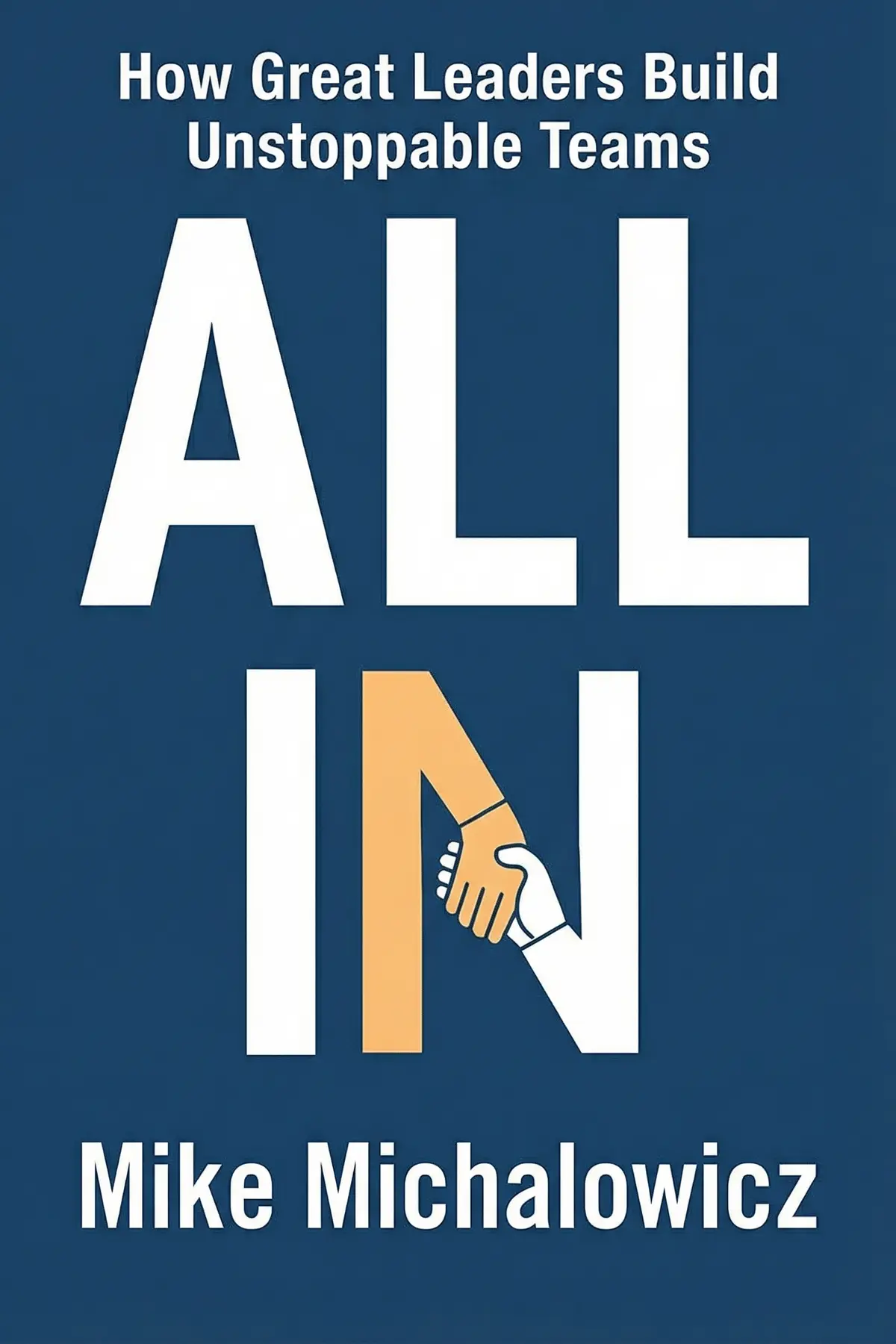
All In: How Great Leaders Build Unstoppable Teams
Mike Michalowicz
7 Powers: The Foundations of Business Strategy
Hamilton Helmer
AUDIO SUMMARY AVAILABLE
Listen to The CIO Paradox in 15 minutes
Get the key ideas from The CIO Paradox by Martha Heller, plus 5,000+ more titles in English and Thai.
- 5,000+ titles
- Listen as much as you want
- 7-day free trial
- Cancel anytime







