
15 min 26 sec
The Devil Emails at Midnight: What Good Leaders Can Learn From Bad Bosses
By Mita Mallick
Explore the archetypes of toxic leadership and discover practical strategies to foster healthier, more productive workplace environments. This guide offers actionable advice for both managers looking to improve and employees navigating difficult bosses.
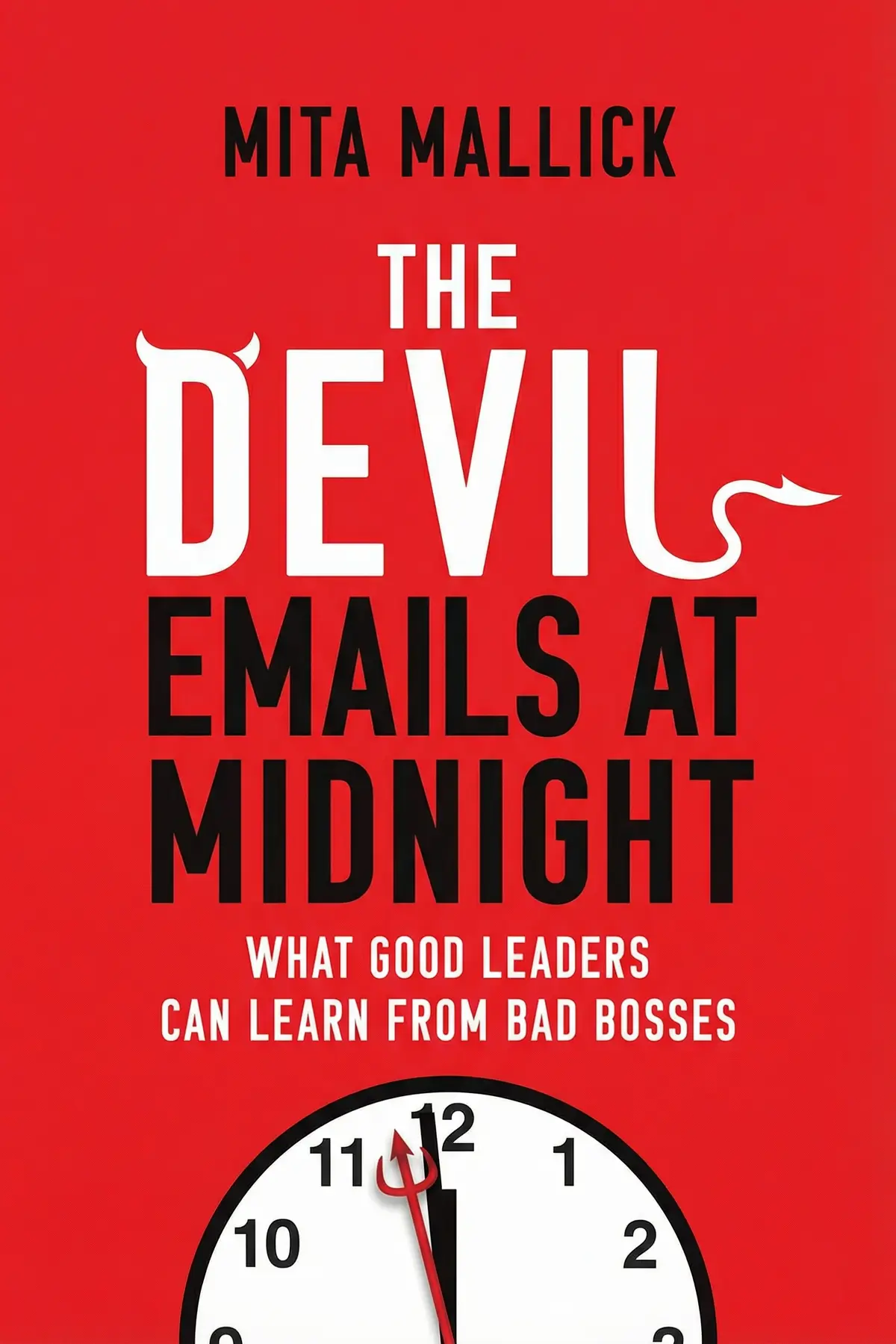
Table of Content
1. Introduction
1 min 38 sec
We have all felt that distinct drop in the stomach when a specific name pops up in our inbox at an unreasonable hour, or the quiet frustration of sitting through a meeting where the person in charge seems to be everywhere except in the room mentally. Workplace dynamics are often dictated by the habits of those in power, and all too frequently, those habits lean toward the destructive. These patterns don’t just make for a bad day; they can derail entire careers and poison the culture of an organization.
The core of the problem is that bad leadership often operates in the shadows of busyness, charisma, or simple neglect. It isn’t always a matter of malice; sometimes, it’s a lack of awareness or a reliance on outdated methods of control. But the impact remains the same: talent is wasted, morale is depleted, and the mission of the team suffers. To fix these environments, we first have to name exactly what is happening. We have to look at the specific archetypes of leaders who drain energy instead of fueling it.
In this exploration, we are going to walk through the most common types of difficult bosses you’ll likely encounter. We will look at the ghost-like manager who only appears when the sun goes down, the one who hovers so closely you can’t breathe, and the one who uses fear as a primary tool for motivation. But more importantly, we will focus on the antidote to each of these styles. This isn’t just a diagnostic tool; it is a practical guide for anyone who wants to lead better or simply survive a toxic environment. By the end, you’ll have a set of clear strategies for reclaiming your time, your credit, and your sanity. Let’s start by looking at the leaders who mistake their own lack of boundaries for a sign of productivity.
2. Managing the Disappearing Act
2 min 03 sec
Some leaders are invisible during the day only to flood your inbox at midnight. Discover why this happens and how to set boundaries that protect your sleep.
3. Confronting Active Disengagement
2 min 00 sec
When a leader stops caring, the entire team’s morale begins to crumble. Learn how to spot the signs of a checking-out boss and what to do about it.
4. Breaking the Cycle of Micromanagement
2 min 02 sec
Hovering and redoing work doesn’t ensure quality; it destroys confidence. Here is how to move from constant surveillance to outcome-based leadership.
5. Dismantling Fear-Based Leadership
2 min 07 sec
Fear can force short-term results, but it kills long-term innovation. Learn how to identify the enforcer and restore safety to your team.
6. The Danger of the Likability Trap
2 min 00 sec
A nice boss is great, but a nice boss who can’t lead is a burden. Explore how to bridge the gap between being friendly and being competent.
7. Reclaiming the Spotlight
2 min 05 sec
When a leader takes credit for your work, it doesn’t just feel unfair—it halts your career. Learn how to ensure your contributions are recognized.
8. Conclusion
1 min 31 sec
As we navigate the complexities of our professional lives, it becomes clear that leadership is not a static title but a collection of daily choices. We have explored the various ways these choices can go wrong—from the leader who disappears into the night to the one who hovers too closely, and from the one who rules through fear to the one who hides incompetence behind a smile. Each of these archetypes presents a unique challenge, but they all share a common solution: the restoration of clarity, boundaries, and mutual respect.
The throughline of a healthy workplace is transparency. When we define what success looks like, when we protect our time and the time of others, and when we ensure that credit is given where it is due, we create an environment where everyone can thrive. Whether you are currently in a leadership position or working your way toward one, the lesson is the same: your impact is measured by how you treat the people around you and how much space you create for them to succeed.
Take the strategies we’ve discussed and put them into practice. Start that difficult mirror conversation, set your midnight boundaries, and move from constant surveillance to genuine coaching. By addressing these toxic patterns head-on, you aren’t just improving your own daily experience; you are helping to build a more equitable and productive future for everyone. Remember, a great leader doesn’t just avoid being a ‘bad boss’—they actively work to be the kind of person they would want to follow. Now, it’s time to take those lessons back to your desk and start the work of transformation.
About this book
What is this book about?
The workplace is often shaped by the personalities at the top, but what happens when those personalities become obstacles rather than facilitators of success? This summary delves into the specific behaviors that define problematic leadership, from the manager who only communicates through late-night emails to the one who takes credit for everyone else's hard work. By identifying these archetypes, we can better understand the emotional and professional toll they take on a team. The book promises a roadmap for transformation. It isn't just about pointing out flaws; it is about providing a toolkit for restoration. You will learn how to set boundaries with an unavailable boss, how to reignite engagement in a leader who has checked out, and how to protect your own career growth from those who might stifle it. Ultimately, the goal is to shift the professional narrative toward clarity, respect, and shared ownership, ensuring that leadership becomes a source of empowerment rather than a drain on resources.
Book Information
About the Author
Mita Mallick
Mita Mallick is a renowned workplace strategist and the head of Inclusion, Equity & Impact at Carta. Recognized as a LinkedIn Top Voice and a member of the Thinkers50 Radar Class of 2024, she brings extensive expertise to the field of corporate culture. She holds a BA from Barnard College and an MBA from Duke University’s Fuqua School of Business. Mallick is also the author of the best-selling book Reimagine Inclusion.
Ratings & Reviews
Ratings at a glance
What people think
Listeners find this work to be an absorbing and effortless read that provides useful lessons and reflective prompts throughout. The book serves as a captivating roadmap for better management, highlighting the need to support and elevate others while sharing authentic and recognizable anecdotes about difficult bosses. Listeners value the blend of wit and insight, with one review noting how each chapter links the stories to research. Listeners characterize the book as sincere and profoundly human.
Top reviews
Kae
Ever wonder why your manager thinks a 1 AM email is acceptable behavior? Mallick dives deep into the psychology of the 'Devil' boss with a blend of humor and razor-sharp observation. I found the section on the 'spotlight' boss particularly gut-wrenching because it mirrored my last corporate role perfectly. The book doesn't just vent; it offers actionable strategies to regain your sanity and set boundaries that actually stick. It’s rare to find a management book that feels this human and grounded in reality rather than just corporate buzzwords. Every chapter ends with reflection questions that forced me to look at my own habits as a team lead, which was uncomfortable but necessary. This is an essential guide for anyone currently navigating a toxic workplace or trying to ensure they don't become the very person they once hated working for.
Show moreMethinee
After hearing Mita Mallick speak on a podcast, I knew I had to pick up this book. It’s a masterclass in 'what not to do' that manages to be funny and deeply moving at the same time. The way she dissects the 'fear-based' boss reminded me of the physical toll a bad manager can take on your health—something we don't talk about enough in corporate America. I loved that she wasn't afraid to share her own failures as a manager, which makes the advice feel much more authentic. Each chapter is short, punchy, and backed by actual research, which helps validate your own 'crazy' experiences. It’s a fast read but one that lingers long after you close the cover. If you manage people, or if you're managed by people, you need this on your desk.
Show moreLena
Wow. This book hit home in a way most business books never do. Most leadership guides focus on the 'hero' narrative, but Mallick focuses on the reality of the 'villains' we encounter every day. I was particularly struck by the discussion on 'micromanagement' as a tool of fear rather than a quest for quality. It’s such a simple shift in perspective, but it changes how you respond to that hovering manager. The book is heartfelt, deeply human, and avoids the usual jargon that makes management books so boring. I finished it in two sittings and have already recommended it to my entire HR department. The truth is, we’ve all been 'the devil' at some point, and this book gives you the grace to admit it and the tools to change.
Show moreLuke
Direct and insightful, this is exactly the kind of leadership book we need right now. Mallick isn't interested in fluff; she's interested in the daily habits that actually build or break a culture. The way she links each archetype to research makes the observations feel much more substantial than just a collection of office horror stories. I particularly appreciated the 'trade' system for managing calendars—nothing new without removing something old. It’s a simple, practical way to maintain boundaries in a world that demands 24/7 availability. Whether you are currently leading a massive team or just starting your first job, these lessons on empathy and credit-sharing are invaluable. This is a brave, witty, and necessary addition to any professional library. I’ll be buying copies for my management team.
Show moreTom
Finally got around to reading this after seeing it everywhere on LinkedIn, and it lived up to the hype for the most part. Mallick has a way of naming dynamics that many of us just accept as 'normal' office politics. The chapter on the 'kind but incompetent' boss was a revelation for me because it's a type that rarely gets discussed in leadership circles. We often excuse poor results because someone is 'nice,' but this book highlights how that actually drains a team’s momentum over time. My only gripe is that the solutions offered for the most toxic bosses rely heavily on having an HR department that actually cares, which isn't always the case. Regardless, the self-reflection prompts are gold. I’ve already started using the 'delayed send' trick for my own emails to protect my team’s weekends.
Show moreDivya
As someone who has survived a 'glory hog' boss, reading this felt like a much-needed therapy session. Mallick identifies thirteen distinct types of bad leaders, and I could put a face to almost every single one of them from my twenty-year career. The book is especially strong when it discusses the 'actively disengaged' leader—the one who checks out but stays in power. It’s sobering to realize how much damage a 'napper' can do to a high-performing team. I think the practical tips on documenting incidents and building allies are incredibly useful for those stuck in bad situations. I'm giving it four stars instead of five only because a few sections felt a bit repetitive. However, the core message about intentional leadership is something every CEO should take to heart.
Show moreSofia
Picked this up because the title was too relatable to ignore. We’ve all been there—trying to enjoy a Friday night when that notification pings from the boss. Mallick does a fantastic job of breaking down why that behavior is so toxic, even if the boss has 'good intentions.' To be fair, the book is a bit heavy on anecdotes, which I liked, but some readers might prefer more structured data. I found the section on the 'disengaged' boss particularly relevant to the current remote work environment. It provides a roadmap for staying visible and maintaining your own standards when your leader has essentially disappeared. It's a refreshing, honest take on the modern workplace that doesn't sugarcoat how hard it is to work for people who don't know how to lead.
Show moreMo
This book started with such a punchy, relatable concept, but the momentum seemed to stall around the halfway mark. While the initial archetypes like the 'midnight emailer' are spot-on, some of the later chapters felt a bit redundant or lacked the same depth. Truth is, I appreciated the research linked to each story, yet I found the author’s personal biases occasionally distracting from the broader leadership lessons. To be fair, the writing style is incredibly accessible and the humor keeps it from being too dry. It’s a decent read for new managers who need a mirror held up to their behavior, but seasoned leaders might find some of the advice a bit elementary. It's a quick read, so I don't regret picking it up, but it didn't quite change my life.
Show moreMia
Not what I expected, but still quite a useful tool for looking at workplace culture. The writing is very casual and conversational, which makes it an easy weekend read. While I enjoyed the humor, I felt like some of the 'practical tools' were things most people already know, like using delayed send for emails. Personally, I was looking for a bit more depth into how to handle these bosses when you have zero leverage in a company. It's great to say 'set boundaries,' but that's easier said than done with a 'fear-based' leader who holds your promotion in their hands. That said, the categorization of boss types is very clever and helps you realize you aren't the problem. It’s a solid 3-star read for me—good, but maybe not groundbreaking.
Show moreThongchai
The concept had so much potential, but I found the execution incredibly frustrating. What started as a promising look at leadership archetypes quickly devolved into a platform for the author's personal grievances and political biases. By the seventh chapter, the objective analysis disappeared, replaced by a tone that felt more like a social media rant than a professional development guide. Frankly, it made the book nearly unreadable for me toward the end. If you’re looking for a data-driven, neutral exploration of management styles, this probably isn't the book for you. It felt less about 'what good leaders can learn' and more about settling old scores under the guise of mentorship. I really wanted to like this, but the heavy-handed approach to certain social topics overshadowed the actual management advice.
Show moreReaders also enjoyed

7 Powers: The Foundations of Business Strategy
Hamilton Helmer

A Bigger Prize: How We Can Do Better Than the Competition
Margaret Heffernan


A Year with Peter Drucker: 52 Weeks of Coaching for Leadership Effectiveness
Joseph A. Maciariello
AUDIO SUMMARY AVAILABLE
Listen to The Devil Emails at Midnight in 15 minutes
Get the key ideas from The Devil Emails at Midnight by Mita Mallick, plus 5,000+ more titles in English and Thai.
- 5,000+ titles
- Listen as much as you want
- 7-day free trial
- Cancel anytime







