
21 min 05 sec
The Discomfort Zone: How to Get What You Want by Living Fearlessly
By Farrah Storr
The Discomfort Zone explores how leaning into anxiety, failure, and social pressure can catalyze personal growth. Learn to reframe fear as fuel and use constraints to unlock your highest creative potential.
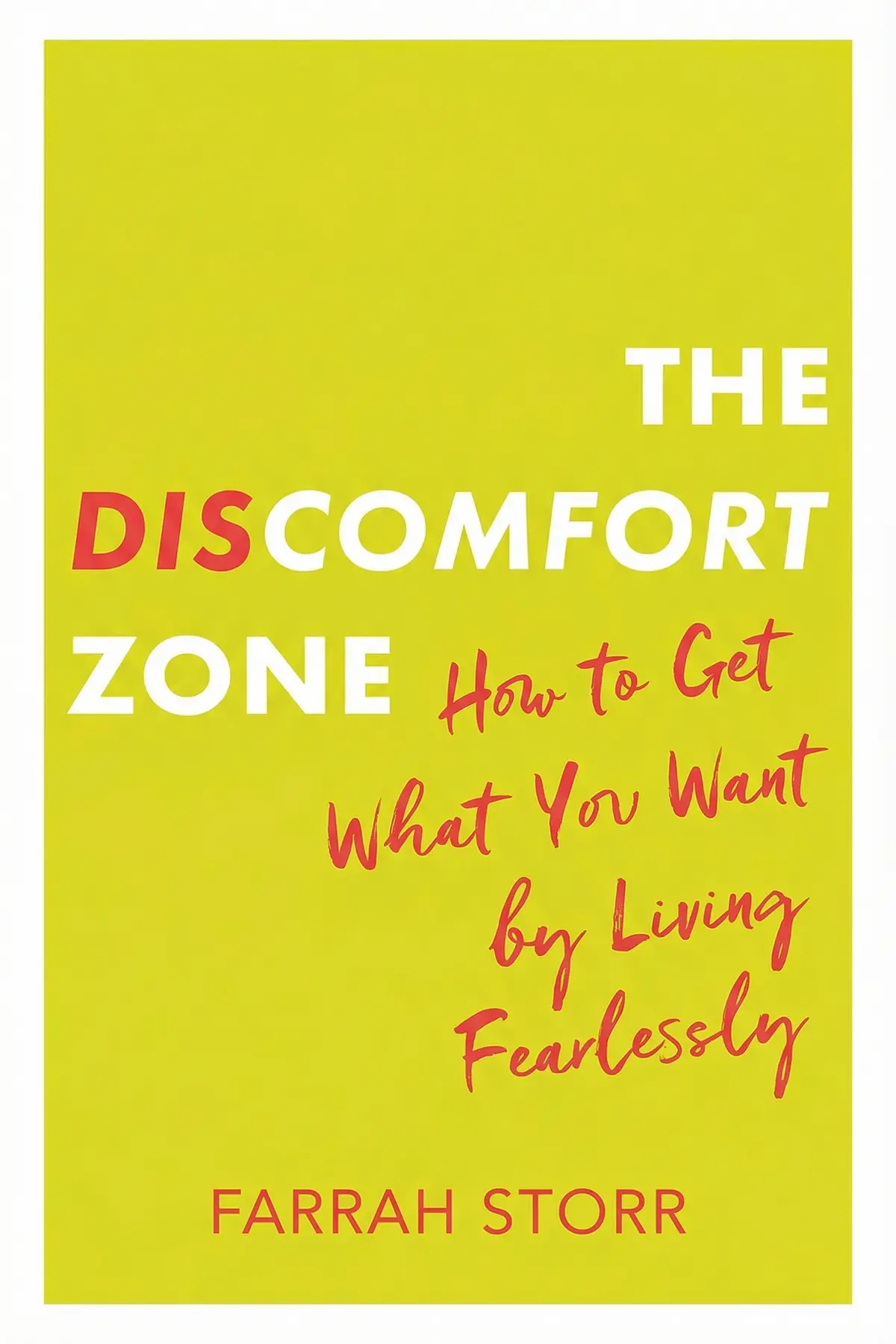
Table of Content
1. Introduction
2 min 03 sec
Have you ever paused to consider what your life might look like if fear simply wasn’t a factor in your decision-making? Imagine for a moment that the fluttering in your stomach or the sudden urge to back away from a challenge didn’t dictate your choices. Perhaps you would have pursued that creative career that seemed a bit too risky, or maybe you would have booked a solo flight to a part of the world that feels entirely foreign. For many of us, these ‘what ifs’ are the boundaries of our lives. We exist within a comfortable, predictable bubble, often unaware that the very things we are avoiding are the keys to the growth we desire.
Fear is a universal human experience, but it frequently acts as a restrictive force, keeping us small and safe. When that familiar wave of unease hits, our biological instinct is to find the nearest exit. We associate discomfort with danger, and so we stay in the ‘known,’ even when the ‘known’ feels stagnant. But there is a different way to live—one that doesn’t require us to be born with a special ‘bravery gene’ or to become reckless daredevils. Instead, it requires a fundamental shift in how we perceive and handle discomfort.
The throughline of this journey is simple yet profound: to truly flourish and reach your full potential, you must learn to get comfortable with being uncomfortable. This isn’t about seeking out pain for its own sake; it’s about recognizing that growth and discomfort are two sides of the same coin. In the following discussion, we will explore how to reframe your physical responses to stress, how to navigate obstacles without giving up, and why feedback—while often stinging—is the essential nutrient for professional excellence. We’ll look at how trauma can be processed into strength and why having fewer resources can actually make you more innovative. By the end, you’ll see that the ‘discomfort zone’ isn’t a place to be feared; it’s the laboratory where your best self is built. So, let’s begin by looking at the very physiology of fear and how we can turn it into a high-performance tool.
2. Reframing Stress as a Performance Tool
2 min 25 sec
Discover how the physical sensations of anxiety can be transformed into a winning mindset by shifting from a threat-based perspective to a challenge state.
3. Navigating Obstacles with Resilience
2 min 19 sec
Learn how the way we respond to unexpected barriers defines our success, using the inspiring story of a world-class dancer to illustrate the power of the pivot.
4. Finding Growth in the Wake of Trauma
2 min 05 sec
Traumatic events can be devastating, but by processing them deeply, we can uncover a profound sense of meaning and ‘post-traumatic growth.’
5. Shedding the Shackle of Social Perfectionism
2 min 07 sec
Our fear of judgment is often based on an illusion. Discover the ‘spotlight effect’ and how owning your vulnerability can lead to greater courage.
6. The Essential Role of Radical Feedback
2 min 07 sec
Feedback can be uncomfortable, but it is the fastest route to improvement. Learn how to build a ‘care coach’ relationship to fuel your professional growth.
7. Leveraging Constraints to Spark Creativity
1 min 58 sec
Contrary to popular belief, total freedom can actually kill creativity. Discover why having less time, money, or resources can be your greatest asset.
8. The Scientific Approach to Smart Failure
1 min 55 sec
Not all failure is created equal. Learn to distinguish between careless mistakes and ‘smart failures’ that provide the data needed for future success.
9. Mastering the Hustle through Reciprocity
2 min 01 sec
Asking for what you want can be incredibly awkward. Discover how to transform the ‘hustle’ from a one-way street into a mutually beneficial exchange.
10. Conclusion
2 min 05 sec
As we wrap up our exploration of the ‘discomfort zone,’ it’s important to bring all these ideas back down to earth. The central lesson we’ve learned is that the feelings we typically try to avoid—anxiety, social pressure, the sting of criticism, and the fear of failure—are not our enemies. They are actually the biological and psychological markers of growth. When you feel that familiar flutter of unease, it’s a signal that you are pushing against your current boundaries. Avoiding that feeling means staying exactly where you are. Embracing it is the only way to move forward.
To help you put this into practice immediately, Farrah Storr introduces the BMD Method—which stands for Brief Moments of Discomfort. The core idea is that most of the awkwardness or fear we face actually only lasts for a very short period—often just a few minutes. If you can learn to tolerate those few minutes, you can achieve almost anything. The method has three simple steps. First, acknowledge the fear. Don’t try to suppress it; just name it. Second, identify a small action you can take to make the moment slightly more manageable, like taking a deep breath or a sip of water to buy yourself time. Finally, reframe the sensation. Tell yourself that the rush you’re feeling is adrenaline meant to help you perform, not a sign of danger.
Ultimately, living fearlessly isn’t about the absence of fear; it’s about changing your relationship with it. It’s about realizing that the discomfort of trying and failing is far more productive than the comfortable regret of never trying at all. Whether it’s seeking out a care coach for honest feedback, leaning into the constraints of a difficult project, or simply owning your vulnerability in a social setting, the path to your best life leads directly through the things that make you nervous. So, the next time you feel the urge to retreat into the safety of the known, take a breath, lean in, and step boldly into your discomfort zone. That is where your transformation truly begins.
About this book
What is this book about?
We often view discomfort as a signal to retreat, yet Farrah Storr argues it is actually the most reliable indicator of impending growth. This book provides a blueprint for moving past the paralyzing effects of fear by entering the Discomfort Zone—a space where we intentionally face our insecurities and challenges. By examining the psychology of stress, the benefits of radical feedback, and the power of creative constraints, Storr shows how anyone can transform their relationship with failure. The book promises to help readers move from a state of avoidance to a state of action, using practical methods like the BMD technique to master the brief moments of awkwardness that lead to long-term success.
Book Information
About the Author
Farrah Storr
Farrah Storr is a highly accomplished journalist and editor. Her career highlights include serving as the editor-in-chief of Cosmopolitan, where her leadership earned her prestigious accolades such as the PPA Award and the BSME Award in 2018. Recognized as one of the UK’s 1,000 most influential people in 2017, Storr brings her professional expertise and personal experiences to her debut book, The Discomfort Zone.
Ratings & Reviews
Ratings at a glance
What people think
Listeners find that *The Discomfort Zone* provides a perceptive look at viewing failure differently and overcoming daunting work-related obstacles. Even though views differ regarding how the book is organized, many listeners value the actionable advice for handling social nerves and professional development. Furthermore, the presence of motivating interviews and personal stories reinforces the writer’s main point. Listeners also highlight the worth of the book’s distinct mantras, and one listener points out that it acts as a deep manual on how to "give discomfort meaning" and advance through adversity.
Top reviews
Supachai
Ever wonder why some people thrive under pressure while others crumble at the slightest hint of conflict? Storr tackles this head-on by reframing failure as a necessary modality of success rather than something to be feared. I went in thinking this would be a David Goggins style 'embrace the pain' marathon, but it’s actually much more relatable for the average professional. The concept of the 'care coach' was a total game-changer for how I view my own support system. Not gonna lie, I’ve already started implementing the advice on choosing whose feedback actually matters. The stories of people overcoming massive professional hurdles are incredibly inspiring and grounded. This isn't just a book; it's a profound toolkit for anyone who feels paralyzed by the fear of looking stupid.
Show moreYui
This is exactly what I needed to read during a particularly difficult transition in my professional life. Farrah’s perspective on overcoming hurdles is strangely comforting, even though she’s pushing you to do the exact opposite of what feels safe. The book is filled with unique mantras that I’ve started writing down in my daily journal to stay focused. I loved the emphasis on how we can give our discomfort a specific meaning to propel us forward. The examples provided are highly relevant to the modern workplace, making the advice feel fresh and applicable. It’s one of those rare books that actually makes you want to go out and fail at something just to see what you can learn. If you're feeling stuck in your comfort zone, this is your wake-up call.
Show moreGiulia
Finally got around to reading this after seeing it everywhere on LinkedIn. Storr’s take on professional growth isn't about working harder; it’s about leaning into those moments that make your stomach turn. The practical tips for navigating intimidating meetings were genuinely useful, though the prologue felt a bit fluffy and took a while to get to the point. I appreciated the specific strategies for handling feedback from the right people instead of just absorbing every criticism that comes your way. It’s not a revolutionary manual on psychology, but as a guide for career momentum, it hits the mark. The writing style is breezy, almost like a long-form editorial, which makes it easy to finish over a weekend. While some sections could have been tightened up, the core message about giving discomfort a specific meaning stuck with me.
Show moreAlejandra
As someone who struggles with social anxiety in corporate settings, I found this perspective to be incredibly refreshing. Storr doesn't suggest that we should eliminate fear, but rather that we should learn to enjoy the failure that comes from trying. The way she discusses the Discomfort Zone as a place of growth is much more accessible than most 'tough love' self-help books. I particularly enjoyed the sections on how we build entire industries just to avoid feeling confused or stressed. Truth is, we often blame the obstacle because it's easier than facing our own limitations. The writing is engaging and moves quickly, though I agree with others that it lacks a bit of academic weight. Still, the practical advice on navigating career-stalling fears makes it a worthy addition to your shelf.
Show morePloy
The chapter on feedback completely shifted how I interact with my management team at work. I used to view every piece of criticism as a personal attack, but Storr helps you realize it's just part of the growth process. The book provides a few very specific, practical tips that you can use immediately, which is rare in this genre. I do think the author's voice can come across as a bit young, but the insights from her interviewees add a layer of sophistication. It’s not quite as academic as I expected, focusing more on anecdotal evidence than hard data. Despite that, the message about not letting the fear of social discomfort hold you back is powerful. It’s an engaging read that provides a necessary push for anyone looking to level up their career.
Show moreNoah
Not what I expected at all, but in a very good way. I picked this up thinking it would be about physical endurance, yet it’s actually a deep dive into the psychology of social fear. The idea that we choose to respond to distress in specific ways was a major eye-opener for me. Storr explains that discomfort is just a part of life that we need to stop avoiding if we want to see any real progress. Personally, I found the section on 'care coaches' to be the most valuable part of the entire book. While some of the author’s personal stories felt a little avoidable, the broader lessons on resilience are universal. It’s a quick read that packs a punch and leaves you with plenty of food for thought.
Show moreSiriporn
If you're looking to level up your career, this book offers a compelling roadmap for navigating intimidating professional hurdles. The author does a great job of explaining why we get stuck in our ways and how to break free by embracing the awkward. I appreciated the mix of personal stories and interviews, even if the organization felt a bit loose in the middle sections. The truth is, most of us are held back by a fear of looking foolish, and this book tackles that head-on. It’s an insightful guide that reframes failure as a learning modality rather than an end-point. While it could have been more concise, the core message is vital for anyone working in a high-pressure environment. Definitely worth a read for the practical tips alone.
Show moreRodrigo
Look, this book is a bit of a mixed bag for me. While Farrah Storr offers some fantastic mantras about avoiding 'easy absolutes,' the actual structure of the writing left me frustrated. It often felt like a collection of loosely connected magazine articles rather than a cohesive, academic exploration of stress and growth. I was particularly bothered by the story where she had to speak to 20,000 people without knowing—that felt more like a lack of preparation than a 'discomfort zone' lesson. To be fair, the interviews with high-achievers were the highlight and provided much-needed depth. If you want a deep dive into the science of trauma or grit, look elsewhere. However, if you need a quick push to stop avoiding your boss or that scary project, there’s enough value here to justify the read.
Show moreJoseph
In my experience, self-help books fall into two categories: the scientific ones and the 'Malcolm Gladwell' school of storytelling. This book definitely falls into the latter, using singular data points and anecdotes to prove a broader point. While the stories are engaging, I found the methods weren’t entirely new or revolutionary if you’ve read any grit-based literature before. The writing itself was difficult to digest at certain points because the structure felt a bit woolly and unfocused. However, there are some significant pearls of wisdom to be found if you’re willing to dig. The discussion about why we avoid stress and how that stunts our growth was particularly thought-provoking. It’s a solid 3.5-star read that offers a few practical tips without reinventing the wheel.
Show moreLook
The premise sounded incredible, but the execution felt immature and lacked the intellectual rigor I was hoping for. Many of the situations described by the author seemed entirely avoidable with basic communication, making the 'discomfort' feel self-inflicted and unnecessary. I found the language a bit juvenile at points, almost like it was written by someone who just discovered self-help for the first time. The book suffers from poor organization, jumping between anecdotes without a clear, logical thread to tie the concepts together. Frankly, the advice could have been condensed into a single, punchy article rather than stretched across several hundred pages. While there are a few interesting interview nuggets buried in there, they aren't enough to save the overall experience. It’s a pass for me.
Show moreReaders also enjoyed
60 Seconds & You’re Hired!
Robin Ryan
59 Seconds: Change Your Life in Under a Minute
Richard Wiseman
A Guide to the Good Life: The Ancient Art of Stoic Joy
William B. Irvine
AUDIO SUMMARY AVAILABLE
Listen to The Discomfort Zone in 15 minutes
Get the key ideas from The Discomfort Zone by Farrah Storr, plus 5,000+ more titles in English and Thai.
- 5,000+ titles
- Listen as much as you want
- 7-day free trial
- Cancel anytime







