
18 min 56 sec
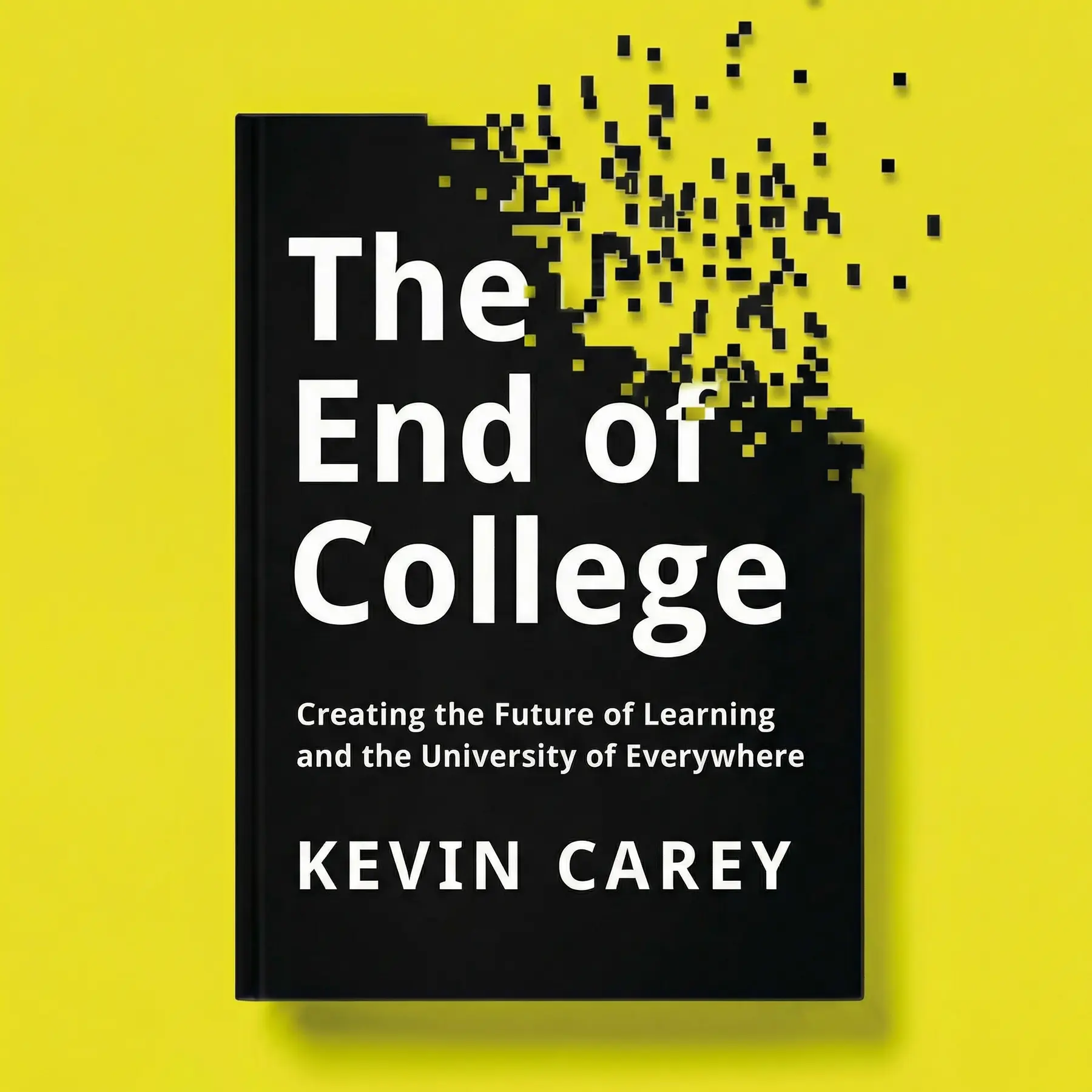
The End of College: Creating the Future of Learning and the University of Everywhere
By Kevin Carey
The End of College explores the structural collapse of traditional higher education and the rise of a flexible, digital alternative known as the University of Everywhere, offering a new path for global learning.
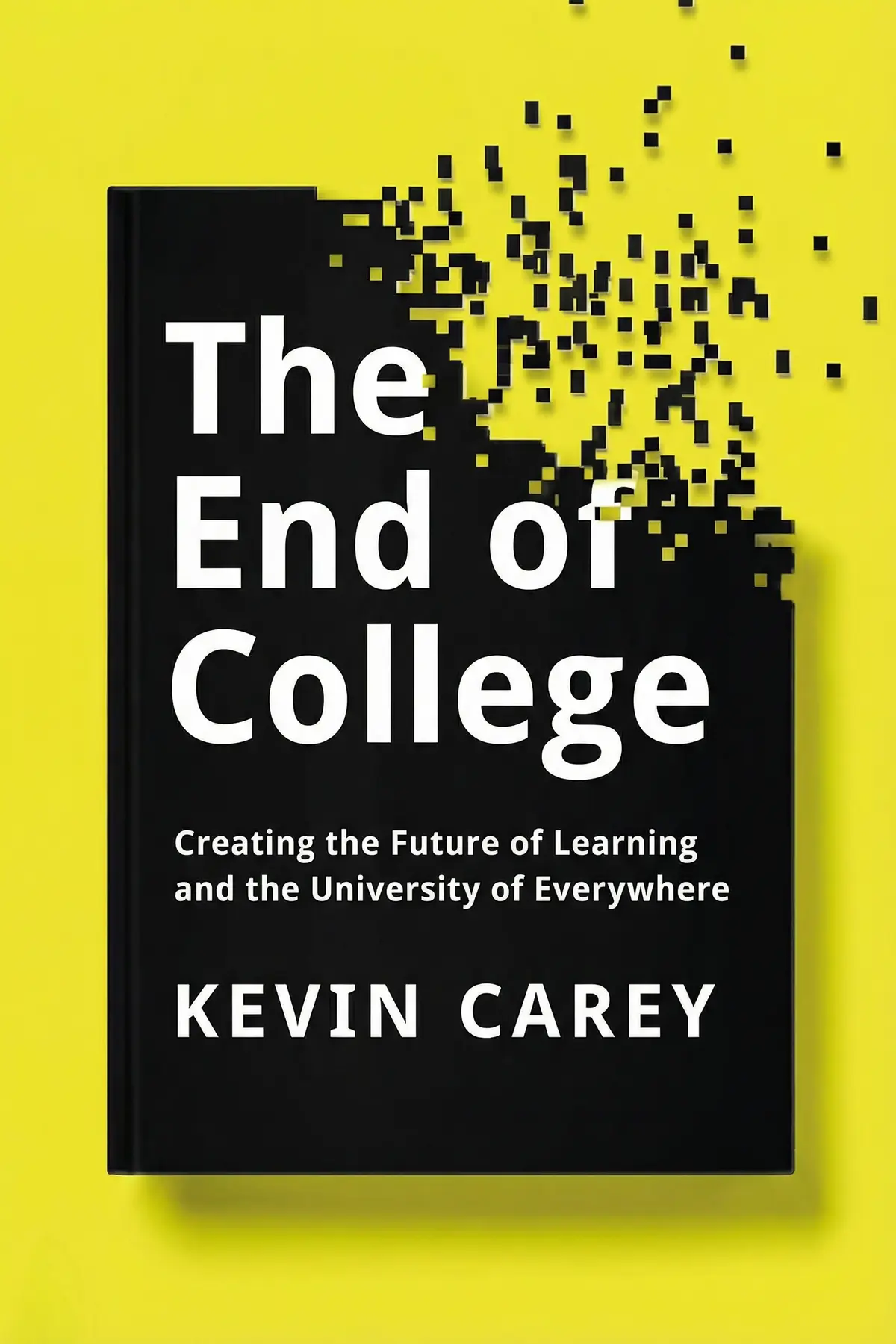
Table of Content
1. Introduction
1 min 37 sec
Imagine a world where the ivory tower has no walls. Think for a moment about the typical college experience: the sprawling green lawns, the massive stone libraries, and the lecture halls filled with hundreds of students. For a long time, this was the only way to get a world-class education. But that physical reality comes with a staggering price tag and a rigid structure that doesn’t always serve the person it’s meant for—the student.
What if you could pursue a degree while sitting in your favorite park, or even while traveling across the globe? What if the most prestigious professors from the world’s top institutions were available to you at any time of day, for a fraction of the cost of a traditional degree? This isn’t just a utopian dream; it is the beginning of a fundamental shift in how humanity shares and acquires knowledge.
We are currently witnessing the sunset of the traditional university and the dawn of what we might call the University of Everywhere. This shift isn’t just about moving classes onto a computer screen; it’s about breaking down the gatekeeping systems that have restricted elite education to the few. In the following discussion, we’ll trace the history of how the university became so expensive and specialized, why the current American model is struggling to keep its promises, and how the digital revolution is finally ready to fulfill the original mission of higher learning: making knowledge truly universal. This journey will take us through the streets of medieval Italy, into the offices of Harvard’s past presidents, and finally toward a future where learning is a lifelong, accessible, and deeply personal endeavor.
2. The Failure of the Current Academic Model
2 min 23 sec
Traditional higher education is struggling with high dropout rates and a lack of measurable skill growth, leaving millions with debt but no degree.
3. The Evolution from Student-Led to Professor-Centric
2 min 12 sec
Uncover how the original student-driven university model shifted into a professor-controlled system that prioritized institutional power over the learner.
4. The Printing Press and the Centralization of Knowledge
2 min 12 sec
Learn why the invention of the printing press, rather than decentralizing education, actually strengthened the traditional university’s grip on learning.
5. The Three Pillars of the American University
2 min 16 sec
Explore the three distinct philosophies—land grants, research, and liberal arts—that merged to create the complex American higher education system.
6. The Creation of the Hybrid University and the Degree Market
2 min 08 sec
See how Harvard’s Charles William Eliot designed the modern bachelor’s degree, transforming education into a competitive and expensive market.
7. The Hidden Conflict Between Research and Teaching
2 min 08 sec
Discover why modern universities often prioritize research prestige and funding over the actual quality of undergraduate instruction.
8. The Rise of the University of Everywhere
2 min 13 sec
Explore the potential of digital learning platforms to provide a flexible, affordable, and high-quality alternative to traditional campus-based education.
9. Conclusion
1 min 47 sec
As we look back at the long history of higher education, it becomes clear that we are at a unique turning point. For centuries, the university has been a physical destination—a place you had to ‘go to’ in order to access the secrets of the world. This created a system of gatekeepers, high costs, and rigid structures that eventually began to serve the institution more than the student. The hybrid model that dominates American education today, while prestigious, is buckling under its own weight. It’s too expensive, it often fails to teach effectively, and it leaves too many people behind.
But the emergence of the University of Everywhere changes the equation entirely. By leveraging the power of digital technology, we are reclaiming the student-centric spirit of the original universities of Bologna while maintaining the high standards of modern scholarship. We are entering an era where your location, your wealth, and your schedule no longer define your potential for learning. This doesn’t mean that every traditional college will disappear tomorrow, but it does mean their monopoly on elite knowledge is over.
The throughline of this transformation is accessibility. The future of learning is one where education is a continuous, lifelong process that fits into the palm of your hand. It is a future where the ‘product’ is no longer the degree itself, but the actual, measurable growth of the human mind. As we embrace this new model, we move closer to a world where anyone, anywhere, can find the university of their dreams. The end of college as we know it isn’t something to fear; it is the beginning of a more enlightened and egalitarian society where the only limit to what you can learn is your own curiosity.
About this book
What is this book about?
The current model of higher education is facing a crisis of cost, quality, and accessibility. For decades, the traditional university has functioned as a gatekeeper of knowledge, charging exorbitant fees for a system that often fails to deliver significant learning gains or timely graduations. This book deconstructs the history of the university—from its student-led origins in medieval Italy to the modern American hybrid model—to show how we arrived at this point of stagnation. The promise of this exploration is a vision of a future liberated from physical and financial barriers. Kevin Carey introduces the concept of the University of Everywhere, a digital ecosystem where elite-level knowledge is available to anyone with an internet connection. By leveraging technology, we can move away from the expensive, research-centric institutions of today toward a more egalitarian, personalized, and effective way of learning that fits the needs of the twenty-first century.
Book Information
About the Author
Kevin Carey
Kevin Carey is a prominent voice in education policy, serving as the director of the Education Policy Program at the non-profit research organization New America. His expertise is grounded in both practice and theory, having taught education policy at Johns Hopkins University. Carey is a frequent contributor to major publications, including the New York Times, and his insights have been featured in outlets like Wired and Slate.
Ratings & Reviews
Ratings at a glance
What people think
Listeners find the work extensively researched and accessible, noting it is a crucial read for parents of the millennial generation. The quality of writing is appreciated, and listeners describe the text as stimulating with fascinating concepts. Listeners express divided opinions on how effective education remains.
Top reviews
Caleb
Carey’s exploration of the 'University of Everywhere' is a wake-up call for anyone trapped in the spiraling debt of modern higher education. He does a masterful job explaining how the American 'hybrid' university—a confusing mix of research, liberal arts, and vocational training—has become an overpriced beast that fails to prioritize actual teaching. The section on the history of Bologna and the evolution of the Ph.D. system was eye-opening for me. While the focus on technology might seem overly optimistic to some, the reality is that the current model is unsustainable. Digital badges and verifiable educational identities offer a much more granular and honest way to prove competence than a single, expensive diploma. If you have kids approaching college age, you need to read this to understand why the old rules no longer apply. It is a brilliant, provocative look at how the internet is finally breaking the walls of the ivory tower.
Show moreFon
Imagine a world where your educational identity isn't tied to a single, expensive piece of paper but is instead built through verifiable digital badges that prove what you actually know. Carey paints a vivid picture of this future, and it is incredibly exciting. He dismantles the prestige of the 'hybrid' university with surgical precision, showing how the focus on research prestige has completely gutted the undergraduate teaching mission. The book is well-paced and avoids becoming too academic, though the level of detail on the history of Land Grant colleges was surprisingly fascinating. I've been following his columns in the New York Times for years, but seeing the narrative tied together like this makes the 'disruption' argument much more compelling. It’s not just about moving classes online; it’s about a fundamental shift in how we define intelligence and merit in a global economy. This is an essential manifesto for the future of learning.
Show moreOwen
This is easily the most thought-provoking book on education policy I’ve encountered in a decade. Carey doesn't just complain about the cost of college; he explains the architectural flaws in the system that make those costs inevitable. I was particularly gripped by the sections on how we can use data to A/B test intro courses to ensure students actually learn the material. The current model of 'academic freedom' often just means professors are free to be terrible at teaching, and Carey isn't afraid to say it. His vision for a 'University of Everywhere' where a kid in rural India has access to the same quality of instruction as a student at MIT is moving. It’s a rare book that manages to be both a scathing critique and a hopeful vision for the future. The writing is top-notch—clear, concise, and deeply researched. If you care about the democratization of knowledge, buy this book immediately.
Show moreSomsri
As a parent of two teenagers, I found the breakdown of the 'hybrid' university particularly enlightening and frankly a bit terrifying. Carey explains that we are essentially paying for high-end research and athletic facilities while our children are taught by underpaid adjuncts or distracted professors. The book is thoroughly researched and easy to read, making a complex subject feel very urgent. I especially liked the chapter on how cognitive science can be integrated into software to create personalized learning paths that a human lecturer simply cannot match in a hall of 300 students. My only complaint is that he brushes past the value of the 'college experience'—the networking and soft skills—a bit too quickly. Still, his argument that we need a more 'open' system of credentialing through badges is hard to ignore. It is a thought-provoking read that definitely changed how I view the upcoming tuition bills. We can't keep pretending the system isn't broken.
Show moreFang
Finally got around to reading this, and it perfectly articulates the frustration I feel about skyrocketing tuition costs for what often amounts to a mediocre classroom experience. Carey's critique of the 'hybrid university'—where research is king and students are just a revenue stream—hit home for me. The prose is sharp and fast-moving, particularly when he’s skewering the prestige-chasing tactics of schools like GWU. I found the concept of 'educational identity' versus financial or political identity to be a very powerful framework for understanding why we cling to diplomas. Some of the tech-speak about 'network economies' and 'scale' got a little dry toward the middle, but the overall message is clear: the status quo is dying. It's a must-read for millennials and their parents who are tired of the 'academically adrift' reality of modern degrees. The shift toward the University of Everywhere seems inevitable after reading this.
Show moreRodrigo
The chapters detailing how the American university system became a messy mash-up of German research ideals and British liberal arts are worth the price of admission alone. Carey provides a historical roadmap that explains exactly why your tuition is so high and your professors are so unavailable. I found his discussion on the 'prestige race' particularly galling; it’s sickening to see how much money is spent on marketing and facilities instead of pedagogy. While I’m slightly more skeptical than he is about Silicon Valley 'fixing' education, I agree that the credentialing system is ripe for disruption. The idea that we can break down a degree into specific, verifiable skills (the badges) is the most logical solution I've heard to the current crisis. The writing style is brisk and engaging, making it a very quick read for such a dense topic. Highly recommended for anyone working in or attending a university today.
Show moreNora
Ever wonder why we still use a system designed in the 11th century to train people for 21st-century jobs? Kevin Carey dives deep into this absurdity, exposing the 'hybrid' university for the inefficient relic it is. I loved the way he traced the history from Bologna to the modern-day Coursera/EdX revolution. It’s a very accessible book that manages to explain economic concepts like 'first mover advantage' without being boring. Gotta say, his takedown of the current grading and transcript system was my favorite part; it’s so true that a B in English tells an employer absolutely nothing about a candidate's actual skills. He does lean a bit too hard into the 'tech will save us' narrative, and I would have liked more discussion on the social aspects of learning, but the core argument is sound. It’s a wake-up call for an industry that has been stagnant for far too long. Definitely worth the read.
Show moreNattapong
Picked this up because I follow Carey's NYT columns, and while it has some fascinating insights, the execution is somewhat uneven. The first half of the book is a solid history of higher education, detailing how we combined disparate German and English models into the mess we have today. However, the tone shifts dramatically when he starts discussing MOOCs and venture-backed education tech. It becomes almost evangelical. I agree that the 'spa-like' experience of modern campuses is a waste of money, but I’m not yet convinced that an algorithm can replace a great mentor. His chapter on the MIT biology course he took was interesting, but it felt like a single case study being used to justify a total systemic overhaul. Truth is, the book is a bit repetitive, and some of the chapters feel like they were written for different audiences. It’s a good conversation starter, but take the techno-optimism with a grain of salt.
Show moreMarco
While I appreciated the historical context regarding the university's origins in Bologna, the second half of this book felt like an extended marketing brochure for Silicon Valley startups. Carey spends far too much time gushing over MOOCs and specific platforms like EdX without sufficiently addressing the high failure rates or the lack of social community in online spaces. He tends to lump all institutions together, treating a small state school the same as Harvard, which ignores the vastly different missions these schools serve. To be fair, his critique of George Washington University’s pricing strategy is biting and well-deserved, but his solution—that 'big data' will magically fix the pedagogy—is incredibly simplistic. I was looking for a deep policy analysis but instead got a series of linked columns that feel faddish. The writing is accessible, but the arguments lack the nuance required for such a massive societal shift. It felt a bit like a tech enthusiast’s fever dream.
Show moreBun
The central flaw here is Carey’s tendency to lump elite Ivy League institutions together with small state schools and proprietary colleges as if they all share the same rot. This lack of nuance makes his 'End of College' thesis feel more like a provocative headline than a balanced analysis. Look, I get it—the internet is changing things—but his insistence that digital 'badges' will replace the deep cultural and social capital of a university degree is a stretch. He ignores the very real problems of student motivation and the digital divide. Much of the book reads like he’s trying to please his venture capitalist sources rather than looking at the hard data on MOOC completion rates. The chapter on his personal experience with an online biology course was self-indulgent and didn't really prove his point. It’s a readable book, but it feels like it’s missing a real understanding of why the 'hybrid' model was created in the first place. Not his best work.
Show moreReaders also enjoyed
AUDIO SUMMARY AVAILABLE
Listen to The End of College in 15 minutes
Get the key ideas from The End of College by Kevin Carey, plus 5,000+ more titles in English and Thai.
- 5,000+ titles
- Listen as much as you want
- 7-day free trial
- Cancel anytime







