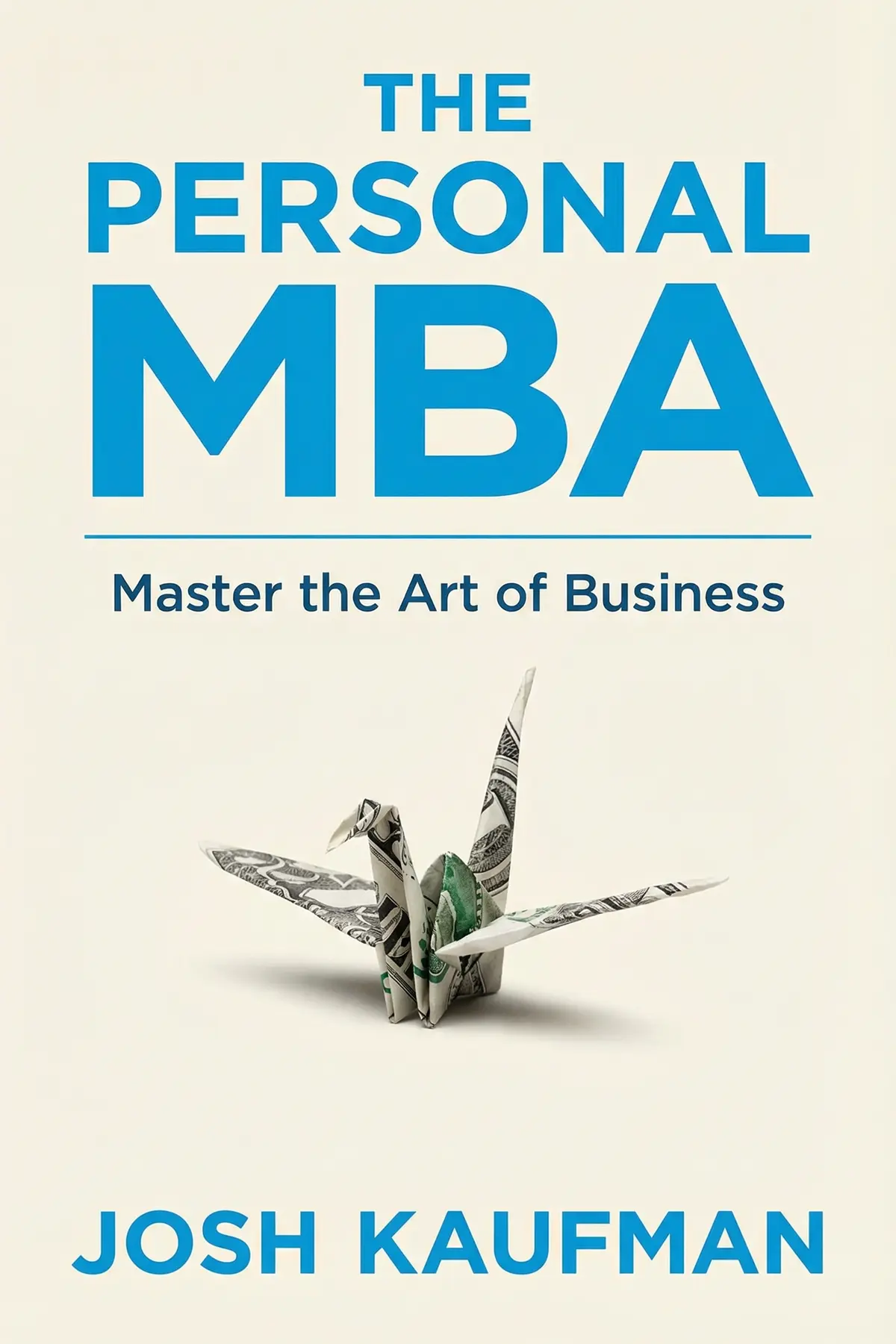
The Personal MBA: Master the Art of Business
Josh Kaufman
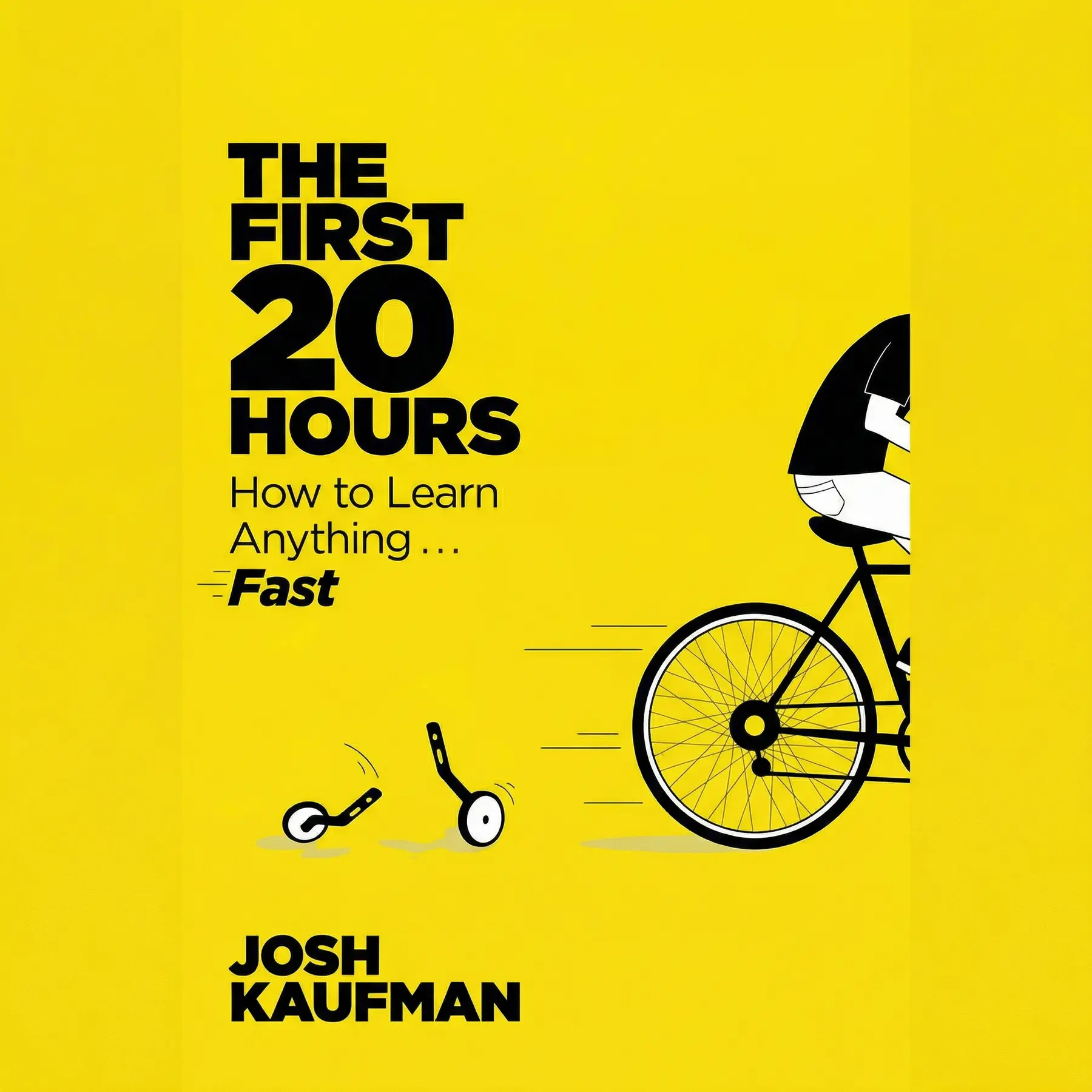
Josh Kaufman presents a strategic framework for bypassing the frustration of being a beginner. Learn how to reach functional proficiency in any new skill by dedicating just twenty focused hours to deliberate practice.
1 min 54 sec
Have you ever looked at someone playing a guitar with effortless grace, or heard a friend navigate a conversation in a foreign language, and felt a pang of regret? Most of us carry a list of things we’ve always wanted to learn. Maybe it’s a sport, a technical skill like coding, or a creative outlet like painting. But for many, that list remains a collection of dreams rather than realities. We tell ourselves that we simply don’t have the time, or that we missed the window of opportunity when we were younger and our brains were more like sponges.
We often fall into the trap of believing that unless we can commit thousands of hours to becoming a world-class expert, there is no point in starting at all. This is where many people get stuck. They see the mountain of mastery and decide it’s too high to even begin the climb. But what if the goal wasn’t to be the next virtuoso, but simply to be good enough to enjoy yourself? What if you could bridge the gap between being a total novice and being reasonably competent in a surprisingly short amount of time?
This exploration is about a method called rapid skill acquisition. It’s a way to break down the daunting walls of the unknown and build a solid foundation in any field in just twenty hours of focused practice. That’s less than an hour a day for a single month. In the following discussion, we will walk through a systematic approach to learning that prioritizes efficiency and practical results. We’ll look at how to choose your battles, how to strip away the distractions that stall your progress, and how to navigate the inevitable frustration that comes with being a beginner. By the end, you’ll see that the barrier to entry for most skills isn’t a lack of talent—it’s a lack of a strategy. Let’s dive into how you can start checking those items off your bucket list, starting today.
1 min 52 sec
Discover how twenty hours of focused effort can take you from total confusion to a functional level of skill without requiring a lifetime of study.
1 min 43 sec
Learn why narrowing your focus to a single, high-interest skill is the key to maintaining the motivation required for rapid growth.
1 min 43 sec
Success begins with defining what ‘good enough’ looks like and deconstructing a large skill into its most vital components.
1 min 38 sec
Efficiency requires having the right tools ready and proactively removing the physical and emotional barriers that hinder your progress.
1 min 43 sec
Discover how to carve out time in a busy schedule and set up rapid feedback loops to correct mistakes in real-time.
2 min 02 sec
Success in the early stages of learning comes from practicing in short, intense bursts while prioritizing the number of repetitions over the quality of the output.
1 min 33 sec
The journey of acquiring a new skill doesn’t have to be a lifelong slog or a source of perpetual ‘someday’ guilt. As we’ve explored, the distance between being a novice and being functional is much shorter than most people realize. By applying a structured approach—choosing a single focus, deconstructing the skill, preparing your environment, and pushing through the initial frustration with high-frequency practice—you can unlock a world of new abilities in just twenty hours.
The philosophy here is a practical one: don’t let the quest for mastery stop you from achieving competence. You don’t need to be the best in the world to find joy, utility, and satisfaction in a new pursuit. Whether you want to learn to code, pick up a new instrument, or master a new sport, the blueprint is the same. It starts with a simple commitment to put in the time and a willingness to be ‘bad’ at something until you aren’t anymore.
As a final step, consider keeping a simple logbook of your time. For the next few days, just track where your hours go. You’ll likely find pockets of time that are currently being ‘leaked’ into activities that don’t actually bring you fulfillment. If you can reclaim just sixty minutes of that time each day, you are less than a month away from a brand-new skill. The only thing standing between you and the person you want to become is those first twenty hours. Why not start the first one today?
We often abandon new hobbies or professional skills because the initial learning curve feels insurmountable. This guide explores a systematic approach to overcoming that "frustration barrier" and gaining competence in record time. It breaks down a methodology centered on ten core principles, ranging from the deconstruction of complex tasks to the removal of environmental distractions. The core promise is that you do not need years of dedicated study to enjoy or effectively use a new skill. By focusing on the most critical sub-skills and committing to a mere twenty hours of focused, deliberate effort, you can move from complete confusion to respectable performance. Whether your goal is to play a musical instrument, pick up a new language, or master a complex game, these insights provide a roadmap to stop procrastinating and start achieving tangible results.
Josh Kaufman is an independent researcher who focuses on topics including business, entrepreneurship, productivity, and behavioral psychology. He is recognized as one of the top business authors by Amazon. His first book, The Personal MBA: Master the Art of Business, earned bestseller status and established his reputation for making complex professional concepts accessible to a wide audience.
Josh Kaufman
Listeners value the guide's 10 principles for quickly learning new skills and find the material clear and accessible. The caliber of the information is praised, with one listener specifically noting the thorough explanations provided for various subjects. Furthermore, listeners consider the concepts engaging and the system well-designed, with one listener observing that it eliminates the excuses people use to procrastinate. However, opinions regarding the content are divided.
Finally got around to reading this, and while I see the "filler" complaints, the case studies actually helped me visualize the process. Kaufman is the self-help guru for the tech-savvy set, and his analytical approach to things like coding a web app really resonated with me. The book serves as a perfect companion to his "Personal MBA" because it moves from business theory to personal execution. I loved the section on the ukulele; it proved that you can have fun with a skill almost immediately if you focus on the right chords. Not gonna lie, I was skeptical about the 20-hour claim, but the logic of deliberate, focused practice is hard to argue with. It’s an inspiring read that makes daunting tasks feel incredibly approachable.
Show moreThe core message here is undeniably powerful: you don't need 10,000 hours to become reasonably competent. Josh Kaufman breaks down rapid skill acquisition into ten straightforward principles that anyone can follow. I specifically liked the emphasis on deconstructing a skill into smaller parts before starting. However, while the first section is tight and actionable, the rest of the book feels like a travelogue of the author’s hobbies. Reading about his journey with the ukulele or windsurfing was fun, but it sometimes felt like filler. To be fair, seeing the principles applied to real-world tasks helps visualize the process. It’s a quick read, and if you’re looking to kill the excuses holding you back from a new project, this provides a solid roadmap.
Show morePicked this up on a whim after seeing Kaufman’s TED talk and found it quite enlightening. The chapter on touch-typing and the Colemak keyboard was particularly fascinating because it shows the mental strain of rewiring your brain. I had never considered the importance of practicing right before sleep to maximize memory retention through REM cycles. The book is written in a very clear, accessible style that doesn't get bogged down in too much academic jargon. While some chapters like the one on Go or programming might be too technical for some, they serve as proof of concept. To be honest, I’ve already started applying the 20-hour rule to my guitar practice. It has significantly lowered the initial frustration for me.
Show moreAfter hearing about the 10 principles of rapid skill acquisition, I expected something much drier and more academic. Instead, Kaufman delivers a very straightforward and encouraging guide that removes the intimidation factor from new skills. The focus on the "first 20 hours" is brilliant because it sets a manageable goal for anyone prone to procrastination. I particularly appreciated the advice on eliminating distractions in your environment to foster deep work. While some of the case studies, like the one on the game of Go, felt a bit lengthy, they illustrate the principles well. It’s a well-thought-out system that focuses on getting to a "good enough" level quickly. I’d recommend it to anyone who feels stuck in the "I wish I knew how to" phase of life.
Show moreNot what I expected initially, as I thought it would be more of a scientific deep-dive into cognitive psychology. Instead, it’s a very practical, hands-on report of one man’s journey to learn six diverse skills. Some chapters, especially the technical ones on programming, are complicated and might be worth skipping if that's not your thing. But the overarching message—that the barrier to entry is usually emotional rather than intellectual—is spot on. I’ve always wanted to learn a new language, and this book gave me the nudge to stop researching and start doing. It’s not a perfect book by any means, and some of the tips are fairly obvious, but the structure it provides is undeniably helpful for getting past the initial frustration of being a beginner.
Show moreWhy does a book about rapid learning spend so much time discussing the history of Yoga? While the methodology of removing barriers and deliberate practice is sound, it often feels buried under mountains of personal anecdotes. I felt like I was reading a dictionary for a particular skill rather than a guide on how to acquire it myself. The author’s writing is clear, but the structure is uneven. If you take the core 10 principles and apply them, you’ll get value, but the surrounding material is hit-or-miss. It’s an okay resource if you can filter out the fluff. To be fair, the first section on deconstruction is genuinely useful for beginners who don't know where to start.
Show moreAs a chronic hobby-hopper, I found the first few chapters on deconstruction and barrier removal to be pure gold. The idea of "making time" instead of "having time" is a mindset shift I desperately needed. Kaufman's ten principles of effective learning are common sense, but having them organized in a check-list format is helpful. However, the book loses steam once it dives into the specific case studies like windsurfing. I was hoping for more psychological insights similar to "The Art of Learning" by Josh Waitzkin, but this is much more pragmatic and surface-level. Truth is, the middle sections are hit-or-miss depending on your interest in the author's specific hobbies. It’s a decent read that offers a solid framework for beginners.
Show moreEver wonder why you quit every new thing you start within a week? This book suggests it’s because you haven't properly deconstructed the skill into its most vital sub-components. Kaufman’s approach is logical: find the 20% of sub-skills that give you 80% of the results. Personally, I found the 10 principles of effective learning more useful than the specific "rapid" acquisition rules. The author’s writing is clean and he seems like a guy who just genuinely loves to learn. That said, I do agree with critics who say the book is a bit bloated with personal filler. If you’ve read Tim Ferriss’s "The 4-Hour Chef," a lot of this will feel like familiar territory. It’s a decent entry-level guide for someone new to the self-improvement genre.
Show moreTruth is, the value you get from this book depends entirely on whether you actually apply the 20-hour rule. The methodology is clearly explained in the early chapters, covering everything from pre-commitment to fast feedback loops. It’s a quick, light read that doesn’t take itself too seriously, which I appreciated. However, the middle sections describing the author's personal projects can feel like a bit of a slog if you aren't interested in those specific topics. I found the yoga chapter particularly repetitive, as it felt more like a history lesson than a skill-building guide. Still, the core concept of putting in 20 hours of concentrated effort is a worthwhile takeaway. It's a solid self-help book that provides a useful, if simple, framework.
Show moreLook, the actual "method" part of this book is basically a long blog post padded out to reach a certain page count. You get the four major steps—deconstruct, learn, remove barriers, and practice—and then you get hundreds of pages of the author’s personal diary. Does a reasonably intelligent person really need to read twenty pages on the origins of yoga to understand skill acquisition? I'll wager you won't even need two hours to realize that the core content is quite thin. It feels like a missed opportunity to dive deeper into the science of the brain. Instead, we get a surface-level look at things like web programming that won't interest anyone not already in that field. It's not a total waste, but it's far from essential.
Show moreAUDIO SUMMARY AVAILABLE
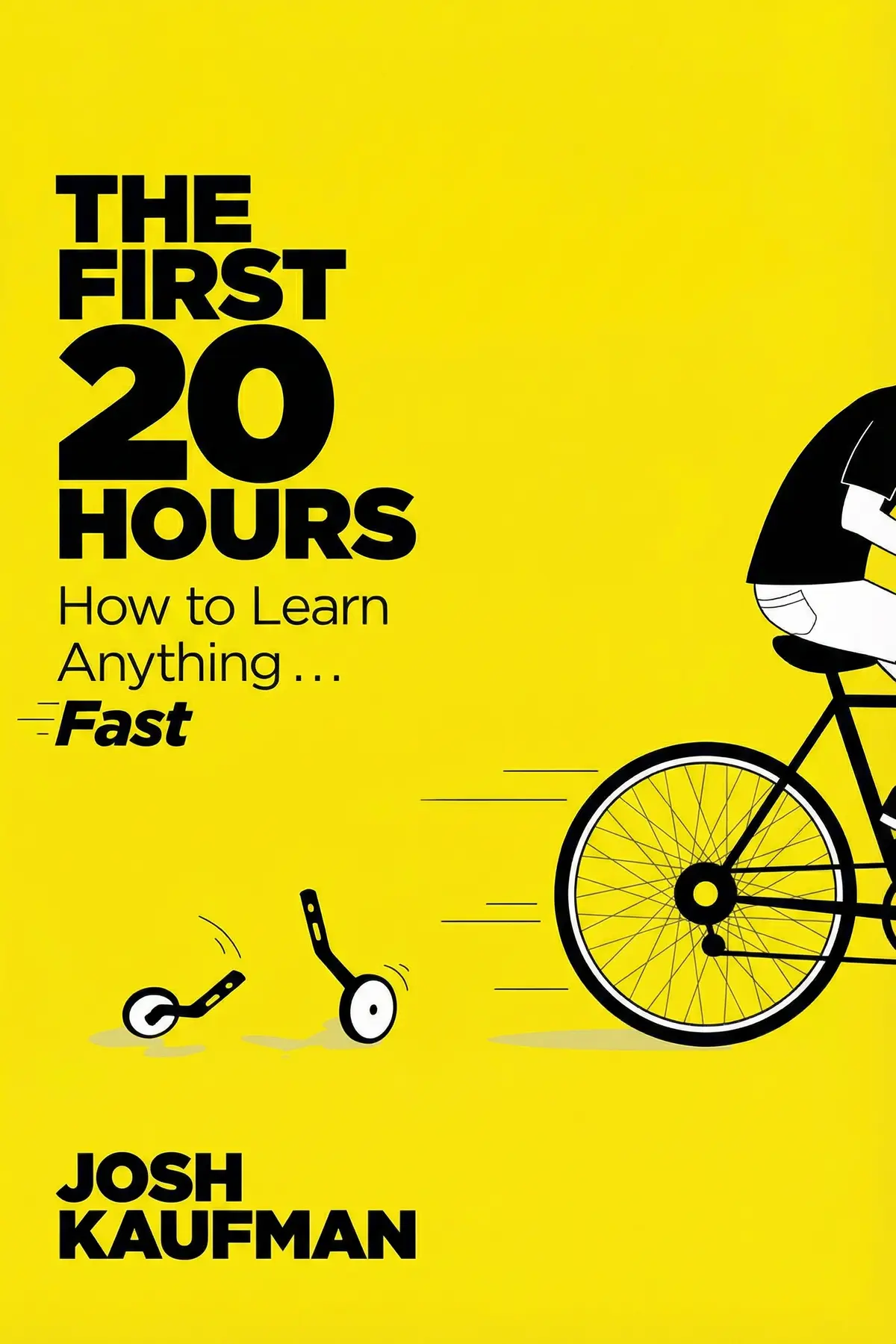
Get the key ideas from The First 20 Hours by Josh Kaufman, plus 5,000+ more titles in English and Thai.