
A Biography of Loneliness: The History of an Emotion
Fay Bound Alberti
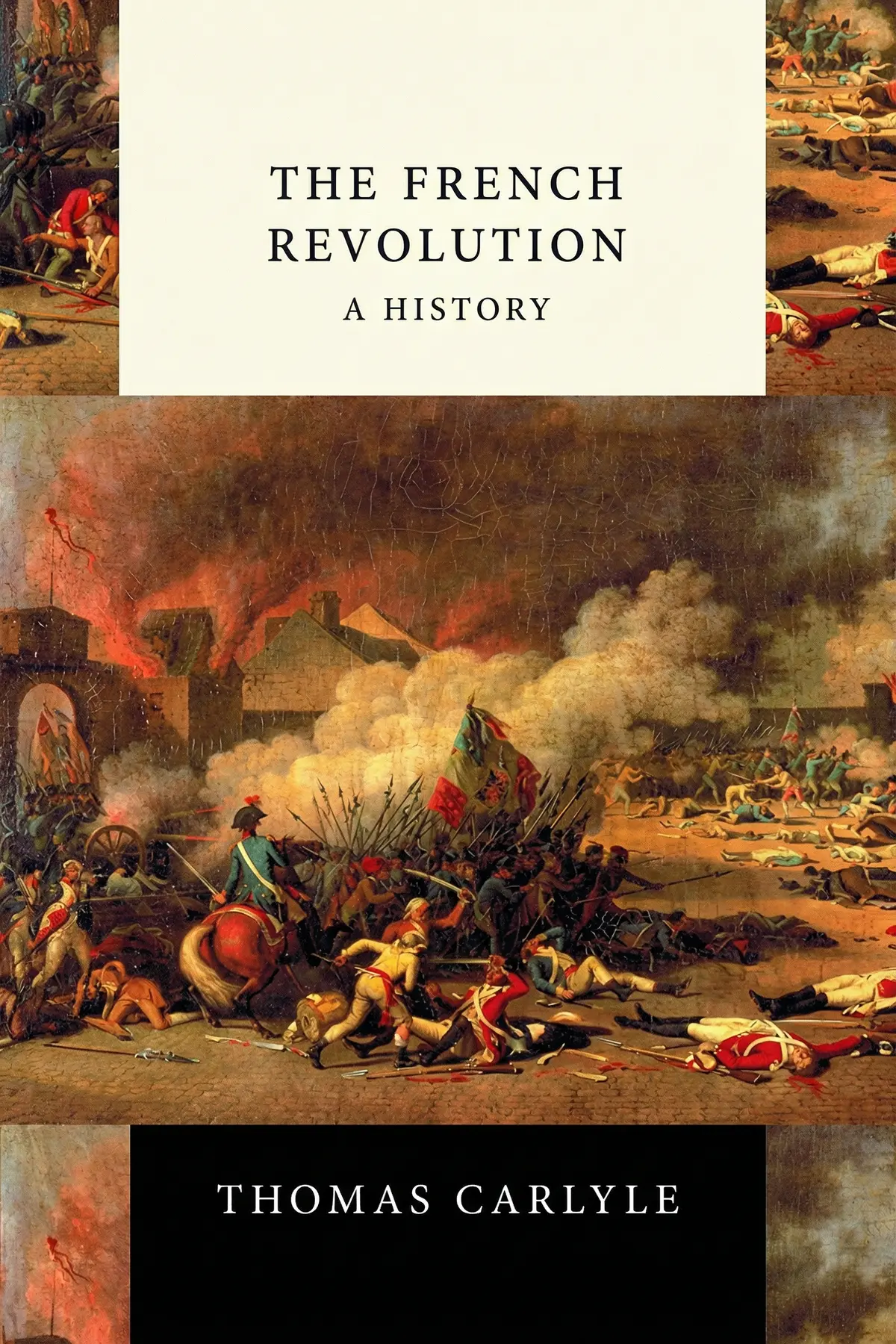
Thomas Carlyle’s epic retelling of the French Revolution reimagines historical facts as a dramatic, moral drama, tracing the descent from absolute monarchy through blood-soaked chaos to the rise of military order.
1 min 36 sec
Step back into the soot-stained streets of late eighteenth-century Paris. Imagine a city where the air is thick not just with the smell of woodsmoke and bakeries, but with a palpable, electric tension. This isn’t a dry history lesson or a collection of dusty archives; it is a front-row seat to one of the most explosive periods in human history. In Thomas Carlyle’s vision, the French Revolution wasn’t just a political reshuffling or a change in government. It was a moral thunderstorm—a massive, inevitable reckoning for a society that had allowed its soul to rot from within.
Carlyle, writing in the mid-1800s, didn’t want to just describe the past; he wanted to make you feel the heat of the torches and the vibration of the shouting crowds. He saw history as a living, breathing thing, driven by the passions of the masses and the iron will of unique individuals. Through his eyes, we see a France that is literally bursting at the seams. The old world of kings and courtiers, of silken robes and whispered court secrets, is about to be consumed by a fire that the people themselves have lit.
As we journey through this narrative, we will explore the throughline of collapse and rebirth. We will see how a nation’s adoration for its monarch can turn into a cold, murderous indifference. We will watch as the language of the courtroom is replaced by the roar of the guillotine. From the first spark of rebellion at the Bastille to the final, iron-fisted restoration of order under a young general named Napoleon, we are tracing the anatomy of a societal earthquake. This is the story of what happens when the gap between the rulers and the ruled becomes a chasm that only a revolution can bridge.
2 min 33 sec
Discover how the transition from a ‘beloved’ monarch to a despised elite set the stage for total social collapse in a nation starving for both bread and meaning.
2 min 10 sec
Explore the moment when the common people refused to be silenced, turning a bankrupt government’s meeting into a defiant declaration of a new national identity.
2 min 08 sec
Witness the power of the desperate as the women of Paris take the lead, marching through rain and mud to reclaim their king and their future.
2 min 10 sec
Follow the suspenseful and ultimately tragic journey of a royal family attempting to flee their own people, only to find their destiny halted by a single recognition.
2 min 16 sec
Step into the darkest chapter of the Revolution, where a quest for total moral purity turns the nation into a theater of state-sponsored slaughter.
2 min 10 sec
See how the chaotic energy of the masses was finally tamed by a young officer’s cannons, bringing a bloody conclusion to the revolutionary cycle.
1 min 25 sec
The French Revolution, as interpreted by Thomas Carlyle, is a profound meditation on the volatility of human society. The central takeaway is that revolution is not a linear path to a better world, but a chaotic, often self-destructive explosion of pent-up energy. It is a reminder that when a ruling class becomes entirely disconnected from the needs and the spirit of the people, a collapse is not just possible—it is inevitable. Carlyle shows us that the same passion that can tear down a symbol of tyranny like the Bastille can also build a machinery of death like the Reign of Terror.
As we look back on this journey, the lesson is one of balance and moral responsibility. The Revolution succeeded in destroying a corrupt and dying system, but it struggled to build something lasting in its place because it became consumed by vengeance and ideological extremism. It was only when the ‘whiff of grapeshot’ brought an end to the chaos that a new era could truly begin. Carlyle’s history challenges us to consider the price of progress and the terrifying power of the collective will. It asks us to remember that beneath the political slogans and the grand speeches, there are real people driven by the most basic of needs: for food, for dignity, and for a sense of justice that the world actually honors. The story of 1789 is a timeless warning that the structures of our world are only as strong as the moral foundations they are built upon.
This summary explores Thomas Carlyle’s visceral and uniquely cinematic account of the French Revolution. Rather than presenting a dry list of dates and treaties, the narrative captures the explosive energy of a society in collapse. It traces the journey from the decaying court of Louis XV to the final silencing of the Paris mob by Napoleon Bonaparte. Listeners will witness the critical moments that defined the era: the storming of the Bastille, the desperate march of the women to Versailles, the King’s failed escape, and the terrifying peak of the Reign of Terror under Robespierre. The book promises a deep dive into the psychology of the crowd and the moral failures that turn political idealism into a cycle of vengeance and destruction.
Thomas Carlyle was a nineteenth-century Scottish essayist, historian, and philosopher who profoundly influenced Victorian intellectual culture through his innovative writing style and moral vision. Known as the “sage of Chelsea,” his writings established a new approach to historical and social criticism, introducing concepts like the “Great Man theory” of history. In addition to The French Revolution, his major works include On Heroes, Hero-Worship, and the Heroic in History and History of Friedrich II of Prussia.
Listeners consider the prose style to be exceptional and value the work as a worthwhile investment. It is a powerful resource for learning about the French Revolution, with one listener observing how it merges historical events and literature into a fascinating story. Ease of reading gets conflicting reactions, with several listeners finding it particularly difficult to get through. The momentum is praised, as one listener points out how every line throbs with passion and excitement. Views on the narrative's accuracy and overall storytelling are varied.
The energy within these pages is absolutely electric. Carlyle doesn't just record history; he resurrects it with a feverish, almost manic intensity that makes modern textbooks look like dry dust. It is easy to see why Charles Dickens was so captivated by this work while writing A Tale of Two Cities. The prose is admittedly dense, demanding your full attention as it weaves through the chaos of 1789. Truth is, you don't read this book for a simple timeline of events. You read it to feel the pulse of the Parisian mob and the desperation of the monarchy. While the Shakespearean affectations might alienate some, I found the "doom-trumpet" tone perfectly suited to the cataclysmic subject matter. It's a masterpiece of Victorian literature that happens to be about the guillotine and the death of an era.
Show moreWow. This is easily the most unusual history I have ever encountered. Carlyle’s prose doesn't just describe the revolution; it mimics the sheer, unbridled chaos of the era. Every line seems to throb with a mixture of excitement and dread, as if the author himself is standing on a street corner in Paris watching the guillotine fall. The way he handles the death of Louis XV and the rise of the Jacobins is nothing short of epic. Yes, it is incredibly difficult to speed-read this, and the vocabulary is enough to make a dictionary weep. But for those who persevere, the reward is a visceral connection to the past that no modern author can replicate. It’s an investment of time that pays off in pure, terrifying atmosphere and historical weight.
Show moreEvery line throbs with such passion that you almost forget you’re reading a book written nearly two centuries ago. Carlyle's French Revolution is a masterpiece of verbal coinages and high-stakes drama. I loved the way he divided the work into acts, like the Insurrection of Women and the September massacres, giving the whole thing the weight of a Greek tragedy. It is definitely not for the faint of heart or those who want a quick summary. You have to commit to the rhythm of his labyrinthine sentences. If you can get past the initial shock of the style, you’ll find a work that is as much about the human soul as it is about the fall of the Bourbons. It is a stunning blend of history and literature.
Show morePicking this up felt less like opening a history book and more like stepping into a grand, tragic theater production. Carlyle writes with a distinct, "historical present" tense that places you right in the middle of the Insurrection of Women. He paints portraits of people like Marat and Camille Desmoulins with such vivid, gritty detail that they stop being names in a ledger and become breathing men. To be fair, the language is archaic and can be quite a slog if you aren't used to 19th-century stylistic flourishes. There were moments where I had to reread paragraphs three times just to find the main verb. Despite the difficulty, the way he captures the Paper Age dissolving into the Terror is hauntingly beautiful. It’s a rewarding challenge for those who love literature as much as history.
Show moreAs someone who usually prefers modern, data-driven histories, I found this Scottish philosopher's take on the Revolution to be a fascinating anomaly. It is less a recitation of facts and more a philosophical drama. Carlyle’s bias against the Republican principles of Rousseau is obvious, yet his research into the day-to-day movements of the French commoners is surprisingly deep. The book serves as a remarkable historical document of how the British viewed the "Terror" during the mid-1800s. While I wouldn't rely on it as my sole source for accuracy—his portrayal of Danton is a bit overly Herculean—the narrative sweep is undeniable. It's a work that deserves its classic status, even if the prose feels like wading through thick molasses at times. It is excellent value for the money.
Show moreIs this a history book or a sprawling epic poem? Carlyle manages to turn the "Feast of Pikes" into a scene out of Homer. I was struck by the meteoric genius of his descriptions, even when I struggled to keep track of the political factions. The truth is, the book is a bit of a mixed bag; the storytelling is top-tier, but the readability is a genuine hurdle for the modern reader. He has this way of personifying the Revolution as a living, breathing monster that I found incredibly compelling. I did find the lack of clear dates and timelines frustrating, as I often had to check external sources to see exactly where we were in the chronology. Still, it’s a brilliant, fiery mess that any history lover should attempt at least once.
Show moreThe chapter on the Bastille alone is worth the price of admission. It’s written with a "Doom-trumpet" intensity that makes the hair on your arms stand up. While I agree with other reviewers that the prose is often dense and impenetrable, there is a certain magic in Carlyle’s madness. He manages to blend history and literature into a compelling, albeit biased, tale of social grievances and resuscitation. Personally, I think it’s a great resource for anyone who already has a basic grasp of the Revolution and wants to see it through a more poetic lens. Just don't expect a straightforward narrative; this is history told through lightning strikes and thunderclaps. It’s a demanding but ultimately rewarding classic that every serious reader should own.
Show moreAfter hearing so many scholars praise Carlyle, I finally delved into this massive chronicle. Frankly, it was one of the most exhausting reading experiences of my life. The author treats the reader like an insider who already knows every minor figure of the Revolution, tossing out nicknames and obscure references without a second thought. If you are looking for a clear, introductory text, this isn't it. However, the sheer value of the scholarship and the unique British perspective on characters like Robespierre and Danton are undeniable. It feels more like a long-form prose poem than a standard history book. I appreciated the passion, but the labyrinthine sentence structures often left me feeling more confused than enlightened about the actual political shifts of the Third Estate.
Show moreLook, I really tried to love this one because of its massive reputation. There are moments of absolute brilliance, particularly his description of the "squalidest bleared mortal" Jean Paul Marat. However, the incessant use of nicknames and French words that my e-reader couldn't even translate made for a very disjointed experience. It’s a book that requires a lot of cultural effort to enjoy. To be fair, the pacing is excellent during the high-drama scenes of the Terror, and you can tell Carlyle cares deeply about the human cost of these events. I just wish it was written with a bit more clarity for those of us who aren't specialists in 19th-century Scots-British verbiage. It’s a 3-star read that left me feeling more exhausted than educated.
Show moreNot what I expected at all. I wanted to fill the holes in my knowledge regarding the French Revolution, but instead, I got a tortuous journey through metaphors and flowery Romanticism. Carlyle seems more interested in his own clever coinages than in explaining why the Bastille fell. He refers to Maximilien Robespierre as "the seagreen" reformer so often it becomes a distraction, and the lack of basic context for major events is baffling. In my experience, a history book should actually help you understand history, not act as a barrier to it. If you’re an English major, you might love the proto-Joyce experimentation, but for a casual history buff, it’s mostly just a headache. I’ll be looking for something more readable like Tuchman to actually learn the facts.
Show moreFay Bound Alberti
Ben Macintyre
Ron Chernow
Philip Freeman
Michael Axworthy
Tom Standage
Ishmael Beah
AUDIO SUMMARY AVAILABLE
Get the key ideas from The French Revolution by Thomas Carlyle, plus 5,000+ more titles in English and Thai.







