
25 min 57 sec
The Future Is History: How Totalitarianism Reclaimed Russia
By Masha Gessen
Explore the tragic reversal of Russian democracy through the eyes of those who lived it. This summary traces the nation’s journey from Soviet collapse back to the grip of modern totalitarianism.
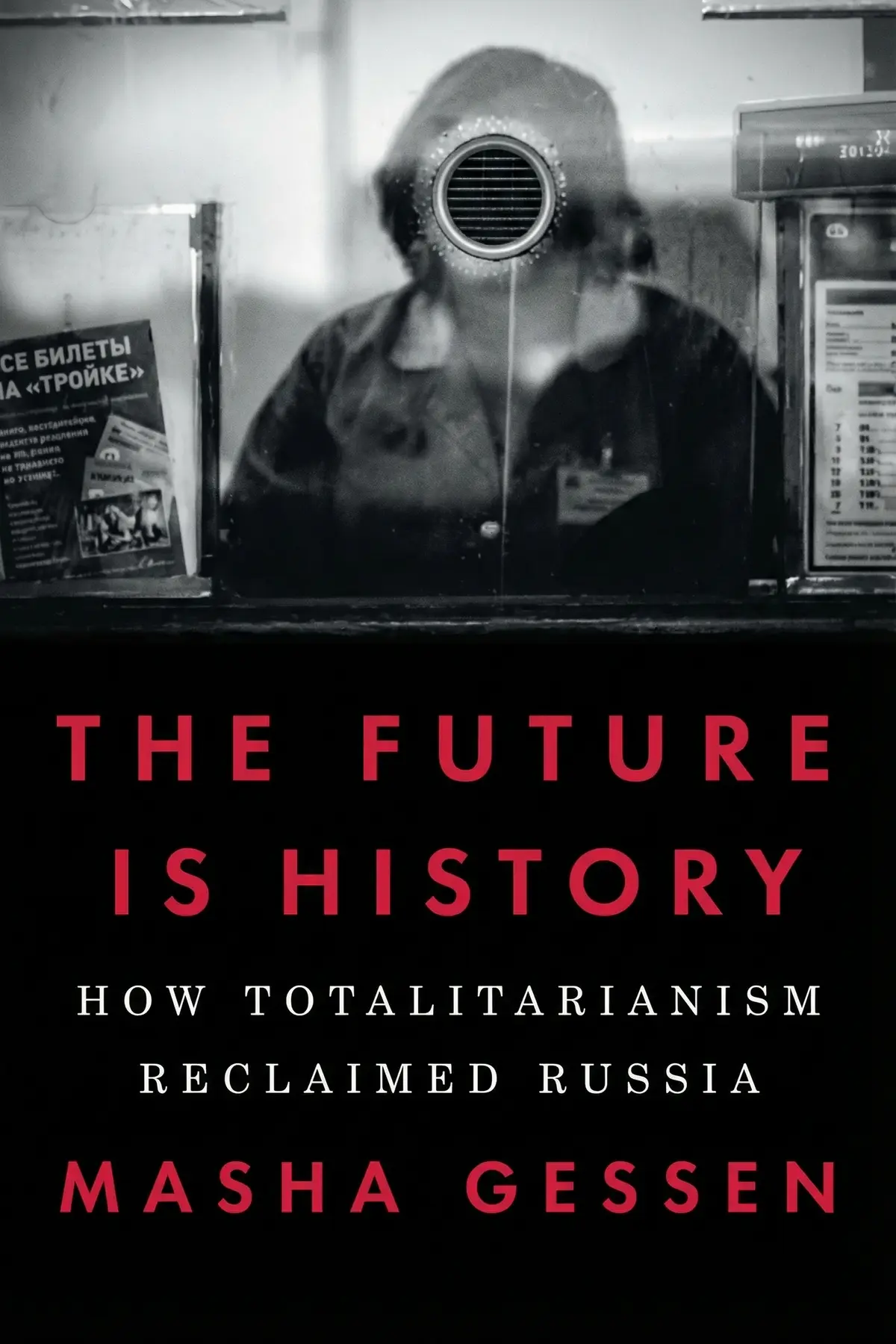
Table of Content
1. Introduction
1 min 51 sec
Have you ever wondered if societies are truly capable of learning from their own past, or if they are perpetually caught in a cycle of repeating the same mistakes? It is a question that haunts the study of history. We often look back at the rise of dictatorships with a sense of distance, believing that modern progress has somehow immunized us against the return of the absolute ruler. But the story of modern Russia serves as a startling and sobering counter-argument. It is a narrative of a nation that seemingly broke the chains of a decades-long totalitarian regime, only to find itself, just a few decades later, walking back into the embrace of a similar system.
In the pages ahead, we will explore the internal mechanisms of this shift. This isn’t just a story about politicians in high offices; it is a story about the psychological and sociological fabric of a country. We will see how the absence of self-reflection and the lack of social sciences during the Soviet era left a massive void in the Russian consciousness. When the Soviet Union finally collapsed, the people were left with a freedom they hadn’t been trained to use, leading to a period of intense trauma and uncertainty.
What this really means is that the ‘stability’ promised by a strongman like Vladimir Putin wasn’t just a political choice; for many, it felt like a psychological necessity. Through the experiences of individuals who lived through these shifts—from psychologists to activists—we will trace the journey from the hopeful reforms of the 1980s to the state-sanctioned crackdowns of the 21st century. We will see how a nation’s history can be suppressed, manipulated, and eventually used to reclaim a future that looks remarkably like the past. This journey through the Russian experience offers a deep look into the contradictions of a society struggling to find its footing in a post-Soviet world, and why the promise of order so often trumps the messiness of democracy.
2. The Intellectual Vacuum of the Soviet Era
2 min 22 sec
Discover how the suppression of social sciences created a society that lacked the psychological tools to understand its own identity during a time of radical change.
3. The Frustrated Hopes of Perestroika
2 min 20 sec
Explore the internal struggles of the reformers who tried to change the Soviet system, only to find themselves blocked by corruption and a lack of clear data.
4. The Psychological Toll of Sudden Freedom
2 min 05 sec
Learn why the collapse of the Soviet Union led to a national identity crisis and why some people began to fear freedom more than they feared the state.
5. A Nation Divided by New Walls of Wealth
2 min 11 sec
Observe the stark and often brutal reality of class stratification in post-Soviet Russia, where some found riches while others were left in desperate poverty.
6. The Sedating Power of Soviet Nostalgia
2 min 22 sec
Discover how a popular movie and the suppression of historical atrocities helped a traumatized public find comfort in a romanticized version of the past.
7. The Rise of the Strongman in a Time of Terror
2 min 10 sec
Learn how a series of national tragedies and the promise of ‘steely determination’ allowed an obscure former KGB officer to capture the Russian imagination.
8. The Systematic Dismantling of Liberty
2 min 12 sec
Observe how the new regime began to quietly and efficiently roll back the reforms of the past, using the media and administrative power to consolidate control.
9. The Resurgence of the Autocratic Mindset
2 min 05 sec
Discover the troubling trend of how the Russian public began to equate greatness with raw power, leading to a rehabilitation of figures like Josef Stalin.
10. The Creation of Internal Enemies
2 min 15 sec
Examine how the Kremlin turned to social issues, particularly anti-LGBTQ+ rhetoric, as a tool to distract the public and consolidate conservative support.
11. The Return of Fear and the National Death Drive
2 min 16 sec
Explore the chilling final stages of Russia’s descent back into totalitarianism, marked by state-sanctioned violence and a pervasive sense of hopelessness.
12. Conclusion
1 min 48 sec
The journey of Russia over the last forty years is a powerful and tragic illustration of how fragile democracy can be when it is not supported by a deep understanding of history and a robust civil society. We have seen how the intellectual void of the Soviet era left a population without the psychological tools to navigate the sudden and traumatic freedom of the 1990s. The chaos and economic disparity of that decade created a deep-seated longing for order, which Vladimir Putin expertly exploited by offering a promise of stability through authoritarian control.
What this narrative truly reveals is that history is not just a list of dates and events; it is a living force that shapes the collective psyche of a nation. When a society is unable to confront its own atrocities and process its own trauma, it becomes vulnerable to those who would rewrite that history for their own ends. The systematic dismantling of rights, the consolidation of media, and the creation of internal enemies are all part of a familiar playbook that has been used to reclaim the future for a new form of totalitarianism.
The story of individuals like Lyosha, Masha, and Marina Arutyunyan shows us the human cost of these political shifts. It reminds us that behind the grand narratives of geopolitics are real lives that are shattered by the return of fear and the loss of liberty. As we look at the Russia of today, the actionable takeaway is clear: the defense of democracy requires more than just fair elections; it requires a commitment to historical truth, the protection of individual identity, and a constant vigilance against the lure of the ‘strongman’ who promises stability at the cost of the soul of the nation. The future does not have to be history, but only if we have the courage to remember the past for what it truly was.
About this book
What is this book about?
The Future Is History examines the complex and often painful transition of Russia over the last four decades. It moves from the hopeful but chaotic reforms of the late 1980s through the economic devastation of the 1990s and finally into the consolidation of power under Vladimir Putin. The book follows several individuals—activists, academics, and ordinary citizens—to illustrate how a lack of historical self-reflection allowed an old form of authoritarianism to return under a new guise. The promise of this narrative is to explain the 'why' behind Russia’s current political landscape. It delves into the psychological and sociological voids left by the Soviet Union, showing how a population unprepared for the burdens of freedom eventually traded liberty for a promise of stability. By tracing the rise of state-sponsored homophobia and the systematic dismantling of democratic institutions, it reveals how the nation’s future became a mirror of its oppressive past.
Book Information
About the Author
Masha Gessen
Masha Gessen is an esteemed journalist living in New York City. Her writing has been featured in the New Yorker and the New York Review of Books. She is also the author of The Man Without a Face: The Unlikely Rise of Vladimir Putin.
Ratings & Reviews
Ratings at a glance
What people think
Listeners find this account both engrossing and thoroughly researched, celebrating the expert fusion of individual experiences and a high-impact narrative. Additionally, the writing is considered exceptional, with listeners regarding it as a definitive piece on modern Russian political history; one listener mentions how it clarifies the present-day political landscape in Russia. The book is also praised for its perceptiveness, as one listener notes its value in explaining the Soviet psyche. However, perspectives on the sociological components are divided, with some valuing the psychological examination while others perceive it as being too much.
Top reviews
Bond
Wow, this was a heavy hitter. I’ve read plenty of history books that focus on dates and treaties, but Gessen focuses on the internal landscape of a people. The way she interweaves the lives of Zhanna, Lyosha, and others creates this tapestry of a society that tried to breathe and then slowly suffocated again. It’s a master work of contemporary political history. You see the hope of the 90s evaporate in real-time. The writing is brilliant, pulsing with a kind of controlled energy that keeps you turning pages even when the subject matter gets incredibly dark. It’s heartbreaking to see how the 'Homo Sovieticus' mindset was revitalized to serve a new kind of czar. Truly a staggering achievement that packs a massive punch.
Show morePot
Picked this up after seeing Gessen on several news programs and I'm glad I did. This book is a revelation. It explains the 'why' behind Putin’s popularity in a way that most journalists miss. It’s not just about oil prices or power; it’s about a collective psychological trauma that was never healed. The chapters on the Orange Revolution and the encroachment on Crimea are particularly prescient given everything happening today. Gessen’s research is impeccable. She manages to balance the grand narrative of history with the small, mundane details of daily life that make the stories feel real. It’s a dense read, nearly 500 pages, but the pacing is more like a novel than a textbook. Absolutely essential reading for the 21st century.
Show moreWararat
The way Gessen weaves the concept of 'Homo Sovieticus' into the narrative is nothing short of brilliant. This isn't just a book about Russia; it's a book about how totalitarianism reclaims its lost territory. She follows the children of the elites and the activists, showing how their dreams were systematically dismantled by the new regime. The psychological depth here is staggering. You aren't just reading about events; you're feeling the slow, crushing weight of a society closing in on itself. It’s a masterclass in narrative non-fiction. I finished this feeling enlightened but also deeply unsettled. It’s a terrifyingly applicable playbook for how absolute power is formed. If you have any interest in how democracies die, you need to read this book immediately.
Show moreKwan
Finally finished this doorstopper and I am still reeling. Gessen is an artful researcher who manages to turn complex sociology into a compelling, human story. I particularly appreciated the focus on Aleksandr Dugin and the intellectual architects of the modern Russian state—it’s fascinating and frightening stuff. The book does a great job of explaining how the 'Soviet antisemitic machine' and other forms of state-sponsored hate were repurposed for the modern era. The writing is sophisticated and evocative. I’ll be chewing on her theories about 'doublethink' for a long time. It’s one of the most important and prescient books I’ve read in years. Truly a masterpiece of contemporary reporting.
Show morePat
The psychological analysis in 'The Future Is History' is what sets it apart from every other book on the shelf. Gessen doesn't just tell you what happened; she explains how it felt to live through it. She captures that specific brand of Russian fatalism and shows how it was weaponized by the state. The stories of the four young people are heartbreakingly well-told. You see their early idealism slowly give way to the grim reality of a new autocracy. It’s a brilliant, masterful combination of personal stories and political narrative that really packs a punch. I can't recommend this enough for anyone who wants to understand the Soviet mind and how it persists today. A powerful, gut-wrenching read.
Show moreLogan
Gessen doesn’t hold back in this sweeping autopsy of the Russian soul. By following several individuals born as the Soviet Union began to crack, she manages to make dense political theory feel incredibly intimate and urgent. I was particularly struck by the sections on the rise of state-sanctioned homophobia and how it was used to manufacture a new national identity. While some might find the sociological detours a bit thick, they provide necessary context for why the country pivoted back toward totalitarianism. It isn't a light read by any means, but it’s essential for anyone trying to understand the current geopolitical landscape. The prose is sharp, almost clinical at times, yet you can feel the underlying grief for a lost future. Frankly, it’s one of the more comprehensive looks at the Putin era I’ve encountered recently.
Show moreManika
Is it possible to capture the soul of a failing state through just seven lives? Gessen certainly tries, and for the most part, she succeeds brilliantly. She uses a sociological lens to explain how Russia returned to its totalitarian roots, focusing on the lack of true democratic institutions and the crushing weight of state propaganda. My only gripe is that the narrative occasionally feels filtered through Gessen’s own very specific, very Western-aligned viewpoint. Some of the psychological analysis of the 'Soviet mind' felt a bit repetitive after a while. However, the human dimension she provides is invaluable. It’s a sympathetic portrait of people living in truly difficult, often terrifying circumstances. Definitely worth the time if you want to go beyond the headlines.
Show moreWittaya
As someone who lived through the transition years in a former Soviet state, I found Gessen's descriptions of the '90s chaos painfully accurate. The transition from the rigid control of the USSR to the 'free market' wasn't the liberation many expected; it was a free-fall. Gessen captures that disorientation perfectly through her subjects. She explores how hopelessness and anxiety are effectively used as tools of state control. The book is very rich in political theory, which I loved, though I can see how it might be a slog for some. The only reason I'm not giving it five stars is that the author's voice sometimes drowns out the protagonists she’s supposed to be highlighting. Still, it’s a masterwork that helps make sense of the current madness.
Show moreMaya
Look, if you want a dry, objective history book, this isn't it. Gessen has a very clear perspective and she isn't afraid to let it show. While I learned a lot about the rise of the current administration, I felt like the book focused too much on a very specific segment of the population—intellectuals and activists in Moscow. What about the millions of people in the provinces who actually support the status quo? Gessen dismisses them a bit too easily for my taste. The sociology was interesting but felt a bit excessive in the middle chapters. I also found the pacing a bit uneven toward the end. It's a good book, and the research is definitely there, but I wish it had been a bit more inclusive of different Russian perspectives.
Show morePracha
To be fair, I found the constant negativity exhausting and frankly quite one-sided. Gessen writes with a palpable disdain that colors every single observation, from the architecture of Moscow to the very psyche of the Russian people. While the individual stories are meant to provide a human face to history, they feel cherry-picked to support a very specific, pre-determined agenda about the 'inevitability' of Russian failure. Calling everyone a 'Homo Sovieticus' who is incapable of independent thought feels less like sociology and more like an insult to millions of people. I was hoping for something more nuanced like Svetlana Alexievich’s work, but instead, I got a manifesto of vitriol. If you’re looking for a balanced perspective, look elsewhere. This is just bias on top of bias.
Show moreReaders also enjoyed
Abortion: Our Bodies, Their Lies, and the Truths We Use to
Jessica Valenti
Adults in The Room: My Battle With Europe’s Deep Establishment
Yanis Varoufakis
21 Lessons for the 21st Century
Yuval Noah Harari
A Different Kind of Power: A Memoir
Jacinda Ardern
Age of Anger: A History of the Present
Pankaj Mishra

A History of Iran: Empire of the Mind
Michael Axworthy
AUDIO SUMMARY AVAILABLE
Listen to The Future Is History in 15 minutes
Get the key ideas from The Future Is History by Masha Gessen, plus 5,000+ more titles in English and Thai.
- 5,000+ titles
- Listen as much as you want
- 7-day free trial
- Cancel anytime







