
16 min 55 sec
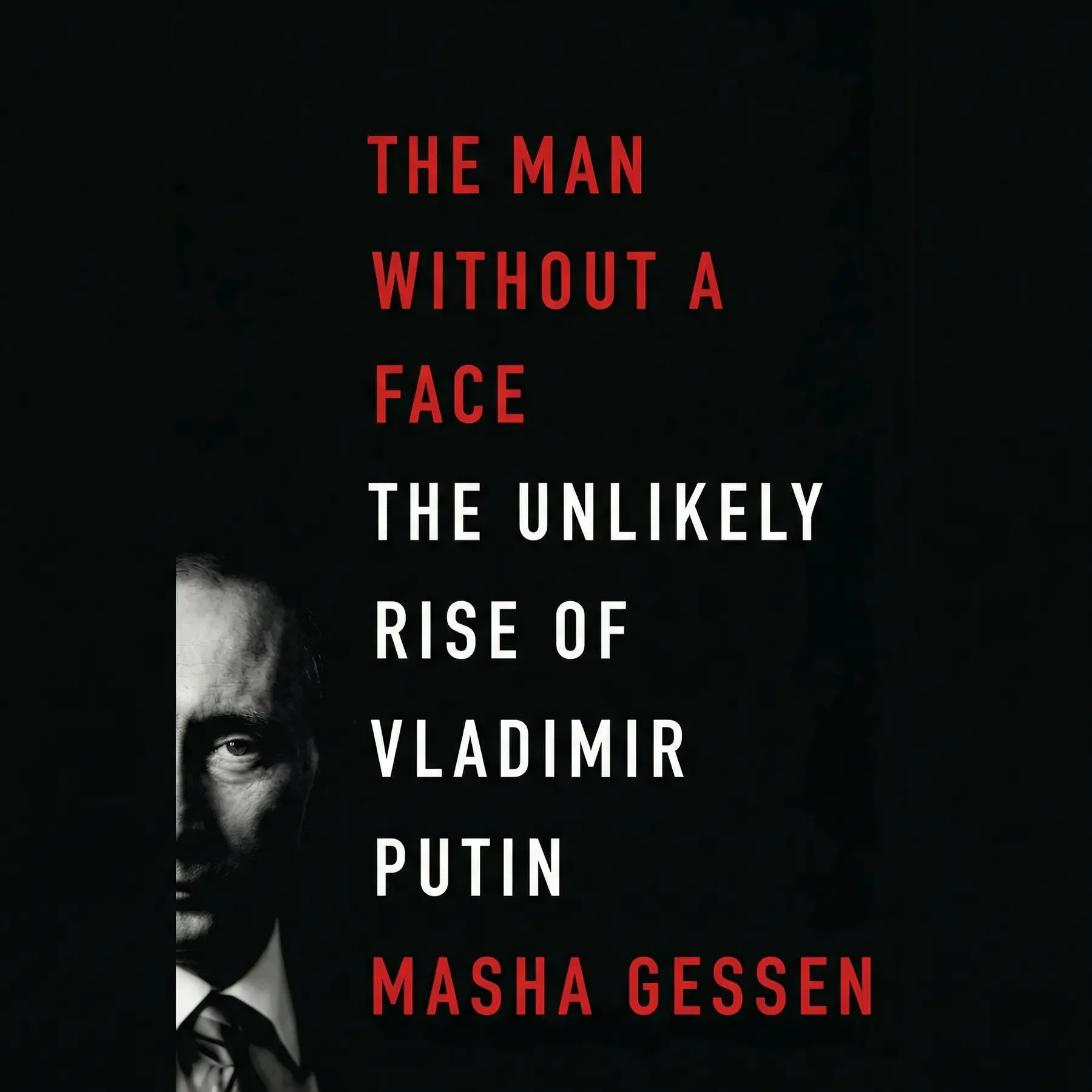
The Man Without A Face: The Unlikely Rise of Vladimir Putin
By Masha Gessen
Explore the shadowy ascent of Vladimir Putin, from a mid-level bureaucrat to Russia’s absolute ruler. This summary examines the strategies of intimidation and control that reshaped a nation and dismantled its democracy.
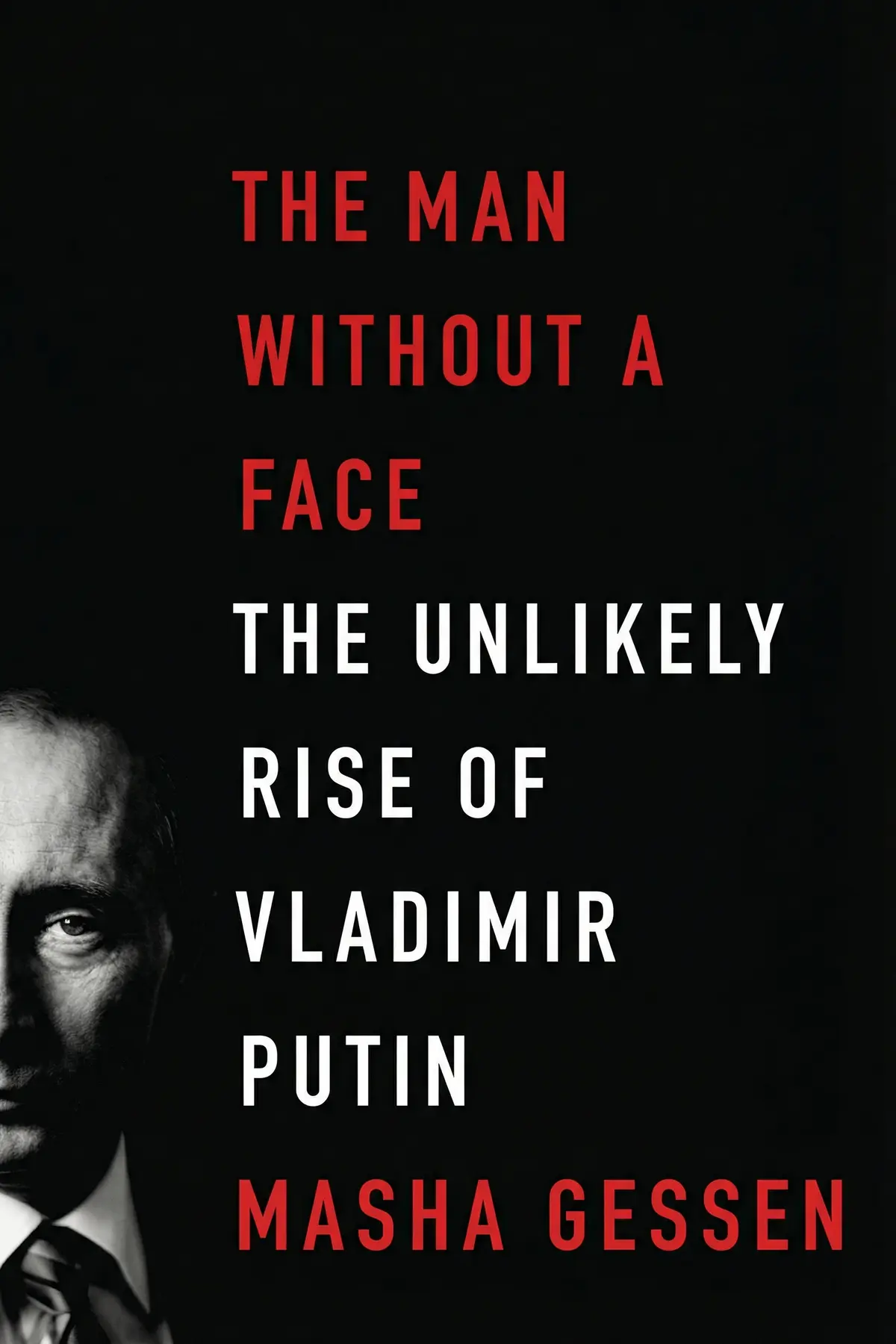
Table of Content
1. Introduction
1 min 33 sec
In the closing days of the twentieth century, the world watched as a frail Boris Yeltsin handed over the keys of the Kremlin to a man few had ever heard of. To the international community and even to most Russians, Vladimir Putin was a blank slate—a mid-level bureaucrat who seemed to lack a distinctive public face or a clear ideology. Some hoped he would be a steady hand to guide Russia toward stability, while others believed he would simply be a puppet for the oligarchs who had thrived after the Soviet collapse. However, as Masha Gessen reveals in this deep dive, that lack of a clear public identity was exactly what allowed Putin to seize control of the state so effectively.
This is the story of how an anonymous paper-pusher transformed himself into the most powerful man in Russia, and perhaps the world. It is a narrative that begins in the bombed-out ruins of Leningrad and winds through the secret corridors of the KGB in East Germany, before culminating in a ruthless consolidation of power in Moscow. Throughout this journey, we will explore the themes of calculated aggression, the strategic use of fear, and the systematic dismantling of dissent. What emerges is not just a biography of a politician, but a case study in how democracy can be hollowed out from the inside. By looking closely at the pivotal moments of his career, we see a pattern of behavior that favors absolute loyalty and state strength over human life and individual liberty. As we navigate this history, keep in mind the central question: how did a man so many underestimated manage to build a system where his power remains virtually unchallenged?
2. A Childhood Forged in Aggression and Ambition
1 min 52 sec
Discover the early years of a young boy in post-war Leningrad, where survival meant fighting back and the secret police represented the ultimate dream.
3. The Frustrations of a KGB Paper-Pusher
1 min 36 sec
Follow Putin to East Germany, where his career in the secret service turned out to be less about espionage and more about bureaucratic boredom.
4. Maneuvering Through the Chaos of the 1990s
1 min 32 sec
See how Putin navigated the volatile transition from communism to capitalism by playing both sides of a failed coup and building his first fortune.
5. The Anointing of a Successor
1 min 25 sec
Understand the unlikely circumstances that led the Kremlin elite to choose an unknown bureaucrat to protect the legacy of President Boris Yeltsin.
6. Consolidating Power Through Crisis and Conflict
1 min 35 sec
Examine the dark turning point of the 1999 apartment bombings and how a climate of fear was used to justify a new era of authoritarianism.
7. The Systematic Dismantling of the Media and Opposition
1 min 20 sec
Witness the fall of Russia’s independent television and the harsh consequences faced by those who dared to criticize the new regime.
8. Taming the Oligarchs and Amassing State Wealth
1 min 35 sec
Explore the high-stakes battle between Putin and the billionaires who once thought they ran Russia, resulting in a new era of state-sponsored greed.
9. The Illusion of Democracy and the Medvedev Shift
1 min 25 sec
Learn about the clever political theater used to bypass constitutional limits and maintain a permanent grip on the Russian government.
10. The Public Mask versus the Private Leader
1 min 31 sec
Uncover the PR machinery behind the ‘strongman’ image and the moments where the facade slipped to reveal a cold and disconnected character.
11. Conclusion
1 min 31 sec
The rise of Vladimir Putin is not a story of an extraordinary individual capturing the imagination of a nation, but rather a story of a system being systematically re-engineered to serve a single man. From his beginnings as an aggressive child in Leningrad to his days as an anonymous bureaucrat, Putin learned that power comes from control, loyalty, and the ability to project force. He took advantage of a fragile moment in Russian history to build a regime that prioritizes state strength over individual rights, using both tragedy and propaganda to solidify his grip on the Kremlin.
The throughline of Masha Gessen’s analysis is the warning that democracy is far more fragile than we often assume. It can be dismantled not just by a sudden coup, but by the slow erosion of a free press, the intimidation of the judiciary, and the strategic use of fear. Putin’s Russia serves as a somber example of how a leader can use the tools of democracy to eventually destroy it.
As an actionable takeaway, this history encourages us to be vigilant consumers of information. Putin’s first act was to seize the television stations, proving that an informed public is the greatest threat to an autocrat. In our own lives, we can honor the importance of truth by seeking out diverse, independent news sources and questioning narratives that seem designed to incite fear rather than provide understanding. By staying engaged and informed, we resist the kind of political apathy that allows ‘men without faces’ to define our future. The story of Putin’s Russia is a reminder that the price of liberty is indeed eternal vigilance.
About this book
What is this book about?
The Man Without A Face offers an unflinching look at the life and political evolution of Vladimir Putin. It traces his trajectory from a scrappy youth in post-war Leningrad to his time as a frustrated KGB officer in East Germany, and eventually his unexpected rise to the presidency. The book argues that Putin’s climb was not a matter of charisma, but of calculated maneuvering within the vacuum left by the collapse of the Soviet Union. Listeners will learn how a relatively anonymous paper-pusher was hand-picked by the Russian elite, only to systematically dismantle the very democratic institutions that allowed his rise. Through a series of tragic events—ranging from apartment bombings to school sieges—Putin consolidated power, silenced his rivals, and amassed immense wealth. The promise of this summary is to reveal the mechanics of modern autocracy and the character of a leader who prioritized state control and personal loyalty above all else, leaving a trail of silenced critics and suppressed freedoms in his wake.
Book Information
About the Author
Masha Gessen
Masha Gessen is a Russian-American journalist and activist who has spent decades reporting on Russian politics and the erosion of democracy. Known for their deep investigative work and personal insight into the Russian political landscape, Gessen provides a unique perspective on the transition from the Soviet era to the current administration.
Ratings & Reviews
Ratings at a glance
What people think
Listeners find this book an exceptional read that offers an extensively researched primer on Vladimir Putin, written in a journalistic style. They characterize it as a gripping, highly engaging narrative, with one listener noting that it helps clarify his underlying motivations. The storytelling receives varied feedback; some deem it a revelation, while others take issue with its perceived self-interest. Listeners value the sensitivity within the text, with one review emphasizing the struggle of courage and suffering for freedom and democracy.
Top reviews
Lincoln
Ever wonder how Russia shifted from the hope of the 1990s to a full-blown kleptocracy? Gessen’s work is a masterclass in connecting the dots between the mysterious apartment bombings and the rise of a new kind of authoritarianism. The way she describes the manipulation of 'The Family' around Yeltsin is absolutely fascinating. I was particularly struck by the tragedy of Beslan and how those events were leveraged to tighten control over the entire country. This isn't just a biography; it’s a warning about how easily democratic institutions can be hollowed out from the inside. It kept me up way too late reading. Highly recommended for the depth of research alone.
Show moreRuangrat
As someone who has always been fascinated by Russian politics, I found this to be an eye-opening and deeply moving piece of work. Gessen’s bravery in writing this while living in Moscow is staggering. The book details the courage of individuals like Mikhail Khodorkovsky and the high price they paid for challenging the status quo. It’s a suspenseful page-turner that illustrates exactly how the free press was strangled in its infancy. The prose is sharp, and the emotional weight of the stories regarding the victims of the regime is something that will stay with me for a long time. It provides essential context for everything we see in the news today. A brilliant, albeit dark, read.
Show moreOn
Gessen delivers a visceral account of the price of dissent in a country where the rule of law has been replaced by the rule of one man. The sections covering the murders of Anna Politkovskaya and Alexander Litvinenko are handled with a grim sensitivity that highlights the stakes of their investigative work. It’s a haunting portrait of a man who seems to have no core beliefs other than the preservation of his own power. The book is written with a sense of urgency that makes it impossible to put down. Even though it was written several years ago, the themes of corruption and the suppression of democracy feel more relevant now than ever before.
Show morePang
It’s rare to find a non-fiction book that reads with the frantic pace of a suspense novel, but Gessen has achieved exactly that. This book isn't just about Putin; it’s about the soul of Russia and the systematic way it was crushed by a new 'thugocracy.' From the handling of the Kursk submarine disaster to the rigged elections, the level of detail is impressive and deeply disturbing. It really helps you understand the mindset of a leader who views any opposition as a personal betrayal. This is a powerful, essential read for anyone who wants to look past the propaganda and see the reality of how the Kremlin operates. A truly stunning piece of journalism.
Show moreKaen
This is a bone-chilling deep dive into the dismantling of Russian democracy over the last few decades. Masha Gessen provides a journalistic account that feels more like a political thriller than a dry history book. You start to see how an obscure, almost invisible bureaucrat managed to consolidate such immense power through a combination of luck and cold calculation. While the narrative is definitely opinionated, the sections regarding the takeover of the media and the systematic destruction of the oligarchs were incredibly enlightening. It really helped me understand the motives behind the Kremlin’s current geopolitical stance. Some parts felt a bit rushed, but the overall impact is undeniable for anyone interested in modern history.
Show moreAndrew
Frankly, it's a bit of a tale of two halves. The first part of the book, which covers Putin's childhood in Leningrad and his early KGB days, relies heavily on words like 'presumably' and 'possibly,' which made me question the factual basis of those specific chapters. However, once Gessen moves into the post-2000 era, the quality of the reporting shifts gears entirely. The analysis of the corruption and the 'thugocracy' that emerged is sharp and terrifyingly well-documented. She paints a picture of a man who isn't necessarily a genius, but someone who knows exactly how to use fear as a tool of the state. It’s a necessary read, even if you have to take the early biographical speculation with a grain of salt.
Show moreIsabelle
The chapter on the St. Petersburg food shortages and the 'meat-deal' was particularly illuminating for me. It shows a side of Putin’s early career that many Westerners aren't aware of—the transition from a mid-level bureaucrat to someone who understood how to divert state resources for personal and political gain. Gessen does a great job of explaining the 'facelessness' that allowed him to be a blank slate for so many different interest groups. My only complaint is that the timeline jumps around a lot, making it difficult to follow the chronological progression of his rise to power. Still, the insight into the FSB’s influence on modern Russian life is worth the price of admission.
Show moreLuckana
Picked this up after hearing Gessen on a podcast, and I have mixed feelings about the final product. On one hand, the details about Garry Kasparov’s failed presidential run and the immense pressure put on any form of opposition are heart-wrenching. You really feel the struggle for freedom that these people endured. On the other hand, the writing style can be quite tedious and the structure is all over the place. One moment we are talking about KGB ideology, and the next we are hearing about the author’s bathroom fixtures. It’s an interesting introduction to the era, but I suspect there are more balanced and better-structured biographies of Putin out there that don't lean so heavily on conjecture.
Show moreSophia
Look, I wanted a rigorous biography of Vladimir Putin, but what I got was mostly a memoir of Masha Gessen’s personal grievances. The book is incredibly self-referential, often spending more time on the author’s daily struggles and her own political activism than on the subject himself. At times, the portrayal of Putin feels less like a political figure and more like a caricature of a Bond villain. There is so much obvious bias that it’s hard to tell where the legitimate journalism ends and the personal dislike begins. While the sections on the seizure of Yukos were interesting, the lack of objectivity throughout the rest of the text makes it hard to trust the author’s conclusions.
Show moreNitaya
Pure speculation passed off as fact. I was immediately put off when the author used the term 'autobiography' to describe a book she admits was written by a group of consultants. That kind of linguistic sloppiness sets the tone for the entire work. Most of the early chapters are just gossip and anecdotal evidence tied together by the author's intense personal hatred for the man. It felt like reading a long-form op-ed rather than a researched biography. If you’re looking for a balanced look at Russian history, keep looking. This is a one-sided polemic that insults the reader's intelligence by presenting guesses as absolute truths. Truly a disappointing and frustrating experience.
Show moreReaders also enjoyed
A River in Darkness: One Man’s Escape from North Korea
Masaji Ishikawa
A Spy Among Friends: Philby and the Great Betrayal
Ben Macintyre
21 Lessons for the 21st Century
Yuval Noah Harari
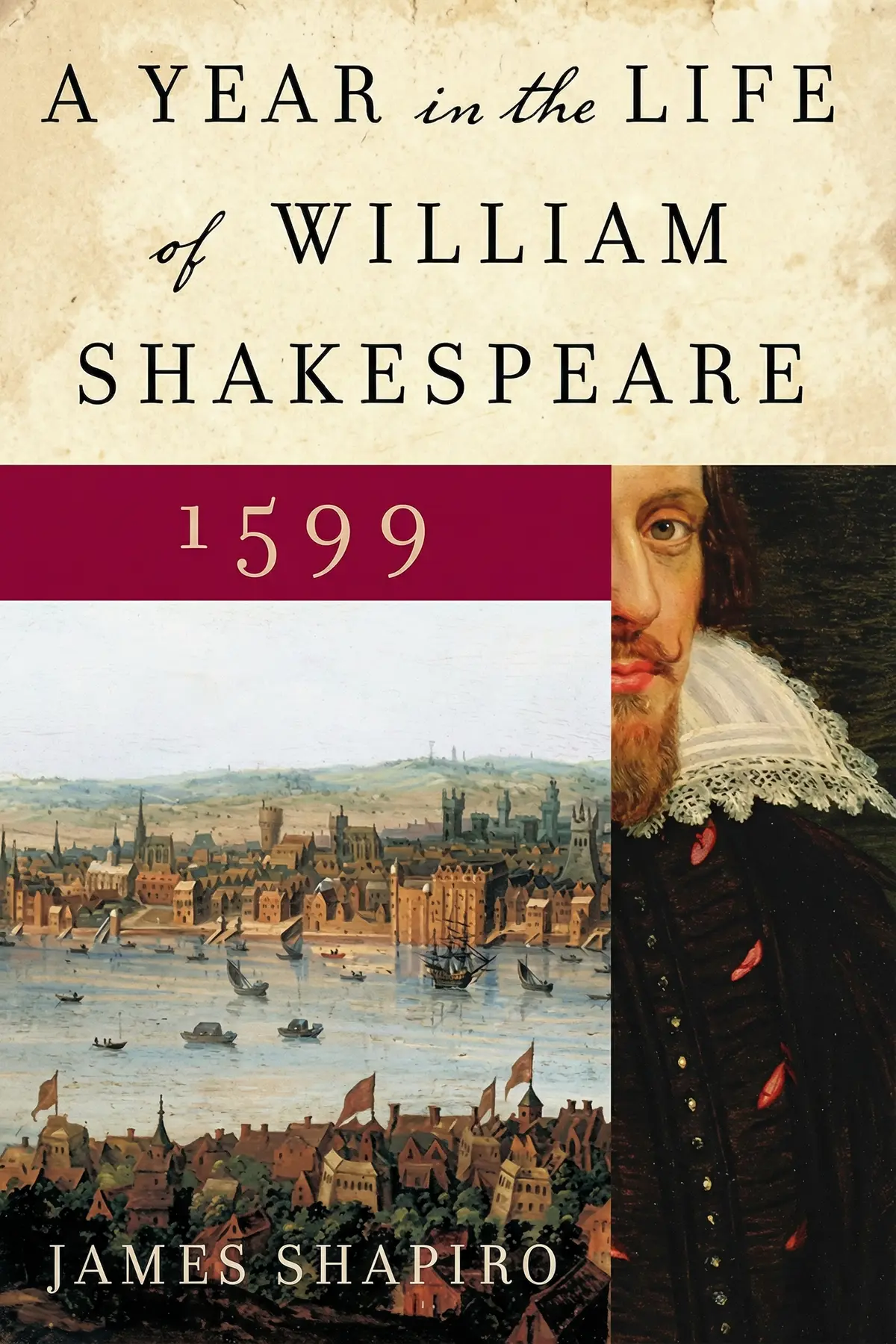
A Year in the Life of William Shakespeare: 1599
James Shapiro
A Theory of Justice
John Rawls

AUDIO SUMMARY AVAILABLE
Listen to The Man Without A Face in 15 minutes
Get the key ideas from The Man Without A Face by Masha Gessen, plus 5,000+ more titles in English and Thai.
- 5,000+ titles
- Listen as much as you want
- 7-day free trial
- Cancel anytime







