

A Biography of Loneliness: The History of an Emotion
Fay Bound Alberti
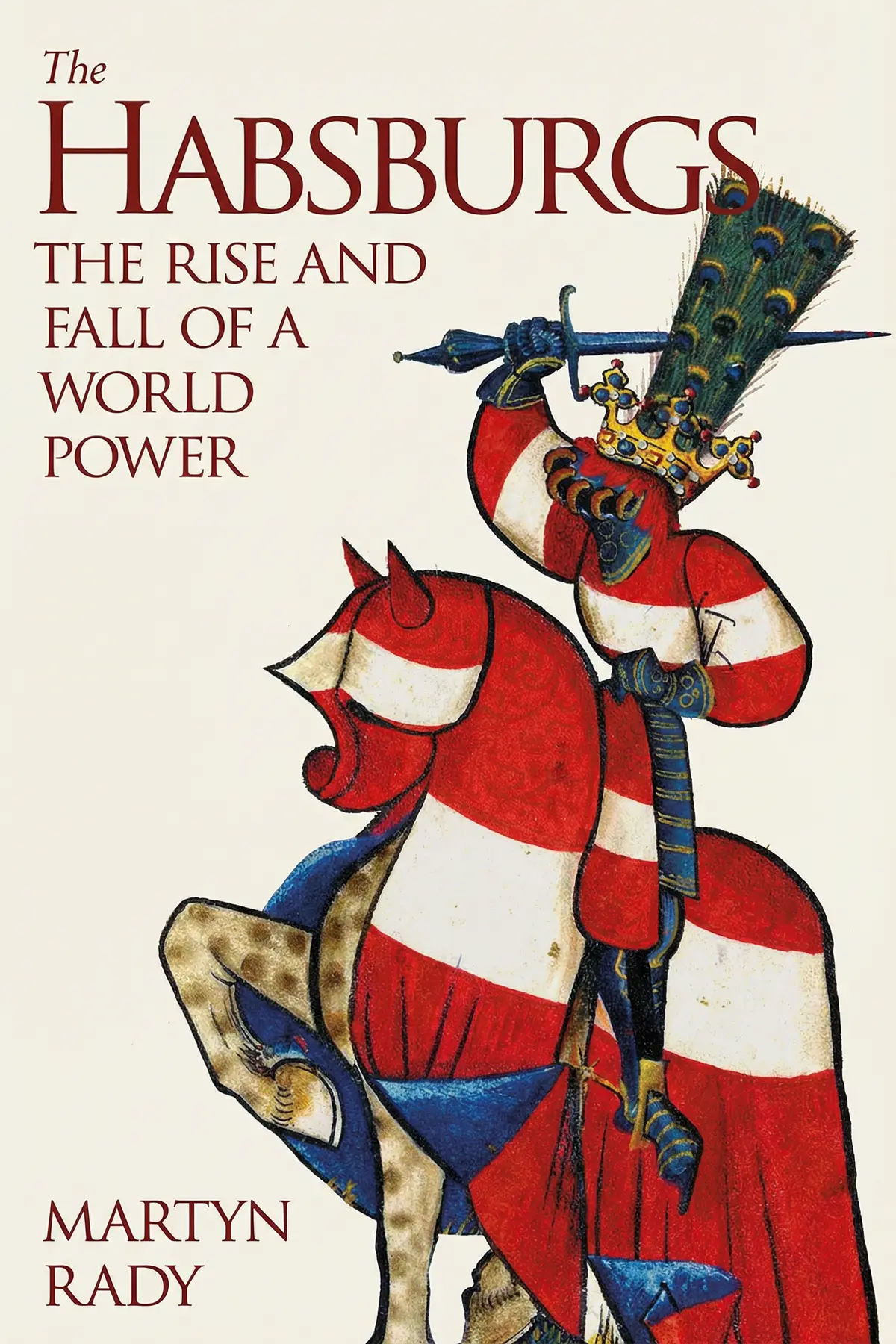
Explore the six-century saga of the House of Habsburg. Discover how this dynasty used strategic marriages to build a global empire, and how that same insularity led to its eventual collapse.
1 min 40 sec
The narrative of the House of Habsburg is an epic that spans over six centuries, dictating the rhythm of European and global history. Imagine a single family tree so vast and influential that its branches reached from the mountains of Switzerland to the silver mines of Peru, and from the courts of Vienna to the ports of the Philippines. For nearly 650 years, this dynasty sat at the center of world events, acting as the primary guardians of Western Christendom and the architects of an empire on which the sun truly never set.
But what makes the Habsburg story truly unique isn’t just the duration of their reign; it’s the method of their conquest. While other royal houses were busy bleeding their treasuries dry to fund massive standing armies and destructive wars of territorial aggression, the Habsburgs realized that a well-placed marriage could be more effective than a thousand cannons. They mastered the art of the strategic union, transforming wedding ceremonies into geopolitical shifts. This philosophy allowed them to accumulate titles and territories across the globe without firing a shot.
However, this focus on keeping power within the family had a darker side. By the dawn of the 20th century, the genetic pool of the dynasty had become dangerously shallow. To understand the gravity of this, consider the pedigree of Archduke Franz Ferdinand. When a researcher examined his lineage, they found that while he should have had thousands of unique ancestors dating back to the 1500s, the reality was a tangled web where the same names appeared over and over again. This summary explores that fascinating contradiction: a family that married its way to the top of the world, only to find that the same insularity would eventually lead to their physical and political undoing.
2 min 26 sec
Discover how a minor Swiss nobleman and a legendary hawk set the stage for a dynasty that would eventually rule the world through compromise and luck.
2 min 23 sec
Explore the era of Maximilian I, where the Habsburgs traded military campaigns for matrimonial alliances, nearly doubling their empire through a single marriage.
2 min 21 sec
Witness the reign of Charles V, the ruler of an empire where the sun never set, and see why the burden of power eventually forced a historic division.
2 min 28 sec
See how the Habsburgs used art, music, and a militant religious identity to survive the devastating Thirty Years’ War and transform Vienna into a cultural capital.
2 min 35 sec
Uncover the strange and tragic physical toll of the family’s inbreeding, from the legendary ‘Habsburg Jaw’ to the health crises that crippled its final leaders.
2 min 53 sec
Witness the final decades of the empire under Franz Joseph, as the forces of modern nationalism finally shattered the world’s most enduring royal house.
1 min 36 sec
The story of the Habsburgs is ultimately a lesson in the rise and fall of absolute power. For over six centuries, this family proved that longevity in politics comes from adaptability, strategic alliances, and a deep commitment to cultural and religious identity. They were the masters of the long game, using the slow accumulation of territories through marriage to build a global presence that rivaled the Roman Empire. They gave the world the splendors of the Baroque era, the reforms of the Enlightenment, and a sense of European unity that preceded the modern era by centuries.
However, their downfall was baked into the very methods they used to succeed. The extreme inbreeding that kept their lands within the family also crippled their genetics, and their commitment to a centralized, multi-ethnic empire could not survive the explosive force of modern nationalism. When the empire finally collapsed in 1918, it marked the end of an era where a single family could claim a divine right to rule over a vast portion of humanity.
As you reflect on this history, consider the throughline of the Habsburg legacy: the idea that greatness is often followed by a period of narrowing focus. Their early success came from reaching out—through marriage and diplomacy—to new lands. Their decline came when they turned inward, focusing so much on preserving their ‘pure’ bloodline that they lost touch with the biological and political realities of the world. It is a powerful reminder that the most enduring empires are those that remain open to change, rather than those that attempt to freeze time through tradition and insularity.
The Habsburgs traces the incredible journey of a family that rose from obscure Swiss beginnings to become the masters of much of the known world. For nearly 650 years, this dynasty shaped the borders, religion, and culture of Europe and the Americas. This summary explores their unique philosophy of expansion—choosing the wedding altar over the battlefield—and the biological consequences that followed. You will witness the heights of the Holy Roman Empire, the division of global territories, and the slow decline under the pressures of nationalism and genetic frailty. It is a story of how a family’s greatest strength eventually became its fatal flaw.
Martyn Rady is the Masaryk Professor of Central European History at University College London. He is an acclaimed authority on the history of the region, having authored several specialized works including The Emperor Charles V and a concise introduction to the Habsburg Empire. His deep scholarship has earned him honorary doctorates from Károli University in Budapest and Lucian Blaga University of Sibiu.
Listeners find this book to be a thorough and captivating primer on one of the most powerful families in history. Though perspectives on the tempo differ—since some listeners believe the broad range sometimes results in a surface-level look at specific monarchs—most enjoy Rady’s evident passion and the intriguing bits he shares about architecture, art, and private family matters. Furthermore, they prize the way the story links hundreds of years of fragmented European history, with one listener commenting that it effectively "stitches up" what they knew about the dynasty's impact. Also, listeners suggest the provided photographs and maps are useful resources for following the intricate Habsburg family tree.
Picked this up on a whim and was immediately sucked in by Rady’s infectious enthusiasm for his subject. This isn't just a dry list of dates and battles; it’s a vibrant exploration of the 'Habsburg idea'—a sense of divine mission that linked the earthly and heavenly realms for nearly a thousand years. I was particularly captivated by the sections on the international Baroque and how the family used architecture as a universal language to project power. Even the darker aspects, like the consequences of perpetual inbreeding and the tragic end of Maximilian in Mexico, are handled with a perfect balance of historical objectivity and narrative flair. It’s rare to find a history book that feels this epic yet remains so readable. If you want to understand how the modern map of Europe was shaped by the legacy of Rome, this is essential reading.
Show moreThe Habsburgs weren't just a family; they were a vision of a universal enterprise rooted in the legacy of Rome, and Rady captures that grandiosity perfectly. What I loved most was his ability to show how the dynasty adapted over time, shifting from medieval landowners to the champions of the Counter-Reformation and eventually the defenders of an aging order against the tides of revolution. The way he connects the 'Habsburg idea' to their collections of art and natural history was particularly enlightening, making it clear that their power was as much about knowledge and culture as it was about territory. Frankly, the book reads like a high-stakes family saga, except every decision has world-altering consequences. It’s an ambitious, sweeping narrative that manages to be both intellectually satisfying and genuinely entertaining.
Show moreWow, what a comprehensive and wildly entertaining ride through European history. Rady somehow manages to 'stitch up' centuries of disparate events into a single narrative that explains how one family basically ran the world for hundreds of years. I loved the focus on how the dynasty wasn't just about territory, but about an almost mystical sense of destiny that combined power and spirituality. The inclusion of maps and photos was a huge plus for keeping the complex family tree straight. Not every chapter is a page-turner—some of the administrative bits get a little dry—but the author’s enthusiasm always pulls you back in. It’s the perfect starting point for anyone who wants to understand how the map of modern Europe came to be, all while enjoying some truly strange stories about royal madness and inbreeding.
Show moreMartyn Rady has managed an incredible feat by condensing centuries of complex European history into a single, manageable volume. Before picking this up, my knowledge of the dynasty was limited to the 'Habsburg jaw' and their ultimate collapse in 1918, but this book successfully stitches together those disparate pieces of information into a cohesive whole. The narrative is something of a gallop, which is understandable given the massive scope, though it does mean we occasionally skim over the more nuanced political strategies of individual rulers. However, the inclusion of fascinating asides—like the bizarre 18th-century vampire panics during Maria Theresa’s reign—kept the tone from becoming too academic. To be fair, the sheer volume of names can be overwhelming, but the provided maps and family trees were indispensable tools for keeping the lineage straight. It is a solid, engaging introduction that left me wanting to dive deeper into specific eras.
Show moreTo be fair, the geographic reach of the Habsburgs is nearly impossible to keep straight without a guide, and Rady proves to be an excellent one. I was impressed by how he balanced the two branches of the family, jumping from the heart of Central Europe to the sun-drenched courts of Spain and even the New World. The book does feel a bit dry when it delves into the minutiae of administrative reform, but it quickly recovers with snippets of personal drama and cultural trivia. Personally, I found the photographs and maps to be the highlight, as they allowed me to visualize the grandeur Rady describes so eloquently. It’s a tall order to cover everything from the 10th century to Otto von Habsburg, and while some transitions feel a bit abrupt, the overall impact is a profound sense of a dynasty that truly believed they were destined to rule the world.
Show moreAs someone who only knew about the dynasty from the start of the First World War, seeing their 10th-century origins was eye-opening. Rady explains the 'Fortinbras-moments'—the family's uncanny ability to show up and claim land just as the previous owners died off—with a dry wit that I really appreciated. The book successfully illustrates how they weren't just German or Austrian, but a truly supranational entity that managed to hold together a patchwork of different languages and identities for centuries. My only real complaint is that the end of the dynasty in 1918 felt like it was over in a flash. I would have loved more detail on the final days of Emperor Karl and the transition to the modern era. Still, for a single-volume history, it covers an incredible amount of ground without ever becoming totally incomprehensible.
Show moreFrankly, Rady's passion for his subject is the real engine of this book. You can tell he is enamored with the sheer scale of the Habsburg enterprise, and that enthusiasm is infectious even when the subject matter turns to duller topics like tax reform or bureaucratic restructuring. I particularly enjoyed the focus on the 'civilizing mission' of the later empire and how they tried to bring Enlightenment ideas to their subjects, often whether they wanted them or not! The book is a bit of a gallop, and I did find myself re-reading certain pages to keep the names straight, but the effort was worth it. It provides a necessary bridge between the medieval world and the modern one, showing how the echoes of this one family still resonate in the architecture and museums of Europe today.
Show moreIs it possible to condense seven centuries of power into one book? Rady certainly tries, but the result is a bit of a rush that left me feeling breathless and occasionally confused. Truth is, while the writing is engaging, the breadth of the subject means individual rulers like Charles V feel more like cameos than fully-realized historical figures. I appreciated the thematic discourses on things like Baroque art and Freemasonry, but these diversions often interrupted the chronological flow just when I was starting to get a handle on the political situation. It serves as a decent overview for beginners, but the superficial treatment of the 1918 dissolution—which is covered in just a handful of pages—was a disappointment for someone interested in the empire’s final days. It’s a helpful starting point, but I wouldn't call it the definitive account.
Show moreAfter hearing so much about the 'Habsburg jaw' and the bizarre levels of inbreeding within the Spanish line, I finally decided to dive into their full history. Rady’s book is definitely a solid introduction, but it has its flaws. The early chapters on the 10th and 11th centuries felt a bit slow and academic, making it hard to stay engaged until the more famous figures like Charles V appeared. I also found the 'thematic' chapters on things like vampirism or Freemasonry to be a bit distracting; while they are 'fun facts,' they sometimes felt like they were included just to spice up a narrative that was growing a bit thin. That said, the final section on the slow-motion car crash of the Austro-Hungarian Empire during WWI was well-written, even if it felt a bit rushed. It’s a decent 'middle of the road' history book.
Show moreLook, I wanted to love this, but the pacing is just so wildly inconsistent that it became a chore to finish. One moment the author is giving us fascinating details about 18th-century occultism, and the next he’s sprinting through several decades of complex geopolitical maneuvering in a single paragraph. Trying to cover the entire Habsburg story in 300-odd pages is a mistake; it results in a hybrid style that feels scattershot and often superficial. I frequently lost the thread of who was succeeding whom, especially during the more tangled periods of the Holy Roman Empire. If you already have a deep knowledge of European history, this might be a fun refresher, but as a newcomer, I felt like I was reading a very long Wikipedia entry with a few colorful anecdotes thrown in to keep me awake. It’s a shame because the family's story is so central to history, but this specific volume just didn't work for me.
Show moreFay Bound Alberti

Ben Macintyre
Ron Chernow
Philip Freeman
Michael Axworthy
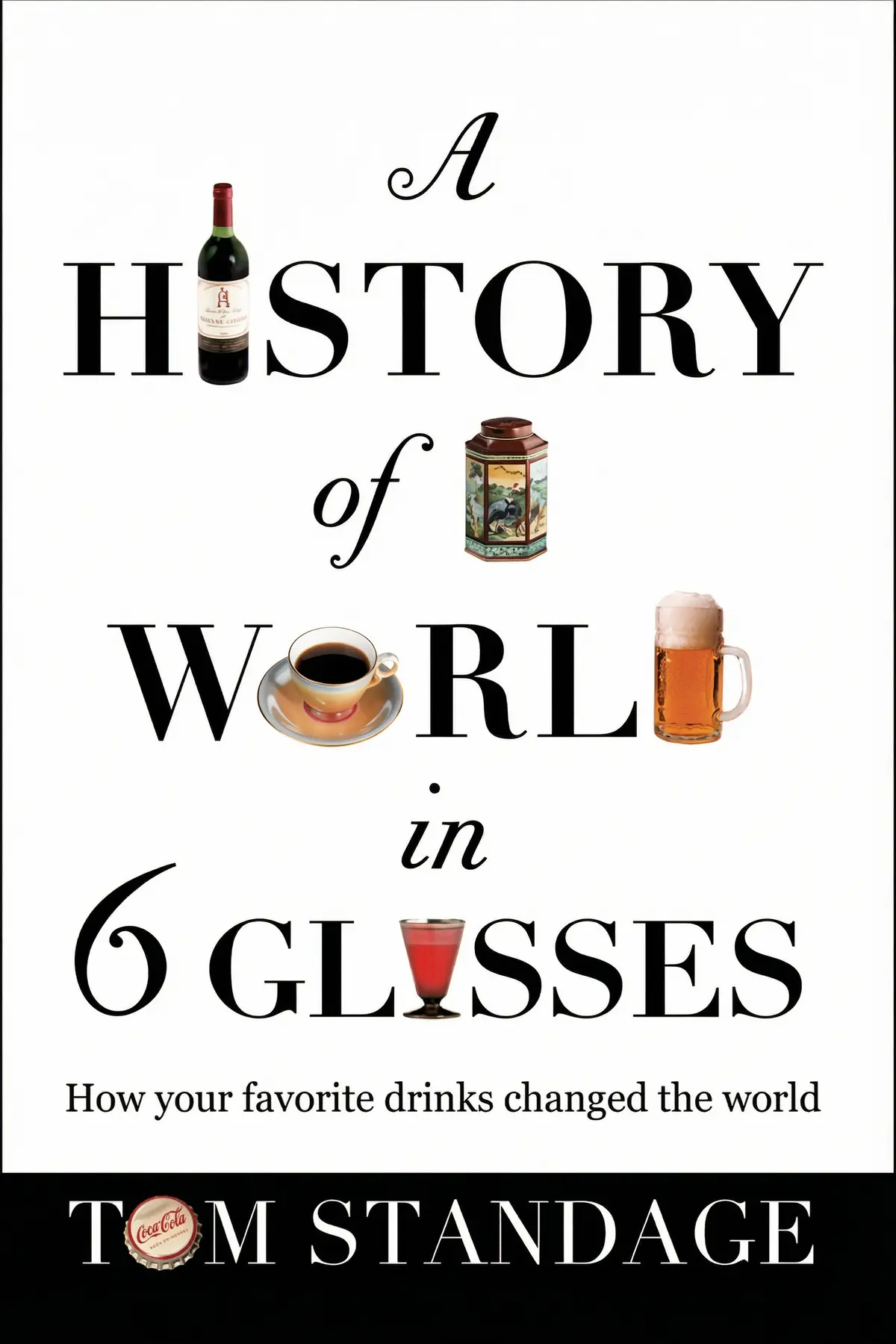
Tom Standage

Ishmael Beah
AUDIO SUMMARY AVAILABLE
Get the key ideas from The Habsburgs by Martyn Rady, plus 5,000+ more titles in English and Thai.







