
28 min
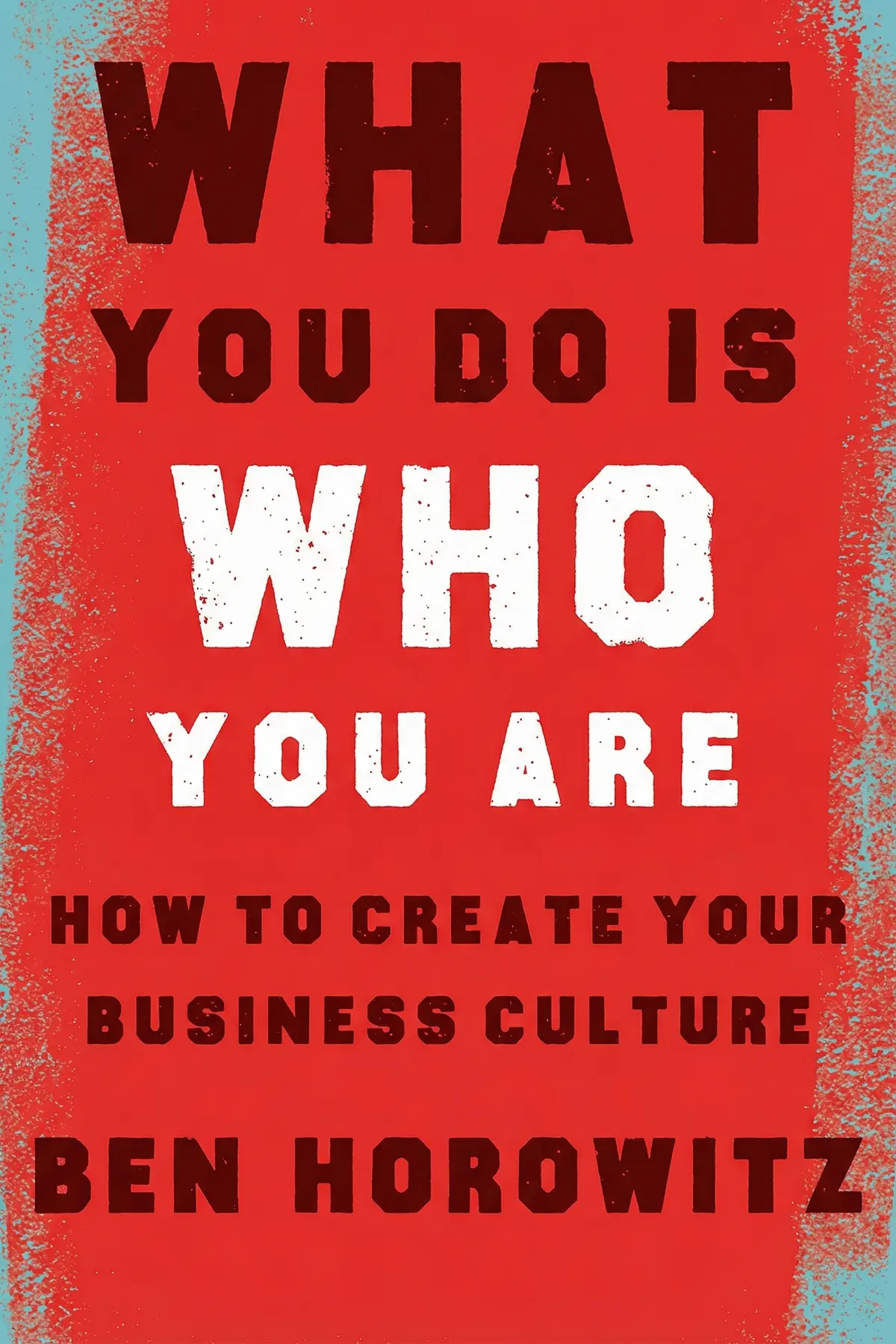
The Hard Thing About Hard Things: Building A Business When There Are No Easy Answers
By Ben Horowitz
Ben Horowitz offers a raw and practical look at the challenges of leadership, providing a roadmap for managing a company when there are no easy answers and the stakes are high.
Table of Content
1. Introduction
1 min 28 sec
Every entrepreneur begins with a spark of an idea and a vision of a flourishing future. We imagine the product launches, the satisfied customers, and the thrill of building something significant. However, there is a vast, often unspoken gap between those initial dreams and the actual day-to-day reality of running a business. Most management books describe how to keep a well-oiled machine running smoothly, but they rarely prepare you for the moments when the machine is on fire, the fuel is running out, and everyone is looking to you for a miracle. This is the central theme we are exploring today: the reality that being a CEO isn’t about the easy days; it’s about what you do when there are no good choices left.
Ben Horowitz, a man who has lived through the highest highs and the most gut-wrenching lows of Silicon Valley, offers a perspective born of hard-won experience. He doesn’t offer platitudes or easy formulas because, as he argues, there are no formulas for the hardest problems in business. Instead, he provides a look into the psychological and operational fortitude required to lead. We will move through the phases of founding and scaling a company, looking closely at how to handle the weight of responsibility, how to manage people with dignity during dark times, and how to distinguish between different styles of leadership. By the end of this journey, you’ll see that greatness in leadership isn’t about avoiding the struggle, but about how you navigate it. Let’s dive into the lessons learned from a career spent in the trenches of the technology industry.
2. The Weight of The Struggle
1 min 56 sec
Discover why the gap between your entrepreneurial dreams and the harsh reality of business creates a unique psychological pressure known as The Struggle.
3. Distributing the Burden
1 min 45 sec
Learn why the instinct to protect your team from bad news can backfire and how involving them in crises can save your company.
4. Managing Your Internal Psychology
1 min 42 sec
Explore the mental techniques necessary to keep your focus on solutions rather than the threats that surround you.
5. The Imperative of Absolute Honesty
1 min 59 sec
Understand why communicating bad news quickly is the only way to maintain the speed and trust required for a successful organization.
6. Executing Layoffs with Integrity
1 min 47 sec
When downsizing becomes inevitable, discover how to handle the process quickly and fairly to protect the future of the company.
7. The Nuance of Firing Executives
1 min 46 sec
Learn the strategic and cultural considerations required when you have to let go of a high-level leader in your organization.
8. People First, Products Second
1 min 54 sec
Discover why investing in human resources and comprehensive training is the most effective way to scale a high-quality organization.
9. Hiring for Strengths over Weaknesses
1 min 53 sec
Find out why looking for the ‘perfect’ candidate often leads to mediocrity and how to identify the singular talents your company actually needs.
10. Eliminating Corporate Politics
2 min 13 sec
Learn how to build a culture that rewards merit rather than maneuvering by implementing strict processes and clear communication.
11. Visionaries versus Implementers
2 min 14 sec
Understand the difference between ‘Ones’ and ‘Twos’ in leadership and why the best CEOs must learn to bridge the gap between strategy and execution.
12. Leading in Peace and War
1 min 59 sec
Discover why the management style that works when your company is winning can be disastrous when you are fighting for survival.
13. The Evolution of a CEO
1 min 57 sec
Leadership is not an innate trait but a skill developed through the courage to do things that feel fundamentally unnatural.
14. Deciding When to Sell
2 min 01 sec
Navigate the complex emotional and rational landscape of exiting your company and learn the criteria for a successful sale.
15. Conclusion
1 min 26 sec
As we reach the end of this exploration into the world of high-stakes leadership, the central theme is clear: there are no easy answers to the hard things. Ben Horowitz has shown us that being a CEO is a journey defined by ‘The Struggle’—that intense, often painful period where the weight of the company’s future rests entirely on your shoulders. We have seen that success in this role doesn’t come from avoiding these difficult moments, but from facing them with radical honesty, a focus on people, and the courage to make uncomfortable decisions. Whether you are leading through the prosperity of peacetime or the life-or-death challenges of wartime, your primary duty is to stay in the game and keep moving forward.
The throughline of these lessons is the importance of organizational and personal resilience. By building a culture that values merit over politics, training employees to reach their potential, and managing your own internal psychology, you create a company that can withstand the inevitable shocks of the business world. Remember that leadership is a skill that is forged in the fire of experience. You won’t always feel ready, and you won’t always have a perfect plan, but if you remain authentic and prioritize the health of your team, you can navigate even the most treacherous waters. The ‘hard thing’ isn’t just about the obstacles you face; it’s about the person you become while overcoming them. Take these insights and apply them to your own journey, knowing that greatness isn’t found in the absence of struggle, but in how you master it.
About this book
What is this book about?
The Hard Thing About Hard Things is a deep dive into the messy reality of being a CEO. Unlike traditional business books that focus on how to maintain success when things are going well, this guide addresses the inevitable crises that occur in every startup's journey. It tackles the difficult conversations that most leaders avoid, such as how to conduct layoffs, how to fire an executive friend, and how to manage the intense psychological pressure that comes with the top job. The book promises to strip away the gloss of Silicon Valley and provide a realistic framework for decision-making under duress. It explores the transition from a founder to a leader and distinguishes between the skills needed for growth versus those needed for survival. By following Ben Horowitz’s experiences, you will learn how to build a resilient organization that can withstand the harshest market conditions and come out stronger on the other side.
Book Information
About the Author
Ben Horowitz
Ben Horowitz is a founding partner at the prominent venture capital firm Andreessen Horowitz. Before entering the world of investing, he established himself as a successful entrepreneur and leader in the tech industry. He was the co-founder and CEO of the IT company Opsware, which he navigated through significant market volatility before selling it to Hewlett-Packard in 2007 for $1.6 billion. His influential blog on management and leadership has reached an audience of over 10 million readers.
Ratings & Reviews
Ratings at a glance
What people think
Listeners find this business guide thought-provoking, filled with functional tips and authentic anecdotes that keep them hooked and make it worth revisiting. It acts as an indispensable tool for entrepreneurs, offering concrete strategies and personal narratives about scaling companies. Listeners value the motivating material, especially the focus on psychological hurdles, and view it as a thorough manual with enough depth to be a permanent resource.
Top reviews
Kofi
Finally finished this and I’m genuinely blown away by how raw Horowitz is about the "torture" of being a CEO. This isn’t some polished MBA case study; it's a visceral account of what happens when everything is falling apart and there are no good options left. I loved the chapters on building Opsware out of the ashes of Loudcloud because it shows that persistence often outweighs "genius" in the long run. The advice on hiring for strengths instead of focusing on a candidate's lack of weaknesses is something I’ll be implementing immediately in my own hiring process. While the rap lyrics at the start of every chapter felt a bit forced at first, they eventually grew on me as a reflection of his personality. It’s a definite reference guide for anyone dealing with the messy reality of management.
Show morePrae
Most business books feel like they were written by people who have never actually been in the trenches, but this one is pure war stories from start to finish. I was gripped by the account of the Opsware IPO and the sheer grit required to keep a company alive when the market is actively rooting against you. The takeaway about "the struggle" being an inevitable part of the journey was exactly what I needed to hear right now. Frankly, the advice on one-on-ones being the employee's meeting, not the manager's, is worth the price of the book alone. It's rare to find a leader who is this honest about the loneliness of the top job. If you want a sugary success story, look elsewhere; this is for the people who want the truth.
Show moreSebastian
Wow, what a brutal and beautiful look at the realities of entrepreneurship that most people are too scared to talk about. I especially appreciated the section on "the torture" and how the only difference between a successful CEO and a failure is often just the refusal to quit. The book offers a masterclass in making high-stakes decisions with 55/45 certainty while everyone around you is convinced you're making a mistake. It’s an emotional rollercoaster that validates the stress and isolation many leaders feel but rarely voice in public. I’ve already recommended this to three of my colleagues who are struggling with their own growth-stage challenges. This is not a "one and done" read; it’s a manual you keep on your desk for when things get difficult.
Show moreHiroshi
After hearing about Ben’s "no-bullshit" reputation, I had high expectations, and this book delivered on every single one of them. The transparency regarding the Opsware/HP deal and the internal revolts he faced was incredibly courageous and insightful. It’s rare to find a leader who admits to the "cold sweats" and the paralyzing fear of failure while simultaneously offering a roadmap out of the dark. The emphasis on building a culture where people can tell the truth, especially when things are going wrong, is a lesson every manager needs to take to heart. This is a visceral, high-stakes management guide that I will definitely be rereading every time our company hits a rough patch. Truly an invaluable resource for the modern entrepreneur.
Show moreGor
The hip-hop references are definitely a choice, but if you look past the "cool CEO" posturing, there is some of the most practical management wisdom I've ever read. Horowitz dives deep into the awkward, painful parts of leadership like conducting layoffs and managing your own psychology during a crisis. I found the section on "wartime" versus "peacetime" CEOs to be particularly enlightening for our current economic climate. To be fair, he comes across as quite abrasive and maybe a bit aggressive at times, which might turn some readers off. However, his stories about Bill Campbell’s mentorship add a much-needed layer of humanity to the narrative. It’s an essential read for tech entrepreneurs, though maybe a bit niche for general management.
Show moreTak
As a founder who just went through a difficult hiring cycle, I found the tactical advice in this book to be incredibly relevant. Horowitz doesn't sugarcoat how hard it is to bring in big-company executives without breaking your startup's culture. He highlights the importance of asking candidates how their new role will differ from their old one, which is a brilliant filter for success. I did feel that some of the timeline jumping between Loudcloud and Opsware got a bit confusing in the middle sections of the book. Plus, the "Jackie Robinson of barbecue" comment in the intro was definitely a cringe-worthy moment of self-blindness. Still, the core lessons on building a resilient organization are too valuable to ignore because of a few personality quirks.
Show moreTanawan
Picked this up because everyone in my network was raving about it, and for the most part, it lives up to the hype. The specific details on how to manage an executive team and when to hire internally versus externally were extremely helpful for my current project. Horowitz shares lessons that you just don't get in a classroom, like how to handle a "big jerk dog" executive or the right way to deliver bad news to your board. Some of the anecdotes are a bit self-indulgent, and the focus on venture-backed tech startups might limit its appeal to some. But for my specific niche, the wisdom is actionable and grounded in the harsh reality of the valley. A solid four stars for the sheer density of "hard" knowledge provided.
Show moreChatchai
This isn't your typical "five steps to success" business fluff, which is exactly why it’s so refreshing to read. Horowitz focuses on the impossible scenarios where there is no "right" answer, only a choice between two very difficult paths. I loved the insight that being a CEO is about making decisions, and that those decisions require a constant, hungry quest for data from every interaction. The chapters on organizational design and how communication becomes the biggest hurdle as a company scales were spot on. My only gripe is that the book assumes you’re already operating at a certain level of scale, making it less useful for the very early-stage solo founder. It's a heavy, intense read that demands your full attention.
Show moreYulia
Truth is, I have mixed feelings about this one because the tone frequently veered into what felt like toxic masculinity and unnecessary aggression. While the business insights are undeniably sharp, I struggled with how Horowitz describes his interactions with his wife and employees. It felt like he was trying a bit too hard to be the "bad boy" of Silicon Valley by using profanity and aggressive metaphors for basic management tasks. That said, the technical advice on navigating a company through a pivot is excellent and clearly comes from a place of deep experience. If you can filter out the ego and the humblebragging about his famous mentors, there is a lot to learn here. It’s a 3-star read for me simply because the delivery was so distracting.
Show moreGioia
I wanted to love this given the high praise, but I found the structure a bit too rambling and stream-of-consciousness for my taste. It starts off strong with a chronological narrative of his career, but then it devolves into a series of short, disjointed blog posts. While I agree that the advice on "training your people" is vital, I felt like I was being yelled at for three hundred pages. The constant name-dropping and the bizarre attempt to link rap lyrics to corporate strategy felt like he was trying too hard to be "edgy." There are some diamonds in the rough here regarding product vision and customer retention metrics. However, you have to dig through a lot of abrasive posturing to find them.
Show more
Readers also enjoyed

Acting with Power: Why We Are More Powerful Than We Believe
Deborah Gruenfeld
All In: How Great Leaders Build Unstoppable Teams
Mike Michalowicz
Alibaba: The House That Jack Ma Built
Duncan Clark
AUDIO SUMMARY AVAILABLE
Listen to The Hard Thing About Hard Things in 15 minutes
Get the key ideas from The Hard Thing About Hard Things by Ben Horowitz, plus 5,000+ more titles in English and Thai.
- 5,000+ titles
- Listen as much as you want
- 7-day free trial
- Cancel anytime







