
23 min 22 sec
What You Do Is Who You Are: How to Create Your Business Culture
By Ben Horowitz
Explore how business culture is defined by actions, not just words. This summary draws on historical leaders and modern CEOs to show how virtues create lasting and successful organizational identities.
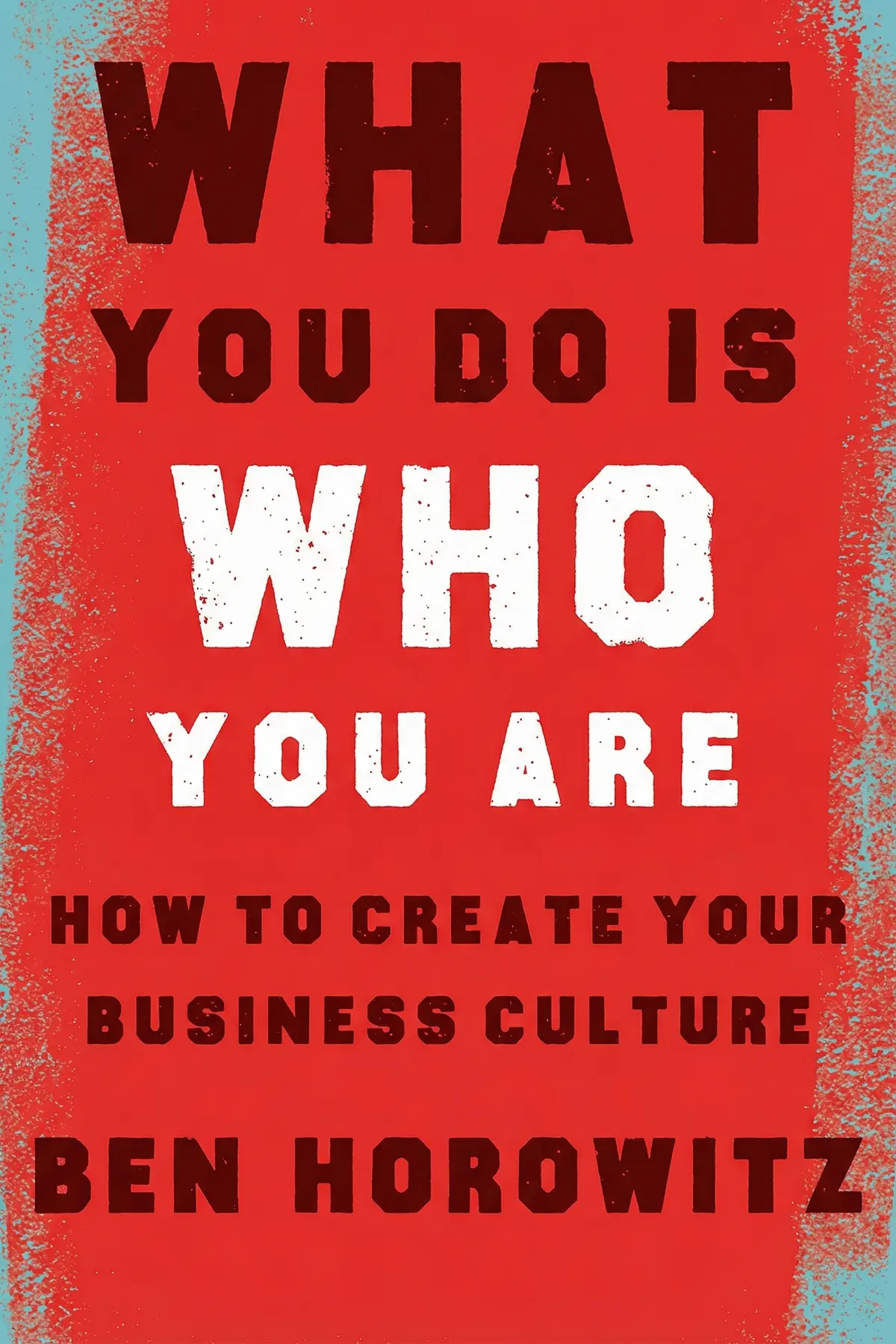
Table of Content
1. Introduction
1 min 54 sec
Every entrepreneur or executive understands that culture is the invisible glue that holds a company together. Yet, if you ask ten different leaders to define what culture actually is, you’ll likely get ten different, often fuzzy, answers. Is it the free snacks in the breakroom? Is it the inspirational quote printed on the lobby wall? Or is it something more elusive, like the general ‘vibe’ of the office?
What we are exploring today is a radical shift in that perspective. The true essence of culture isn’t found in what you hope to be; it is found in what you do. It is the set of assumptions and behaviors that your employees use to solve problems when you aren’t in the room to guide them. It’s the collective character of the organization, forged through daily actions and reinforced by the choices of its leaders.
In this journey, we aren’t just looking at the latest management trends from Silicon Valley. To understand how to shape a human collective, we have to look much further back. We are going to see how the 12th-century Mongolian steppes, the battlefields of the Haitian Revolution, and the strict codes of the Japanese Samurai offer surprisingly practical blueprints for modern business.
Through these historical and contemporary lenses, we will uncover why some cultures flourish while others wither. We’ll see how giants like Amazon and Netflix use specific, sometimes jarring rules to keep their teams aligned. We’ll also discover why the most successful cultures are those that aren’t copied from a textbook, but are instead an honest reflection of the person at the top and the specific challenges the company faces. By the end of this summary, you’ll see that building a culture isn’t an HR project—it’s the most important job of a leader, because in the end, your actions don’t just speak for you; they define you.
2. The Distinction Between Values and Virtues
2 min 39 sec
Discover why aspirations on a wall often fail and how shifting your focus to daily practices creates a truly functional organizational culture.
3. The Power of Shocking Rules
2 min 40 sec
Learn how historical leaders used counter-intuitive and dramatic rules to force their followers to adopt entirely new ways of thinking.
4. Applying the Samurai Code to Corporate Life
2 min 43 sec
Explore the ancient Japanese philosophy of Bushido and how its focus on action and the acceptance of failure can strengthen a business.
5. Reforming Culture from the Inside Out
2 min 45 sec
Examine the incredible story of Shaka Senghor to understand how any group, no matter how troubled, can be transformed through leadership and engagement.
6. The Mongol Empire's Lessons on Inclusion
2 min 59 sec
See how Genghis Khan built one of the world’s most successful empires by ignoring tradition and focusing on merit and loyalty.
7. Aligning Culture with Leadership and Strategy
2 min 44 sec
Understand why your personal traits and your specific business goals must dictate the culture you create, rather than copying others.
8. The Art of the Cultural Pivot
3 min 08 sec
Learn when to stick to your guns and when to radically change your culture to survive in shifting markets, from the rise of the iPhone to the burden of trust.
9. Conclusion
1 min 50 sec
As we wrap up our look at the intersection of history, leadership, and workplace dynamics, the throughline becomes clear: culture is not a side project. It is not something you ‘fix’ with a few posters or a company retreat. It is the very foundation of your business, and it is built out of the bricks of your daily actions. We’ve seen how ancient Samurai used the awareness of death to find focus, how revolutionaries used shocking rules to build trust, and how modern tech giants use physical symbols to enforce frugality. These examples teach us that the most effective cultures are those that are lived, not just spoken.
Your most important takeaway should be this: look in the mirror. Your company’s culture will inevitably reflect your own strengths, your own flaws, and your own priorities. If you want a culture of honesty, you must be the most honest person in the room, especially when it hurts. If you want a culture of excellence, you must never settle for ‘good enough’ in your own work.
To put this into action, take a moment to look at the ‘values’ you claim to have. Then, look at the actual decisions made in your company over the last month. Do they align? If not, it’s time to create your own ‘shocking rules’ or rituals to bridge that gap. Remember, your employees are watching your feet, not your lips. They are learning who to be by watching what you do. By aligning your personal virtues with your business strategy and remaining flexible enough to pivot when the world changes, you can create a culture that doesn’t just survive, but thrives. Because at the end of the day, what you do truly is who you are.
About this book
What is this book about?
In this exploration of organizational identity, the core premise is simple yet profound: your culture is not what you say you believe, but how you actually behave. Many leaders struggle to define or implement a healthy workplace environment, often confusing it with vague mission statements or superficial perks. This summary provides a roadmap for building a culture that truly reflects a company’s goals and its leadership’s character. Drawing from a remarkably diverse range of sources—from the revolutionary tactics of Toussaint Louverture in Haiti and the meritocratic empire of Genghis Khan to the ancient code of the Samurai and modern-day Silicon Valley success stories—the narrative reveals that culture must be unique and actionable. You will learn why ‘shocking rules’ can reinforce frugality, how the mindset of a warrior helps a CEO face failure, and why the distinction between a wartime and peacetime leader is critical for survival. Ultimately, the book promises to help you create a culture that is authentic, resilient, and perfectly aligned with your business strategy.
Book Information
About the Author
Ben Horowitz
Ben Horowitz is a prominent venture capitalist, management expert, and a New York Times best-selling author, known for his previous work, The Hard Thing About Hard Things. He is a co-founder of the influential venture capital firm Andreessen Horowitz. Earlier in his career, he served as the president and CEO of the software company Opsware, which achieved significant success before being acquired by Hewlett-Packard for $1.6 billion in 2007. His insights are grounded in years of high-stakes leadership and investment experience.
Ratings & Reviews
Ratings at a glance
What people think
Listeners find this work to be a high-quality exploration of organizational culture, valuing its pragmatic guidance for authentic problems and the way it turns observations into usable business strategies. The material is accessible and engaging for listeners, with one listener specifically mentioning that it held their focus from start to finish. They appreciate the historical context provided and view it as essential for those in management or leadership roles. The motivational aspects of the content draw varied responses from listeners.
Top reviews
Gin
Ben Horowitz has a unique talent for unearthing leadership blueprints in the most unconventional places, moving far beyond the typical boardroom case studies. This book isn't just a collection of management platitudes; it’s a gritty, historical deep dive into how collective behavior is forged in the fires of conflict. I found the section on Toussaint Louverture particularly enlightening, even if it has sparked some debate. Horowitz argues that culture isn't what you say, but what you do, and he uses the Haitian Revolution to show how even the most oppressed groups can reprogram their identity to achieve the impossible. The writing style is punchy and direct, mirroring the author’s 'no-nonsense' venture capital background. While some might find the hip-hop references or the violent historical anecdotes a bit jarring, they serve as effective 'shocking rules' to keep the reader engaged. It’s a rare business book that actually feels vital and urgent. If you are leading a team through a crisis, the distinction between wartime and peacetime leadership alone makes this a mandatory addition to your shelf.
Show moreElise
After the massive success of his first book, I wondered if Horowitz could actually provide new value or if he’d just recycle old Silicon Valley tropes. He proved me wrong. 'What You Do Is Who You Are' is a masterclass in organizational design that looks backward to move forward. The exploration of Genghis Khan’s meritocracy was fascinating; it showed how inclusion isn't just a HR checkbox, but a strategic advantage for any growing empire. Horowitz understands that culture is a living, breathing thing that requires constant maintenance. He doesn't shy away from the 'hard things' like firing people who don't fit the culture, even if they are top performers. The book is easy to read, packed with anecdotes that stick in your brain, and provides a clear framework for anyone looking to build a lasting institution. It’s easily one of the most practical books on corporate culture I’ve ever encountered. The focus on 'virtues' over 'values' is a distinction every leader should internalize immediately.
Show moreEmma
What does it actually mean to embody your company’s values when things are falling apart? Horowitz answers this by looking at how leaders like Steve Jobs and Shaka Zulu created environments where people were willing to go to war for a vision. The book is incredibly inspirational without being 'fluffy.' It’s about the hard work of making decisions that demonstrate your priorities. I loved the story about the Sony deal being turned down to protect the long-term culture; that's the kind of 'walk the talk' moment that defines a legacy. The writing is sharp, and the chapters are short enough to digest during a commute. It successfully bridges the gap between historical philosophy and modern-day management. Even if you aren't a CEO, the lessons on personal integrity and discipline are universal. This is a book I will be gifting to my entire management team this year. It’s simply brilliant.
Show moreDuang
As someone navigating the messy middle of a scaling startup, this book felt like a field manual for survival. Horowitz hits the nail on the head: your culture isn't what you say you believe; it's the person you hire, the person you fire, and the behavior you tolerate. The chapter on inclusion was particularly eye-opening because it focused on the practical necessity of diverse perspectives rather than just moralizing. I found the 'Samurai' approach to remembering death—or in a business sense, bankruptcy—to be a powerful way to keep a team focused on what really matters. It’s a book that demands you look in the mirror and ask if your actions align with your supposed virtues. The tone is aggressive, honest, and deeply practical. If you want a book that tells you everything is going to be easy, look elsewhere. If you want to know how to build something that lasts, buy this immediately.
Show morePia
Finally sat down with this after hearing the author's polarizing interview on The Breakfast Club, and I must say the book is far more nuanced than the soundbites suggest. Horowitz tackles the difficult reality that a company's culture is essentially the set of assumptions employees use to solve problems when the boss isn't in the room. I loved the concept of 'shocking rules,' like Amazon’s ban on PowerPoints, which forces a specific type of critical thinking. The book successfully translates abstract concepts into actionable insights that any manager can implement tomorrow. My only gripe is that it occasionally prioritizes being 'cool' over being thorough. Some of the anecdotes about hiring 'assholes' because they produce results felt a bit like a justification for toxic brilliance, which seems to contradict his points on trust. Still, the core message that your deeds define you is a wake-up call that every executive needs to hear. It’s a solid follow-up to his previous work.
Show moreBank
The exploration of the Bushido code and its application to modern business ethics was a surprising highlight that really stuck with me throughout the week. Horowitz does a great job of explaining why 'integrity' is a useless word unless it's backed by specific, repeatable actions. I particularly liked the section on how leaders set the tone through their accidental actions—people are always watching, and they will mimic your worst traits faster than your best ones. The book is at its best when it deals with real-world dilemmas, like how to keep a team motivated when the company is failing. It loses some steam when it tries to be too academic about ancient history, but the transitions back to tech examples like Netflix and Uber keep it grounded. It's a quick read that offers a lot of food for thought for anyone in a leadership position. I didn't agree with every conclusion, but it definitely made me re-examine how I interact with my own team.
Show moreBun
Business manifestos are usually a dry, repetitive slog, yet this one gripped me from the very first chapter with its raw energy and unusual examples. Ben Horowitz avoids the typical corporate jargon and instead talks like a real person who has been in the trenches. The idea that your culture is what your employees have to do to survive and succeed is a brutal but necessary truth. I found the 'wartime vs. peacetime' CEO distinction to be incredibly relevant in today’s volatile market. To be fair, the book can be a bit repetitive at times, and some of the rap lyrics feel like he's trying a bit too hard to be relatable to a younger crowd. However, the core advice on building trust and making ethics explicit is invaluable. It’s an important book for anyone who cares about the soul of their organization. It’s not a perfect history book, but it is an excellent leadership manual.
Show moreAisha
While the central premise—that culture is defined by actions rather than posters on a wall—is undeniably powerful, the execution left me somewhat conflicted. To be fair, Horowitz is an engaging storyteller who knows how to keep a reader’s attention by weaving together tales of the Samurai, Genghis Khan, and modern tech giants like Apple. However, the historical analysis often feels like it’s being forced into a Silicon Valley shaped box. The way he 'rebrands' the Haitian Revolution as a management case study feels a bit reductive and, at times, culturally insensitive to the actual suffering involved. I appreciated the practical tips on inclusion and the importance of 'walking the talk' when it comes to company ethics, but I couldn't shake the feeling that I was reading a very high-level blog post stretched into a book. It’s a fast, interesting read, but take the historical 'lessons' with a massive grain of salt. It is useful for managers, but maybe less so for historians.
Show morePui
Look, the tactical advice regarding 'shocking rules'—like Amazon’s famous PowerPoint ban—is pure management gold, but the rest of the book is a mixed bag. I picked this up because I loved his previous work, but this felt a bit more like a collection of interesting dinner party stories than a cohesive strategy. The historical segments on Genghis Khan are fun to read, but they often lack the depth required to be truly instructive for a 21st-century startup. It felt a bit like a high-end Buzzfeed article: '10 things Genghis Khan can teach you about HR.' Truth is, Horowitz is at his best when he’s talking about his own experiences at Opsware or Netscape. When he strays into being a historian, it feels a bit performative. It’s still a good read for the 'A-HA' moments scattered throughout, and it certainly kept my attention. I just wish there was more Ben and less filtered history.
Show moreChanon
Not what I expected from a tech titan, and frankly, the parallels drawn between corporate culture and the Haitian Revolution felt incredibly tone-deaf to me. Horowitz attempts to be 'edgy' by using prison culture and slavery as frameworks for business efficiency, but it mostly just feels callous. Using Toussaint Louverture’s struggle for basic human rights to explain why Amazon employees shouldn't use slide decks is a bridge too far. The book treats history as a buffet where you can just cherry-pick the 'cool' parts while ignoring the systemic horror. While there are a few gems regarding how to handle layoffs and the importance of sincerity, they are buried under a mountain of questionable comparisons. If you want real leadership advice, stick to the chapters on Intel and Slack. The rest of it feels like a venture capitalist trying too hard to be a philosopher-king. It’s a disappointing departure from the practical brilliance of his first book, which was far more grounded in reality.
Show moreReaders also enjoyed

7 Powers: The Foundations of Business Strategy
Hamilton Helmer

A Bigger Prize: How We Can Do Better Than the Competition
Margaret Heffernan
A Year with Peter Drucker: 52 Weeks of Coaching for Leadership Effectiveness
Joseph A. Maciariello


AUDIO SUMMARY AVAILABLE
Listen to What You Do Is Who You Are in 15 minutes
Get the key ideas from What You Do Is Who You Are by Ben Horowitz, plus 5,000+ more titles in English and Thai.
- 5,000+ titles
- Listen as much as you want
- 7-day free trial
- Cancel anytime







