
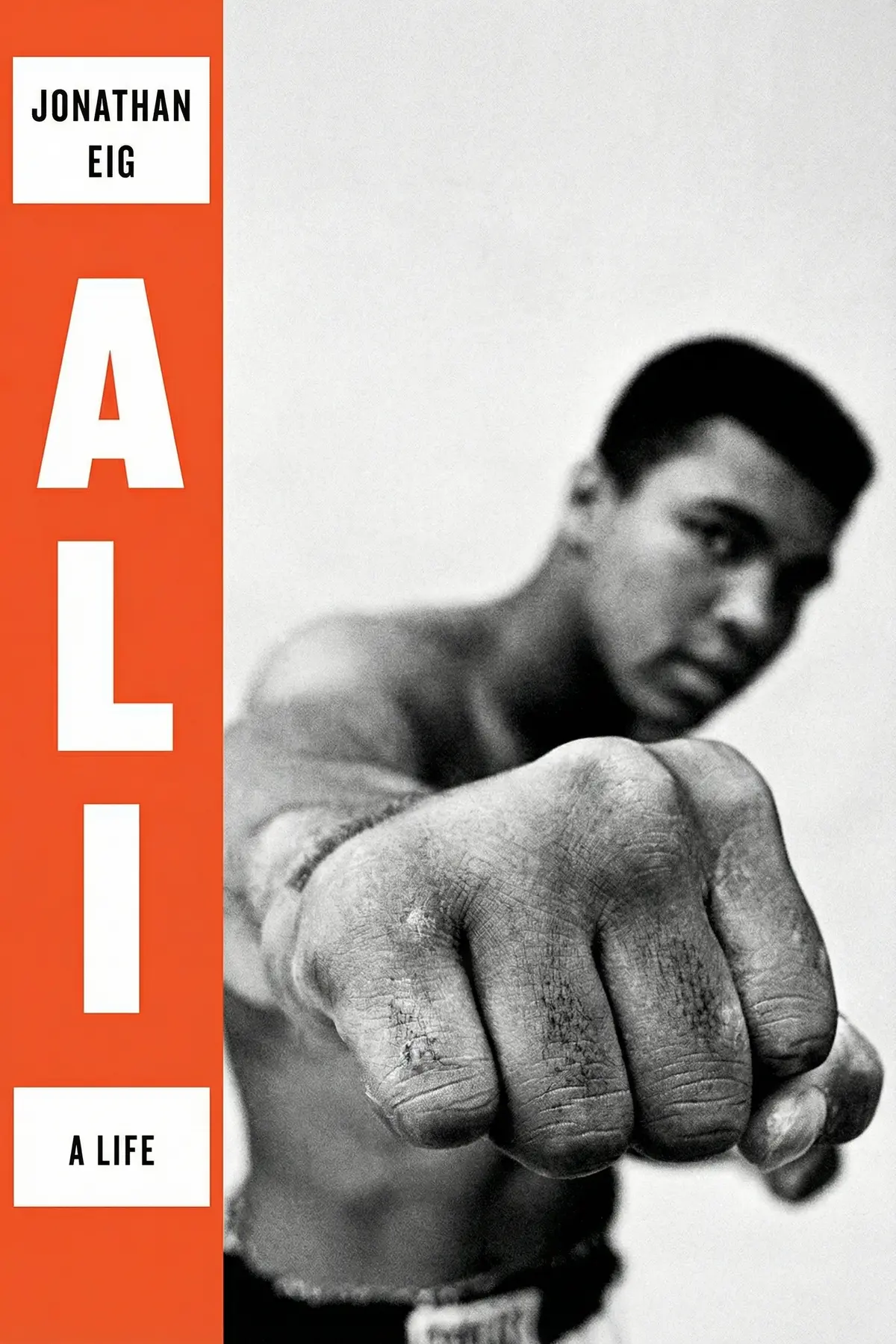
Ali: A Life
Jonathan Eig
Discover how to unlock peak performance by silencing your inner critic. This guide explores the mental techniques needed to master self-trust, focus, and the natural learning processes that lead to excellence.
1 min 37 sec
Every time you step onto a court, enter a boardroom, or pick up a new hobby, you are actually playing two games simultaneously. The first is the outer game, played against an external opponent or a specific set of obstacles. This is the game everyone sees. But the second, more subtle struggle is the inner game. This takes place entirely within your own mind, and its outcome determines whether you will reach your true potential or crumble under the weight of your own expectations.
Most of us have been taught that the way to improve is through rigorous self-criticism and constant instruction. We think that if we just tell ourselves what to do often enough, we will eventually get it right. But have you ever noticed that the more you tell yourself to ‘relax’ or ‘focus,’ the more tense and distracted you become? This is the fundamental paradox of performance. The very part of our mind that wants to help us succeed is often the greatest barrier to our success.
In the following minutes, we are going to explore a revolutionary approach to performance that prioritizes instinct over intellect. We will look at why the best athletes often describe their greatest moments as being ‘out of their minds’ and how you can tap into that same state of flow. By the end of this journey, you will understand the relationship between your conscious and unconscious selves, and you will have practical tools to quiet the internal noise that holds you back. This isn’t just about tennis; it’s a blueprint for mastering the mental side of life, allowing you to learn faster, perform better, and enjoy the process more than ever before. Let’s dive into the core principles that make the inner game the most important match you will ever play.
2 min 22 sec
Who are you talking to when you criticize yourself on the court? Discover the relationship between your conscious ego and your instinctive body.
2 min 16 sec
Learn why labeling your actions as ‘good’ or ‘bad’ actually prevents you from improving and how to see things as they truly are.
2 min 06 sec
Most of us try too hard to succeed. Discover the power of ‘letting it happen’ rather than ‘making it happen.’
2 min 07 sec
Silence the mental chatter by giving your mind a singular point of focus. Explore the techniques for staying in the ‘now.’
2 min 12 sec
Why do children learn so much faster than adults? Discover the secret of ‘implicit learning’ and the power of mental imagery.
2 min 18 sec
Is winning everything? Learn how to shift your perspective on competition to reduce anxiety and increase performance.
1 min 48 sec
As we wrap up our exploration of the Inner Game, it’s worth reflecting on how these principles apply to the world beyond the tennis court. The core struggle we’ve discussed—the battle between the judgmental conscious mind and the instinctive, capable body—is a universal human experience. Whether you are giving a speech, navigating a difficult conversation, or trying to master a new skill, the secret to success lies in your ability to get out of your own way.
We have seen that peak performance is not a product of intense straining or self-criticism. Instead, it flows from a quiet mind, a non-judgmental awareness of reality, and a deep-seated trust in your innate abilities. By silencing Self 1 and empowering Self 2, you don’t just become a better performer; you become a more balanced and resilient individual. You learn to see mistakes not as failures, but as data points that guide your progress. You learn to see competition not as a threat to your ego, but as a welcome challenge that pulls the best out of you.
As an actionable step you can take today, try the ‘roleplay’ technique. The next time you feel stuck or pressured in a task, stop trying to ‘be’ yourself and instead ‘play the role’ of someone who is already a master at that task. If you’re nervous about a presentation, imagine you are a world-class public speaker. Don’t just think about it; inhabit the physical feeling of their confidence and poise. By stepping into this role, you bypass the self-doubts of Self 1 and give Self 2 a clear image to follow. You’ll likely find that you have abilities within you that you never knew existed, simply because you finally gave yourself permission to let them out. The inner game is a lifelong practice, and every moment is a fresh opportunity to trust yourself and play with everything you’ve got.
The Inner Game of Tennis explores the psychological breakthroughs required to reach a state of peak performance, both on the court and in everyday life. Most people believe that success comes from more effort, more instruction, and more willpower. However, this book argues that the primary obstacle to excellence is actually our own conscious, judgmental mind. By understanding the relationship between our analytical 'Self 1' and our instinctive 'Self 2,' we can learn to stop micromanaging our actions and start trusting our innate abilities. The promise of the 'Inner Game' is a more relaxed, focused, and effective way of being. It provides a roadmap for quieting the internal chatter that causes tension and self-doubt. Through techniques like non-judgmental awareness and rhythmic focus, readers learn how to enter the 'zone' more frequently. Whether you are an athlete, a business professional, or simply looking to improve your personal skills, these principles offer a path to mastering the mental side of any challenge, allowing your natural talents to flourish without the interference of fear or over-analysis.
W. Timothy Gallwey was an accomplished tennis player before transitioning into a role as a tennis instructor. It was during his time teaching others that he recognized the immense power of mental training over traditional technical instruction. This discovery led him to become a best-selling author and a pioneer in the field of coaching. Today, Gallwey is a renowned business coach who applies his 'Inner Game' philosophy to a wide variety of professional and personal situations, helping individuals overcome internal barriers to achieve their goals.
Listeners find this tennis manual to be an exceptional read that offers helpful advice and develops skills, with one listener identifying Chapter 8 as being of particular importance. The text provides deep insights into the challenges of life and assists in advancing one's athletic abilities, with one listener mentioning that it revolutionized their performance. Listeners value how it strengthens mental focus and attention, which increases their enjoyment of the game, and they regard it as a definitive classic.
Finally got around to reading this classic, and it’s easy to see why it transformed the way people think about performance. Truth is, I don’t even play tennis, but the concepts of overcoming mental hurdles are universally applicable to any high-stakes environment. Chapter 8 on the nature of competition was a total revelation for me, reframing opponents as friends who help you find your limits. The writing is surprisingly poetic for a sports book, though it does get a bit technical with racket grips in some sections. If you struggle with self-doubt or "choking" under pressure, this is mandatory reading. It’s less about the mechanics of the swing and more about the silence between the points.
Show moreWow. I’ve been a 3.5 player for years, constantly overthinking my backhand and cursing every unforced error, but this book completely rewired my brain. The concept of "relaxed concentration" is a game-changer because it takes the pressure off "trying" and puts it on "observing." Instead of yelling at myself to keep my eyes on the ball, I started focusing on the seams of the ball as it spins, and my accuracy shot up almost immediately. It’s basically DBT for athletes, teaching you to accept the present moment without labeling every mistake as a personal failure. My matches are finally enjoyable again instead of being a source of weekend anxiety.
Show moreAfter hearing David Foster Wallace mention this in an essay, I felt compelled to see what the fuss was about. I wasn't expecting a sports book from 1974 to feel so modern, yet the insights into focus and concentration are timeless. The way he describes the internal dialogue—that nagging "Self 1" that judges every move—is something every professional can relate to. Look, you don't need a racket to benefit from the lessons on how to quiet the mind and enter a state of flow. It’s a swift, engrossing read that provides practical tools for anyone looking to bridge the gap between their potential and their actual performance.
Show morePicked this up on a whim after seeing Pete Carroll's foreword in the new edition, and I’m genuinely impressed by how much it applies to my work in corporate management. The idea that we compromise our natural learning processes by relying too heavily on rigid instructions is a lesson every leader needs to hear. Truth is, we often "over-coach" our teams just like we over-think our serves. By focusing on the "Inner Game," I've started looking at obstacles as necessary ingredients for self-discovery rather than just annoyances. It’s a wholesome, enlightening view of human potential that transcends the tennis court. I’ll be recommending this to my entire department.
Show moreAs someone who has spent years in the mental health field, I found Gallwey’s "Self 1" and "Self 2" dichotomy to be a brilliant, accessible precursor to modern mindfulness practices. The core idea is simple: your conscious, critical mind often gets in the way of your body’s natural ability to perform. Frankly, some of the tennis-specific instructions felt a little dated, but the psychological framework remains incredibly sharp. I appreciated the emphasis on non-judgmental observation rather than just "positive thinking," which usually adds more noise to the system. It’s a quick read, yet it requires a lot of slow reflection to actually implement the shifts in focus he suggests.
Show moreThe chapter on competition alone is worth the price of admission, especially for those of us who struggle with the "win at all costs" mentality. Gallwey suggests that our opponent is actually a partner in our growth, which is a radical shift that immediately lowered my stress levels on the court. Gotta say, I was skeptical about the "visualization" techniques at first, thinking it sounded a bit too "new agey" for a sports manual. However, once I stopped giving myself verbal instructions and started just "seeing" the trajectory of the shot, my body followed suit. It’s not a perfect book, and some of the analogies are a bit long-winded, but the results are hard to argue with.
Show moreEver wonder why you can play perfectly in practice but fall apart the moment a score is kept? This book answers that question by diving deep into the interference caused by our own egos. The "rose analogy" he uses to describe the process of development is one of the most beautiful pieces of writing I’ve encountered in a coaching manual. In my experience, the hardest part isn't learning the skill, it's unlearning the habit of self-condemnation. My only gripe is that the middle sections drag a bit with specific court positioning that won't interest non-players. Still, it’s a classic for a reason and a great refresher for the soul.
Show moreTo be fair, this is probably the most practical book on mindfulness I’ve ever read because it gives you a tangible way to practice it. Most meditation books are too abstract, but Gallwey gives you a yellow tennis ball and tells you to watch the seams. It’s simple, effective, and surprisingly difficult to do for more than a minute. I did find some of the talk about "Self 2" to be a bit mystical at times, but the results in my golf game—yes, it works for other sports too—are undeniable. It’s a solid 4-star read that offers a refreshing, non-judgmental perspective on how we learn and grow as individuals.
Show moreThis book definitely has some profound moments, but I’m in the camp that feels it could have been a much shorter essay. While the philosophy of letting go and trusting your subconscious is life-changing, the repetitive nature of the text started to wear on me by the halfway mark. To be fair, Gallwey was a pioneer in the 70s, so it’s unfair to judge it against the more polished performance books we have today like 'Flow.' I also found the sections on tennis mechanics to be a bit distracting since I was looking for purely mental strategies. It’s a foundational text for sure, but maybe not the "one-stop shop" for mindset that the hype suggests.
Show moreNot what I expected, to be honest. While I appreciate the historical significance of Gallwey’s work, I found the "Inner Game" methodology to be a bit repetitive after the first few chapters. The distinction between the conscious and subconscious is useful, but it feels like the same three points are hammered home for 150 pages. Not gonna lie, I was hoping for more concrete drills and fewer philosophical musings on the nature of being. If you’re a fan of mindset books, you’ll likely enjoy this, but if you want high-level tactical tennis advice, you might be disappointed. It’s a decent read, just over-hyped in my opinion.
Show moreJonathan Eig


Deepak Chopra

Richard Wiseman

William B. Irvine
AUDIO SUMMARY AVAILABLE
Get the key ideas from The Inner Game of Tennis by W. Timothy Gallwey, plus 5,000+ more titles in English and Thai.







