
12 min 37 sec
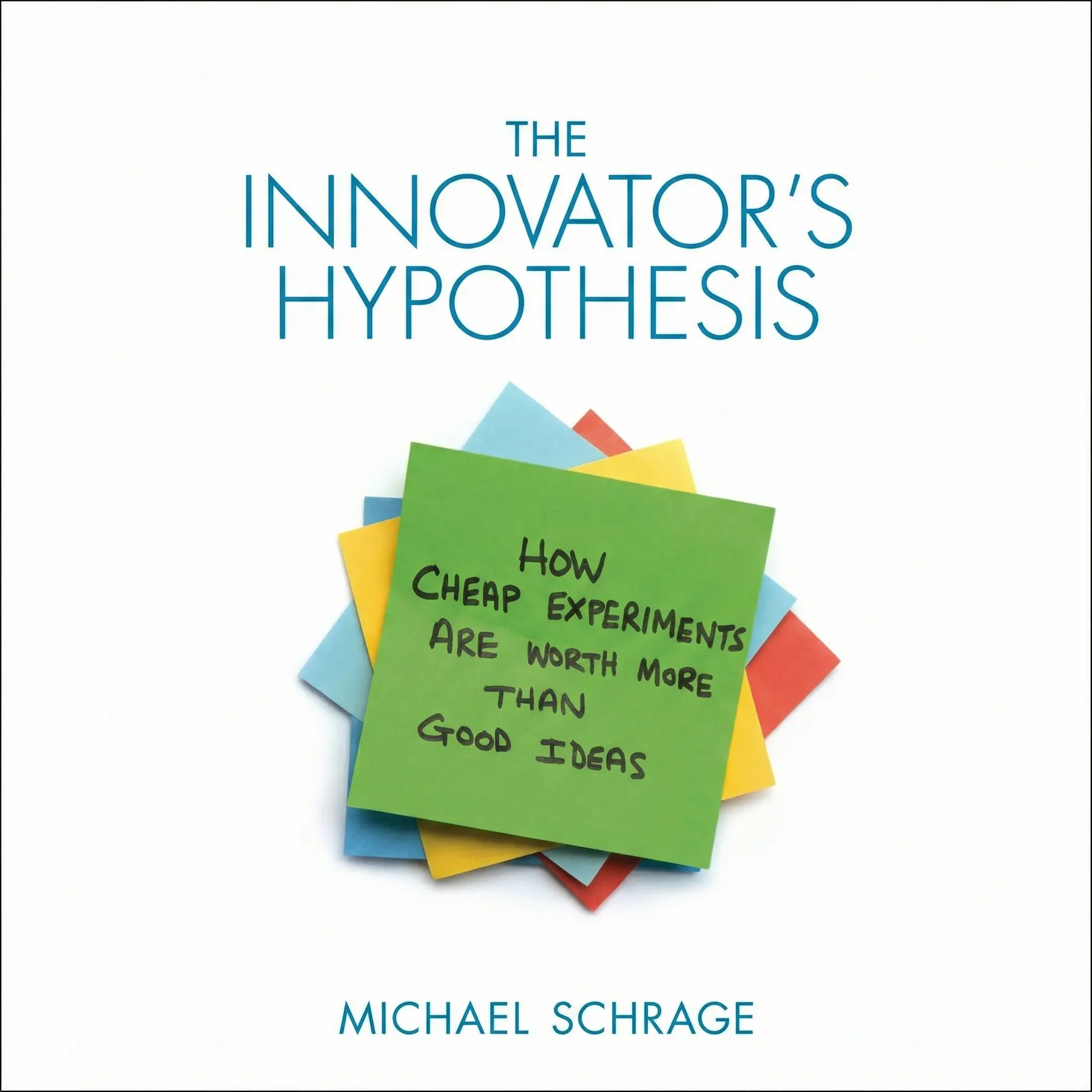
The Innovator’s Hypothesis: How Cheap Experiments Are Worth More than Good Ideas
Discover why low-cost, high-speed experimentation trumps expensive R&D. This guide reveals the 5x5 framework for testing business hypotheses rapidly, helping teams innovate more efficiently while minimizing risk and maximizing market impact.
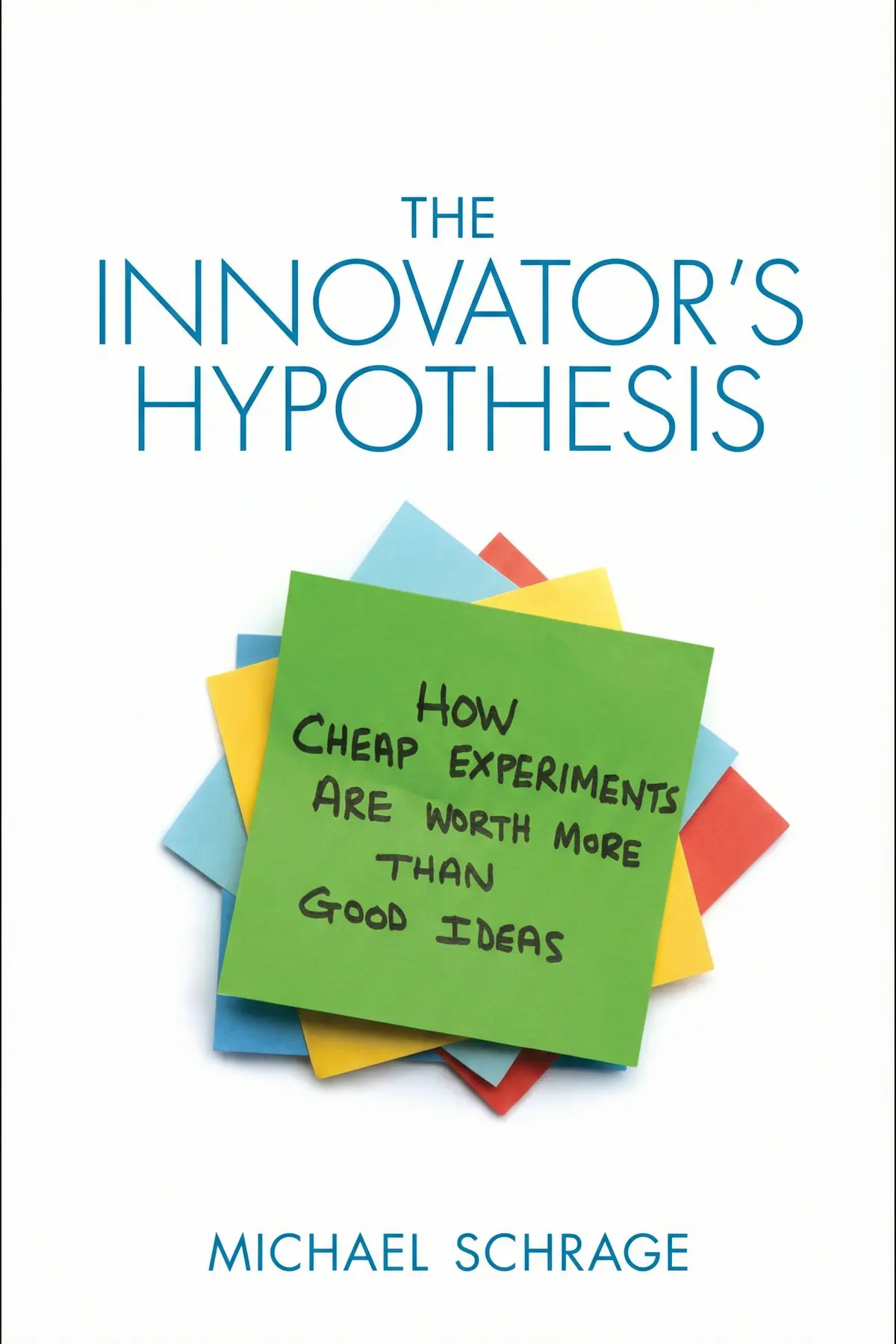
Table of Content
1. Introduction
1 min 52 sec
In today’s global economy, the only constant is the relentless speed of change. Every morning, a new startup emerges, a new technology is patented, or a customer’s preference shifts in a way that could leave established businesses in the dust. Traditionally, the corporate world’s answer to this pressure has been a massive investment in Research and Development. We’ve been told that if we just hire enough Ph.D.s and spend enough millions of dollars, we can buy our way into the future. But there is a glaring problem with this old-school approach: it is slow, it is incredibly expensive, and more often than not, it leads to dead ends.
What if the secret to staying ahead wasn’t about having the ‘best’ idea from the start, but about having a system to test hundreds of ideas quickly and cheaply? This is the core throughline of Michael Schrage’s work. He proposes a fundamental shift in how we think about creativity and progress. Instead of relying on the ‘eureka’ moments of a few geniuses, Schrage advocates for a scientific approach to business. By treating every new idea as a hypothesis to be tested, rather than a plan to be executed, organizations can discover what actually works in the real world.
In this summary, we are going to explore a new framework for innovation—the 5×5 model—that is designed to strip away the bureaucracy and high costs of traditional R&D. We will look at why a ‘searcher’ mentality is more valuable than a ‘planner’ mentality and how you can foster a culture that embraces failure as a necessary step toward success. Whether you are leading a large corporation or launching a small project, the insights here will help you innovate with more speed and significantly less waste. We’ll learn how to bridge the gap between abstract ideas and practical, market-ready solutions through the power of disciplined experimentation.
2. The Evolution from R&D to High-Velocity Experimentation
2 min 00 sec
Traditional research is becoming too slow and costly for the modern market. Discover why businesses are trading heavy analysis for small-scale, rapid-fire testing.
3. The 5x5 Model for Rapid Prototyping
1 min 52 sec
A structured framework can turn abstract ideas into actionable data. Learn how the 5×5 method uses small teams and short timelines to drive results.
4. Adopting a Searcher Mentality Over a Planner Mentality
1 min 51 sec
Innovation is often stifled by a culture that values experience over evidence. Discover the mindset shift required to embrace true discovery.
5. Aligning Experiments with Core Values and Strategic Buy-In
1 min 43 sec
How do you get executives to support small, risky tests? The secret lies in connecting experiments to the company’s fundamental mission.
6. The Future of Innovation and the Role of AI
1 min 55 sec
The next frontier of business experimentation won’t just be human-led; it will be powered by intelligent engines that suggest the next best test.
7. Conclusion
1 min 24 sec
As we wrap up our journey through the world of high-velocity experimentation, the ultimate takeaway is that innovation is not an exclusive club for the wealthy or the exceptionally gifted. It is a disciplined practice that anyone can master if they have the will to act. We have seen how the landscape is shifting away from the slow, bureaucratic R&D models of the past toward a more agile, experimental future. The 5×5 model offers a clear roadmap for this transition, providing a way to test ideas quickly, involve the whole team, and stay aligned with the core mission of your organization.
But remember, as the economist Joseph Schumpeter famously noted, innovation is less about the intellect and more about the will. You can have the most brilliant hypothesis in the world, but it means nothing if you don’t have the courage to put it to the test. The biggest risk in today’s market isn’t making a mistake during a cheap experiment; the biggest risk is standing still while the world moves on without you.
Your next step is simple: stop planning and start searching. Find a small team, pick a question that matters to your business, and design a five-week test to find the answer. Don’t wait for perfection, and don’t wait for permission. The data you gather from a single real-world trial is worth more than a thousand hours of theory. By embracing the innovator’s hypothesis, you aren’t just trying to predict the future—you are actively building it, one experiment at a time.
About this book
What is this book about?
The Innovator’s Hypothesis explores the fundamental shift in how successful modern businesses approach growth and creativity. Rather than pouring millions into long-term research and development projects that often fail to deliver, Michael Schrage argues that the most successful organizations prioritize cheap, fast, and scalable experiments. This approach allows companies to fail fast, learn quickly, and identify winning ideas before investing significant capital. The book provides a practical, actionable framework called the 5x5 model. This system empowers small, diverse teams to generate and test five distinct business hypotheses over a five-week period. By shifting the corporate culture from a 'planner' mentality to a 'searcher' mentality, organizations can navigate the fast-paced market with greater agility. Readers will learn how to align these experiments with their company's core values, gain executive buy-in, and leverage emerging technologies like artificial intelligence to automate the hypothesis-generation process. The ultimate promise is a more predictable and cost-effective path to world-changing innovation.
Book Information
About the Author
Michael Schrage
Michael Schrage is a recognized expert, advisor, and consultant specializing in innovative risk management. He serves as a research fellow at the MIT Sloan School of Management for Digital Business. Known for his insights into how technology transforms business relationships, Schrage is also a highly regarded speaker on the topics of innovation and business experimentation.
Ratings & Reviews
Ratings at a glance
What people think
Listeners highly value the central strategy for fast-paced experimentation, even if there are differing views regarding the writing's repetitiveness and the book's overall length. They find the actionable "5x5x5" system beneficial, as it provides a clear roadmap for groups to execute inexpensive and quick business trials. Furthermore, listeners emphasize the priority given to empirical evidence over standard analysis, pointing out how this streamlines the way organizations innovate. The included practical case studies are also frequently praised, with one listener observing that the concentration on verifiable concepts effectively connects conceptual theory with real-world execution.
Top reviews
Mattanee
Wow, Schrage really hits the nail on the head regarding the scientific method's place in the modern boardroom. Most business schools focus heavily on churning out expert planners, but very few teach the art of the humble experiment. This book makes a passionate plea for empiricism, suggesting that theories about the market are useless until they are tested against reality. I especially loved the '5x5x5' approach because it sets a hard cap on time and capital, which forces teams to actually think about what they are testing. It’s about moving away from hunches and toward evidence-based decision making. In my experience, the hardest part of innovation is bridging the gap between an abstract idea and a functional prototype. This book provides the bridge. It is a vital read for anyone who wants to turn their organization into a learning machine rather than just a planning machine.
Show moreGin
After hearing about 'cheap' innovation for years, it was refreshing to finally see a concrete system for implementation. Schrage’s hypothesis is simple: the more experiments you run, the more likely you are to stumble upon a breakthrough. I’ve been in so many meetings where 'great ideas' are debated for months without a single data point to back them up. This book provides a way out of that cycle by demanding that every idea be turned into a testable hypothesis. The 5x5x5 constraint is brilliant because it removes the fear of failure; if an experiment fails, you’ve only lost five weeks and five thousand dollars. That is a small price to pay for the insights gained. It’s a very useful book on innovation that moves past the 'what' and dives straight into the 'how.' It really helped me put my previous training into context. This should be mandatory reading for every MBA student.
Show moreSamira
This book provides a remarkably clear roadmap for anyone stuck in the paralysis of over-analysis. Schrage argues that the real enemy of innovation isn't a lack of creativity, but rather the high cost and slow pace of traditional business planning. By introducing the 5x5x5 framework—five teams of five people spending five thousand dollars over five weeks—he offers a concrete way to lower the barrier for entry. I found the emphasis on testable hypotheses particularly refreshing compared to the usual vague 'disruption' talk found in management literature. While some sections felt a bit stretched, the core logic of prioritizing rapid empiricism over long-term R&D is undeniable. It is a solid read for those looking to foster a more experimental culture in a corporate setting without breaking the bank. Truth is, most companies spend way too much money on ideas that should have been killed in a week.
Show moreCee
Picked this up on a recommendation and found the 5x5x5 methodology surprisingly easy to visualize for my own team. The author uses a great example about weight loss—everyone knows the 'good' idea is to eat less and exercise, but the 'innovation' is in how you actually implement it. This shift in perspective, focusing on implementation through tiny experiments like lipo or specific diets, makes the concept of innovation feel much more reachable. Not gonna lie, the prose can be a bit dry and clinical at times. Still, the practical value of having a structured way to run $5,000 experiments is huge for a small business like mine. It simplifies a process that usually feels overwhelming and expensive. The book successfully argues that any idea that isn't testable isn't really a good idea yet. I'll be keeping this on my shelf for the framework alone.
Show moreUbolrat
In my experience, the biggest hurdle to growth isn't a lack of ideas, but the astronomical cost of proving them out. Schrage tackles this head-on with his hypothesis-driven approach. He wants us to stop acting like planners and start acting like scientists. The book is filled with examples of how small, inexpensive tests can reveal more about customer behavior than any million-dollar focus group ever could. I found the section on 'cheap' vs. 'expensive' failures particularly enlightening. However, the book does presume you already have a basic grasp of what innovation looks like in your industry. It’s not a complete 'how-to' for the creative side of the process, but rather a guide for the validation side. The 5x5x5 rule is a fantastic management tool that I plan to pitch to my department next quarter. A solid, albeit slightly wordy, addition to the business canon.
Show moreWin
Schrage makes a compelling case for why your next big breakthrough probably won't come from a lab, but from a series of fast, low-stakes trials. This book is a great antidote to the 'big bet' mentality that sinks so many startups. By focusing on high-speed, low-cost experiments, companies can explore a much wider range of possibilities. I appreciated the practical tips on how to structure these teams and what kind of metrics to look for. The tone is authoritative and grounded in real-world application, which I liked. My only real gripe is that the writing can feel a bit circular at times, almost as if the author was trying to meet a word count. Despite that, the message is vital for anyone working in a fast-moving industry. It teaches you how to stop guessing and start knowing. It’s a very helpful guide for bridging the gap between theory and actual implementation.
Show moreAnong
Ever wonder why big corporations struggle to launch anything new without spending millions on R&D? Schrage suggests the answer lies in their fear of being 'cheap' with their experiments. The book introduces a methodology for doing fast, low-cost trials to generate innovative behaviors quickly. I appreciated the distinction he made between R&D and true innovation, which involves a much wider scope of testing business hypotheses. However, for someone already well-versed in the 'jobs to be done' literature, the first half of the book feels quite elementary. It’s mostly a repetitive argument for why experiments are good. The real meat doesn't start until Part III where the 5x5x5 framework is actually explained in detail. It’s a helpful guide for beginners, but experienced innovators might find themselves wanting more depth and less fluff. Not a bad book, just a bit uneven in its pacing.
Show moreThongchai
Look, the shift from heavy-duty planning to rapid-fire testing is a necessary evolution for most businesses today. Schrage makes this case well, emphasizing that the market is the ultimate judge of an idea’s truthfulness. I liked the focus on making ideas testable and the push to involve smaller, diverse teams. But the book is just so long for such a simple premise. I felt like I was reading the same three sentences rephrased in every chapter. While the 5x5x5 model is practical, the author spends far too much time justifying why experiments are better than analysis. Most people reading this probably already agree with that! It’s a bit like preaching to the choir for 200 pages. It is a good resource if you need to convince a skeptical boss to let you try something new, but for the individual contributor, it’s a bit of a slog.
Show moreOn
As a seasoned product manager, I found the core message here incredibly bloated and repetitive. Schrage has one great idea—that quick, cheap experiments are better than slow, expensive planning—and then spends two hundred pages saying it over and over. Frankly, this entire book could have been a three-page Harvard Business Review article or a concise blog post. I was also distracted by the author’s weird interpretations of Keynes and Schumpeter, which seemed to miss their original economic contexts entirely just to fit his narrative. If you are already familiar with Lean Startup or Design Thinking, you won’t find much new here except for the specific 5x5x5 rubric. The writing style is dense and feels like it’s trying too hard to sound academic for a concept that is essentially common sense. I wanted to like this more, but I spent most of the time skimming.
Show moreHang
The chapter on economic theory was where this book lost me. Schrage tries to use Keynesian concepts to explain corporate management, but his understanding of the 'economic systems' Keynes described seems fundamentally flawed. To be fair, the '5x5x5' method is a decent enough heuristic for running a workshop, but it doesn't justify a full-length book. The writing is annoyingly repetitive, hammering home the same point about 'cheap experiments' until you want to put it down. It feels like the author had a great 20-minute presentation and was forced to expand it into a manuscript. If you have ever worked in an agile environment, you already know 90% of what is being proposed here. It's essentially 'fail fast' rebranded with a catchy numerical name. I didn't find the real-world examples particularly enlightening either. Save your money and just look up a summary of the framework online.
Show moreReaders also enjoyed
A Year with Peter Drucker: 52 Weeks of Coaching for Leadership Effectiveness
Joseph A. Maciariello
Acting with Power: Why We Are More Powerful Than We Believe
Deborah Gruenfeld
All In: How Great Leaders Build Unstoppable Teams
Mike Michalowicz
AUDIO SUMMARY AVAILABLE
Listen to The Innovator’s Hypothesis in 15 minutes
Get the key ideas from The Innovator’s Hypothesis by Michael Schrage, plus 5,000+ more titles in English and Thai.
- 5,000+ titles
- Listen as much as you want
- 7-day free trial
- Cancel anytime







