
13 min 39 sec
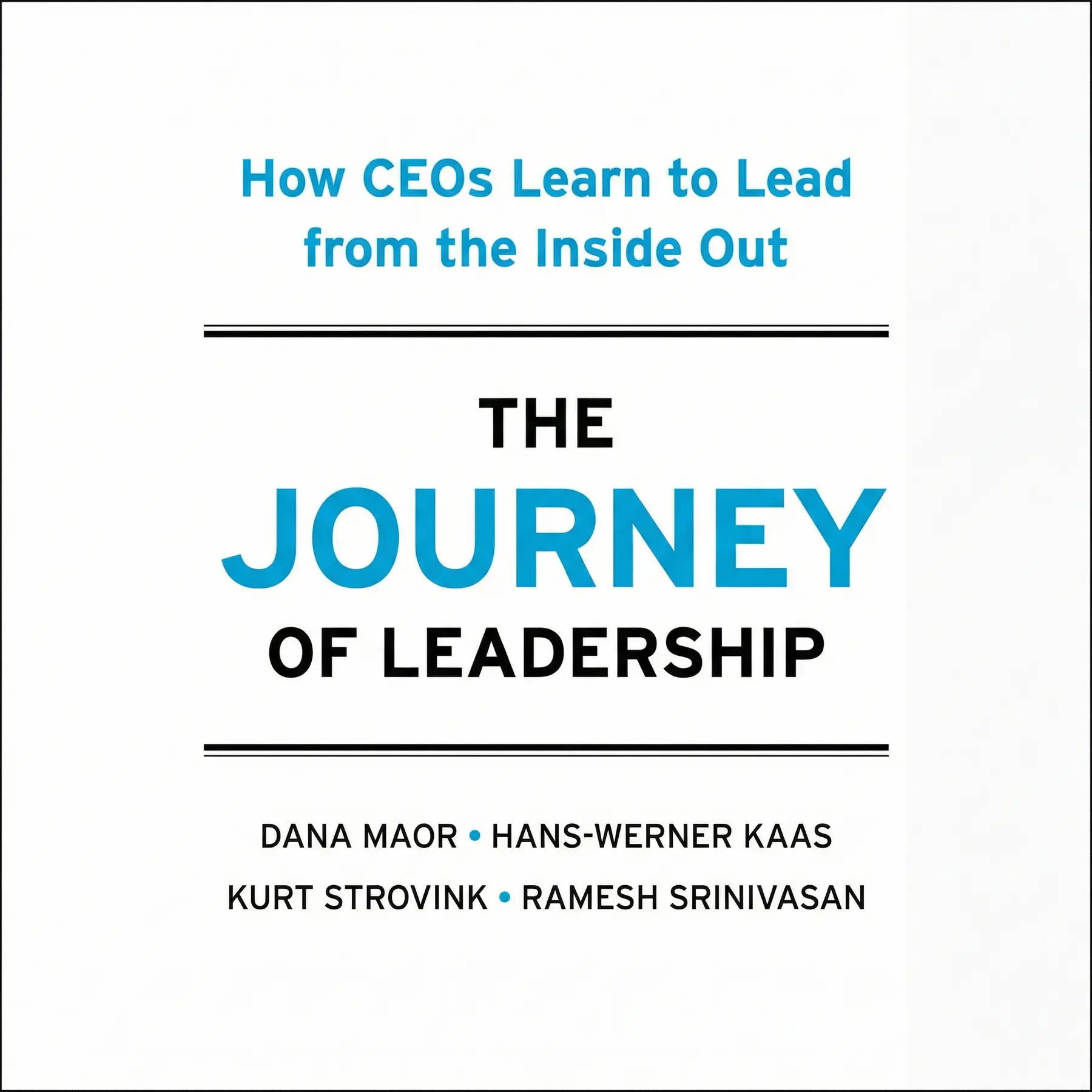
The Journey of Leadership: How CEOs Learn to Lead from the Inside Out
Explore the evolution of modern leadership in this summary of The Journey of Leadership. Learn how self-awareness and human-centric strategies empower executives to navigate complexity and drive sustainable organizational success.
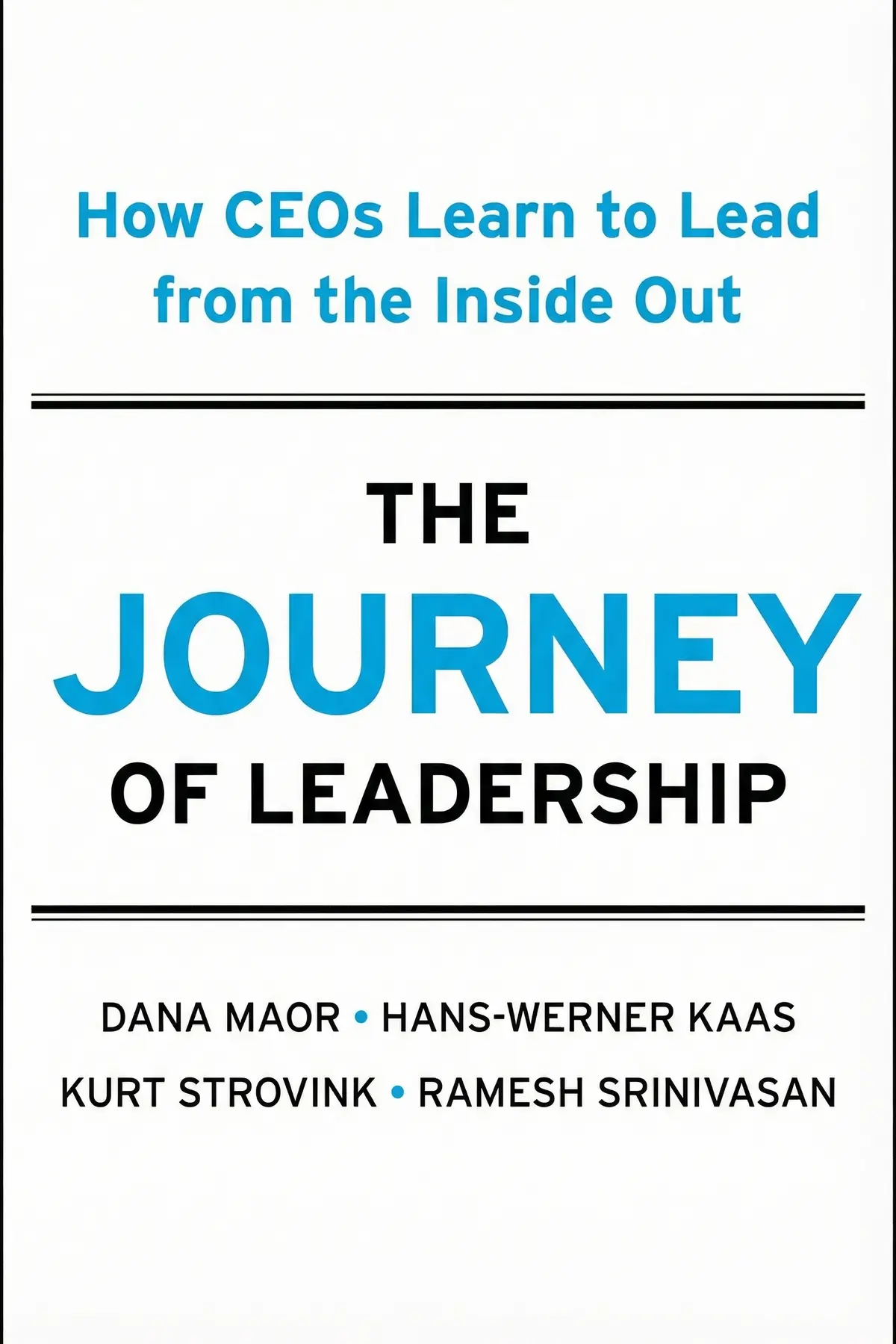
Table of Content
1. Introduction
1 min 57 sec
The modern corporate world is more than a series of balance sheets and strategic maneuvers; it is a complex landscape of human emotions, shifting expectations, and rapid change. For decades, the image of the successful leader was someone who sat at the top of a pyramid, issuing directives and maintaining a stoic, almost untouchable exterior. But as the world becomes more interconnected and the challenges we face become more nuanced, that old model is showing its cracks. There is a growing realization that the tools which helped leaders succeed in the past are no longer sufficient for the demands of the future.
This brings us to a fundamental realization: leadership is not just a role you inhabit or a set of skills you display. It is, as the title suggests, a journey. It is a continuous process of growth that begins not with the external organization, but with the internal self. The Journey of Leadership explores this transition, moving away from the idea of the executive as a cold tactician and toward the idea of the executive as a self-aware, adaptable, and deeply human guide. This transformation is not easy, nor is it ever truly finished, but it is necessary for anyone who hopes to lead an organization toward meaningful and lasting success.
In our time together, we will explore the core pillars of this leadership evolution. We will look at why looking inward is the first step toward effective outward action, and how the ability to adapt your own mindset is the ultimate competitive advantage. We will examine the ways in which leaders can build deeper connections with their teams, fostering environments where innovation can actually thrive. By the end of this journey, the goal is to see leadership not as a destination you reach, but as a path you walk—one that requires courage, curiosity, and a willingness to change. So, let’s begin by looking at the very foundation of this philosophy: the inner world of the leader.
2. The Foundation of Self-Awareness
2 min 08 sec
Discover why the most effective leadership doesn’t start with a boardroom strategy, but with a deep and honest exploration of your own internal landscape.
3. The Courage to Be Vulnerable
1 min 58 sec
Explore the surprising power of showing humanity in high-stakes environments and how vulnerability can actually strengthen your authority rather than diminish it.
4. Adapting Your Leadership Mindset
2 min 00 sec
Learn how the ability to pivot your own perspective is essential for navigating the unpredictable challenges of a global marketplace.
5. Fostering Human-Centric Success
2 min 00 sec
Delve into the transition from managing tasks to leading people, and why the human element is the true driver of long-term performance.
6. Sustaining the Leadership Journey
1 min 54 sec
Examine how to maintain your impact and energy over the long haul, ensuring that your leadership remains effective through every stage of the executive lifecycle.
7. Conclusion
1 min 42 sec
As we come to the end of our exploration of the leadership journey, it’s clear that the path to excellence is an internal one. We have seen that the most effective leaders are those who are willing to look inward, cultivate deep self-awareness, and embrace the vulnerability that comes with being human. They are the ones who can adapt their mindsets to meet the challenges of an ever-changing world and who prioritize the human element of their organizations above all else. This isn’t just a feel-good approach to management; it is a practical and necessary strategy for succeeding in a complex global economy.
The throughline of this entire discussion is the idea of transformation. Leadership is not about reaching a state of perfection or achieving a certain title; it is about the continuous process of becoming a better version of yourself so that you can better serve others. It’s about moving from a mindset of control to a mindset of connection. It requires the courage to be honest with yourself and the discipline to keep growing, even when it’s uncomfortable. This is the ‘inside-out’ shift that defines modern, transformative leadership.
As you move forward, I encourage you to take these insights and apply them to your own life and career. Start with the small things—a moment of reflection before a big meeting, a more honest conversation with a colleague, or a commitment to listen more than you speak. Notice the shadow you cast as a leader and be intentional about the impact you want to have. The journey of leadership is long and demanding, but it is also one of the most rewarding paths you can take. By leading yourself first, you create the possibility of leading others toward a future that is more innovative, more successful, and more human. The journey starts with you, and it starts today.
About this book
What is this book about?
The Journey of Leadership addresses the profound shift required of modern executives moving from traditional command-and-control models toward a more empathetic and reflective style. It presents the argument that true leadership transformation begins with an internal evolution of the leader themselves. By focusing on self-awareness and the human element of business, the book provides a roadmap for navigating the pressures of the C-suite while fostering a culture of innovation. Drawing on extensive research and insights from experts at McKinsey, the book promises to help leaders bridge the gap between their personal values and their professional demands. It offers a framework for becoming more adaptable in the face of uncertainty and explains how shifting one's mindset can unlock greater potential within a team. Ultimately, it is a guide for those seeking to lead with greater purpose and effectiveness in a rapidly changing global landscape.
Book Information
About the Author
Dana Maor
Dana Maor is a prominent figure at McKinsey, where she leads the People and Organizational Performance Practice in Europe and contributes to the McKinsey Knowledge Council. Hans-Werner Kaas, a senior partner emeritus at McKinsey, has served as a co-dean of the Bower Forum and was a member of the Global Client Council. Kurt Strovink is a senior partner at McKinsey’s New York office and heads the firm’s global CEO special initiative. Ramesh Srinivasan has been a senior partner at McKinsey since 1994 and serves as a co-dean of the Bower Forum, bringing decades of experience in leadership development to his work.
Ratings & Reviews
Ratings at a glance
What people think
Listeners find this work to be an intriguing exploration that captures the essence of leading others, providing useful perspectives for those in any stage of their career. The text is highly accessible and offers actionable guidance, while one listener mentions how the content assists in managing competing pressures. Listeners value the way it extracts wisdom from CEO narratives, and one individual points out the skillful integration of real-world examples. They also prize the book's profound emotional resonance, with one listener characterizing the experience as a strong emotional power bust.
Top reviews
Rose
Finally got around to reading 'The Journey of Leadership' and it’s basically an emotional power boost for anyone in management. It’s not just for the C-suite; even for my work with non-profits, the advice on leading through influence without positional power hits home. The way the authors break down the internal vs. external traits feels remarkably fresh for a 2024 release. Truth is, most business books are dry, but this one captures the actual soul of what it means to lead other humans. I particularly enjoyed the sections on selflessness and how that actually creates more long-term value than ego-driven decisions. If you're looking for a guidebook that balances professional grit with genuine humanity, this is it.
Show moreElan
The chapter on being 40% humble and 60% courageous really changed my perspective on how I approach my board meetings. Most books tell you to be one or the other, but Maor and her co-authors understand the nuanced reality of being at the top. It’s a lonely position, and this book addresses that isolation with a level of emotional depth I didn't expect from a McKinsey publication. In my experience, the best leaders are those who can admit they don't know the answer yet, and this text gives you the 'permission' to be that kind of leader. The 'Big Four' techniques for staying calm during a crisis are worth the price of the book alone. This is an essential read for anyone who wants to lead with both their heart and their head.
Show morePot
Wow, what a refreshing take on the 'CEO as a human' instead of the CEO as a machine. I loved the advice about spending the first 30 minutes of your day being present and seeing your family as a source of strength rather than a distraction. It’s rare to find a business book that encourages you to bring your whole self to work, including your vulnerabilities. The MRI approach to slicing problems into thin pieces has already helped me tackle a massive project that seemed impossible last week. Not gonna lie, I was moved by some of the narratives about leaders overcoming their own egos to create something better for their employees. This is more than a management manual; it's a guide for being a better person in a high-pressure world.
Show moreElena
As someone who has navigated the messy reality of executive life for a decade, I appreciated the focus on holding two opposed ideas at once. The book highlights the tension between being certain and remaining willing to change, which is a rare perspective in traditional leadership manuals. I found the '12 essential traits' framework to be a solid mental map for self-evaluation, even if some parts felt a bit redundant. Gotta say, the emphasis on empathy and 'fearless learning' is exactly what’s needed in today’s stakeholder-driven economy. While I wished for a few more tactical, 'day-one' action items in the later chapters, the high-level strategy is undeniable. It’s a strong 4-star read that encourages you to look inward before you try to change the organization.
Show moreBird
Picked this up because I wanted to see how the pandemic changed the conversation around corporate authority and I wasn't disappointed. The case studies are incredibly current, reflecting the modern shift toward human-centric leadership where vulnerability isn't seen as a weakness. Not gonna lie, I was skeptical about the authors' backgrounds, but they do a great job of humanizing Fortune 500 CEOs and military generals. The distinction between having a 'voice' and a 'vote' on projects was a lightbulb moment for me. It provides a practical way to manage expectations and accountability without crushing morale. The writing style is accessible, though the sentence structure can get a bit formulaic in the middle sections. Overall, it’s a valuable resource for anyone trying to balance performance with people-first values.
Show morePierre
Look, leadership books are a dime a dozen, but 'The Journey of Leadership' stands out because of its focus on psychological safety and candor. I appreciated the specific examples of how to encourage healthy dissent within a team without losing control of the narrative. The authors masterfully weave in real-world examples from admirals to non-profit heads, showing that these principles are universal across industries. My only gripe is that it occasionally leans too heavily on the 'Bower Forum' as the only place where these revelations happen. Aside from that, the checklists and self-evaluation questions at the end of each chapter make it very functional. It’s a book I’ll likely keep on my desk to reference during those inevitable 'shit storm' moments. It helps you keep moving when you're tempted to just quit.
Show moreRafael
After hearing several colleagues rave about this, I decided to dive in and see if the hype was real. It’s a fascinating read that captures the evolving soul of leadership in an era where employees demand more than just a paycheck. The authors successfully argue that you must lead yourself before you can lead an organization, which is a truth often overlooked by ambitious executives. I found the section on 'rehearsing your fear' particularly helpful for my own professional development. To be fair, some of the CEO stories feel a bit sanitized, but the underlying lessons remain poignant and applicable. It’s an easy read that manages to be both strategic and deeply personal at the same time. Definitely a solid addition to the 2024 business canon.
Show moreBunyarit
Ever wonder why every leadership book eventually starts sounding the same? This one tries to break the mold with its focus on the 'internal journey,' but it still falls into the trap of being somewhat repetitive for retention's sake. Personally, I found the first half about self-mastery much more engaging than the second half, which felt a bit more like standard management theory. The advice is solid—things like 'pre-mortems' and the 'MRI approach'—but experienced managers might find themselves skimming the more basic sections. It’s definitely a useful tool for a new manager who needs a comprehensive overview of 2024 leadership trends. However, if you've already read the 'greats' of the genre, you might find this to be a collection of well-packaged reminders rather than groundbreaking new insights.
Show moreAnong
To be fair, the book is a decent compilation of what it takes to be a modern executive, but it lacks a certain 'edge.' It feels very safe, which is ironic considering how much it talks about being bold and taking risks. I liked the focus on 'grit vs. quit' and understanding sunk costs, but I wanted more data and fewer anecdotes. Some of the advice feels like it was written for people who have never had a difficult conversation in their lives. However, the 12 traits framework is a helpful way to structure a leadership development program if you're starting from scratch. It’s a 3.5-star book for me—practical and well-written, but just a little too polished to feel truly raw and authentic.
Show moreFon
This book felt like an extended brochure for the Bower Forum, which got pretty old after the tenth mention. Frankly, it’s disappointing when McKinsey partners just recycle grade school chestnuts like 'it's hard to dislike someone once you know them.' While the case studies are from 2024, many of the CEOs mentioned feel like no-name generic characters facing 'meh' crises that are conveniently solved by more McKinsey intervention. The structure is fine, but the content often lacks the intellectual depth I expected from such high-level authors. To be fair, there are a few nuggets about vulnerability, but they are buried under layers of corporate-speak and repetitive themes. It’s a pass for me unless you really love hearing about how great consulting forums are.
Show moreReaders also enjoyed
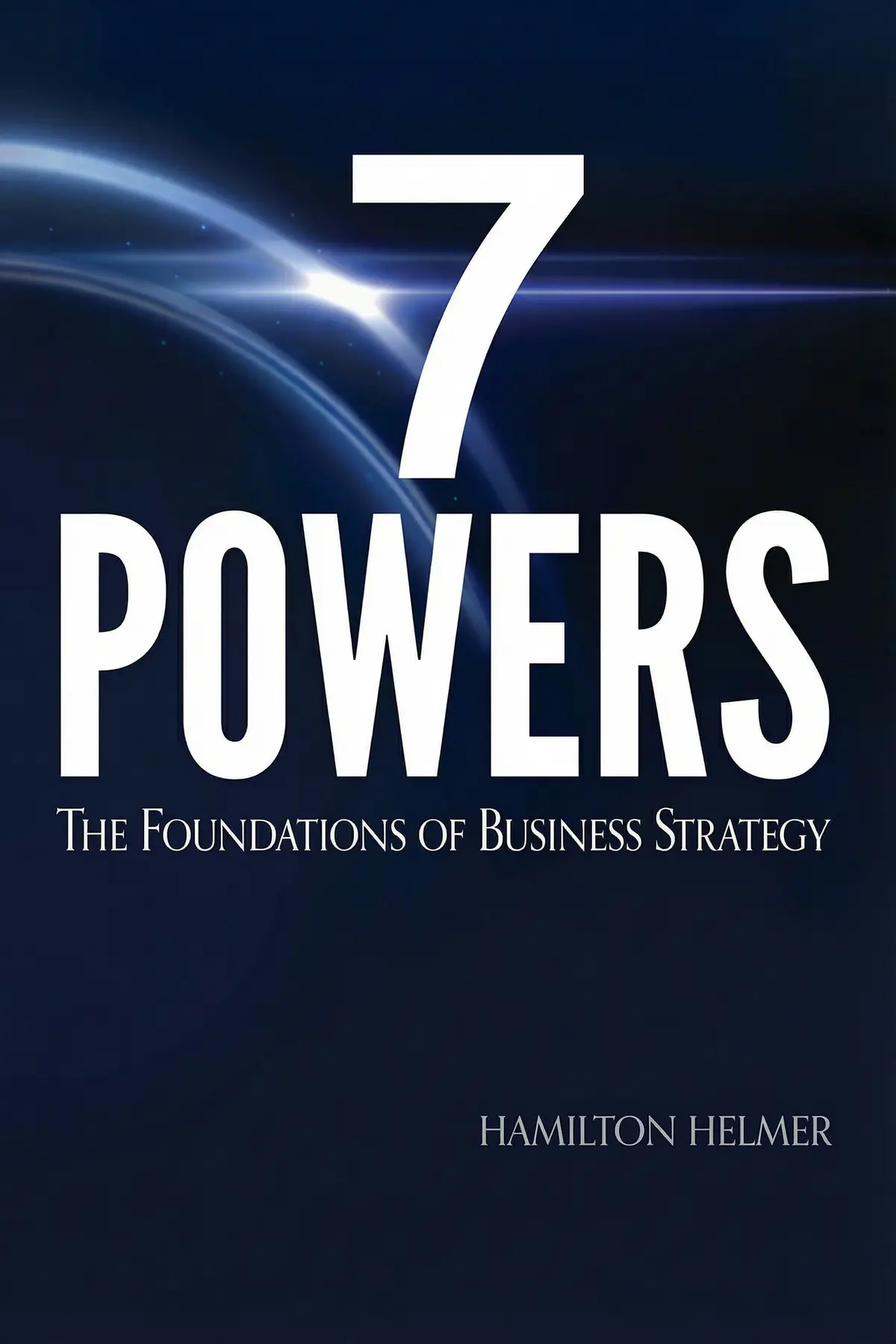
7 Powers: The Foundations of Business Strategy
Hamilton Helmer

A Bigger Prize: How We Can Do Better Than the Competition
Margaret Heffernan
A Year with Peter Drucker: 52 Weeks of Coaching for Leadership Effectiveness
Joseph A. Maciariello
AUDIO SUMMARY AVAILABLE
Listen to The Journey of Leadership in 15 minutes
Get the key ideas from The Journey of Leadership by Dana Maor, plus 5,000+ more titles in English and Thai.
- 5,000+ titles
- Listen as much as you want
- 7-day free trial
- Cancel anytime







