
18 min 04 sec
The Leadership Moment: Nine True Stories of Triumph and Disaster and Their Lessons for Us All
Explore pivotal leadership moments through nine gripping stories of high-stakes decision-making. Learn how vision, communication, and decisive action define success in the most challenging and unpredictable professional and personal environments.
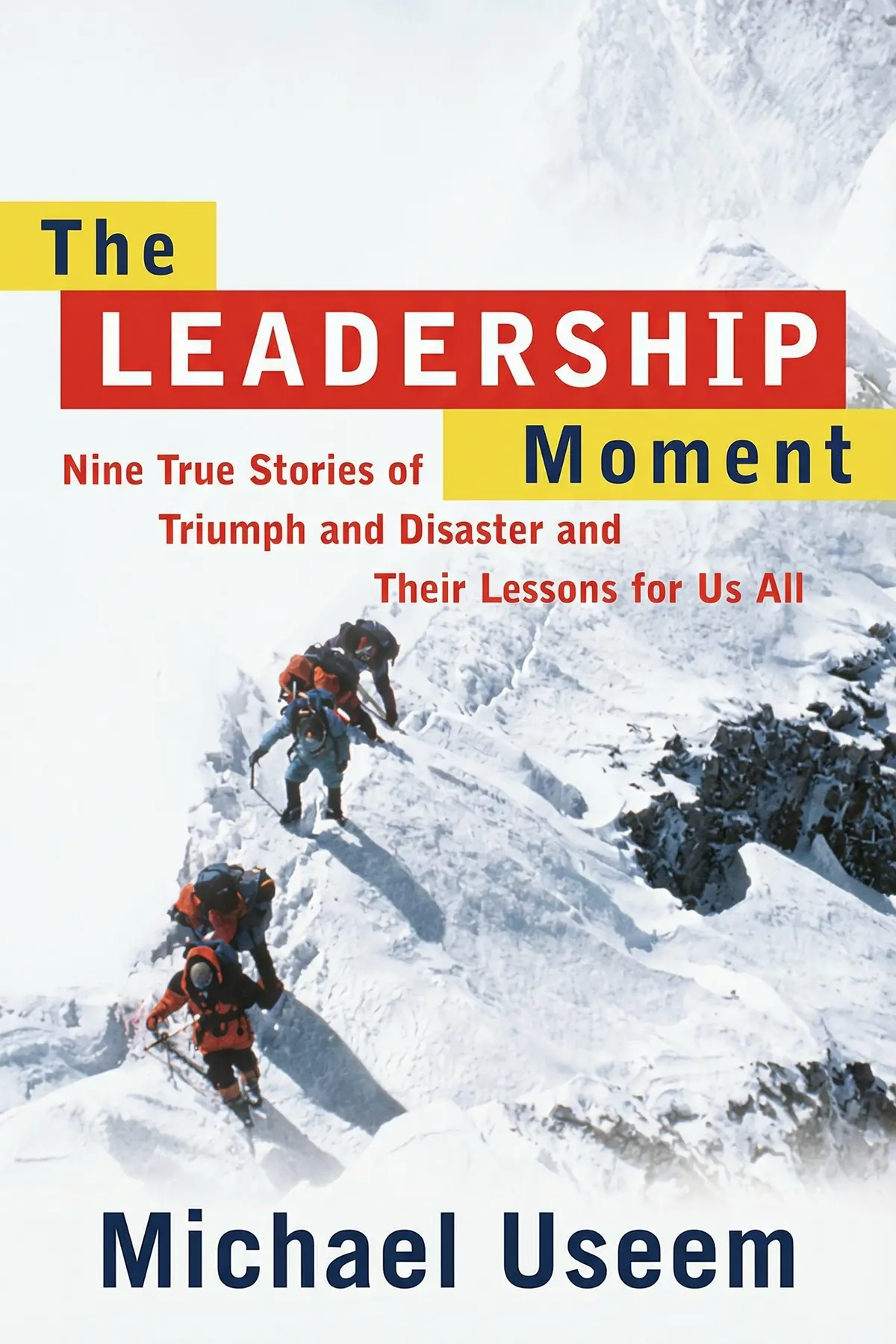
Table of Content
1. Introduction
1 min 27 sec
Every career is defined by specific, high-stakes intervals where the path forward is unclear and the consequences of a wrong move are severe. These are what we call leadership moments. They are the crucibles that test our character, our preparation, and our ability to inspire others. But how do we prepare for a moment we haven’t yet encountered? The answer lies in the experiences of those who have already stood at the edge of the abyss and found a way through—or, in some cases, those who didn’t.
In this summary, we are going to dive into a series of diverse narratives that span from the corporate boardroom to the lunar surface. We will look at nine specific situations where a single individual’s choices dictated the outcome for many. Through these stories, we can extract a set of universal principles that apply whether you are leading a small volunteer team or a multinational corporation.
We will explore why some leaders thrive when the pressure is highest, while others freeze. We’ll look at the vital role of internal values, the necessity of clear communication, and the importance of constantly seeking out new challenges to sharpen your edge. By the end of this journey, you’ll have a clearer understanding of how to conduct yourself when your own leadership moment finally arrives. The goal isn’t just to learn facts about history or business; it’s to internalize the mindsets that allow for triumph in the face of disaster. Let’s begin by looking at how growth as a leader is a continuous, intentional process.
2. The Power of Seeking Greater Challenges
2 min 25 sec
Discover how one leader used increasingly complex roles to build a repertoire of skills that eventually allowed him to transform massive, stagnant organizations.
3. Aligning Personal Values with Professional Mission
2 min 09 sec
See how a leader’s deep commitment to her personal vision allowed her to walk away from a powerful institution to create a more impactful alternative.
4. Prioritizing Human Impact over Profit
1 min 41 sec
Learn about the pharmaceutical leader who stayed true to his company’s core values, even when the financial path seemed daunting.
5. Decisiveness and Composure in a Crisis
1 min 54 sec
Step into the shoes of a NASA flight director to see how gathering facts quickly can prevent catastrophe during a literal life-and-death mission.
6. The High Price of Executive Inaction
1 min 47 sec
Contrast the success of NASA with a corporate failure where a lack of immediate action led to a financial and reputational freefall.
7. The Fatal Consequences of Poor Communication
1 min 47 sec
Experience the harrowing story of a firefighting crew where a leader’s silence led to a total breakdown of trust and a tragic outcome.
8. Winning Support through Empathy and Listening
1 min 30 sec
Explore how a Civil War commander turned a group of mutineers into a loyal fighting force by simply giving them a voice.
9. Building Resilience through Team Consensus
1 min 41 sec
Follow an all-female mountaineering expedition to see how shared decision-making can maintain morale even when individual goals are sacrificed.
10. Conclusion
1 min 43 sec
The nine stories we’ve explored offer a profound look at the anatomy of a leadership moment. From these varied experiences, we can see that leadership is not a static quality but a dynamic response to challenge. It requires a unique blend of preparation, values, and the ability to connect with others. We’ve seen how Clifton Wharton used every role as a stepping stone, how Nancy Barry and Roy Vagelos let their internal compasses guide their most difficult choices, and how Eugene Kranz stayed calm when the stakes were literally astronomical.
Conversely, the failures we examined—the silence of Wagner Dodge and the hesitation of John Gutfreund—remind us that the absence of leadership can be as impactful as its presence, often with tragic results. These stories serve as a mirror, asking us to reflect on our own tendencies. Are we communicating enough? Are we listening to our teams? Do we have the courage to act when things go wrong?
As you move forward in your own career, remember that you don’t have to wait for a crisis to start practicing these skills. You can seek out challenges today that will prepare you for tomorrow. You can clarify your values now, so they are ready when they are tested later. And you can begin to foster a culture of consensus and empathy in your current team.
The final lesson is that leadership is a choice. It is a choice to step forward when others step back, to speak when it is easier to stay silent, and to put the needs of the mission and the people above your own. By internalizing these lessons from history and business, you are not just studying the past; you are preparing your own path to triumph in your future leadership moments. Take these stories with you, and use them as a guide to lead with purpose, clarity, and compassion.
About this book
What is this book about?
The Leadership Moment explores the high-pressure world of decision-making through a series of dramatic, real-life case studies. By examining the choices made by individuals in moments of extreme crisis or opportunity, the book reveals the core principles that separate effective leaders from those who falter. You will walk through the corridors of power at the State Department, the tense control rooms of NASA, the treacherous slopes of the Himalayas, and the literal battlefields of the American Civil War. The promise of this work is that leadership is not an innate trait but a set of skills that can be sharpened through the study of others' experiences. Whether it is the story of a corporate executive restructuring a massive pension fund or a firefighter facing an out-of-control blaze, each narrative provides a blueprint for handling complexity, managing teams, and staying true to a core mission. It offers practical wisdom on when to act, how to speak, and why empathy is often the most powerful tool in a leader's arsenal.
Book Information
About the Author
Michael Useem
Michael Useem is a distinguished professor at the Wharton School of the University of Pennsylvania. In addition to his teaching duties, he serves as the Director of the Center for Leadership and Change Management. A renowned expert in the theory and practice of leadership, Useem has dedicated his career to analyzing how individuals and organizations navigate change. He is also the author of several other influential works, including The Leader’s Checklist and The Go Point: When It’s Time to Decide.
Ratings & Reviews
Ratings at a glance
What people think
Listeners find the quality of information in this book to be outstanding, with one noting it is grounded in leadership and management theories. The narratives are also highly engaging, as one listener points out how real-life experiences are used to depict true leadership challenges. Additionally, the book offers solid examples of leading others. However, listeners hold conflicting views on how easy the text is to read.
Top reviews
Amy
What an absolute powerhouse of inspiration for anyone stepping into a management role for the first time. The diversity of the nine stories is what makes this book stand out from the typical business shelf. From Arlene Blum leading an all-female team up Annapurna to Alfredo Cristiani’s delicate negotiations in El Salvador, the scope is massive. Useem highlights that leadership isn't a one-size-fits-all suit. Instead, it’s about making critical decisions when your personal values are tested by your organization or environment. I found the section on Roy Vagelos and the fight against River Blindness particularly moving because it shows the ethical side of leadership that often gets ignored in profit-driven books. The prose is clear, and the lessons provided are practical enough to apply to my own career immediately. This book doesn't just tell you what to do; it shows you what it looks like when everything is falling apart and someone has to step up. A must-read for anyone who feels like a 'reluctant' leader.
Show morePaiboon
Finally got around to finishing this, and the lessons on Arlene Blum’s mountain climbing expedition alone made it worth the purchase. Useem has a gift for picking stories that illustrate the raw, messy reality of leadership rather than the sanitized 'hero' versions we usually see in the press. This isn't just about winning; it’s about the burden of responsibility and the consequences of failure. The book forces you to ask yourself: 'What would I have done in that situation?' That kind of active engagement is rare in non-fiction. I loved how the author integrated the importance of vision and building a team of leaders within the ranks. The specific examples, like the fight against global poverty at Women's World Banking, provide a really broad perspective on what 'success' actually looks like. It’s an engrossing read that bridges the gap between high-stakes adventure and daily management. I’ve already recommended it to several people in my department who are struggling with team buy-in.
Show moreRatchanee
Rarely do you find a business book that manages to bridge the gap between historical drama and practical leadership strategy so effectively. Useem’s selection of cases is brilliant. I was particularly struck by the account of Joshua Chamberlain at the Battle of Gettysburg; it really highlighted how personal leadership and character can change the course of history. The book emphasizes that we all face 'leadership moments' in our daily lives, even if they aren't as dramatic as a civil war or a space mission. The advice on gaining commitment and building camaraderie is timeless. Unlike some other management books that feel like they were written in a vacuum, this one is grounded in real-world struggles and adversities. The insights into how Warren Buffett saved Salomon Inc. are equally fascinating for those of us in the corporate world. It’s an amazing powerhouse of motivation and practical guidance. I finished the book feeling better prepared for the challenges life throws at me.
Show moreSofia
The chapter on Eugene Kranz and the Apollo 13 mission really set the tone for this entire collection. Useem does a fantastic job of illustrating how a leader functions under extreme pressure when lives are literally on the line. I appreciated how the book isn't just about corporate boardrooms; it spans across firemen, mountain climbers, and historical figures like Joshua Chamberlain at Gettysburg. The narrative flow is generally strong, though I found the transition from the high-stakes storytelling to the academic analysis a bit jarring at times. While the leadership principles summaries at the end of each section felt slightly repetitive, the core insights are undeniably valuable for anyone navigating a complex organization. It’s a solid mix of historical recount and management theory that avoids being too preachy. If you enjoy learning through case studies rather than abstract concepts, you'll find plenty to chew on here. It’s definitely not a one-sitting read, but rather something to digest slowly, one 'moment' at a time.
Show moreArm
After hearing about Useem’s work from a colleague, I decided to give this a shot during my commute. The book’s premise—that we prepare for our own leadership moments by reliving the challenges of others—really resonated with me. I particularly liked the contrast between different styles of leadership, such as John Gutfreund’s failure at Salomon Inc. versus Warren Buffett’s intervention. It’s a great reminder that inaction or a lack of vision can be just as damaging as a bad decision. The book is well-detailed and backed up with enough theory to satisfy an MBA student, yet the stories remain accessible to a general audience. My only real gripe is that some chapters feel significantly more polished than others. Some of the principles felt like they were reaching a bit too far to create a 'list' for the reader. Still, the overall experience was positive. It helped me reflect on how I want to handle my own pivotal moments when they inevitably arrive.
Show moreYaowaluk
As someone who has always preferred learning through narratives rather than dry textbooks, this hit the mark. The selection of nine true stories of triumph and disaster is excellent. You get a little bit of everything: NASA, business, social service, and war. The book does a wonderful job showing how a leader's personal character is just as important as their expertise or the power of their office. I think the most important takeaway for me was the idea of preparing your colleagues and organization before the crisis actually hits. The writing style is generally engaging, though some of the management-speak can get a little dense in the summary sections. Not gonna lie, I skimmed a few pages of the TIAA-CREF chapter because it felt a bit dry compared to the life-and-death stakes of the other stories. However, the overall package is incredibly valuable. It’s a book that encourages reflection and provides a solid foundation for anyone looking to cultivate their own leadership style.
Show moreJib
Pick this up if you want a break from the usual 'guru' style leadership books that dominate the market. Michael Useem provides a refreshing look at leadership through the lens of nine very different individuals. The variety is what kept me turning the pages—one minute you're in the middle of a Montana forest fire, and the next you're navigating the complexities of a global bank. Truth is, not every chapter landed perfectly for me. The business restructuring case felt a bit slow compared to the high-adrenaline stories of NASA and mountain climbing. But even in the slower moments, there’s a lot of wisdom about how to align personal values with organizational goals. The book is well-detailed and serves as a great reminder that leadership is often about the small actions we take every day to mobilize others. It’s an action-gripping and learning-filled read that I’ll likely revisit. It’s definitely earned a permanent spot on my shelf.
Show moreWachira
Is this a history book or a management manual? At times, The Leadership Moment feels like it’s having an identity crisis. The storytelling is top-notch, especially the gripping account of the Apollo 13 crisis and the bravery shown at Gettysburg. However, the analysis that follows each story often feels like a letdown. To be fair, Useem provides a decent framework for leadership, but his 'ten cents' at the end of each chapter often felt like he was over-explaining the obvious. I often found myself thinking, 'Yes, I got that from the story itself, thank you.' A few of the business-centric stories, like the one about TIAA-CREF, weren't nearly as captivating as the survival or war stories, which made the pacing feel uneven. It’s a good compilation if you haven't heard these specific stories before, but don't expect groundbreaking philosophical shifts. It serves as a decent introduction to leadership case studies, but it lacks a certain depth in its final synthesis.
Show moreJavier
Look, the stories in this book are genuinely fantastic. Useem has curated a list of historical moments that are both diverse and intense. However, the laborious way he pulls leadership principles out of them made it a bit of a slog for me. It felt like the author didn't trust the reader to understand the point of the story without hitting them over the head with a bulleted list of takeaways. Personally, I would have preferred more historical context and less forced application. Some of the principles, like 'Move Fast' or 'Know Yourself,' are so foundational that they didn't really need a whole chapter of justification. That said, I am glad I read it because it introduced me to several figures I want to learn more about now. It’s a decent primer, but if you’ve already read a lot of leadership literature, much of this will feel like common sense dressed up in historical garb.
Show moreEli
I really wanted to like this, but I struggled to stay engaged throughout the middle sections. While the historical accounts themselves are fascinating—particularly the tragedy of the forest fires—the way Useem tries to extract specific leadership lessons feels incredibly forced. Frankly, it felt like he had a set of management theories he wanted to prove and then went hunting for stories to fit them, rather than letting the history speak for itself. Most of the conclusions he reaches are things an observant reader would have already gathered on their own. By the time I got to the sixth story, the pattern became so predictable that reading it started to feel like a chore. The writing is quite dry in the analytical portions, making it a very difficult book to finish if you aren't a die-hard fan of academic management literature. I would have much preferred a more comprehensive history of these events without the 'pulpit' style of teaching at the end of every chapter.
Show moreReaders also enjoyed
A Year with Peter Drucker: 52 Weeks of Coaching for Leadership Effectiveness
Joseph A. Maciariello


Acting with Power: Why We Are More Powerful Than We Believe
Deborah Gruenfeld
All In: How Great Leaders Build Unstoppable Teams
Mike Michalowicz
7 Powers: The Foundations of Business Strategy
Hamilton Helmer
AUDIO SUMMARY AVAILABLE
Listen to The Leadership Moment in 15 minutes
Get the key ideas from The Leadership Moment by Michael Useem, plus 5,000+ more titles in English and Thai.
- 5,000+ titles
- Listen as much as you want
- 7-day free trial
- Cancel anytime







