
18 min 03 sec
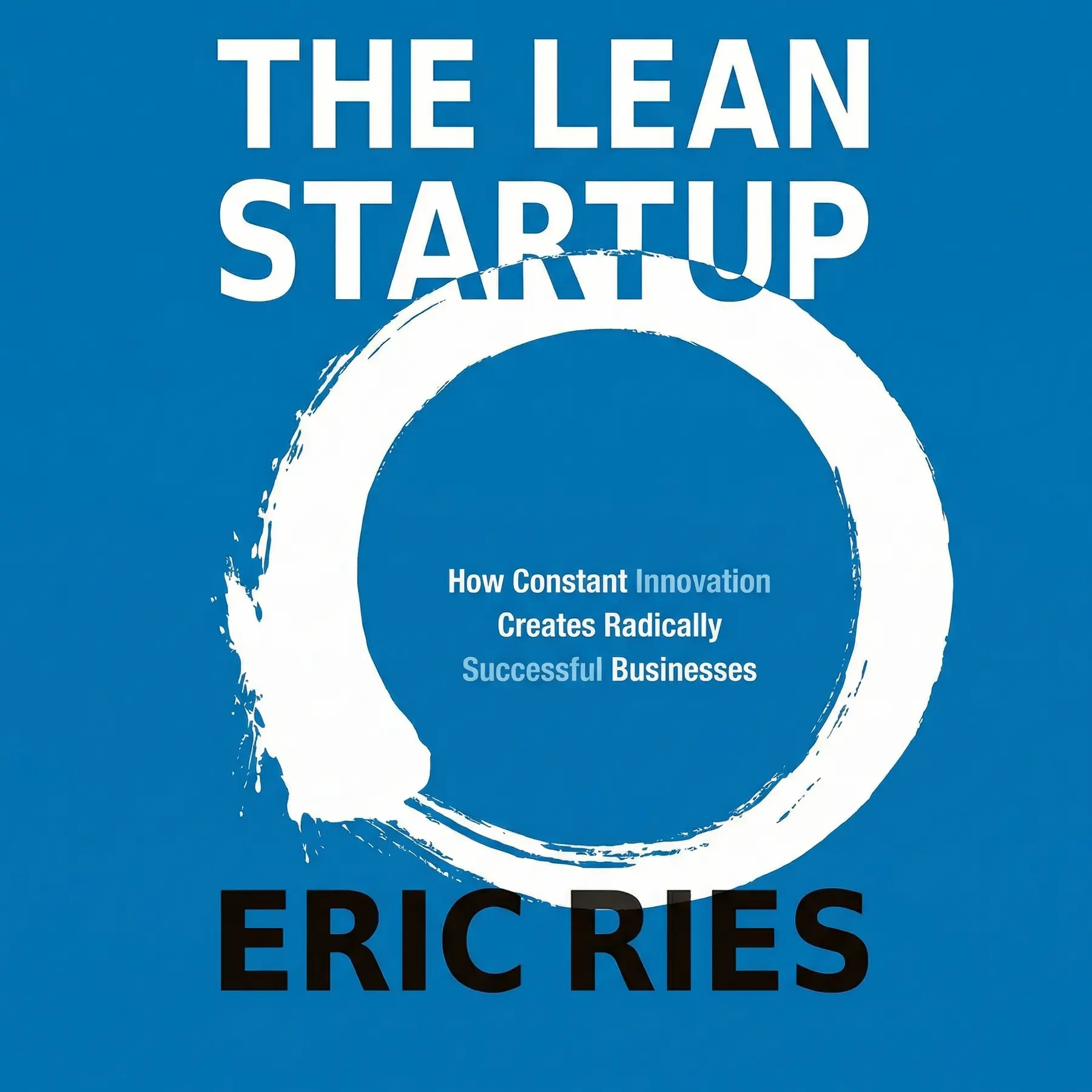
The Lean Startup: How Constant Innovation Creates Radically Successful Businesses
By Eric Ries
The Lean Startup provides a scientific framework for building successful businesses by prioritizing rapid experimentation, validated learning, and iterative product development to thrive in environments of extreme uncertainty.
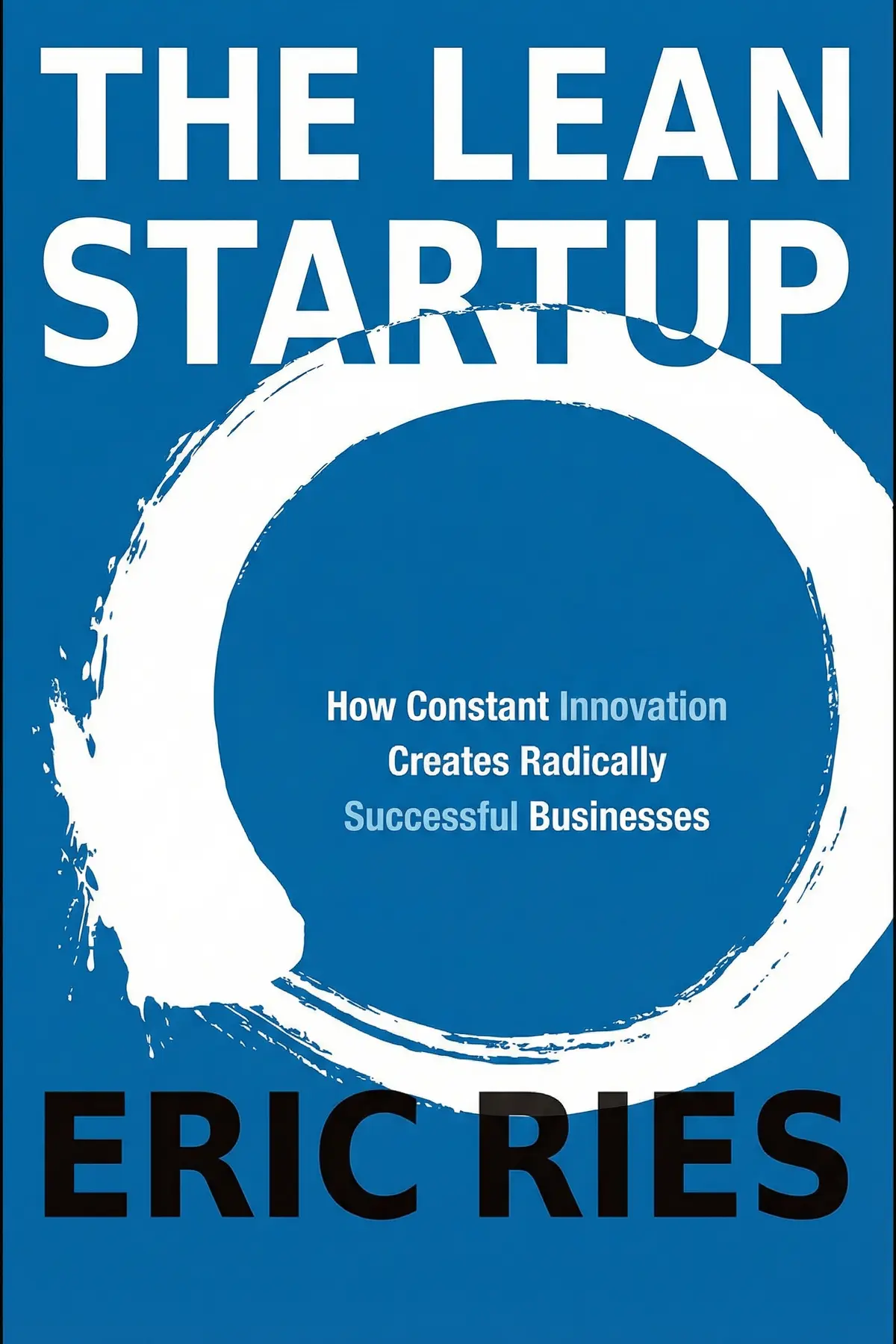
Table of Content
1. Introduction
1 min 42 sec
Every year, thousands of new businesses are launched with high hopes, only to disappear within a few months or years. The tragedy isn’t just the lost money or the failed dreams; it’s the colossal waste of human time, passion, and creativity. We often imagine that startups fail because they didn’t have a good enough plan, or because the founders weren’t working hard enough. But the reality is often the opposite. Many failed startups do everything ‘right.’ They create elaborate business plans, hire the best talent, and build high-quality products. They follow the traditional rules of management to the letter, yet they still crash and burn.
This is where Eric Ries enters the conversation. In The Lean Startup, he offers a fundamental shift in how we think about entrepreneurship. He suggests that the old way of managing—which works well for established companies in stable markets—is a recipe for disaster in the world of startups. When you are operating in a space where the product, the customer, and the market are all unknown, you cannot manage by looking in the rearview mirror or following a rigid five-year plan.
Instead, we need a new kind of management, one that treats a startup as a scientific experiment. The core of this methodology is about shortening the time between an idea and the realization of whether that idea is actually viable. It’s about learning what customers really want, rather than what they say they want or what we assume they want. Over the course of this summary, we will explore a systematic way to navigate uncertainty, measure progress through what Ries calls ‘validated learning,’ and build an organization that can adapt and thrive in a rapidly changing world. The goal is simple but profound: to stop wasting people’s time and start building businesses that truly matter.
2. A New Definition of Entrepreneurship
1 min 48 sec
Discover why being an entrepreneur is about more than just starting a tech company and why it requires a specific kind of management.
3. Learning as the Primary Unit of Progress
1 min 54 sec
Learn why the most important thing a startup can produce isn’t a product, but a specific type of knowledge that proves a business is viable.
4. The Build-Measure-Learn Feedback Loop
2 min 01 sec
Explore the engine of the Lean Startup and how to use it to speed up your path to a successful business model.
5. The Power of the Minimum Viable Product
1 min 52 sec
Understand why your first version shouldn’t be perfect and how a simple prototype can save you months of wasted effort.
6. Avoiding the Trap of Vanity Metrics
1 min 41 sec
Discover why not all data is created equal and how to tell the difference between real progress and empty numbers.
7. The Strategic Choice: Pivot or Persevere
1 min 44 sec
Learn how to recognize when your current strategy isn’t working and how to change direction without losing your vision.
8. The Three Engines of Sustainable Growth
1 min 51 sec
Understand the different ways a business can grow and how to focus your efforts on the right engine for your startup.
9. Small Batches and the Five Whys
1 min 57 sec
Discover how small changes in your workflow can lead to massive improvements in speed, quality, and organizational health.
10. Conclusion
1 min 33 sec
Building a startup is one of the most difficult and uncertain things a person can do. The old rules of business, which emphasized long-term planning and perfect execution, are often worse than useless in the face of the unknown. They lead to ‘the build-it-and-they-will-come’ fallacy, which has resulted in countless failed ventures and wasted lives.
The Lean Startup provides a different path. It’s a path that values learning over planning, experimentation over intuition, and data over ego. By embracing the Build-Measure-Learn loop, focusing on validated learning, and having the discipline to pivot when necessary, entrepreneurs can dramatically increase their chances of building something that lasts.
But perhaps the most important takeaway from Eric Ries’s work is the idea that entrepreneurship is a discipline that can be mastered. It is not about being born with a special ‘vision’ or being a reckless risk-taker. It is about a commitment to a rigorous, scientific process. It’s about being humble enough to realize that your assumptions might be wrong and being agile enough to act on what the world is telling you.
As you move forward with your own ideas, remember that the goal isn’t just to work hard, but to work on the right things. Don’t fall in love with your solution; fall in love with the problem you’re solving for your customers. Use the tools of the Lean Startup to test your ideas early and often. Stop guessing, start measuring, and most importantly, never stop learning. By doing so, you won’t just avoid waste; you’ll build an organization that is capable of changing the world, one small batch at a time.
About this book
What is this book about?
The Lean Startup addresses the central problem of modern business: why so many new ventures fail despite having great ideas and talented teams. Eric Ries argues that traditional management practices, which rely on elaborate planning and market forecasting, are ill-suited for the unpredictable nature of startups. Instead, he proposes a new methodology based on the principles of lean manufacturing and scientific experimentation. This approach promises a more efficient way to build a sustainable business. By focusing on creating a Minimum Viable Product and using a continuous feedback loop known as Build-Measure-Learn, entrepreneurs can stop wasting time on products that customers don't actually want. The book provides a roadmap for navigating uncertainty, knowing when to change direction, and how to scale growth through measurable data rather than vanity metrics.
Book Information
About the Author
Eric Ries
Eric Ries is a highly accomplished entrepreneur who co-founded IMVU, a social networking platform known for its innovative use of 3D avatars. Drawing from his experiences in the tech industry and his challenges with traditional business models, he developed the Lean Startup methodology. Today, Ries is a prominent consultant and public speaker, sharing his insights on innovation and entrepreneurship with organizations worldwide.
Ratings & Reviews
Ratings at a glance
What people think
Listeners strongly suggest this title for entrepreneurs, commending its straightforward explanations and the inclusion of realistic examples throughout. The text presents innovative concepts through a very functional lens, serving as a beneficial tool for emerging companies. Listeners value the revolutionary framework for business creators, with one individual pointing out how it aids in scaling a business without squandering time or energy.
Top reviews
Jackson
Wow, this was exactly the slap in the face I needed for my current project. I previously assumed 'lean' just meant 'cheap,' but Ries shows it is actually about discovering the truth through rigorous experimentation and hard facts. The story about the 'Wizard of Oz' test, where the work is done behind the scenes manually to test value, completely changed my perspective on product development. Frankly, it is a relief to realize that failing is just a prerequisite to learning, provided you have the right metrics in place to track it. I have started sticking quotes about 'vanity metrics' on my office wall to remind the team to stay focused on what actually drives growth. If you are tired of building features that get zero traction, you need to read this immediately.
Show moreLandon
The chapter on 'innovation accounting' alone makes this book worth the price of admission for any serious entrepreneur. Ries identifies the big question of our time: it is not 'Can it be built?' but 'Should it be built?' by real customers. I love his blunt reminder that customers do not care how much time you spent on a feature; they only care if it solves their specific problems. This book gives you permission to ship 'terrible' products early so you can stop wasting months on ideas that are destined to fail in the market. Every startup employee should understand the 'Three Engines of Growth' to ensure the whole company is moving in the same direction. It is a transformational way of thinking about business that moves beyond the typical 'just do it' chaos.
Show moreYanin
Personally, I think this is one of the few business books that actually lives up to its massive reputation. Having read Steve Blank and Geoffrey Moore, I find that Ries does a fantastic job of synthesizing those complex ideas into a more accessible framework. The focus on 'validated learning' prevents the usual trap of following a 'grand plan' into a brick wall of market indifference. I especially liked the borrowing of Toyota’s lean manufacturing concepts and applying them to the world of intangible software development and innovation. It is a highly pragmatic approach that forces you to be intellectually honest about whether your business is actually gaining traction or just treading water. It turns the 'art' of the startup into something much closer to a manageable, repeatable science.
Show moreSomkid
Finally got around to reading this, and I am kicking myself for not starting it years ago when I first heard the title. It provides a clear, articulated path for growing a business without wasting unnecessary time, effort, or capital on unproven fantasies. The 'Minimum Viable Product' is often misused as an excuse for laziness, but Ries clarifies that it is actually about the fastest way to get through the feedback loop. Not gonna lie, some of the 'boring stuff' like accounting and split-testing is what actually ends up being the most revolutionary part of the book. It is not a 'get rich quick' scheme; it is a 'do not fail stupidly' manual that every founder needs. The advice is clear, the logic is sound, and the results of applying it are undeniable.
Show morePia
This book provides a rigorous framework for navigating the extreme uncertainty that defines every new venture in today’s market. Ries successfully argues that entrepreneurship is a form of management that requires a scientific approach rather than just raw intuition or total chaos. I appreciated the heavy emphasis on validated learning and the 'Build-Measure-Learn' loop, which helps teams avoid the trap of building products that nobody actually wants. While some examples feel heavily skewed toward the software industry, the core concepts regarding actionable metrics remain universally applicable for any growth-minded leader. The writing can occasionally feel a bit dry, but the pragmatic advice on pivoting makes it a necessary addition to any business shelf. It is not just about being fast; it is about being focused and disciplined with your precious resources.
Show morePat
After hearing so much hype about the 'lean' movement, I finally decided to see what all the fuss was about. The book offers a ground-breaking methodology that replaces traditional business plans with a series of small, calculated tests to prove your assumptions. I found the 'concierge MVP' example particularly insightful because it demonstrates how to validate a market before writing a single line of code. Look, there are some valid criticisms regarding how well this applies to heavily regulated industries or hardware where you cannot just 'pivot' overnight. Despite that, the emphasis on building a process before building a product is a lesson every founder should internalize deeply. It is a very pragmatic resource, even if the author’s tone can feel a bit condescending at times.
Show moreElan
Picked this up as assigned reading for a work meeting and ended up pleasantly surprised by how much it actually made sense. The writing style is definitely more 'business school textbook' than 'thriller,' but the practical examples help ground the more abstract theories in reality. I think the concept of the 'Pivot' is the most misunderstood part of startup culture, and Ries does a great job explaining why it requires both courage and data. My only real gripe is that it feels very biased toward Silicon Valley software companies that can iterate in the cloud every hour. For those of us in different sectors, you have to do a bit of mental gymnastics to apply these rules to physical goods. Still, the core message of avoiding waste is something everyone can benefit from.
Show moreRoo
Ever wonder why some startups with millions in funding still manage to crash and burn while others succeed on a shoestring budget? Eric Ries suggests it is because the winners focus on the process of learning rather than just the execution of a static, outdated plan. While I found the author's delivery a bit 'know-it-all' in certain chapters, the underlying logic of the 'Pivot' is impossible to ignore. Truth is, we all have a tendency to fall in love with our own ideas, and this book provides the cold bucket of water needed to wake up. The section on the 'Five Whys' was a great takeaway for improving internal communication and getting to the root of recurring problems. It is a solid read that offers a new kind of management for today's uncertain world.
Show moreYothaka
Is this a business manual or a series of advertisements for the author's previous consulting work? I find myself conflicted because the core ideas are easily five-star material, but the actual delivery feels like being lectured by a precocious toddler. The book relies heavily on case studies that feel more like anecdotes than actual scientific proof, which is ironic given the heavy focus on 'science.' I do appreciate the distinction between 'vanity metrics' and 'actionable metrics,' as most of us are guilty of looking at numbers that just make us feel good. Nevertheless, the repetitive nature of the feedback cycle makes the middle section feel like it is spinning its wheels. It is worth reading for the philosophy, but do not expect a smooth or particularly humble narrative.
Show moreDimitri
Measure. Pivot. Measure. Pivot. If you grasp those two simple words, you have basically finished the book without needing to slog through two hundred pages of repetitive filler. I found the first third particularly frustrating because the author says the same thing ten different ways without adding any new informational value. While the concept of the Minimum Viable Product is genuinely brilliant, the execution of the writing itself sucked almost all the joy out of the reading experience. To be fair, the last section picks up some steam when it finally dives into 'innovation accounting' and specific case studies like the Toyota lean manufacturing model. However, the professorial tone and the 'know-it-all' vibe made it difficult for me to stay engaged for long periods. It is a great blog post stretched into a mediocre book.
Show moreFeatured in
Readers also enjoyed
7 Powers: The Foundations of Business Strategy
Hamilton Helmer
Alibaba: The House That Jack Ma Built
Duncan Clark
AUDIO SUMMARY AVAILABLE
Listen to The Lean Startup in 15 minutes
Get the key ideas from The Lean Startup by Eric Ries, plus 5,000+ more titles in English and Thai.
- 5,000+ titles
- Listen as much as you want
- 7-day free trial
- Cancel anytime







