
20 min 07 sec
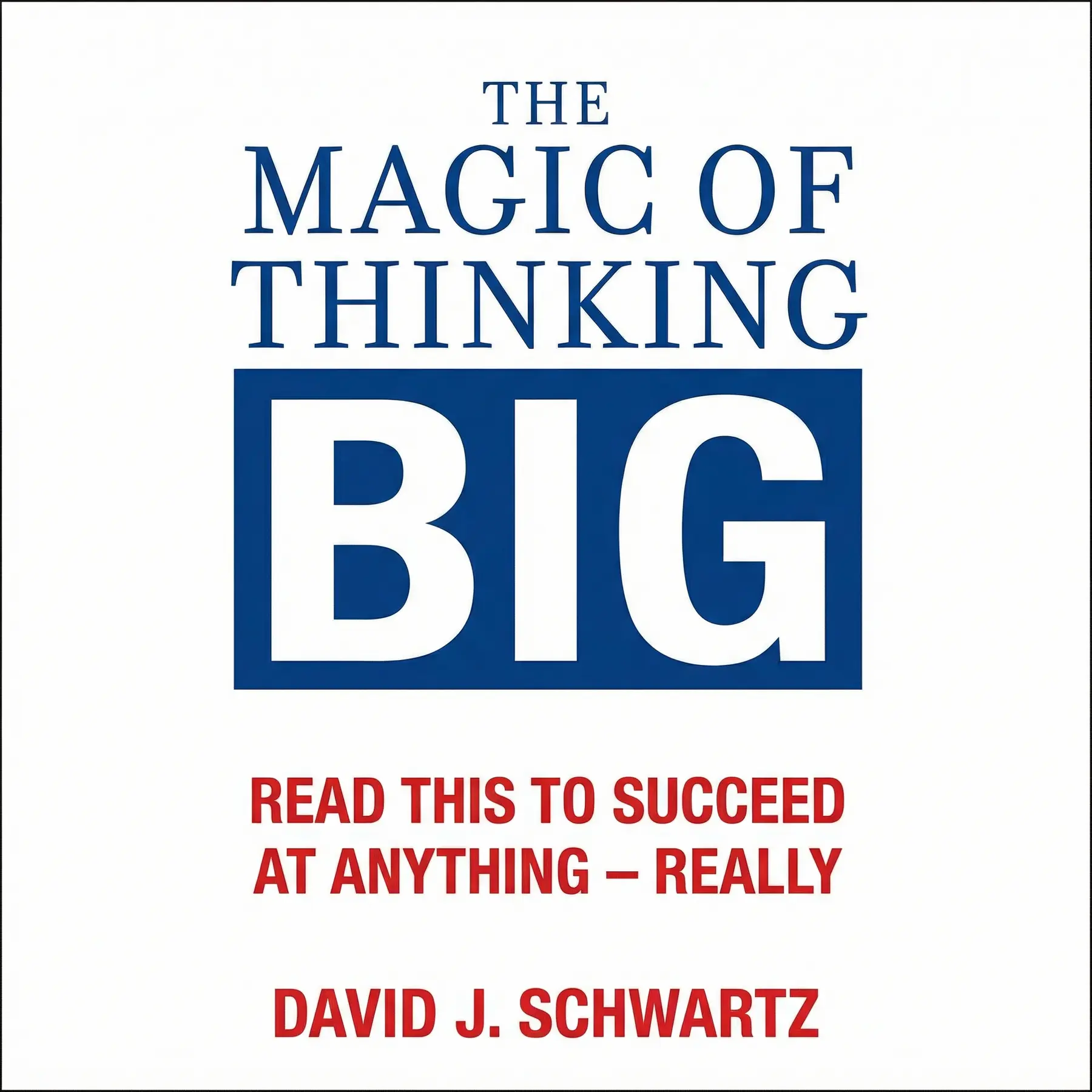
The Magic of Thinking Big
Learn how to transform your life by expanding your mental horizons. This guide demonstrates that personal success is determined not by raw talent, but by the magnitude of your own expectations and belief.
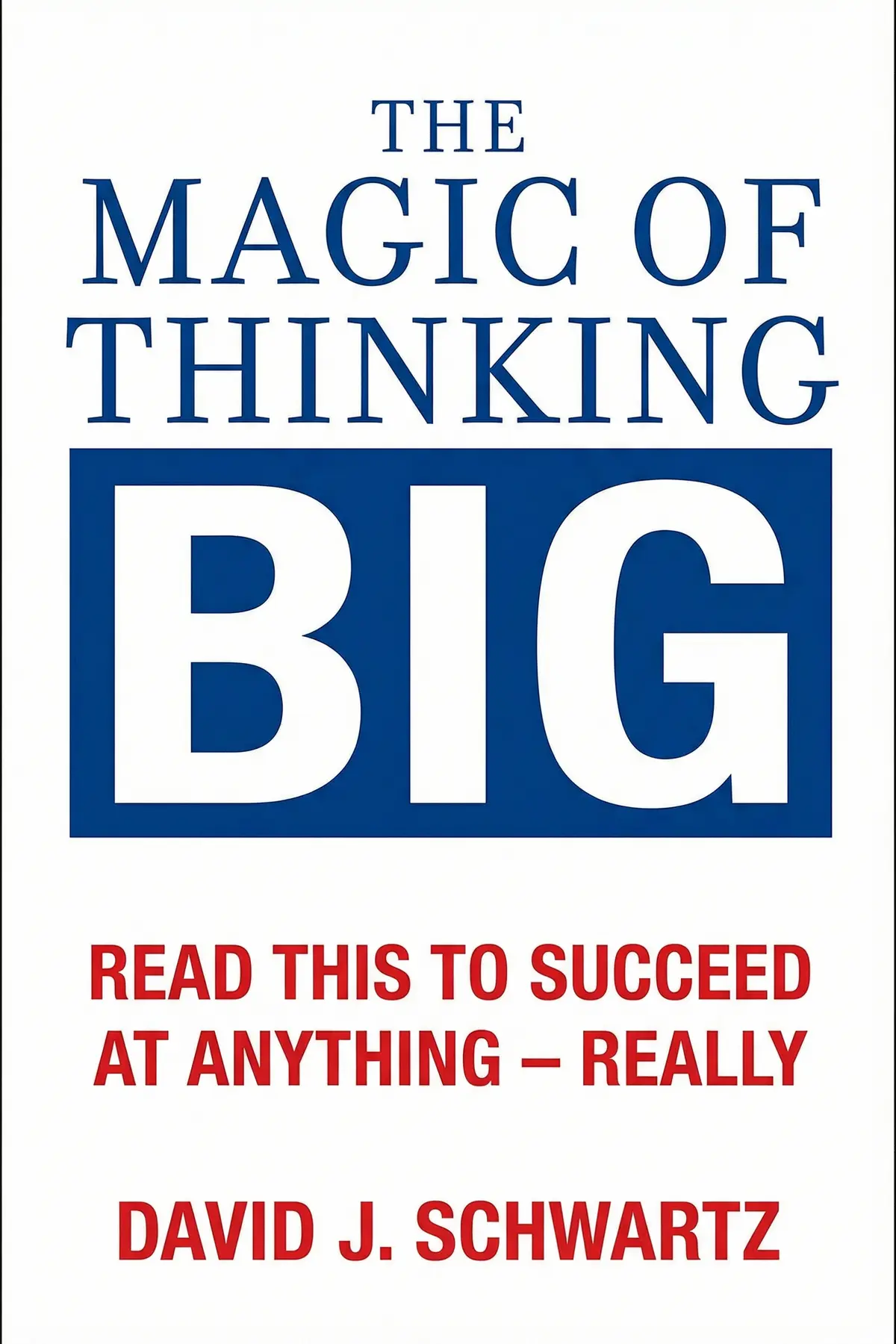
Table of Content
1. Introduction
1 min 28 sec
Every person carries a set of aspirations, ranging from the mundane chores of daily life to the grand, transformative milestones that define a legacy. Perhaps you want to clear a cluttered workspace by Sunday, or maybe your sights are set on a six-figure savings account or a leadership role in your industry. Regardless of the scale, the central question remains the same: how do we actually bridge the gap between where we are and where we want to be? Most people look for external shortcuts, but the real secret lies in the scale of our internal vision.
This journey begins with a fundamental shift in mindset. It’s about more than just optimism; it’s about a profound, unwavering belief in your own capacity to achieve. This throughline—that your success is a direct reflection of the size of your thinking—connects every strategy we will discuss. When you expand your mental boundaries, you don’t just feel better; you actually unlock a reservoir of creative energy that solves problems and attracts opportunities.
In the pages ahead, we’ll explore how to dismantle the habits of small thinking and replace them with the expansive logic of high achievers. We will look at how to shield yourself from the drain of negativity, how to engineer an environment that fosters growth, and why the way you treat others is essentially a reflection of how you see your own potential. By the end of this summary, the goal is for you to walk away not just inspired, but equipped with a practical toolkit for thinking big and acting with the confidence that your goals are not just possible, but inevitable.
2. The Magnetic Power of Belief
1 min 52 sec
Unlock the mental machinery that turns aspirations into reality by understanding how self-confidence acts as a catalyst for creative problem-solving and group support.
3. Choosing Creative Innovation Over Rote Memory
1 min 52 sec
Move beyond the limitations of simple information storage and learn how to train your brain for flexibility and innovative problem-solving in any situation.
4. Neutralizing the Poison of Negative Thinking
1 min 49 sec
Identify and eliminate the ‘mental monsters’ of doubt that hold you back by creating a powerful internal narrative focused on your unique strengths.
5. The Social Lift of Mutual Respect
1 min 44 sec
Discover why treating every person you meet with genuine importance is the most effective way to build a support network that carries you to the top.
6. Optimizing Your Psychological Environment
1 min 42 sec
Evaluate the ‘mind food’ you consume every day and learn how to curate a social and physical space that encourages high-level achievement.
7. Projecting the Attitude of a Leader
1 min 51 sec
Master the silent language of success by aligning your physical presence and moral convictions with the high-level goals you aim to reach.
8. Building Confidence Through Physical Action
1 min 54 sec
Overcome the paralyzing effects of fear by using specific, habitual behaviors to reprogram your brain for courage and self-assurance.
9. Transforming Setbacks Into Strategic Lessons
1 min 54 sec
Learn to view every failure as a valuable data point and discover how creative resilience can turn a ‘no’ into a path toward ‘yes.’
10. Executing the Plan and Guarding Your Focus
2 min 07 sec
Bridge the gap between vision and reality by developing a concrete roadmap and learning how to protect your time from menial distractions.
11. Conclusion
1 min 54 sec
In the final analysis, the journey to a successful and fulfilling life isn’t paved with complex secrets or hidden shortcuts. It is built on the foundational bedrock of self-belief and the courage to think on a grand scale. We have explored how the mind acts as a powerful engine that either finds solutions or invents excuses based entirely on what you believe is possible. We’ve seen how creative thinking, a positive environment, and a resilient attitude toward failure are the practical mechanics that keep that engine running toward your goals.
The most important takeaway is that you are the architect of your own mental climate. You have the power to dismantle the negative ‘monsters’ of doubt and replace them with a personal narrative of strength and capability. You have the choice to treat everyone with the respect that builds a supportive community around you. And you have the ability to use action as a weapon against fear, retraining your brain to be as bold as your ambitions.
As you move forward, start with these actionable steps: First, listen more than you talk; by asking deep questions and truly considering the answers, you gain knowledge and build the kind of relationships that foster success. Second, never stop investing in yourself; your mind is your greatest asset, and it needs constant nourishment from books, classes, and experts. Finally, when you feel the urge to procrastinate on a tough task, meet it with a firm commitment to the present moment. Tell yourself that you are ready right now. By thinking big and following through with disciplined action, you don’t just dream of a better life—you actively create one. The magic isn’t in the thinking alone; it’s in the transformation of that big thinking into a big, bold, and beautiful reality.
About this book
What is this book about?
This summary explores the psychological mechanisms behind achievement, illustrating how our internal narratives dictate our external reality. It challenges the conventional reliance on rote memorization and replaces it with a focus on creative problem-solving and adaptive thinking. By examining the impact of our social environments and the subtle power of non-verbal attitudes, the book provides a roadmap for cultivating unshakable self-confidence. You will discover practical strategies for eradicating the 'negativity monsters' that hinder progress and learn how to build a support system that propels you toward your goals. From the way you walk and talk to the way you analyze your failures, the promise of this work is a total shift in perspective that makes even the most ambitious dreams feel attainable through strategic action and persistent self-belief.
Book Information
About the Author
David J. Schwartz
David J. Schwartz (1927-1987) was a distinguished professor at Georgia State University and served as the president of Creative Educational Services, a leadership consulting firm. A renowned expert in motivation, he delivered lectures to nearly 3,000 sales organizations, trade groups, and management seminars throughout his influential career.
Ratings & Reviews
Ratings at a glance
What people think
Listeners consider this work an essential read filled with valuable insights and useful advice, highlighting how much it motivates them to develop a more optimistic outlook. The content broadens horizons toward better ways of thinking and offers daily utility, with one listener remarking that even just the first 100 pages provide immense value. Although listeners view it as an enduring masterpiece, some feel the material is slightly old-fashioned.
Top reviews
Divya
Finally got around to reading this staple of the self-help genre, and I’m genuinely glad I did. David Schwartz has a way of making "big thinking" feel like a tangible skill rather than some abstract concept. I found the section on "Excusitis" particularly convicting because it highlights how often we hide behind age, health, or lack of intelligence to avoid taking risks. While the 1950s business-man vibe is undeniably strong, the underlying principles of belief and action are timeless. It’s one of those books that serves as a mental reset button whenever you start feeling small or stuck. If you can look past some of the archaic social norms, there is absolute gold in these pages for anyone looking to level up their career or personal life. It really is a must-read for building a resilient, positive mindset.
Show moreZanya
After hearing about this from my mentor, I decided to dive in and see if the hype was real. I wasn't disappointed at all! The book teaches you how to stop being your own worst enemy by expanding your vision of what is possible. I’ve read a lot of modern productivity books, but many of them seem to just repackage what Schwartz wrote back in the fifties. The way he breaks down how to "think big" in terms of relationships and income really helped me identify where I was playing small. It’s more than just "positive thinking"; it’s about creating a psychological environment where success becomes inevitable. Even though some of the language is a bit "old school," the mojo this book carries is undeniable. It’s a genuine classic for a reason.
Show moreYam
As someone who struggles with procrastination, the chapter on "curing the fear of action" was worth the price of the book alone. David Schwartz hits you with the reality that waiting for the "perfect time" is just a sophisticated way of being afraid. I gotta say, the writing style is very punchy and keeps you engaged, though it does get a bit repetitive toward the end. It's interesting to see where so many modern motivational speakers get their material, as this seems to be the source code for many of them. Just be prepared for the 1950s workplace dynamics which haven't aged well at all. If you can read it for the principles rather than the specific social examples, you'll get a lot out of it. Definitely a solid addition to any personal development library.
Show moreCee
Pick this up if you need a serious kick in the pants to start moving toward your goals. I was skeptical about a book from 1959 being relevant today, but the psychology of confidence hasn't changed much in sixty years. Schwartz explains that success is a result of the size of one's thinking, and he provides actual exercises to help you expand that mental horizon. I loved the advice on "memory bank deposits"—intentionally putting positive thoughts into your mind so you can draw on them during tough times. It’s a practical guide that doesn't just tell you to "be happy," but shows you how to build a foundation for genuine achievement. Yes, it’s a bit dated in its view of women, but the core wisdom is still incredibly potent. I’ve already recommended it to three colleagues this week!
Show moreJune
Ever wonder why some people with less talent seem to get further in life than those with high IQs? This book answers that question by focusing on the power of belief and the "magic" of refusing to think small. It's an incredibly motivational read that makes you feel like you can take on the world after just a few chapters. I particularly enjoyed the section on how to turn defeat into victory by learning from every setback rather than moping about it. The tone is very encouraging and "can-do," which is exactly what I needed during a recent career transition. It’s a timeless classic that opens your mind to possibilities you might have previously dismissed as "impossible." Seriously, don’t let the old-fashioned examples stop you from absorbing these life-changing lessons.
Show moreWissanu
Look, I know some people find these old-school books cringey, but there’s a reason this one is still in print after all these years. The advice on how to treat others and how to command respect through your own self-image is gold. Schwartz reminds us that we are exactly what we think we are, and if we think small, our lives will stay small. I found the "action cures fear" mantra to be particularly helpful in my daily life as a manager. I did find the author's reference to Hitler in the solitude chapter to be a very strange and off-putting choice, though. It definitely reminded me that I was reading something from a different era. Overall, it's a very solid motivational tool if you can filter out the occasional weirdness and the 1950s social tropes.
Show morePatcharaporn
This classic self-help guide provides a fantastic blueprint for anyone wanting to escape a mediocre mindset. I especially loved the concept that action cures fear; it’s a simple shift, but seeing it laid out with practical steps made it click for me. Truth is, the book is a product of its time, so you have to filter out the rigid gender roles where women are mostly relegated to supportive wives. If you can get past that 1959 lens, the advice on visualization and goal-setting is remarkably fresh. I found myself highlighting dozens of passages about how we see ourselves compared to how the world sees us. It’s definitely a motivational powerhouse, even if some of the "real-life" anecdotes feel a bit like unverifiable parables. The first half is definitely the strongest part of the entire experience.
Show moreFrida
The chapter on 'Excusitis' was the highlight for me, but the rest of the book felt like a bit of a mixed bag. Frankly, the author’s perspective on women is so archaic it’s almost comical, and it really pulled me out of the experience several times. He talks about "the wife" as if she’s a household appliance meant to support the husband’s "big thinking" without having any ambitions of her own. Beyond that, the advice is quite standard for the self-help genre—think positive, work hard, and visualize success. It’s not that the advice is bad; it’s just that it’s been done better and more inclusively in the years since this was published. It’s worth a skim for the historical value, but I wouldn't call it the "bible" of success like some people do.
Show moreSuvannee
To be fair, the core message here is quite powerful, but I struggled with the delivery. The book relies heavily on "anecdotal evidence" involving nameless characters like "a baker" or "a salesman I know," which makes the advice feel less grounded in reality. I also found the repetitive nature of the chapters a bit exhausting; he could have easily made his point in 100 pages instead of nearly 300. That said, his breakdown of "Excusitis"—the disease of the failure—is brilliant and very relatable even today. We all make excuses for why we aren't where we want to be. I think it’s a decent read for the historical context of self-help, but I’d suggest taking the more "magical" claims with a grain of salt. It’s helpful, but certainly not a perfect book by any means.
Show moreSiriporn
Not what I expected given the glowing reputation this book has in entrepreneur circles. While I appreciate the core message of positivity, I found the author’s tone frequently condescending and his examples incredibly dubious. He constantly references unnamed friends or random businessmen to prove his points, which makes the whole thing feel manufactured. Plus, the ending was genuinely jarring—bringing up Hitler as an example of solitude-driven success felt like a massive lapse in judgment, even for a book written decades ago. The blatant misogyny is also hard to ignore, as it implies women aren't capable of the same "big thinking" as men unless it's in a domestic context. I’d recommend Napoleon Hill or even modern writers over this if you want something that doesn't feel so incredibly dated and problematic.
Show moreReaders also enjoyed

A Guide to the Good Life: The Ancient Art of Stoic Joy
William B. Irvine
A High-Performing Mind: Strengthen Your Mind and Live Your Best Life
Andrew D. Thompson
Abundance: The Inner Path to Wealth
Deepak Chopra
59 Seconds: Change Your Life in Under a Minute
Richard Wiseman
AUDIO SUMMARY AVAILABLE
Listen to The Magic of Thinking Big in 15 minutes
Get the key ideas from The Magic of Thinking Big by David J. Schwartz, plus 5,000+ more titles in English and Thai.
- 5,000+ titles
- Listen as much as you want
- 7-day free trial
- Cancel anytime







