
18 min 56 sec
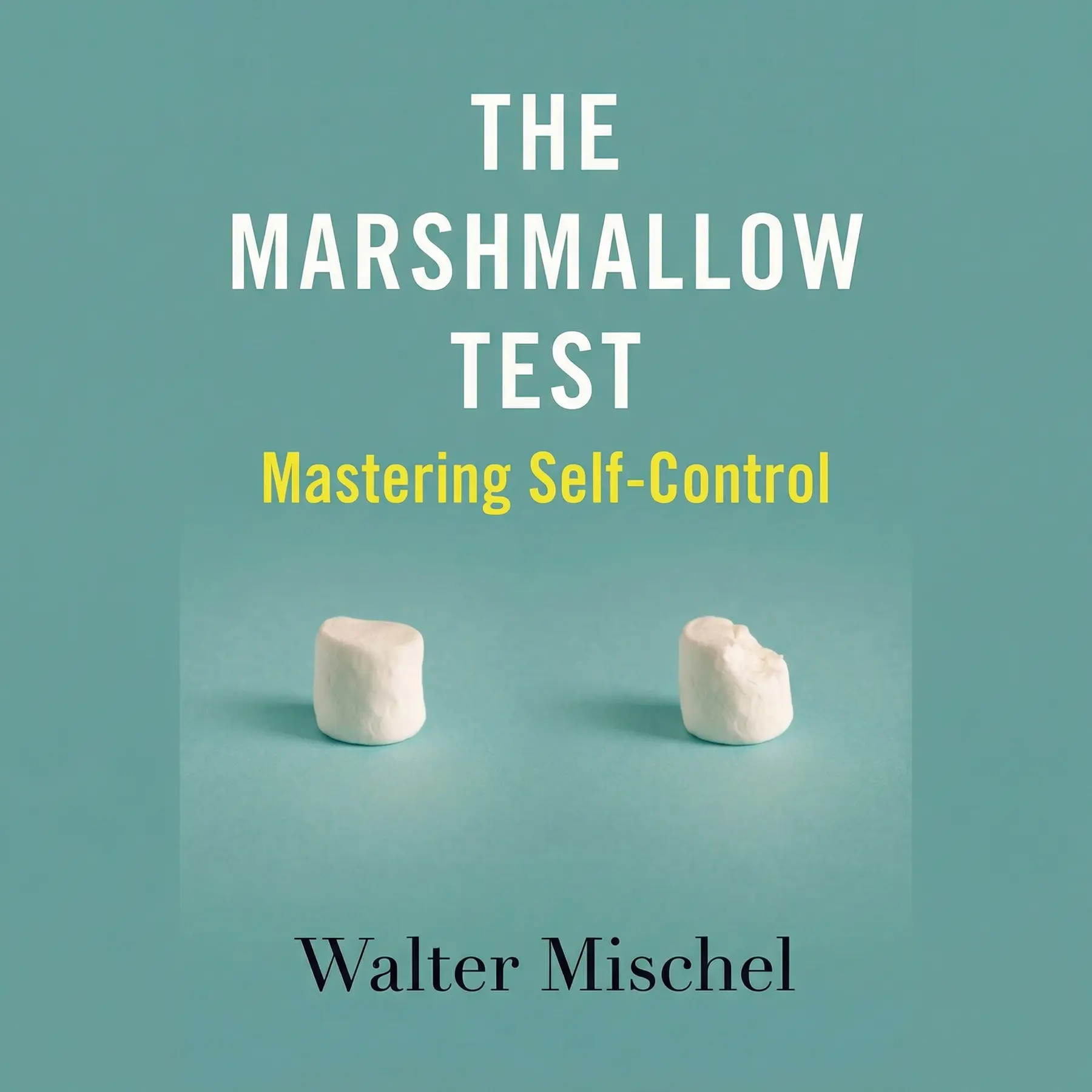
The Marshmallow Test: Mastering Self-Control
Explore the science of self-control with a deep dive into the famous preschool experiments that revealed how our ability to delay gratification predicts lifelong success, health, and emotional well-being.
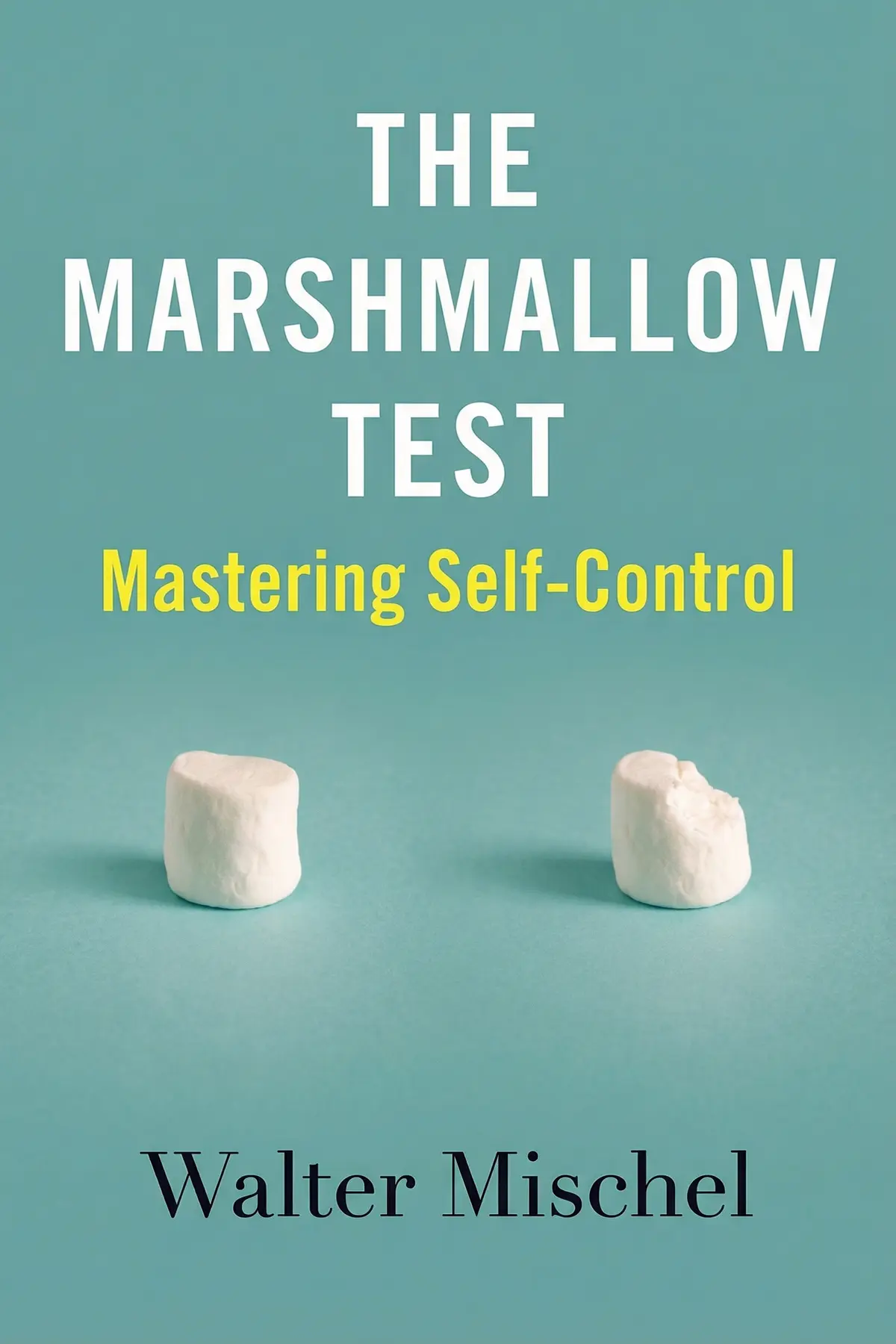
Table of Content
1. Introduction
1 min 50 sec
Think back to your childhood and imagine you are sitting in a quiet, sparsely furnished room. On the table in front of you sits a single, fluffy, white marshmallow. A researcher tells you they have to leave for a few minutes, but they make you a deal: if you can wait until they come back without eating the marshmallow, you will be rewarded with a second one. However, if you eat it now, you won’t get another. This simple scenario is the basis for one of the most famous psychological experiments in history, and it serves as the foundation for Walter Mischel’s profound exploration into human nature.
What makes this study so compelling isn’t just the sight of preschoolers struggling to resist a sweet treat; it’s what happened to those children decades later. Mischel’s research suggests that the ability to delay gratification is a core component of a successful and healthy life. In this summary, we will explore the nuances of the marshmallow test and what it teaches us about the mechanics of the human mind. We’ll look at why some people seem born with an iron will while others struggle, and more importantly, we’ll discover that willpower is not a fixed quantity. It is a set of cognitive skills that can be taught, practiced, and mastered.
Through this journey, we will see how self-control influences everything from our physical health and financial stability to our emotional resilience. We will uncover the ‘hot’ and ‘cool’ systems of the brain that compete for control every time we face a temptation. By the end, you’ll understand that the secret to waiting for that second marshmallow isn’t just about ‘trying harder’—it’s about changing the way you think about the reward itself. This exploration provides a powerful throughline: while our biological predispositions are real, they are not our destiny. Through understanding and strategy, we can all learn to bridge the gap between our current impulses and our long-term goals.
2. The Science of Delayed Gratification
2 min 14 sec
Discover how a simple test involving preschoolers and treats revealed a powerful correlation between early self-control and later success in adulthood, from grades to health.
3. Navigating the Hot and Cool Systems
2 min 20 sec
Explore the internal tug-of-war between the emotional, impulsive part of your brain and the rational, forward-thinking part that manages your goals.
4. The Power of Mental Transformation
2 min 15 sec
Learn the psychological ‘tricks’ that successful delayers use to make temptations seem less appealing and future rewards feel more real.
5. Designing 'If-Then' Blueprints
2 min 10 sec
Discover a simple but profound strategy for automating your willpower so you don’t have to rely on conscious effort when things get tough.
6. The Role of Trust and Environment
2 min 15 sec
Understand why self-control isn’t just an internal trait, but a rational response to the world around us and the reliability of our circumstances.
7. Willpower as a Malleable Skill
1 min 46 sec
Challenge the myth of ‘fixed’ personality and learn how the brain’s plasticity allows us to grow our self-control at any stage of life.
8. Applying Self-Control to Life's Big Challenges
2 min 12 sec
Explore how the lessons of the marshmallow test can be applied to complex issues like financial planning, healthy living, and emotional resilience.
9. Conclusion
1 min 54 sec
The journey through Walter Mischel’s ‘The Marshmallow Test’ brings us back to that simple choice: one treat now, or two later. But as we’ve seen, that choice is merely the tip of a psychological iceberg. The true subject of Mischel’s work is the human capacity for agency. It’s about our ability to step back from our immediate environment, to reflect on our goals, and to consciously shape our own behavior to reach those goals.
We have explored how the ‘hot’ and ‘cool’ systems of the brain interact, creating a constant internal dialogue between impulse and reason. We’ve learned that willpower isn’t a mysterious, finite fuel, but a set of cognitive skills—like mental reframing and if-then planning—that can be honed with practice. We’ve also seen that our environment and our trust in the future play a vital role in making self-control possible. When we believe the second marshmallow will truly be there, the wait becomes not just a trial of endurance, but a rational investment.
The most important takeaway is the power of ‘cooling’ the present and ‘heating’ the future. By changing how we perceive our temptations and our goals, we can master the impulses that once seemed insurmountable. This isn’t about denying yourself pleasure; it’s about making sure that your immediate desires don’t sabotage your long-term happiness.
As you move forward, remember that you have the tools to redesign your responses to the world. When you face your own version of the ‘marshmallow’—whether it’s an unnecessary purchase, a skipped workout, or a heated argument—take a moment to engage your cool system. Remind yourself that your traits are not your destiny, and that with the right strategies, you can wait for the second reward. Self-control is the key to freedom, and it is a key that you now know how to use. The future you want is waiting, and you have everything you need to reach it.
About this book
What is this book about?
The Marshmallow Test examines the psychological mechanisms behind willpower and delayed gratification. Starting with the landmark experiments conducted by Walter Mischel at Stanford University, the book investigates why some children were able to resist a single marshmallow for the promise of two, while others succumbed to temptation immediately. It reveals how these early behaviors correlate with later life outcomes, including academic achievement and physical health. Beyond just reporting findings, this work provides a roadmap for understanding the human mind's 'hot' and 'cool' systems. It promises to teach readers that self-control is not an innate, fixed trait but a cognitive skill that can be developed through specific techniques. By shifting our focus and reframing our temptations, we can master our impulses and build a more fulfilling future.
Book Information
About the Author
Walter Mischel
Walter Mischel was a highly influential psychologist and author. He is best known for creating the marshmallow test during his extensive research into child psychology in the 1960s. Mischel’s academic foundation was built at institutions including New York University, the City College of New York, and Ohio State University.
Ratings & Reviews
Ratings at a glance
What people think
Listeners view this title as essential, especially for parents of young children, and respect the thorough research and hands-on tactics for self-regulation. The content is both amusing and evocative, with one listener praising how it makes biological ideas easy to grasp. While some listeners think it is skillfully written, others find the prose style problematic. Listeners treasure the work's legacy, with one emphasizing the intriguing tracking of subjects over many years, and find it beneficial, with one listener noting the useful ways adults can apply the advice.
Top reviews
Ooi
This book is a masterclass in longitudinal research and an absolute must-read for any parent or educator. Walter Mischel doesn’t just recount the famous candy experiment; he explains the biological 'hot' and 'cool' systems in a way that is incredibly accessible to the average reader. I was particularly fascinated by how he followed the children for decades, linking their early willpower to SAT scores and even BMI later in life! The writing style is professional yet engaging, providing a great balance between data and storytelling. It made me realize that self-control isn't just a fixed trait we're born with, but a skill that can be cultivated through specific mental strategies. Frankly, I think every family with young children should have a copy on their shelf. It completely changed how I view my own impulsive habits and gave me hope for my kids' futures.
Show moreSawit
Mischel successfully bridges the gap between high-level neurobiology and the messy reality of human behavior. I picked this up because I have always struggled with impulsive decisions, and the 'Hot vs. Cool' framework gave me a new way to analyze my choices. The idea that we can literally change our brain’s response to triggers by using 'if-then' planning is revolutionary. It is not just about being 'tough' on yourself; it is about being smart with your environment. The chapter on the 'expert rule' and how willpower can be exhausted—or not, depending on your mindset—was particularly eye-opening. Some might find the writing style a bit dry, but the depth of the data makes it worth the effort. This isn't just a book about candy; it is a guide to understanding the foundations of human success and emotional health. Highly recommended for anyone serious about growth.
Show moreAna
Wow, I was genuinely surprised by how much this book resonated with me on a personal level. I have always been a 'one marshmallow' kind of person, and reading Mischel’s research helped me understand the biological and environmental factors that shaped that. The way he explains epigenetics and how our environment can trigger certain genes is fascinating. It is not just about the test; it is about how we can rewire our brains at any age to achieve our long-term goals. I especially appreciated the sections on overcoming emotional pain and using self-distancing to handle breakups. The writing is clear and the anecdotes about the original Stanford kids are heart-warming. It is a rare science book that feels both intellectual and deeply human. I finished it feeling much more optimistic about my ability to change my habits. A truly meaningful read.
Show moreDavid
Ever wonder why your coworker can turn down a second slice of pizza while you are already on your third? Mischel dives deep into the mechanisms of self-regulation, showing that it is not just about raw grit but about the mental tricks we use to distract ourselves. I loved the practical approach to 'heating up' the future goal and 'cooling down' the immediate temptation. For example, imagining a delicious cake as just a picture or something unappealing like a cockroach really works to kill the craving! The book is a bit heavy on the neuroscience at times, which might turn off some readers, but the real-world applications for adults are undeniable. My only gripe is that it feels a little dated in its assumptions about success. Still, the core message that willpower is malleable is incredibly empowering. It is a thought-provoking read that offers more than just the surface-level advice you find in most self-help books.
Show moreLadawan
After hearing about this study for years, I wanted to go straight to the source for my own parenting journey. I was pleasantly surprised by how much practical advice Mischel includes for raising children with better self-regulation. The emphasis on praising effort rather than intelligence is a game-changer for me. I also loved the section on 'if-then' scenarios—it is such a simple way to help a kid navigate high-stress moments before they happen. While the book can be a bit dense with biological concepts, the real-life stories about the original test subjects kept me hooked. It is a fascinating look at nature versus nurture and how our environment triggers certain gene expressions. Not every chapter was a page-turner, and some of the adult-focused tips felt repetitive, but the overall influence of this work is undeniable. Definitely a useful resource for anyone interested in behavioral science.
Show moreAhmed
To be fair, I expected this to be a light read, but it turned out to be quite a dense deep-dive. Mischel covers everything from the original 1960s experiments to modern neuroscience. The correlation between a four-year-old's patience and their future success is staggering, though I am glad he acknowledges that these traits are not set in stone. The 'if-then' strategy is something I have started using at work, and it actually helps with my daily focus. However, I do agree with other reviewers that the book is a bit repetitive. You could easily cut one hundred pages without losing the core message. It feels like the author was trying to turn a single great idea into a massive tome. Still, the practical tips for both kids and adults make it a worthwhile investment of time. If you can get past the slower chapters, there are some real gems of wisdom here.
Show moreChamnong
As someone who frequently reads psychology books, I found Mischel’s work to be a bit of a mixed bag. On one hand, the insights into 'if-then' plans and self-distancing are genuinely useful for anyone struggling with procrastination or bad habits. On the other hand, the prose can be incredibly dry and repetitive. It often feels like you are reading a long-winded academic paper rather than a book meant for the general public. I enjoyed the case studies, but I had to push myself through the more technical sections about gene expression and brain circuitry. In my experience, the second half of the book is much more practical than the first. It is a solid three-star read: informative and grounded in real science, but definitely a slog at times. If you have the patience for it, there is a lot of wisdom to be found here, but don't expect to be entertained.
Show moreOtt
The core premise of the Stanford experiments is legendary, yet I could not shake the feeling that the book glosses over some massive variables. Recent critiques suggest that the marshmallow test might actually be measuring a child’s trust in their environment rather than innate self-control. If you grow up in a chaotic home where promises are often broken, eating the marshmallow now is the only logical choice! Mischel touches on this, but I wish he had explored the impact of socioeconomic status and stability more deeply. The book is well-written and the research is undeniably extensive, but it feels a bit one-sided. I appreciated the tips on self-evaluation and overcoming emotional pain, though many of the 'tools' seemed a bit like common sense. It is an interesting look at a classic study, but take the findings with a grain of salt. A decent read for psychology fans, but not the definitive word on human nature.
Show moreThida
Finally got around to reading this classic, but I found it surprisingly thin on substance. While the original Stanford experiment is a cornerstone of psychology, Mischel takes far too long to get to the point. Most of the chapters felt like unnecessary padding or a scientific literature review that failed to offer the practical guidance I was craving. Truth is, you could probably learn just as much from a fifteen-minute summary as you can from these three hundred pages. He talks about 'cooling' your emotions, but the advice feels like common sense wrapped in fancy psychobabble. If you want a deep dive into the history of the test, it's fine. If you want a self-help guide with actionable data and a punchy writing style, you are better off looking elsewhere. It is not a bad book, just a very bloated one.
Show moreChanon
Look, this is essentially a very long academic paper disguised as a trade paperback. While the initial description of the marshmallow experiment is cute and engaging, the rest of the book is quite dull. I was hoping for a punchy, actionable guide to better willpower, but instead, I got three hundred pages of psychobabble and unremarkable findings. Many of the strategies mentioned, like distracting yourself or thinking about your future, are things most people figure out by the time they hit puberty. It is a well-written book in a technical sense, but it lacks the spark of other popular science writers. I found myself skimming large sections just to get to the end. It is okay if you have a deep scientific interest in the topic, but for the average reader, it is a lot of fat that needs trimming. A disappointing experience.
Show moreFeatured in
Readers also enjoyed
Age of Propaganda: The Everyday Use and Abuse of Persuasion
Anthony Pratkanis

A Guide to the Good Life: The Ancient Art of Stoic Joy
William B. Irvine
A High-Performing Mind: Strengthen Your Mind and Live Your Best Life
Andrew D. Thompson
AUDIO SUMMARY AVAILABLE
Listen to The Marshmallow Test in 15 minutes
Get the key ideas from The Marshmallow Test by Walter Mischel, plus 5,000+ more titles in English and Thai.
- 5,000+ titles
- Listen as much as you want
- 7-day free trial
- Cancel anytime







