
14 min 01 sec
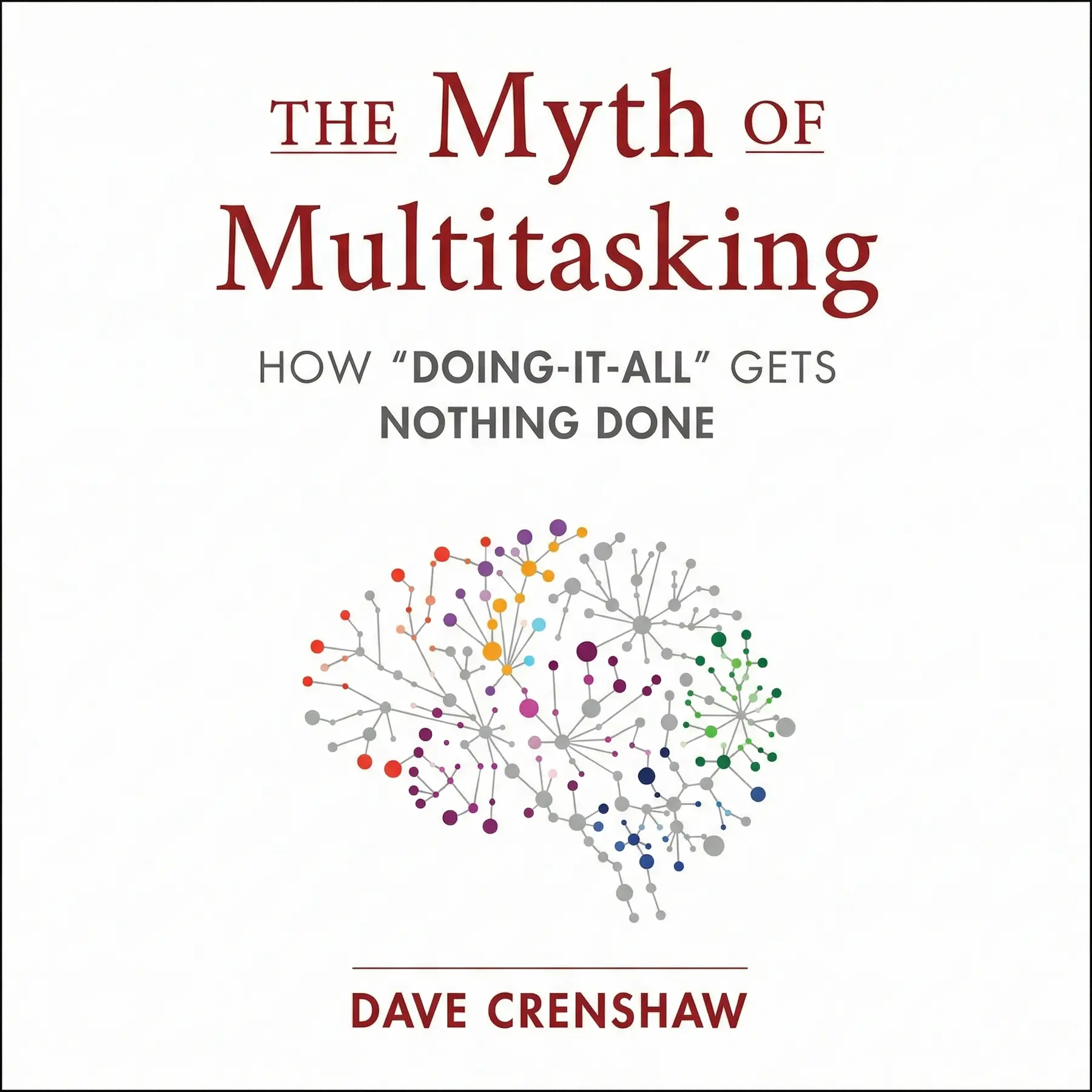
The Myth of Multitasking: How “Doing-It-All” Gets Nothing Done
This summary explores why human brains cannot actually multitask and offers practical strategies for replacing destructive switchtasking with focused, single-task productivity to reclaim your time and improve your professional relationships.
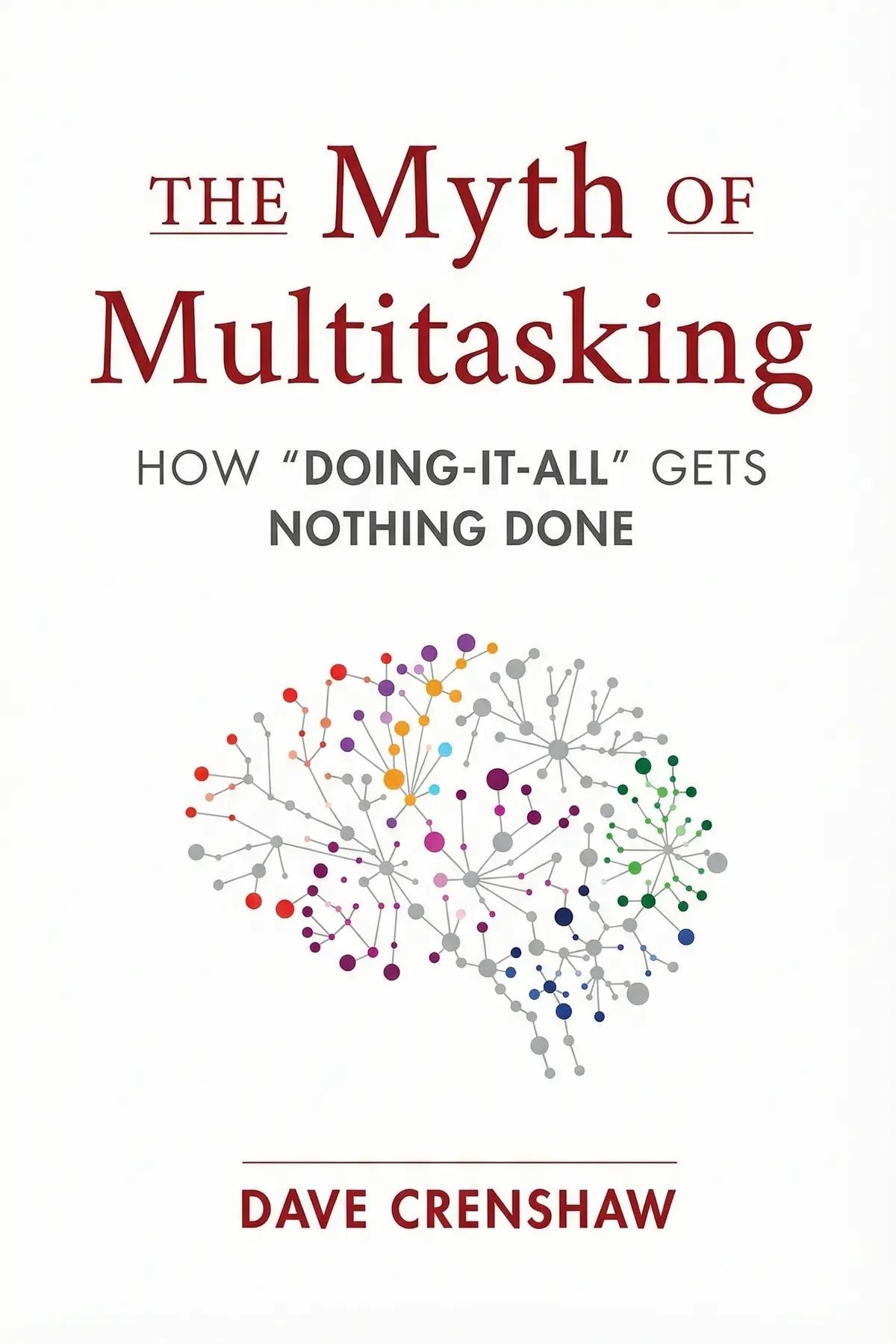
Table of Content
1. Introduction
1 min 38 sec
In our modern world, we often wear our ability to do a dozen things at once like a badge of honor. We answer emails while attending a meeting, scroll through social media while watching a movie, and jump from one browser tab to another as if speed were synonymous with progress. But what if that badge of honor is actually a heavy anchor dragging down our productivity and our happiness?
Welcome to the breakdown of The Myth of Multitasking. The central premise here is as simple as it is revolutionary: the human brain is physically incapable of multitasking. When we think we are doing two things at once, we are actually performing a mental dance that is exhausting and incredibly inefficient. This summary will explore the hidden costs of this divided attention and provide a roadmap to escape the trap of constant interruption.
Over the next few minutes, we will unpack why our brains aren’t wired for split focus and how the concept of switchtasking is actually what’s happening beneath the surface. We’ll look at the specific types of interruptions that sabotage our workdays and learn how to regain control of our schedules by setting clear, firm boundaries. We will also see how these principles apply not just to the office, but to our personal lives and family time. The goal isn’t just to get more work done, but to do the right work with more presence and less stress. Let’s dive in and see how we can stop doing it all and start getting things done.
2. The Fallacy of Simultaneous Processing
2 min 17 sec
Discover why the term multitasking is a scientific impossibility and learn the distinction between active and passive interruptions that pull us away from our goals.
3. The High Price of Lost Momentum
2 min 01 sec
Explore the hidden costs of switching between tasks, including the significant amount of time required to regain your original level of concentration.
4. Designing Boundaries for Deep Work
2 min 04 sec
Learn how to manage the flow of communication by establishing office hours and scheduled meeting times that respect everyone’s focus.
5. The 168-Hour Reality Check
2 min 11 sec
Examine how misjudging our time leads to burnout and learn the importance of an honest audit to align your schedule with your true priorities.
6. Transforming Culture Through Example
1 min 58 sec
Understand how your personal habits influence your entire organization and why demonstrating the power of focus is better than enforcing rules.
7. Conclusion
1 min 52 sec
As we wrap up our look at The Myth of Multitasking, it’s worth reflecting on just how much our lives could improve if we simply stopped trying to do everything at once. We’ve seen that multitasking is a biological impossibility and that switchtasking is a silent thief of time and focus. We’ve learned that the cost of refocusing is the reason our workdays feel so long and our progress feels so slow.
But the most important takeaway is that you have the power to change this. By implementing boundaries, creating a realistic time budget, and leading by example, you can reclaim your focus and your life. To see the proof for yourself, try a simple exercise: get a timer and write the sentence Multitasking is really switchtasking, but for every letter you write, also write a number underneath it in sequence—so M-1, U-2, L-3, and so on. Time yourself. Then, write the full sentence first, and then all the numbers 1 through 30. You will find that doing one task at a time is always faster and less prone to error.
The path to true productivity isn’t about doing more things; it’s about doing one thing as well as you possibly can before moving to the next. Start tomorrow by picking one hour of the day to be completely uninterrupted. Turn off your notifications, close your door, and see what happens when you give your brain the focus it was designed for. You might be surprised at just how much you can achieve when you finally stop trying to do it all.
About this book
What is this book about?
The Myth of Multitasking challenges the common belief that doing many things at once is the key to success. In reality, attempting to juggle multiple responsibilities simultaneously—what author Dave Crenshaw calls switchtasking—leads to decreased efficiency, increased stress, and strained relationships. This summary provides a clear-eyed look at the psychological and physiological costs of divided attention. The book promises to help you find more time for the things you love by teaching you how to manage interruptions, set clear boundaries with colleagues, and audit your schedule for maximum effectiveness. You will learn why busy does not mean productive and how to implement a system of focused work that transforms your personal life and your corporate culture. By moving from a state of constant distraction to one of deliberate action, you can finally stop spinning your wheels and start making real progress.
Book Information
About the Author
Dave Crenshaw
Dave Crenshaw is a highly sought-after business coach who has helped improve companies around the world. His writing has appeared in publications such as Time magazine and the Washington Post. His fourth book, The Power of Having Fun, is due to be published in the fall of 2017.
Ratings & Reviews
Ratings at a glance
What people think
Listeners describe this work as a revelation and a quick read that can be finished in only a few hours. They value the useful efficiency strategies and approachable storytelling, while one listener points out how the concepts are relevant to every part of life. The text boosts output using straightforward techniques, and one listener mentions reclaiming an incredible amount of time. Listeners consider the content highly influential, with one individual even characterizing it as life-altering.
Top reviews
Pia
Picked this up during a particularly chaotic week at the office, and it was exactly the wake-up call I needed. The core concept—that multitasking is actually just 'switchtasking'—hit me like a ton of bricks because I realized how much time I lose just recalibrating between emails and projects. Dave Crenshaw uses a simple narrative about a consultant named Phil and a stressed CEO named Helen to illustrate his points, which makes the information incredibly digestible. While the dialogue is a bit scripted, the exercise where you time yourself writing letters and numbers is a game-changer that proves the efficiency drain. I finished the whole thing in about an hour and immediately started blocking my time to avoid interruptions. My productivity has genuinely improved because I stopped trying to do everything at once and started focusing on one task at a time. It's a short read, but the impact on your daily workflow is massive.
Show moreSurasit
As someone who prides themselves on being a high-level juggler, this book was a painful but necessary reality check for my ego. The truth is, I wasn't being efficient; I was being rude to my family and slow at my job. Crenshaw points out that multitasking is often just a polite way of telling someone you aren't listening to a word they say. That hit home for me, especially regarding how I use my phone during conversations. The book is written as a parable, which makes the concepts stick much better than a dry textbook would. I found the advice on being intentional with availability to be life-altering for my stress levels. If you feel like there aren't enough hours in the day, stop what you're doing and read this. It’s a tiny investment of time for a massive return in focus and relationship quality.
Show moreSue
Look, the dialogue between Phil and Helen is incredibly cheesy and feels like a bad corporate training video from the nineties. However, I’m giving this five stars because the actual message changed how I operate my business on a daily basis. I used to think I was a master of multitasking, but after doing the exercises in this book, I realized I was losing hours every week to 'switching costs.' The realization that multitasking is literally impossible for the human brain was the shift I needed to stop the madness. My stress has plummeted since I started focusing on single-tasking and setting boundaries with my time. It’s a very fast read, which is perfect because if you’re the target audience, you probably don't have time for a 400-page tome anyway. It is simple, effective, and provides a clear path toward reclaiming your focus and your life.
Show moreKanchana
Ever wonder why you feel completely exhausted at 5:00 PM but realize you haven’t actually finished a single major project? This book explains that phenomenon perfectly by breaking down the 'myth' of doing it all simultaneously. I loved the practical distinction between background tasking, like listening to music while cleaning, and switchtasking, which is the toxic habit of toggling between two things that require mental focus. The 1-27 exercise mentioned in the text is eye-opening and provides immediate, undeniable proof that our brains aren't wired for dual-processing. Although the fictional framework is a little bit patronizing at times, the brevity of the book is a major plus for busy professionals. It doesn't respect your time by being long; it respects your time by being fast and actionable. I’ve already recommended it to several colleagues who are constantly 'juggling' too many balls.
Show moreSomsri
Wow, I managed to finish this in less than two hours and the ROI is already looking pretty great for my weekly schedule. The book is structured as a conversation, which some people might find annoying, but I thought it made the productivity tips feel more applicable to real-life scenarios. I specifically appreciated the section on how switchtasking damages personal relationships, not just business output. We often forget that giving someone 'piecemeal time' is actually a form of disrespect that costs more than just the minutes involved. While the writing is a bit simplistic and the CEO character is a total caricature, the diagnostic exercises are genuinely effective at proving the author's point. It’s a great 'reset' book for anyone feeling overwhelmed by the constant barrage of notifications and pings. I’m definitely going to stop committing to things without having my calendar physically in my hand from now on.
Show moreNong
Finally got around to reading this after hearing about the '1-27' exercise for years, and I’m glad I did. It’s a simple, straightforward guide that dismantles the idea that we can do two focus-heavy things at once. Personally, I found the advice on limiting availability to be the most helpful part for my current role. We live in a culture that demands instant responses, but this book gives you the permission to focus on one thing until it's done. The writing style is definitely geared toward people who don't usually like reading business books, as it's very conversational and moves quickly. It might be a bit too basic for productivity junkies, but for the average person drowning in emails, it’s a goldmine. It really highlights how 'doing it all' usually results in getting nothing done well. I’m giving it four stars for the practical exercises.
Show moreTar
To be fair, the core message here is undeniably important for our digital age, even if the delivery feels a bit dated. The author argues that multitasking is a lie and that we actually lose time every time we switch our attention. It’s a very quick read, taking maybe ninety minutes if you really take your time with the exercises at the back. My main gripe is that the fictional CEO, Helen, is written as if she’s never encountered a calendar or a clock before in her life. It makes the 'consultant' character look like a genius for stating the obvious, which felt a little manipulative as a reader. However, the Russian proverb about chasing two rabbits and catching neither really stuck with me. It’s a solid 3-star book—useful for the tips and the diagnostic tests, but the narrative style is definitely an acquired taste that I didn't quite enjoy.
Show moreSawit
The distinction between background tasking and switchtasking is the most valuable part of this entire book, but the rest feels like filler. I struggle with the 'business parable' format because the characters never feel like real people with real problems. Helen is the lowest-IQ executive I've ever encountered in literature, making the 'wisdom' Phil provides seem much more profound than it actually is. That said, the science mentioned regarding how the brain handles transitions is fascinating, even if it’s only touched upon briefly. It’s a decent book for a plane ride or a quick lunch break because you can finish it so fast. You’ll walk away with two or three solid time-management tips, which is probably worth the price of admission. Just don't expect a deep dive into psychology; it's a very surface-level look at focus and efficiency.
Show moreWan
It’s hard to take business advice seriously when it’s delivered through a dialogue with the world's most oblivious executive, but there is some gold here. The book is barely 140 pages with large font, so it’s more of a long essay than a traditional book. I think Dave Crenshaw makes a vital point about how we deceive ourselves into thinking we are being productive when we are actually just being busy. The concept of 'switchtasking' is a great term for what most of us do all day. I liked the focus on how this behavior ruins relationships by making people feel unheard. Still, I wish there was more meat on the bones of this narrative. It feels like it was written for a very specific type of person who needs everything spelled out in a story format. It’s a helpful reminder to slow down, but it’s definitely not a deep scholarly work.
Show moreGin
This book is essentially a ten-page white paper stretched into a 130-page fictional narrative through the most unnecessary padding I have ever encountered. The author uses a gimmick where a productivity coach explains basic concepts to a CEO who seems to have the cognitive functioning of a toddler. Frankly, if you need a hundred pages of cheesy dialogue to understand that distractions are bad for your focus, then this might be for you. I was hoping for deep neurological insights, but instead, I got a 'story' that could have been summarized in a single paragraph. To be fair, the distinction between background tasking and switchtasking is a helpful framework, but it doesn't justify the price of a full book. You are better off reading a summary online and saving yourself the hour of reading through this forced, unrealistic conversation between Phil and Helen.
Show moreFeatured in
Readers also enjoyed
AUDIO SUMMARY AVAILABLE
Listen to The Myth of Multitasking in 15 minutes
Get the key ideas from The Myth of Multitasking by Dave Crenshaw, plus 5,000+ more titles in English and Thai.
- 5,000+ titles
- Listen as much as you want
- 7-day free trial
- Cancel anytime







