
22 min 58 sec
The One Device: The Secret History of the iPhone
Explore the secret origins and global impact of the iPhone. This summary reveals the hidden history, internal battles, and complex supply chain behind the gadget that changed everything.
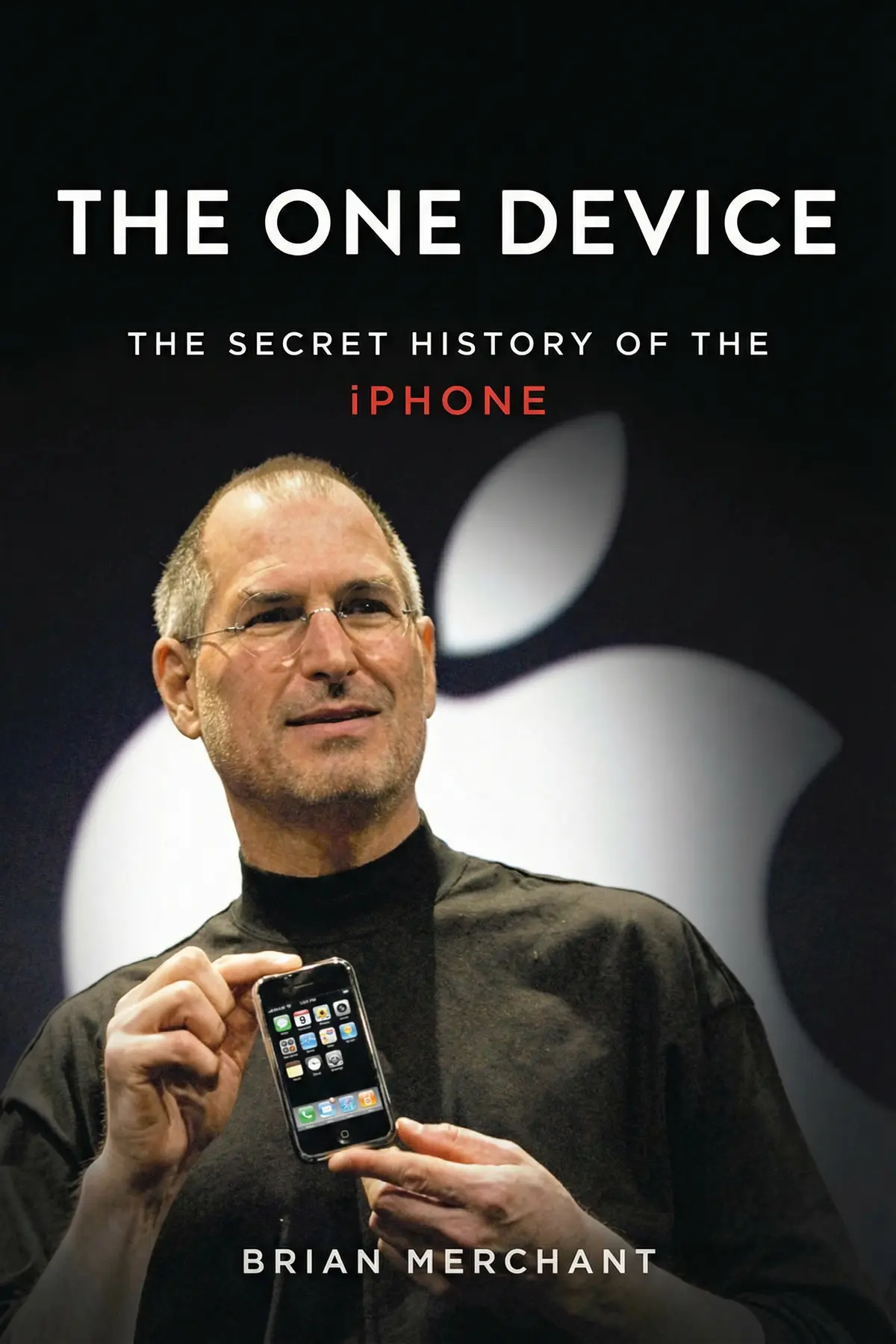
Table of Content
1. Introduction
1 min 45 sec
Think for a moment about the object that is likely in your pocket, on your desk, or perhaps even in your hand right now. It is a sleek, unassuming rectangle of glass and metal. It serves as your camera, your navigator, your personal assistant, and your primary gateway to the collective knowledge of human history. We often take it for granted, yet this single tool—the iPhone—has arguably done more to reshape modern existence than any other invention of the twenty-first century. But how did it actually come to be?
Many of us have a specific image in mind when we think of the iPhone’s birth: Steve Jobs, dressed in his signature black turtleneck, standing on a stage in 2007 and seemingly conjuring a miracle out of thin air. But that image is only a tiny fraction of the truth. Behind that polished presentation lies a much more complex and often messy story. It is a story that spans the entire globe, from the high-pressure laboratories in Silicon Valley to the dangerous lithium mines in South America and the massive factory complexes in China.
In this exploration of The One Device, we are going to peel back the layers of marketing and mythology. We will look at the secret internal wars at Apple, the long-forgotten technologies that were repurposed for the touchscreen, and the thousands of people whose names never appeared on a patent but whose labor made the device possible. We will see that the iPhone wasn’t just a stroke of individual genius, but rather the culmination of decades of research, a massive amount of corporate risk-taking, and a global supply chain that connects us to the very earth itself. By the end of this journey, you’ll see this ubiquitous gadget not just as a piece of consumer electronics, but as a lens through which we can understand the modern world.
2. The Pressure Cooker of Project Purple
1 min 59 sec
Go inside the extreme secrecy and intense work environment at Apple as a small group of engineers worked to build the world’s most influential phone.
3. The Forgotten Roots of Multi-Touch
2 min 01 sec
Discover how the iPhone’s most revolutionary feature—the touchscreen—was actually the result of decades of research by researchers outside of Apple.
4. The Software War for the iPhone's Soul
1 min 50 sec
Learn about the internal battle between two different visions for the iPhone’s software and how the winner defined the future of mobile computing.
5. The Resuscitation of Gorilla Glass
1 min 59 sec
The story of how a defunct 1960s invention was brought back from the archives to provide the iPhone with its durable glass face.
6. The Global Journey of Raw Materials
1 min 55 sec
Follow the trail of minerals and metals from the depths of mines to the components inside your smartphone.
7. Life on the Factory Floor at Foxconn
2 min 03 sec
Explore the massive scale and intense reality of the assembly lines where millions of iPhones are built every year.
8. Steve Jobs as the Ultimate Editor
1 min 58 sec
Reassess the role of Apple’s iconic leader, looking at how his real genius lay in curation and refinement rather than solo invention.
9. The Marketing Masterstroke of 2007
1 min 59 sec
Revisit the legendary keynote that introduced the iPhone and see how it reshaped public perception of what a phone could be.
10. The Accidental Revolution of the App Store
1 min 55 sec
How a decision that Steve Jobs initially resisted became the most transformative aspect of the iPhone’s ecosystem.
11. The iPhone’s Legacy on Human Behavior
1 min 59 sec
Reflect on how the ubiquity of the smartphone has fundamentally changed our social interactions and cognitive habits.
12. Conclusion
1 min 35 sec
We have traveled from the high-security labs of Project Purple to the deep mines of the Andes and the bustling assembly lines in Shenzhen. What we have found is that the iPhone—the ‘one device’—is far more than the product of a single mind or a single company. It is a massive, interconnected tapestry of human effort, spanning continents and decades of scientific discovery. It is an object that contains both our highest aspirations for innovation and the complex ethical challenges of a globalized economy.
Brian Merchant’s exploration reminds us that the devices we carry are not just tools, but historical artifacts. They are the results of a thousand tiny wars, brilliant accidents, and immense personal sacrifices. By understanding the true history of the iPhone, we can begin to look at all our technology with a more critical and appreciative eye. We can see the labor that went into the screen, the minerals that make the battery, and the bold decisions that shaped the software.
The throughline of this story is that innovation is a collective and often messy endeavor. As you move forward, perhaps you will look at your own phone a little differently. Recognize the power it gives you, but also acknowledge the vast world it represents. The real value of understanding the ‘one device’ is the realization that we are all part of this ongoing story. Our choices as consumers and users help shape the next chapter of this technological revolution. Let this knowledge empower you to use your devices more intentionally, appreciating the miracle while remaining mindful of the world that made it possible.
About this book
What is this book about?
The One Device is a deep dive into the creation of the iPhone, moving far beyond the polished stage of a Steve Jobs keynote. It uncovers the gritty reality of how this revolutionary tool was built, from the intense internal secrecy at Apple to the remote mines where its raw materials are extracted. You will learn about the unsung engineers who sacrificed their personal lives for Project Purple, the accidental discoveries that led to multi-touch technology, and the massive manufacturing machine that brings millions of devices to life. This is a story of human ingenuity, high-stakes corporate drama, and the profound social consequences of a world that is now permanently connected through a single glass slab.
Book Information
About the Author
Brian Merchant
Brian Merchant is a journalist of science and technology. His writing has appeared in the Guardian, Slate, Fortune magazine and the Los Angeles Times, among many other publications. He’s also an editor for Motherboard – the science and technology department of VICE.
Ratings & Reviews
Ratings at a glance
What people think
Listeners find the book holds their attention and is exceptionally detailed, with one review highlighting its comprehensive look at various inventions. Furthermore, the historical outlook is well-regarded; one listener describes the book as a stunning achievement of modern history. The prose style, however, generates varying feedback, with some considering it beautifully written while others express disappointment. Finally, the book’s intellectual depth and value for time receive mixed reactions.
Top reviews
Zoe
Ever wonder how that glass slab in your pocket actually came to be? This isn’t just another hagiography of Steve Jobs; instead, it’s a deep dive into the messy, global, and often dark history of the iPhone. Merchant traveled everywhere from the salt flats of Bolivia to the guarded gates of Foxconn to track down the materials and labor that make the “Jesus Phone” possible. I was particularly gripped by the sections on the evolution of multi-touch technology, which apparently dates back way further than 2007. While some might find the heavy focus on raw mineral mining a bit much, it provides a sobering perspective on the environmental cost of our gadgets. It’s a stunning achievement of modern history that forced me to look at my screen differently. Truth is, the story of innovation is far more collaborative than the marketing leads us to believe.
Show morePensri
The chapter on Siri alone is worth the price of admission. I’m a total techie, and even I was surprised by the 'secret history' revealed here. It’s wild to think that Steve Jobs actually resisted the iPhone project for years! Merchant’s writing is punchy and funny, making complex topics like human-computer symbiosis feel accessible to a layperson. I couldn't believe the stories about the Foxconn 'suicide nets' and the intense pressure the assembly workers face; it really makes you rethink your relationship with your phone. Some might call it a bit hyperbolic when he says the iPhone is the 'foundational instrument of modern life,' but after reading this, it’s hard to disagree. It’s a fun, fast-paced ride through the history of the world's most profitable product.
Show moreWatcharaporn
Wow, what a massive undertaking this book must have been for Merchant. He managed to crack the vault of Apple’s secrecy and tell a story that is as much about human perseverance as it is about technology. I loved the 'everything-iphone' approach. From the scavengers in third-world dumps to the high-level executives, he covers the entire lifecycle of the device. The language is plain enough that you don't need a PhD in computer science to follow along, yet it never feels like it's 'dumbing down' the history. It is a stunning achievement that provides a microcosm of how innovation actually happens in the real world. If you enjoyed the Steve Jobs biography by Isaacson, you need to read this for the other side of the story.
Show moreSun
Brian Merchant takes 'investigative journalism' to a whole new level here. The sheer scale of his research—8,000 photos and 200 hours of interviews—is evident on every single page. I loved the way he challenged the myth that Steve Jobs personally invented every facet of the device; the reality of the 'misfit crew' of designers working in secret is much more compelling. The writing style is generally engaging, though it occasionally dips into being a bit preachy regarding the ethics of capitalism. Still, the anecdotes about the internal 'Purple' team and their paranoid secrecy are gold. It’s a thought-provoking read that balances the high-tech glamour of Silicon Valley with the gritty reality of the global assembly line. Definitely worth your time if you want the full picture, not just the PR version.
Show morePun
Finally, a book that deconstructs the 'lone genius' narrative surrounding Apple. While Jobs’ volcanic temper and marketing brilliance are present, the real stars here are the engineers who risked their jobs to work on the device in secret. Merchant does a fantastic job identifying the contributors who are usually erased from the corporate history books. The section on the development of Siri was particularly fascinating, revealing a surprisingly intimate relationship between the creator and the AI. I did find the book a little long-winded at times, especially when it goes into the deep history of every single mineral used in the screen. However, for anyone interested in how innovation actually happens in a vacuum of secrecy, this provides a rare, honest look behind the curtain.
Show moreMo
As someone who follows tech news closely, I was surprised by how much I didn't know about the iPhone's ancestry. This isn't just about 2007; it's about a century of antecedents that led to the 'Jesus Phone.' Merchant is an interesting guy who clearly put his boots on the ground to get this story. He captures the paranoid atmosphere of the 'Purple' project perfectly, describing how the secrecy actually impeded progress by siloing talented engineers. My only real gripe is that the tone can get a bit preachy when discussing the environmental impact. We get it—mining is bad. Still, the historical perspective is brilliant and the prose is far more polished than your average business book. It's a comprehensive account that every iPhone user should probably glance through.
Show moreSue
The narrative structure is fascinating, weaving together the 'secret' Apple meetings with the brutal reality of lithium mines. Merchant manages to avoid the trap of just writing a 'Jobs was a genius' story. Instead, he highlights the hardware hackers and software designers who did the heavy lifting. I found the sections on the 'around-the-world' trip to be some of the most eye-opening parts of the book, even if they occasionally felt like a travelogue. It’s a bit over my head at times when it gets into the chemistry of the electronics, but the human stories kept me turning the pages. The book is definitely long, but it feels necessary to cover the sheer scale of the iPhone's impact on our planet.
Show moreDing
This book wasn't exactly what I signed up for when I hit 'buy'. I was looking for a detailed technical breakdown of the original iPhone creation process within the walls of Cupertino, but that only makes up about a quarter of the text. Instead, you get chapters upon chapters of esoteric trivia about 1950s touch screens and the specifics of rare earth mineral excavation in third-world countries. Look, the journalism is solid, but the pacing felt incredibly dragged out in the middle sections. Merchant is clearly a talented writer, but his tendency to veer off into the supply chain makes the book feel like a general electronics overview rather than a focused Apple history. It’s okay if you’re a complete novice to tech politics, but seasoned technophiles might find themselves skimming to get to the 'meat' of the Apple interviews.
Show moreWachira
To be fair, the research on display in The One Device is staggering, yet it often feels unnecessarily bloated. I appreciated the deep dives into the 1917 Finnish patents and the 1994 IBM smartphone, but did we really need a hundred pages on the logistics of lithium mining? The book suffers from a bit of an identity crisis—is it an Apple exposé or a manifesto on the horrors of the global supply chain? Merchant's access to former Apple employees is impressive, considering how tight-lipped they usually are, but those insights are buried under mountains of trivia. It’s a decent enough read for a flight, but I wish it had been edited down to a leaner, more focused narrative. Not a bad book, just a bit of a slog in the middle.
Show moreNina
I really wanted to like this, but the author's bias is distracting. Merchant spends a significant portion of the book implying that Apple is uniquely culpable for the systemic issues of global mining and labor, which feels like a bit of a stretch given that these are industry-wide problems. Frankly, his credibility took a hit for me when I noticed several technical statements that felt contested or just plain wrong. If you want a book that actually explains how the iPhone was engineered, keep looking. This is more of a sociological critique disguised as a tech history. The narrative is disjointed, jumping from Bolivian mines to 19th-century patents without much of a cohesive thread. It felt like a paid 'around-the-world' vacation for the author that resulted in a bloated, disappointing mess.
Show moreReaders also enjoyed
7 Powers: The Foundations of Business Strategy
Hamilton Helmer

Alibaba: The House That Jack Ma Built
Duncan Clark
AUDIO SUMMARY AVAILABLE
Listen to The One Device in 15 minutes
Get the key ideas from The One Device by Brian Merchant, plus 5,000+ more titles in English and Thai.
- 5,000+ titles
- Listen as much as you want
- 7-day free trial
- Cancel anytime







