
18 min 34 sec
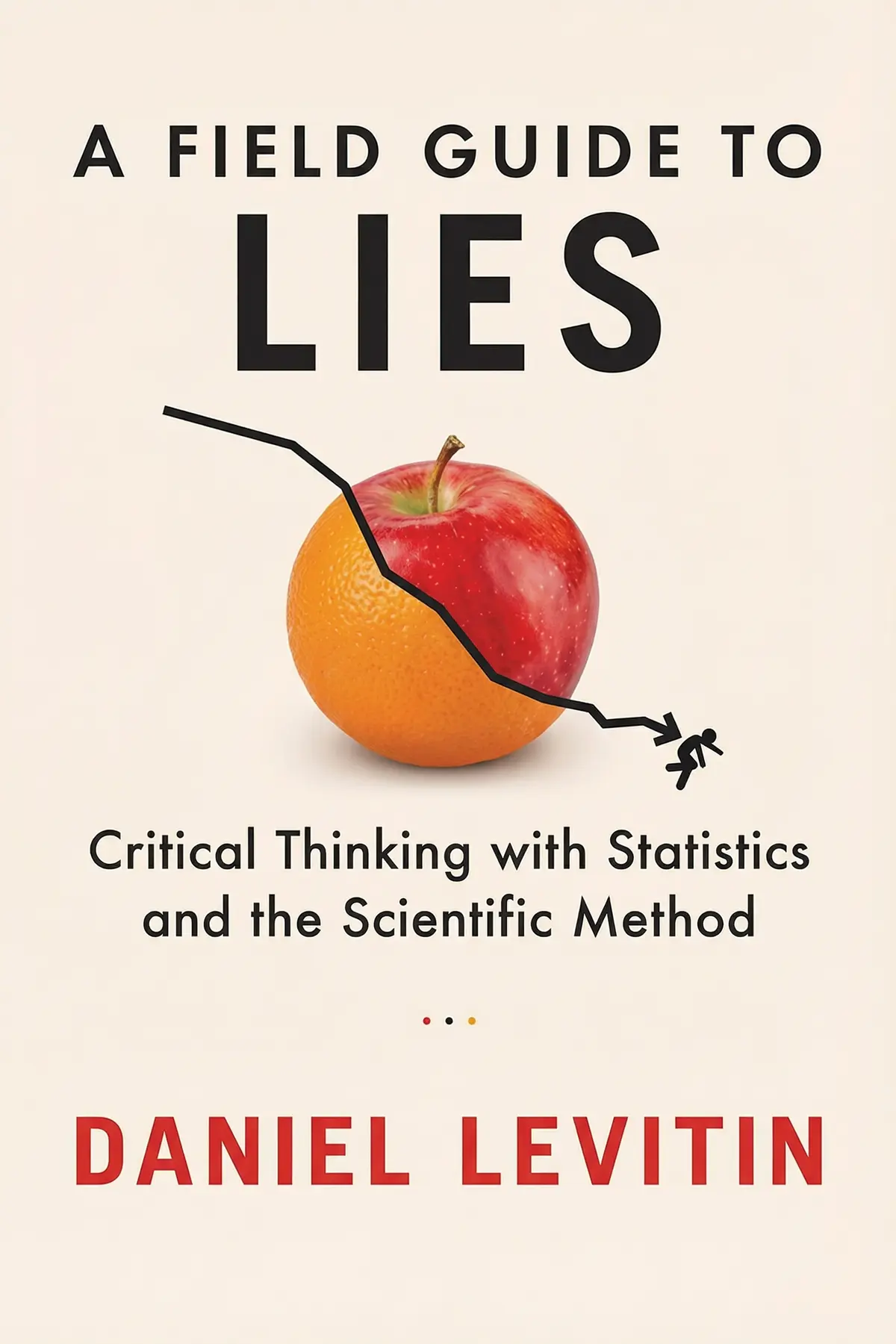
The Optimist’s Telescope: Thinking Ahead in a Reckless Age
The Optimist's Telescope provides a roadmap for reclaiming the human capacity for long-term thinking, offering practical tools to overcome our natural impulses and build a more resilient, sustainable future for everyone.
Table of Content
1. Introduction
1 min 49 sec
Have you ever found yourself making a choice that felt good in the moment, only to realize later that you had completely ignored the long-term consequences? It happens to the best of us. We skip the gym for an extra hour of sleep, we spend money that should have gone into savings, or we delay difficult conversations that only get harder as time passes. On a broader scale, we see this same pattern in how our societies function—prioritizing quarterly profits over environmental health or immediate political wins over generational stability. This tension between the ‘now’ and the ‘later’ is perhaps the greatest challenge of our era.
Bina Venkataraman, in her insightful work, suggests that while we live in a ‘reckless age,’ we are not naturally doomed to be shortsighted. In fact, the very thing that makes us human is our unique ability to imagine the future and plan for it. Our ancestors used this ability to build civilizations, plant forests they would never see mature, and create systems of law and culture meant to outlast them. Somewhere along the way, our modern environment began to weaponize our impulses against this natural foresight.
In the following discussion, we are going to look through what Venkataraman calls ‘the optimist’s telescope.’ This isn’t just about being hopeful; it’s about using the right lenses to see through the fog of the present. We will explore why we often fail to act on warnings, how our culture shapes our patience, and what specific psychological tactics we can use to bridge the gap between our current selves and our future selves. By the end, you’ll see that thinking ahead isn’t just a survival mechanism—it’s a skill we can refine to ensure that we leave a legacy we can be proud of. Let’s dive into how we can stop reacting to the immediate and start building for the enduring.
2. Challenging the Myth of Human Shortsightedness
2 min 24 sec
Discover why being impulsive is a behavioral choice rather than a biological destiny, and how we can consciously pivot toward making wiser, long-term decisions.
3. The Role of Culture in Shaping Patience
2 min 12 sec
Explore how the environments and social norms we grow up in dictate our ability to delay gratification more than our innate biology ever could.
4. Using Mental Time Travel to Connect with the Future
2 min 16 sec
Learn how vivid imagination and technological aids can bridge the emotional gap between who you are today and the person you will become.
5. Mastering the If-Then Ritual for Willpower
2 min 03 sec
Discover a simple but powerful psychological technique to bypass temptation by pre-planning your responses to future obstacles.
6. The Peril of Short-Term Metrics and the Power of Signal
2 min 05 sec
Uncover how obsessing over daily data can blind us to long-term success, and why ‘hiding’ the noise is sometimes the best strategy.
7. Applying the Glitter Tactic for Immediate Motivation
2 min 01 sec
Learn how to make difficult long-term choices more attractive by adding small, immediate rewards that satisfy our craving for instant results.
8. Becoming a Good Ancestor
2 min 04 sec
Shift your perspective from personal gain to collective legacy by viewing the world’s resources as heirlooms rather than commodities.
9. Conclusion
1 min 40 sec
As we conclude our journey through the optimist’s telescope, it becomes clear that the ‘reckless age’ we live in is not a permanent condition, but a challenge we are fully equipped to meet. We have explored how to dismantle the myth of our own inherent impulsivity and how to use culture, imagination, and strategic rituals to guide our paths. We’ve seen that by ignoring the noise of short-term metrics and adding a bit of ‘glitter’ to our long-term goals, we can make the hard work of planning for the future feel not only possible but rewarding.
The most important takeaway is that foresight is a practice. It is something we do, not just something we have. To help you integrate this into your life, consider starting a simple reflection ritual. Set aside a specific time—perhaps once a month—where you turn off all your notifications, step away from your daily metrics, and look at the bigger picture. Ask yourself: If I keep making these current choices for the next ten years, where will I be? Am I acting like a good ancestor to my future self and the people I care about? Use this time to adjust your course, refine your if-then plans, and reconnect with your vivid vision of the future.
Thinking ahead in a reckless age isn’t easy, but it is the most vital work we can do. By sharpening our perspective and choosing the long view, we ensure that the telescope we use isn’t just showing us a distant, unreachable dream, but a clear, actionable path toward a world that is stable, healthy, and vibrant for generations to come. The future is looking for its ancestors. It’s time to start being the ones it needs.
About this book
What is this book about?
We live in an age of immediate gratification where the pressure to deliver instant results often overrides the necessity of planning for what comes next. From personal health choices and financial stability to the global climate crisis, the tendency to prioritize the present over the future has become a defining characteristic of modern life. However, this shortsightedness is not an unchangeable part of our biology; it is a habit that can be broken with the right strategies. In this exploration of foresight, Bina Venkataraman reveals how we can use the tools of psychology, history, and science to sharpen our perspective on the years ahead. By understanding the barriers that prevent us from acting in our own long-term interests, we can learn to make better decisions for ourselves and our communities. The book promises to move beyond mere warnings about the future, offering a constructive guide on how to become better ancestors and more effective stewards of our world, showing that reckless decision-making is a choice we can collectively refuse.
Book Information
About the Author
Bina Venkataraman
Bina Venkataraman is a distinguished journalist and science policy expert. Her professional background includes serving as a senior adviser on climate policy during the Obama administration. Currently, she shares her expertise as a professor within the science, technology, and society program at MIT. In addition to her academic work, she serves as the Editorial Page Editor for the Boston Globe. The Optimist's Telescope marks her debut as an author, bringing together her deep experience in policy and communication.
Ratings & Reviews
Ratings at a glance
What people think
Listeners consider this work essential reading, praising the masterful combination of storytelling and scholarly data. Furthermore, the material is highly regarded; one listener emphasizes its ability to motivate reflection and movement regarding today's and tomorrow's hurdles. The text also offers actionable methods for improved foresight, while one listener points out that it functions as a collection of facts and instances rather than a self-help guide. Finally, its prose is captivating, as one listener mentions its capacity to connect with the audience personally.
Top reviews
Yindee
Finally got around to reading this after seeing so many recommendations in my network. Venkataraman does an incredible job weaving together historical catastrophes like the Fukushima disaster with modern social issues. While some parts felt a bit long-winded, the core message about escaping our 'near-sightedness' is undeniably powerful. It’s not just a dry academic text; she uses these vivid stories to ground complex systemic theories in reality. I particularly liked how she analyzed the way we value the future against the immediate gratification of the present. Truth is, we all need a better way to visualize the long-term consequences of our daily choices. If you’re looking for a book that challenges your perspective on time, this is it. It is a brilliant mix of anecdotes and hard research that keeps you hooked.
Show moreCholada
Wow. This is the kind of book that makes you want to immediately sit down and rethink your entire five-year plan. Bina Venkataraman manages to take the dread of the future and turn it into something actionable and, dare I say, optimistic. I loved how she used the telescope metaphor to show how we can bring the distant future into focus. The research is impeccable, and the way she weaves in stories about her own life makes the advice feel achievable. Truth is, we are often our own worst enemies when it comes to time, but this book provides the tools to change that. It’s a must-read for anyone who feels overwhelmed by the current state of the world and wants to find a way forward. Simply brilliant and deeply inspiring from start to finish. Truly a compendium of wisdom.
Show moreNoah
Picked this up on a whim and was pleasantly surprised by how much it resonated with my current professional challenges. The book isn't a typical self-help manual, which I actually appreciated; it’s more of a deep dive into human behavior and social systems. I found the examples regarding climate change and political funding to be particularly salient in our current era. Venkataraman’s writing style is very engaging, making even the most complex topics feel like a conversation over coffee. Not gonna lie, I did find myself skimming through some of the more autobiographical sections to get back to the hard data. But overall, the blend of anecdotes and research is handled with a lot of skill and grace. It’s a thoughtful look at how we can all become better ancestors for the generations to come. Highly recommended for executives.
Show moreJack
The chapter on how doctors manage antibiotic prescriptions was a total eye-opener for me. It’s fascinating to see how accountability systems can be re-engineered to prevent the slow-motion crisis of drug resistance. Venkataraman’s journalistic background shines through here, as she presents dense research with the pace of a high-stakes narrative. I also loved the section on poker players and how they train themselves to ignore the flashy lights of the casino to focus on the 'grind.' To be fair, the transitions between global issues like climate change and personal finance can feel a bit jarring at times. However, the practical strategies for better planning make this a valuable toolkit for any leader. It’s more of a compendium of smart ideas than a standard self-help guide, offering genuine depth.
Show moreHarper
As someone who usually avoids 'big idea' books, I found this surprisingly grounded and useful. The author uses a personal anecdote about glitter-bombing a friend to frame a serious discussion on research and development. It sounds silly, but it actually works to make the concept of long-term investment feel much more human and relatable. She moves through topics like micro-finance in India and corporate tax structures with a lot of intelligence. I did find myself wishing there was a bit more of a cohesive roadmap or a single unified theory. The structure is somewhat loose, jumping around different sectors and scales of time quite frequently. Still, the insight into how we can 'hack' our own psychology to plan for our future selves is worth the price of admission. It relates to readers on a deeply personal level.
Show moreWyatt
Not what I expected, but still a decent read if you have the patience for it. Venkataraman is clearly brilliant, and her work with the Obama administration gives her a unique vantage point on policy and foresight. However, the book often feels like a rambling collection of interesting facts rather than a focused argument for change. I struggled with the organization, as it felt like the chapters were stitched together without a clear through-line. One moment you're reading about ancient ruins, and the next you're diving into the ethics of AI and spaceflight. Personally, I think the coda at the end should have been the starting point for the entire book. It’s an important topic, yet the delivery is sometimes too scattershot to leave a lasting impact on my daily habits. It’s informative, just a bit jumbled.
Show moreKoi
Look, I appreciate the effort to bring 'long-termism' to the masses, but this felt a bit like Malcolm Gladwell Lite. The writing is polished and the stories are certainly engaging, yet I often felt like the intellectual payoff was missing. She identifies some really important systemic issues, but then offers solutions that feel a bit too small for the scale of the problem. For instance, the discussion on how to avoid short-term noise in investing was helpful, though hardly revolutionary. I also felt the politics were a bit muddled, trying to bridge the gap between institutional conservatism and progressive reform. It’s a nice enough read for a flight or a weekend, but don’t expect it to provide a radical new framework for your life. It's interesting, but perhaps a bit too basic for those already familiar with decision theory.
Show moreEllie
Ever wonder why we are so collectively terrible at preparing for things we know are coming? This book dives deep into that frustration by examining everything from the opioid epidemic to ancient civilizations. The section on micro-loans in India was particularly heartbreaking and illustrative of how good intentions can backfire without long-term foresight. Venkataraman writes with a lot of empathy and a strong first-person voice that keeps the material from feeling too cold or clinical. In my experience, most books on this subject are either too dry or too fluffy, but this hits a middle ground. I will say that the prose sometimes tries too hard to be 'literary' when a simple explanation would have sufficed. It’s a solid read that offers some good food for thought without completely changing my worldview. It’s a thoughtful journalistic effort.
Show moreCharlotte
Frankly, this felt like a series of long-form magazine articles that were forced into a book format. While the individual stories are well-researched, the overall premise—that we should think more about the future—is a bit too basic to sustain 300 pages. I was looking for concrete strategies on how to improve my decision-making, but instead, I got a lot of historical anecdotes that didn't always connect. The comparison between personal fitness and corporate R&D felt particularly forced and didn't really offer any new insights. I've read better books on decision theory that get straight to the point without the flowery, Pulitzer-chasing prose. It’s not a terrible book, but it certainly didn't live up to the hype for me. If you’re already a fan of her journalism, you might enjoy it, but others might find it a bit tedious.
Show moreHang
This book was a major disappointment given the high praise I had seen for it online. It felt like a collection of Buzzfeed-style blog posts where interesting items from the web were slapped together with minimal intellectual contribution. I nearly quit during the chapter where she used a story about glitter bombing a friend to discuss medical R&D and AI. It felt incredibly patronizing to the reader, as if these serious topics needed a 'shiny wrapper' to be interesting. The text often rambles without a clear narrative arc, making it difficult to follow what her actual thesis is. It’s as if she identified the right stars but interpreted them as a horoscope instead of astrophysics. If you are looking for real strategies on foresight, I’d suggest skipping this one and looking elsewhere. Very basic content for such an important topic.
Show moreReaders also enjoyed
A Liberated Mind: How to Pivot Toward What Matters
Steven C. Hayes
Acting with Power: Why We Are More Powerful Than We Believe
Deborah Gruenfeld
Age of Propaganda: The Everyday Use and Abuse of Persuasion
Anthony Pratkanis
AUDIO SUMMARY AVAILABLE
Listen to The Optimist’s Telescope in 15 minutes
Get the key ideas from The Optimist’s Telescope by Bina Venkataraman, plus 5,000+ more titles in English and Thai.
- 5,000+ titles
- Listen as much as you want
- 7-day free trial
- Cancel anytime







