

A Biography of Loneliness: The History of an Emotion
Fay Bound Alberti
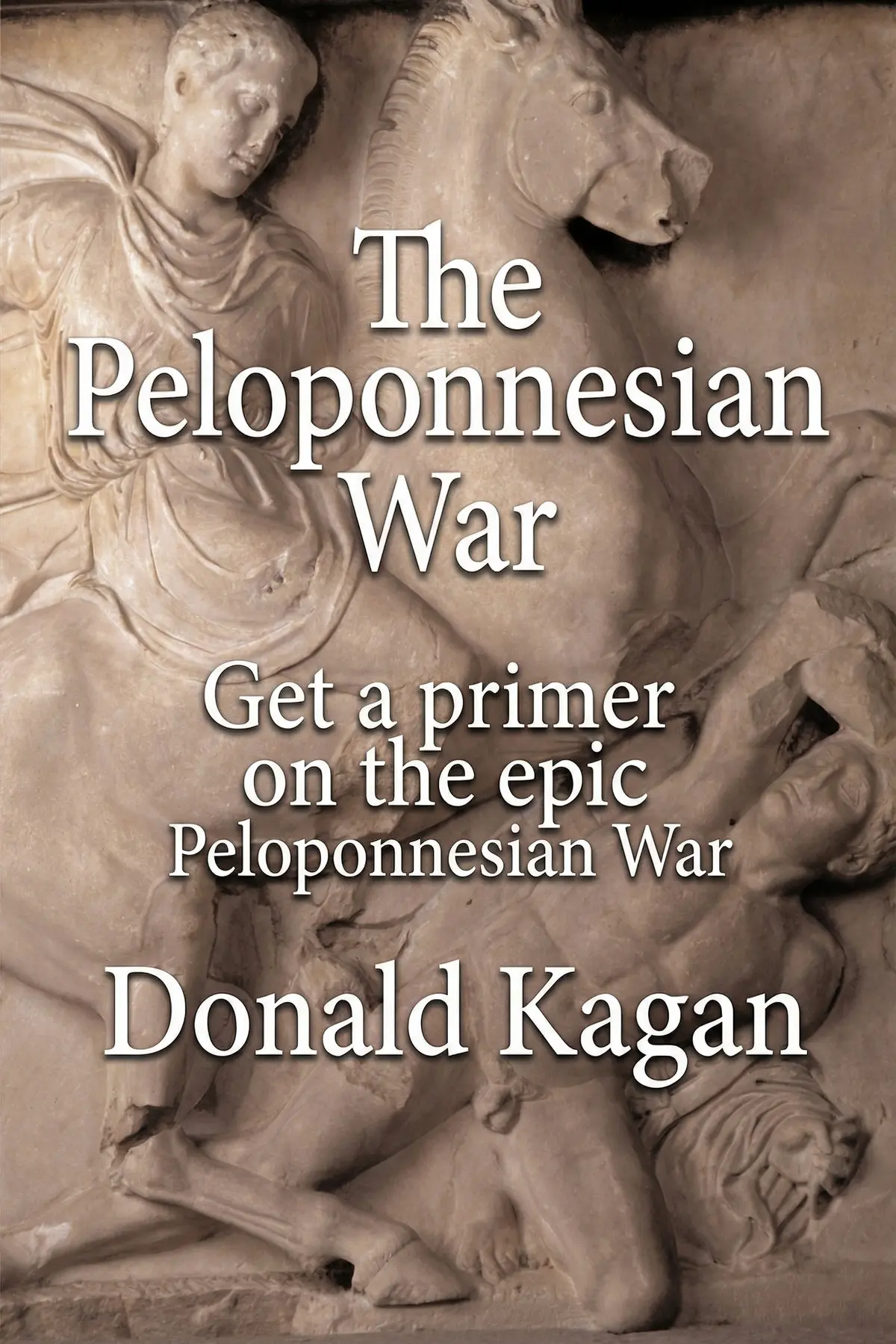
Explore the dramatic rise and fall of ancient Greece's greatest powers in this deep dive into the Peloponnesian War, where democracy, oligarchy, and imperial ambition clashed for twenty-seven transformative years.
1 min 51 sec
Step back into the late fifth century BC, to a time when the Mediterranean world was defined by the rivalry of two vastly different superpowers. On one side stood Athens: a maritime giant, a beacon of burgeoning democracy, and a center of artistic and intellectual flourishing. On the other stood Sparta: a land-based military powerhouse, traditionalist, and governed by a rigid social hierarchy. For thirty years, these two forces engaged in the Peloponnesian War, a conflict that didn’t just decide who ruled Greece, but redefined the very nature of human conflict.
Before this war, battle in the Greek world was relatively straightforward. Armies of heavily armored men would meet in a field, push against one another, and usually, a winner would emerge within a single afternoon. But the Peloponnesian War shattered those old rules. It introduced prolonged sieges, naval dominance, and the involvement of distant empires like Persia. It was a war of ideologies as much as it was a war of shields and spears. It was a struggle where domestic politics in a small city-state could have ripple effects that changed the fate of thousands of miles away.
In this exploration, we will look at how this throughline of escalation and imperial tension led to a total war. We will trace the path from a minor colonial dispute to the utter exhaustion of the Greek world. This isn’t just a story of dates and battles; it’s a story of leadership, human error, and the incredible resilience of a people determined to maintain their way of life even in the face of absolute defeat. As we walk through these events, notice how the themes of power, diplomacy, and the unintended consequences of aggression remain hauntingly relevant to our world today. Let’s begin by looking at the deep-seated friction that made this explosion almost inevitable.
2 min 42 sec
Discover how the fundamental differences between Athenian democracy and Spartan military tradition created a powder keg of resentment that would eventually ignite all of ancient Greece.
2 min 21 sec
Explore how a localized civil war in the obscure city of Epidamnus acted as the unexpected catalyst for the greatest war in the history of the Greek world.
2 min 42 sec
Follow the tense negotiations where leaders like Pericles and Archidamus tried—and failed—to prevent a war that many sensed would be catastrophic.
2 min 22 sec
See how Athens attempted to win a war by refusing to fight on land, relying instead on their massive walls and an invincible navy to weather the Spartan storm.
2 min 34 sec
Witness the breakdown of ancient warfare conventions as the conflict evolved into a series of violent uprisings, executions, and desperate sieges.
2 min 30 sec
Discover why the 421 BC truce between the warring powers was doomed from the start, as lingering resentments and unfulfilled promises simmered beneath the surface.
2 min 28 sec
Follow the Athenian army across the sea to Sicily, where a campaign fueled by hubris and poor leadership resulted in one of the most catastrophic defeats in military history.
2 min 29 sec
Learn how the intervention of the Persian Empire and a domestic coup brought the birthplace of democracy to the brink of total collapse from within.
2 min 22 sec
Explore the tragic irony of Athens’ last great naval victory at Arginusae, which ended with the execution of its own victorious generals.
2 min 19 sec
Follow the final collapse at Aegospotami and see how the Athenian people managed to preserve their identity and democratic spirit even under Spartan occupation.
1 min 40 sec
The Peloponnesian War was far more than a thirty-year struggle for territory; it was a profound shift in the human story. We have seen how the initial tension between two very different societies—the maritime democracy of Athens and the land-bound military oligarchy of Sparta—ignited a fire that eventually consumed the entire Greek world. From the small sparks in Epidamnus to the grand tragedy of the Sicilian Expedition, the conflict was defined by a terrifying escalation that neither side seemed able to stop.
The throughline of this history is the tension between strategy and human emotion. Pericles’ rational, defensive plan was undermined by the unpredictable cruelty of a plague. The pursuit of imperial glory in Sicily was undone by the caution and illness of its leader. And even the most brilliant naval victories, like Arginusae, were turned into tragedies by the volatile politics of the Athenian assembly. It is a reminder that even the most powerful empires are susceptible to internal rot and external pressure when they lose their sense of moderation.
Yet, the final message of this history is one of resilience. While Athens lost its walls, its fleet, and its empire, it did not lose its identity. The restoration of democracy and the commitment to amnesty after the war show a civilization that learned, through immense suffering, the value of political stability and the dangers of extremism. As we look back on these twenty-seven years of conflict, the lesson is clear: power is fleeting, and the rules of warfare may change, but the struggle to balance ambition with restraint remains the central challenge of any great society. The story of the Peloponnesian War serves as a timeless primer on the consequences of leadership and the enduring strength of the democratic spirit.
The Peloponnesian War is a comprehensive examination of the monumental struggle between Athens and Sparta at the end of the fifth century BC. This work dissects the complex web of alliances, the shift from traditional hoplite warfare to innovative naval strategies, and the internal political fractures that defined this era. It moves beyond simple military history to explore the sociological and political drivers that pushed two former allies into a catastrophic, multi-generational conflict. Listeners will gain a profound understanding of how a small civil war in a remote colony spiraled into a global Greek crisis. The narrative covers the rise of influential figures like Pericles and the mercurial Alcibiades, the devastating impact of the Athenian plague, and the strategic blunders of the Sicilian Expedition. Ultimately, the summary promises to illustrate how the war reshaped the Greek world, leading to the collapse of the Athenian empire and the eventual, resilient restoration of its democratic spirit.
Donald Kagan was a distinguished American historian and a leading authority on the ancient world. Beginning his prolific career in the 1960s, he authored numerous foundational texts on Greek history, including The Fall of the Athenian Empire and On the Origin of War and the Preservation of Peace. His scholarly contributions were recognized in 2002 when he was awarded the National Humanities Medal for his lifelong dedication to historical research.
Listeners find the book highly readable and expertly crafted, with one listener noting how accessible it remains for contemporary audiences. They also value the detailed exploration of the war's origins and the unique viewpoints offered on this significant conflict. Additionally, the quality maps are appreciated, and listeners enjoy the absorbing pace, with one listener comparing the narrative to a modern horror story.
Picked this up after seeing it compared to a modern horror story, and that description actually fits. Kagan manages to turn a 2,500-year-old conflict into a gripping, fast-paced narrative that feels incredibly relevant to our current geopolitical climate. The way he details the slow-motion car crash of the lead-up to the war—especially the tensions over Corcyra—is masterful. Unlike some dry academic texts, this one flows with a taut energy that keeps you turning pages. The maps are genuinely helpful for tracking the complex naval maneuvers that defined the era. It’s a tragedy of hubris and missed opportunities that left me reeling. Frankly, it’s the most accessible entry point for anyone wanting to understand why this war broke the Greek world.
Show moreFew historians can compress twenty years of research into a single volume that remains this riveting. Kagan takes the classic text of Thucydides and masterfully fills in the gaps using Plutarch, Xenophon, and Diodorus to complete the story. The narrative of the final years of the war—which Thucydides never finished—is handled with remarkable clarity and tension. I’m not usually a fan of military histories, which can often become a boring slog of troop movements, but this felt different. The pacing is excellent, moving briskly from the plague in Athens to the final naval battles in the Hellespont. It’s a wonderful, compressed tale that bears the reader along delightedly. A must-read for anyone interested in the foundations of Western strategy.
Show moreDonald Kagan has achieved something rare here by making ancient history feel like a modern political thriller. The depth of knowledge on display is tremendous, yet he never lets the scholarship get in the way of a good story. I loved how he highlighted the 'hawks' on both sides, like Cleon and Brasidas, who pushed for total victory regardless of the cost. The book does an excellent job of showing the economic and demographic decline that followed the decades of fighting. Even if you aren't an expert on the time period, the writing is accessible and the pacing is consistently engaging. It’s a masterful distillation of a complex subject. This book should be on the shelf of anyone who enjoys serious history.
Show moreEver wonder how a few trade sanctions against Megara could spiral into a generation-long catastrophe? Kagan spends a significant amount of time on the causes and the early 'Periclean' phase of the war, which provides vital context many other books skip. The writing style is generally entertaining, possessing a dry humor that makes the dense political maneuvering much more digestible. I particularly appreciated the detailed maps; they are essential for following the hoplite battles and the shifting alliances of the various city-states. My only gripe is that it feels a bit light on the cultural and social impacts of the war. It's very much a top-down history of generals and politicians. Still, for a one-volume summary of his larger work, it’s incredibly impressive.
Show moreAlcibiades alone makes this worth reading, as his life story is practically a Shakespearean drama embedded within a military history. Kagan brings these major agents to life, showing how the pressure of the conflict could either make or break a man’s character. The section on the Sicilian disaster is probably the best part of the book, capturing the sheer scale of the Athenian strategic failure. It’s a sobering look at how overreaching and hubris can lead to total ruin. Look, it’s not a light read, and the Argive Alliance sections can be a bit of a slog, but the payoff is worth it. The book serves as a stern warning against assuming any war can be won quickly or decisively.
Show moreThis is essentially a military play-by-play, which is great if that's what you're looking for. The focus on naval strategy and the rare land battles like Mantinea is very detailed. Personally, I was struck by how Athenian leaders were held to such high standards, facing exile or execution for failure. It makes you think about modern political accountability, or the lack thereof. The book is very readable and well-written, though it occasionally feels like a summary of Kagan’s larger four-volume set. It’s long on chronology but short on the 'why' of the culture that produced Socrates and Aristophanes. If you want a clear, fast-moving account of the fighting itself, you won’t find a better version than this one.
Show moreThe chapter on the Sicilian Expedition is absolutely gut-wrenching and serves as the emotional core of the entire book. You can see the disaster coming from miles away, yet the Athenian assembly just keeps digging their own grave. Kagan’s analysis of how the war destroyed Greek norms and led to unprecedented massacres is deeply tragic. He makes it clear that this wasn't just a war between cities, but a domestic struggle between democratic and oligarchic factions. The violence and the profaning of religious sites showed a civilization in total collapse. Human nature hardly changes, and reading about the trial of the admirals after Arginusae is a haunting reminder of mob rule. This is a solid, informative read for any history buff.
Show moreAfter hearing this compared to a modern horror story, I finally dove in and wasn't disappointed by the intensity. The truth is, the Peloponnesian War was a strategic failure of epic proportions for almost everyone involved. Kagan does a fairly good job of mentioning every major military encounter while weaving in the diplomatic intrigue with Persia. I recommend having some basic knowledge of the period first, as the sheer number of names and places can be overwhelming for a complete newcomer. The maps are good, but you'll still be flipping back and forth quite a bit. Despite the Athenian bias others have mentioned, the book remains an essential, high-quality narrative of a war that changed the world.
Show moreWhile the scholarship is undoubtedly deep, I found Kagan’s ideological leanings a bit too transparent for comfort. He is far too appreciative of Athenian democracy, often forgiving their moral failings while painting Spartan society as a collection of incompetent villains. To be fair, it is still the best single-volume history available, but the author’s values determine too much of how the narrative reads. It felt at times like a neo-conservative polemic rather than a neutral historical account. Spartan successes are often dismissed as accidental, while Athenian imperial meddling is rationalized. If you can look past the obvious bias, the military chronology is excellent. However, I’d suggest reading Thucydides alongside this to get a more balanced perspective of the actual stakes involved.
Show moreTo be fair, this reads more like an expanded set of lecture notes than a living, breathing history. It is a serviceable one-volume account, but it never quite comes to life the way a narrative history should. Everything feels like a summary, probably because it’s a condensation of a much longer work. I also found the pro-Athens bias to be quite anachronistic at times. Kagan praises their democracy while almost ignoring the fact that they were ruthless imperialists. The Spartans are treated as secondary characters in their own victory. It’s a decent enough reference book for the military encounters, but it lacks the emotional resonance I was hoping for. It’s a chore to get through certain chapters.
Show moreFay Bound Alberti

Ben Macintyre


Ron Chernow

Philip Freeman
Michael Axworthy

Tom Standage

Ishmael Beah
AUDIO SUMMARY AVAILABLE
Get the key ideas from The Peloponnesian War by Donald Kagan, plus 5,000+ more titles in English and Thai.







