
15 min 02 sec
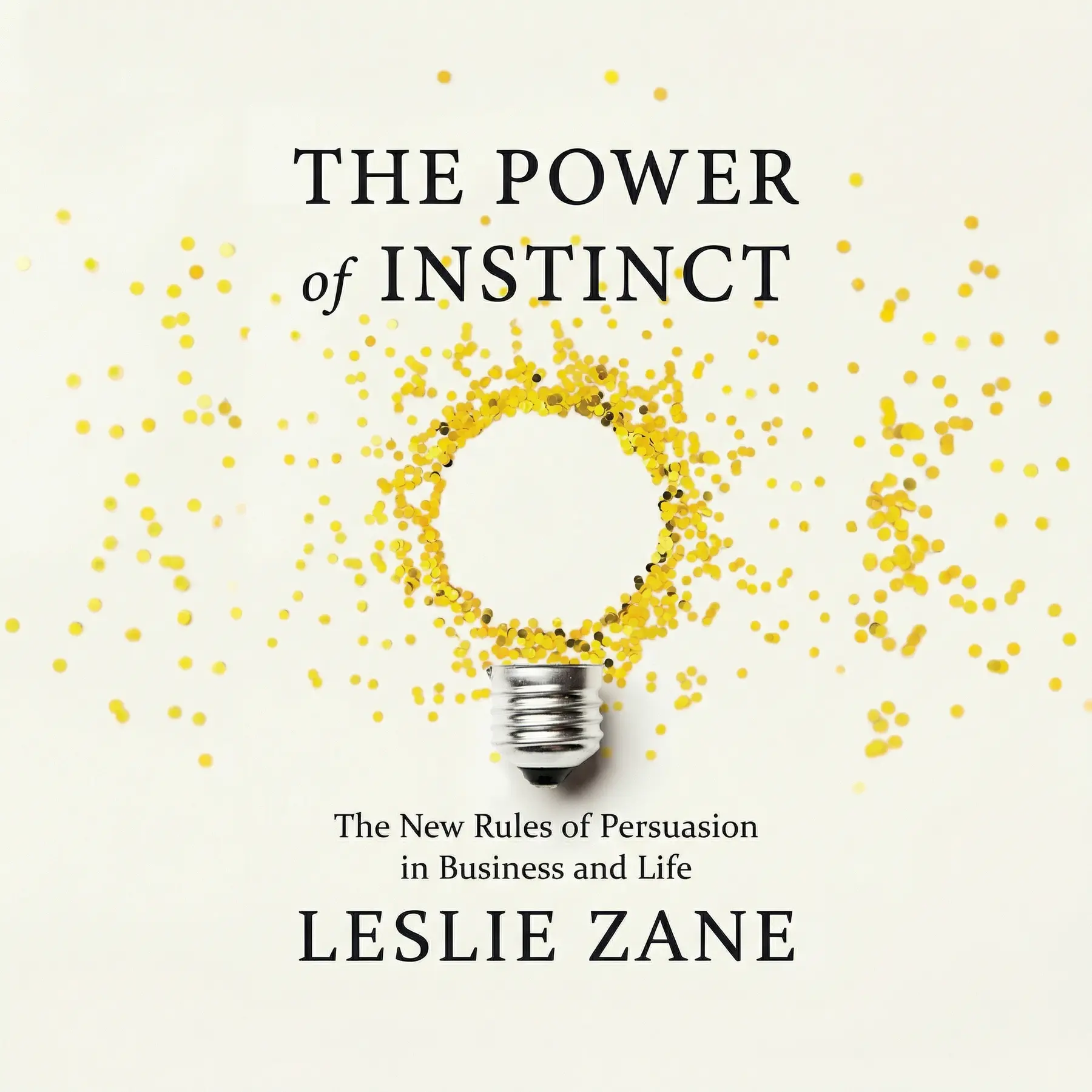
The Power of Instinct: The New Rules of Persuasion in Business and Life
By Leslie Zane
Discover how to bypass the conscious mind and tap into the unconscious drivers of consumer behavior. Learn the science of building instinctive brand loyalty through neural associations and sensory triggers.
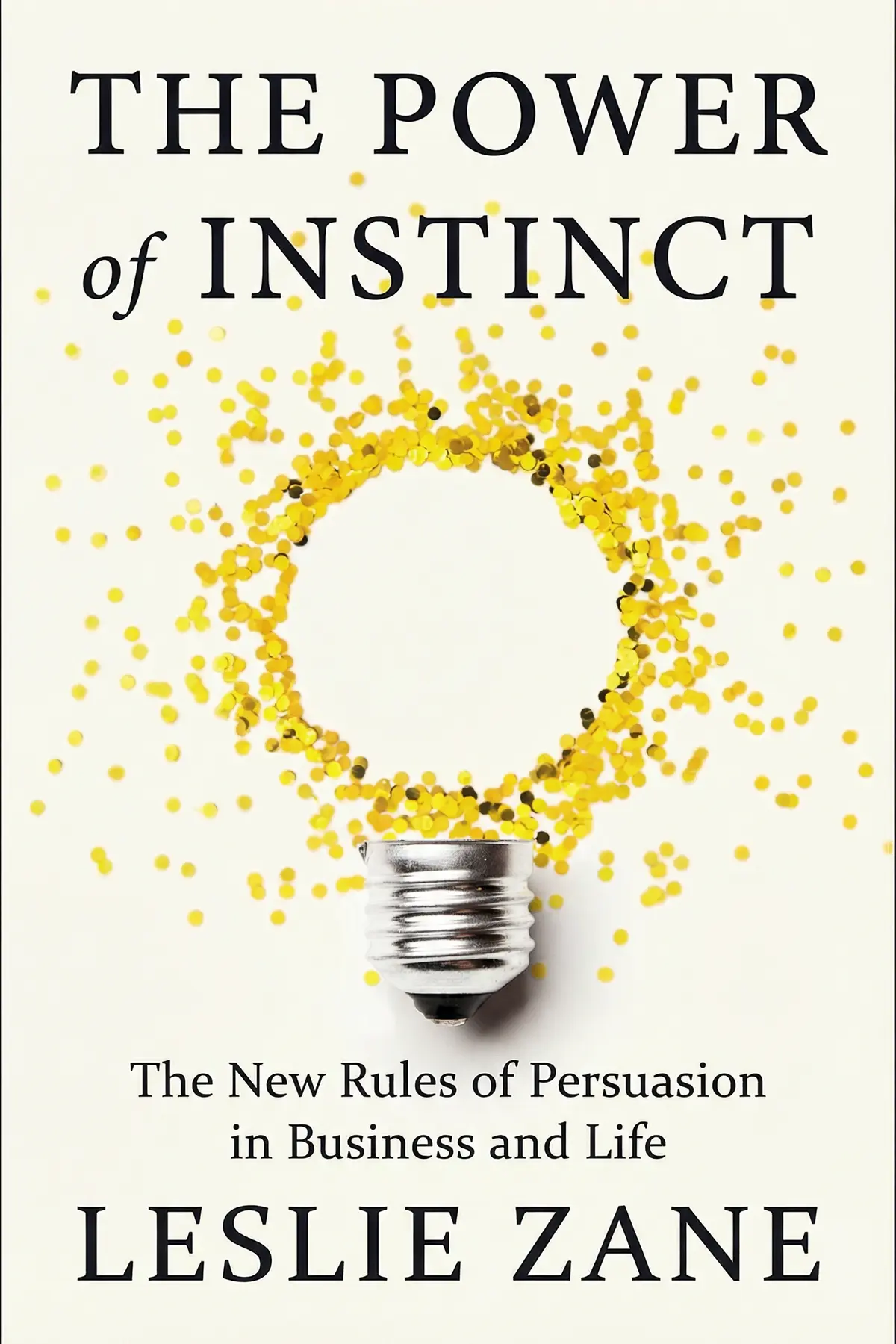
Table of Content
1. Introduction
1 min 42 sec
In an era where we are constantly tracked, tagged, and targeted, it feels like the volume of the world has been turned up to the maximum. From the moment you wake up and check your phone to the billboards you pass on your way home, you are likely exposed to thousands of commercial messages every single day. For a business or a brand, this creates a massive problem: how do you actually get through to someone? Traditional marketing says you just need to shout louder, provide more facts, or offer a lower price. But if you’ve ever felt like your message is simply disappearing into the void, you’re not alone.
The truth is that our old ways of thinking about persuasion are broken. We like to believe we are rational creatures who weigh the pros and cons of every purchase, but neuroscience tells a different story. Most of our decisions are made before our conscious mind even realizes it. We choose products based on gut feelings, deep-seated memories, and rapid-fire associations that happen in the blink of an eye. This is the realm of instinct.
In this summary, we are going to explore a new set of rules for the modern world. We will look at why targeting the conscious mind is a losing game and how you can start speaking directly to the unconscious. We will explore the concept of the ‘brand connectome’—the complex web of thoughts and feelings that live in a consumer’s brain—and learn how to grow that network. We’ll also talk about the specific sensory triggers that can make a brand feel like an old friend and how to root out the negative associations that act like weeds in your mental garden. The goal is to move beyond being a choice and become an instinct.
2. Winning the Battle for the Unconscious Mind
2 min 14 sec
Traditional marketing often fails because it targets the rational brain. Learn why reaching the unconscious mind is the only way to create truly automatic consumer preferences.
3. Cultivating the Brand Connectome
2 min 20 sec
Every brand exists as a neural network within the consumer’s brain. Discover how to build and expand this web of associations to dominate your market.
4. The Power of Sensory Cues and Triggers
2 min 30 sec
Words are often the slowest way to reach a customer. Learn how to use sights, sounds, and smells to trigger instant brand recognition and desire.
5. Pruning the Garden of Negative Associations
2 min 23 sec
One bad connection can outweigh dozens of good ones. Discover how to identify and eliminate the ‘weeds’ that are choking your brand’s growth.
6. Shift from Actual to Perceived Superiority
2 min 16 sec
Being the best is not enough if people don’t feel you are the best. Learn why perception is the ultimate reality in the marketplace.
7. Conclusion
1 min 37 sec
As we wrap up our journey through the science of instinct, the central theme should be clear: the battle for the consumer is won or lost in the unconscious mind. We’ve moved past the era where simply shouting the loudest or having the longest list of features was enough to secure a market position. Today, the brands that thrive are those that understand the ‘connectome’—the complex, messy, and beautiful web of associations that live inside every customer’s head.
By focusing on the four rules we’ve discussed—targeting the unconscious, nurturing your brand’s neural network, using sensory triggers, and aggressively weeding out negative associations—you can transform your business from a mere option into an instinctive preference. You now have the tools to stop fighting for the consumer’s attention and start living inside their intuition.
The transition from rational persuasion to instinctual connection isn’t just a marketing tactic; it’s a fundamental shift in how we understand human interaction. Whether you are building a global brand or trying to be more influential in your personal life, the principles are the same. Look for the shortcuts to the heart and the gut. Build a world that feels familiar, safe, and rewarding. If you can occupy the mind share, the market share will inevitably follow. It’s time to stop over-thinking the sale and start understanding the instinct. Now, take a look at your own brand or project: what is the very first thing people feel when they see it? If it’s not an immediate, positive ‘yes,’ then it’s time to start rewiring.
About this book
What is this book about?
The Power of Instinct challenges the traditional belief that consumers make logical, information-based decisions. Instead, Leslie Zane demonstrates that the majority of our choices are driven by deep-seated unconscious networks known as brand connectomes. The book provides a blueprint for shifting from traditional persuasion methods to a strategy rooted in neuroscience and instinct. By understanding how the brain forms associations, businesses can move beyond competing on price or features. The promise of this work is a pathway to creating 'instinctive brand preference'—a state where customers choose a product automatically without considering alternatives. You will explore how to nurture positive neural connections, leverage sensory cues, and identify the hidden negative associations that might be stunting your growth. It is a comprehensive guide to gaining a larger share of the consumer’s mind to ultimately dominate the marketplace.
Book Information
About the Author
Leslie Zane
Leslie Zane is the founder of Triggers, a brand consultancy that specializes in utilizing instinctual triggers to shape consumer behavior. With a professional background at major corporations like P&G and Johnson & Johnson, she brings deep industry experience to her theories. Zane’s insights have been highlighted in prominent publications such as Forbes, the Harvard Business Review, and Scientific American, and she has shared her expertise on the TEDx stage.
Ratings & Reviews
Ratings at a glance
What people think
Listeners find the writing accessible and absorbing. They value its perspectives, with one listener emphasizing the intriguing take on behavioral science and another noting the effectiveness of the strategy and approach.
Top reviews
Kae
Ever wonder why you reach for the same brand of laundry detergent without even glancing at the price tag? Leslie Zane breaks down the science of these automatic choices with incredible precision and a fascinating lens on behavioral science. The concept of the 'brand connectome' changed how I view every single advertisement I see now. By focusing on the subconscious rather than just shouting features at the consumer, Zane provides a blueprint for building true loyalty. The writing is snappy and the examples are highly relevant to today's fast-paced market. This is essential reading for anyone trying to cut through the digital noise and build something lasting.
Show moreSayan
This book is a masterclass in understanding the invisible threads that pull on our daily decisions. Zane argues that mind share is the true precursor to market share, and she backs it up with brilliant insights. I was particularly struck by the idea that we don't just buy products; we buy into 'brand worlds' with their own values and sensory triggers. The advice on managing the 'weeds' of negative perceptions is worth the price of the book alone. It’s rare to find a business book that is this practical and also this much fun to read. My copy is already full of highlights and notes for my team.
Show moreGoy
Leslie Zane offers a fascinating lens on why traditional advertising often fails in our current digital landscape. Her argument that we need to stop bombarding the conscious mind and start nurturing the unconscious is quite compelling. I particularly liked the section on sensory triggers—it’s amazing how a simple smell or sound can reinforce a decade of brand loyalty. However, I do wish there were more examples of these principles being applied outside of the typical consumer goods sector. Despite that minor gripe, the book is incredibly readable and offers a fresh perspective on behavioral science that most marketing books ignore. It’s a solid addition to my professional shelf.
Show moreBond
After hearing a colleague rave about 'The Power of Instinct,' I jumped in expecting a standard marketing manual. What I found instead was a deep dive into the psychology of preference that felt both modern and grounded. The focus on 'instinctive brand preference' is a total game changer for how we think about market share. Zane's prose is engaging, though she does tend to repeat certain phrases a bit too often for my taste. Still, the core message about building a comprehensive 'brand world' is something I’ll be bringing to my next strategy meeting. It really forces you to think about the long-term mental presence you’re building with your audience.
Show moreRiley
Picked this up because I’ve been fascinated by behavioral science lately, and Zane does not disappoint. She manages to take complex neurological concepts and turn them into a clear strategy for persuasion. The shift from logical reasoning to instinctive preference is something every communicator needs to understand. I found the 'brand connectome' visualization very helpful for mapping out how different marketing touchpoints interact. There are moments where the tone feels a bit like a sales pitch for her consulting firm, but the underlying logic is too good to ignore. It’s an engaging method that actually makes sense in the real world of consumer behavior.
Show moreNora
Look, the idea of the 'brand connectome' is definitely a cool way to visualize mental real estate. I’ve spent years focusing on 'features and benefits,' so shifting to 'instincts and associations' was a refreshing change of pace. The book is very readable and moves quickly, which I appreciated given my busy schedule. Some of the sensory examples felt a little dated, but the core principle remains incredibly strong. If you want to understand why some brands just 'click' while others fade away, this is a great place to start your research. It’s not perfect, but it definitely makes you rethink your entire approach to communication.
Show morePensri
As a small business owner, I found the concepts here a bit geared toward the Fortune 500 crowd. The idea that we need to invest in massive sensory campaigns is great if you have millions, but what about the rest of us? That said, the insights into how the human brain prioritizes negative information were genuinely helpful. It made me realize I need to spend more time 'weeding' out the bad associations my customers might have. It's a solid theoretical framework, even if the execution feels a little out of reach for smaller teams. I enjoyed the read but struggled to see how I could apply it tomorrow morning without a massive budget.
Show moreNarumon
The discussion about how negative associations act like weeds in a garden was a real lightbulb moment for me. It’s a bit scary to realize how much weight our brains give to one bad experience compared to ten good ones. Zane’s method for countering this by flooding the 'connectome' with positive triggers is clever, if a bit difficult to implement perfectly. My only real issue is that the book feels a bit too long for the amount of unique information provided. It’s a good summary of the subconscious mind’s power, but it could have been tighter. A decent read, but be prepared for some repetition of the core themes.
Show moreBun
Frankly, I struggled to find the 'new' in these rules of persuasion. While the writing is clear, much of the advice felt like common sense repackaged with fancier terminology. I went in expecting actionable steps for a small-scale entrepreneur, but most of the case studies seem to cater exclusively to massive corporations with endless budgets. If you aren't managing a global brand, the theories on 'mental real estate' might feel a bit abstract and out of reach. It’s not a bad read by any means, but it didn't provide the breakthrough I was hoping for. It feels like a long-term play for those who already have the resources to burn on sensory triggers.
Show moreCha
To be fair, the writing style is engaging, but the actual substance felt a bit repetitive for me. I felt like the first three chapters told me everything I needed to know, and the rest was just fluff. The idea that instincts drive behavior isn't exactly a revelation in 2024. While Zane tries to put a new spin on it with the 'connectome' concept, it didn't feel like a radical departure from existing behavioral economics. I’d recommend this to a complete beginner, but if you’ve read any Cialdini or Kahneman, you can probably skip this one. It’s readable, just not as revolutionary as the title suggests.
Show moreReaders also enjoyed
AUDIO SUMMARY AVAILABLE
Listen to The Power of Instinct in 15 minutes
Get the key ideas from The Power of Instinct by Leslie Zane, plus 5,000+ more titles in English and Thai.
- 5,000+ titles
- Listen as much as you want
- 7-day free trial
- Cancel anytime







