
28 min 41 sec
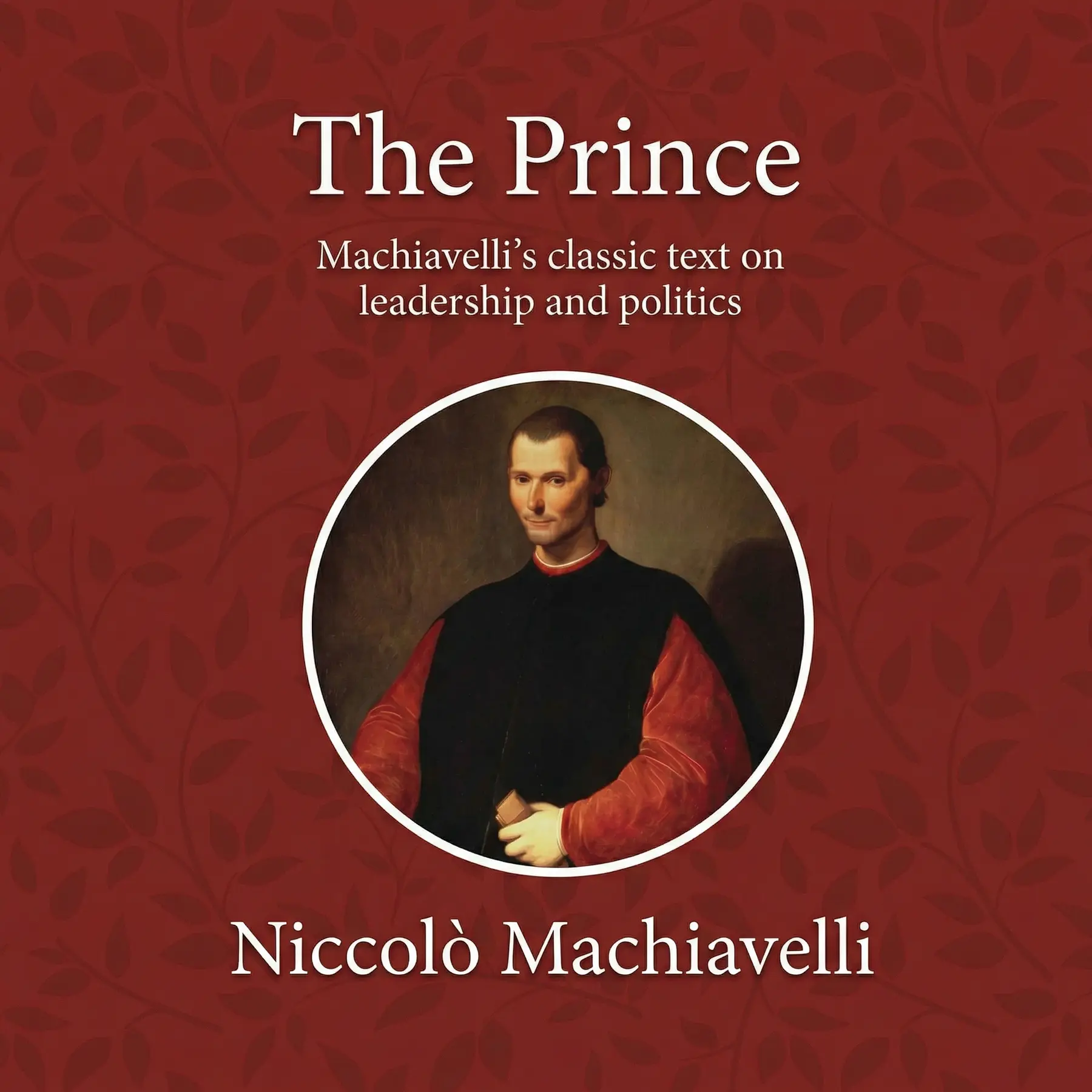
The Prince
A foundational exploration of political realism, this summary examines Niccolò Machiavelli’s timeless advice on how leaders acquire, maintain, and defend power through pragmatism, military focus, and the strategic use of reputation.
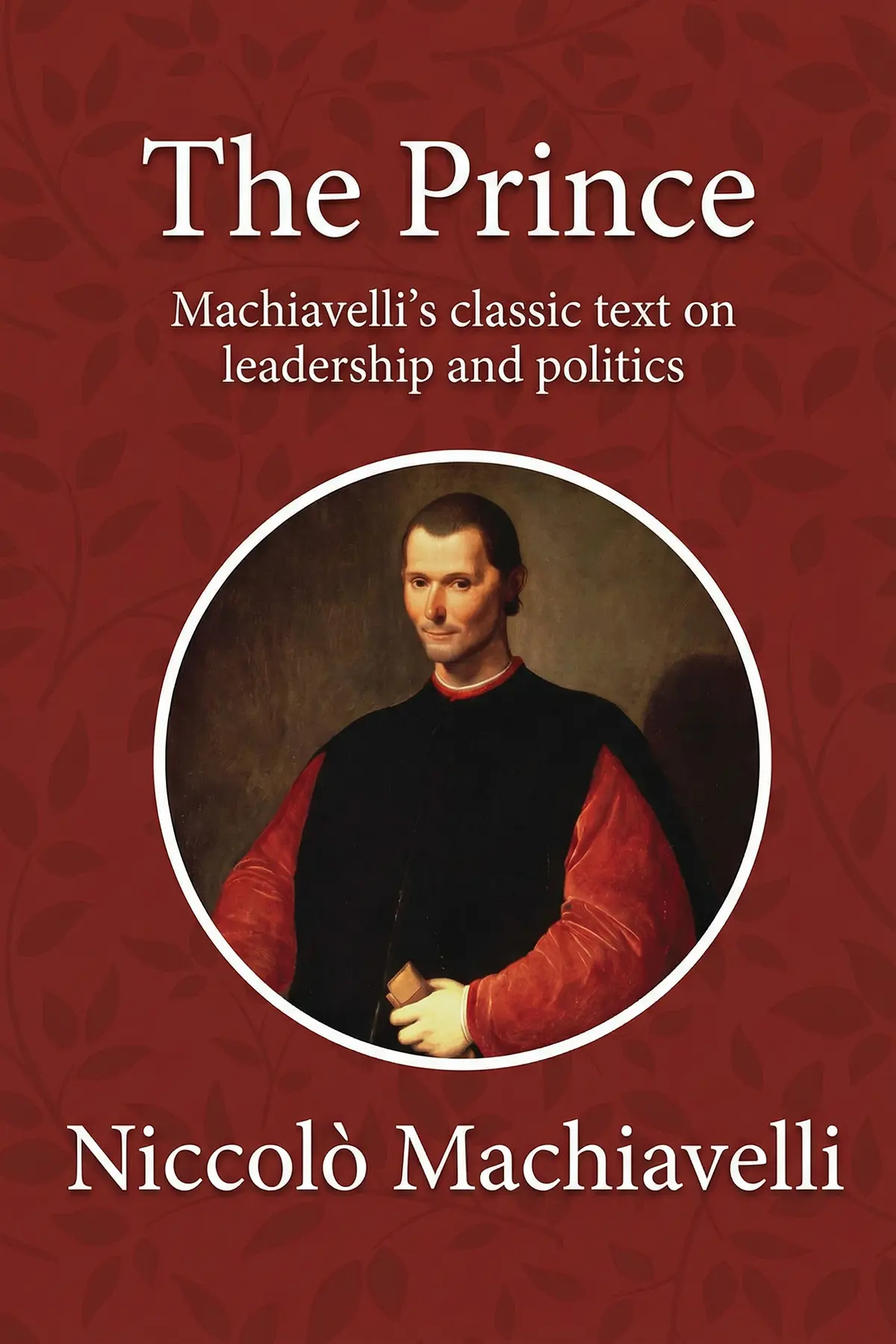
Table of Content
1. Introduction
1 min 40 sec
In the annals of history, few names carry as much weight—or as much controversy—as Niccolò Machiavelli. To some, he is the father of modern political science; to others, he is the teacher of tyrants. But to understand the true core of his most famous work, we have to look past the myths and see it for what it truly was: a survival guide. Written during a time of immense instability in Renaissance Italy, this text was born from a world of shifting borders, sudden betrayals, and the constant threat of invasion. It doesn’t ask how a perfect world should look; it asks how a ruler can survive and thrive in the world as it actually is.
The throughline of our exploration today is the concept of political pragmatism. We are going to look at the mechanics of power—how it is seized, how it is held, and the specific personal qualities a leader must cultivate to prevent their own downfall. You will find that many of the tactics Machiavelli suggests might seem harsh, or even shocking, by modern standards. He explores why cruelty might be a tool for peace, why honesty can sometimes be a liability, and why military preparedness is the only true foundation for a stable state.
As we walk through these insights, try to look at them not as moral judgments, but as a series of strategic observations. Whether you are leading a nation, a corporation, or a small team, the underlying themes of human psychology and organizational stability remain remarkably relevant. We’ll see why some leaders crumble the moment they face opposition, while others manage to build legacies that last for generations. Let’s dive into the sharp, unsentimental logic of the Renaissance’s most famous political mind and discover what it really takes to be a prince.
2. Establishing Presence in New Territories
2 min 27 sec
Acquiring a new land is only the first step. Success depends on how a leader manages the transition of power and makes their presence felt by the local population.
3. The Structure of Governance and Ease of Conquest
2 min 32 sec
The internal organization of a state dictates how difficult it is to overthrow and how much effort is required to keep it under control afterward.
4. The Interplay of Talent and Timing
2 min 23 sec
Reaching the top requires a rare combination of personal skill and external luck, neither of which is sufficient on its own.
5. The Pragmatic Use of Force and Public Favor
2 min 26 sec
Gaining power through ruthlessness can be effective, but only if the violence is concentrated and followed by efforts to secure the people’s gratitude.
6. The Art of War as a Primary Leadership Duty
2 min 12 sec
A ruler who neglects military matters risks losing everything, as the ability to use force is the ultimate guarantor of any laws or institutions.
7. The Risks of Reliance on Mercenaries and Allies
2 min 12 sec
Relying on others for defense is a fatal error. True security can only be found in a loyal army made up of one’s own subjects.
8. Managing the Reputation of Generosity
2 min 17 sec
A leader should not fear being called stingy, as trying to maintain a reputation for generosity will eventually lead to financial ruin and public resentment.
9. The Strategic Choice Between Fear and Love
2 min 28 sec
While it is ideal to be both loved and feared, if a choice must be made, it is significantly safer for a ruler to be feared.
10. The Duality of the Lion and the Fox
2 min 12 sec
Effective leadership requires the strength to overpower enemies and the cunning to see through their deceptions.
11. Selecting and Managing Advisors
2 min 12 sec
The quality of a leader is often judged by the people they choose to surround themselves with and their ability to solicit honest feedback.
12. Mastering Fortune Through Boldness
2 min 00 sec
While half of our lives may be governed by luck, the other half can be directed through preparation and impetuous action.
13. Conclusion
1 min 40 sec
As we conclude our journey through the strategic landscape of The Prince, the message remains clear and uncompromising: the primary duty of a leader is the preservation and strength of the state. Niccolò Machiavelli did not write a book about how to be a ‘good person’ in the religious or moral sense; he wrote a book about how to be an effective ruler in a world where everyone else is playing to win. He reminds us that the qualities we admire in private individuals—honesty, generosity, and gentleness—can often be the very traits that lead to the ruin of a leader and the collapse of a nation.
The throughline of pragmatism we’ve followed suggests that power is a tool that must be wielded with precision. Whether it’s the necessity of building your own loyal army, the strategic use of fear to maintain discipline, or the cleverness required to outwit rivals, everything serves the goal of stability. A ruler must be flexible, moving between the strength of the lion and the cunning of the fox as the situation demands. Above all, you must never be at the mercy of events; through preparation and bold action, you must strive to master fortune itself.
The final takeaway for any modern reader is that leadership requires a clear-eyed view of human nature. If you understand that people are driven by self-interest and fear, you can lead them more effectively. By focusing on outcomes rather than intentions, and by prioritizing the long-term health of your ‘principality’ over short-term popularity, you build a foundation that can withstand the inevitable floods of change. Machiavelli’s Prince is a call to realism, urging us to see the world as it is, so that we might have the power to shape it into what we want it to become.
About this book
What is this book about?
The Prince is perhaps the most famous—and infamous—guide to political leadership ever written. Composed in the early 16th century, it strips away the idealistic notions of how a ruler 'ought' to behave, focusing instead on the cold realities of how power actually functions. It offers a manual for the 'new prince,' exploring the different ways one can ascend to the throne, whether through inheritance, military skill, or even calculated wickedness. The book’s central promise is a blueprint for stability in a chaotic world. It teaches that a successful leader must be both a lion and a fox—strong enough to fight and clever enough to avoid traps. By exploring the nuances of human nature, military strategy, and the fickle nature of fortune, Machiavelli provides a framework for statecraft that prioritizes the survival and strength of the principality above all else. This summary distills his most provocative lessons, from the necessity of being feared rather than loved to the reasons why a ruler must build their own army rather than relying on others.
Book Information
About the Author
Niccolò Machiavelli
Niccolò Machiavelli was a prominent politician and writer in the Republic of Florence during the early 16th century. His life was defined by the turbulent shifts in Italian politics. When the powerful Medici family returned to power and dismantled the republic, Machiavelli was removed from his administrative duties and found himself unemployed. He wrote The Prince as a strategic gesture, essentially serving as a sophisticated job application to the new Medici administration, hoping to prove his value as a political advisor through his deep understanding of statecraft.
Ratings & Reviews
Ratings at a glance
What people think
Listeners find the work worthwhile and engaging, with one noting it as essential reading for history students. Reactions to the prose are varied; while some consider it well written, others describe the language as excessively wordy.
Top reviews
Henry
Machiavelli’s masterpiece is often misunderstood as a handbook for villains, but reading it in its historical context reveals a much deeper layer of desperation and patriotism. To be fair, the advice he gives to Lorenzo de' Medici is chillingly pragmatic, prioritizing the stability of the state over the soul of the ruler. I found the sections on Cesare Borgia particularly illuminating, showcasing a man who was as efficient as he was ruthless. While the prose can be a bit dense depending on your translation, the core message about the 'ends justifying the means' remains a cornerstone of political science. It is a slim volume that packs a massive punch. Every page feels like a peek behind the curtain of how the world actually functions rather than how we wish it would. Whether you find his cynicism refreshing or revolting, you cannot deny the sheer brilliance of his observations on human nature and power.
Show moreStella
After hearing so many people describe this as a 'manual for evil,' I was surprised by how much of it is actually common sense. As someone who enjoys political philosophy, I think this is an essential read because it forces you to confront the uncomfortable relationship between ethics and effective leadership. Machiavelli argues that a leader’s primary duty is the safety of the state, and if that requires breaking a promise, then so be it. This 'realpolitik' approach is what makes the book so enduringly relevant even 500 years later. The historical vignettes about Cesare Borgia are fascinating and provide a vivid picture of the volatility of the Italian Renaissance. It’s a short read, but you’ll find yourself pausing every few minutes to think about how these principles apply to modern corporate or political life. It’s absolutely brilliant and remains a foundational text for a reason.
Show morePornpimon
As a history student, this text has been on my list for ages, and I’m annoyed I waited so long to dive in. It is an absolute must-read if you want to understand the transition from medieval thought to modern political science. Machiavelli strips away the religious pretenses of the Middle Ages and looks at power as a cold, hard commodity. The way he analyzes the successes and failures of past rulers is incredibly methodical. Even if you disagree with his amoral stance, you have to admire the clarity of his logic. The book is well-written, though you definitely need a version with good footnotes to keep track of all the different Italian dukes and popes. It provides a window into a world of constant betrayal where 'goodness' was often a death sentence. It’s dark, it’s cynical, and it’s utterly captivating from start to finish.
Show moreIsaiah
Ever wonder where modern politicians get their playbook? Picked this up after years of hearing the term 'Machiavellian' tossed around in news reports, and it turns out the guy was just calling it like he saw it. The truth is that Machiavelli wasn't necessarily evil; he was just an observer of the chaotic, blood-soaked reality of his era. I loved the short, punchy chapters that offer direct advice on everything from choosing ministers to dealing with flattery. Some of the historical examples are a bit obscure if you aren't an expert on the Borgias or the Medicis, but the psychological grit is universal. My only real gripe is that it feels a bit repetitive in the middle sections regarding mercenaries and auxiliary troops. Still, the insight into how power is maintained through calculated cruelty rather than blind kindness is staggering. It makes you look at every world leader a little differently.
Show moreAom
Gotta say, the sheer ruthlessness on display here is actually quite refreshing compared to the flowery political speeches we hear today. Machiavelli doesn't care about your feelings or your morality; he only cares about whether you can keep your head on your shoulders and your borders secure. The chapter on whether a prince should be loved or feared is a masterclass in psychological realism. Look, he’s definitely a bit of a dick, and his advice on destroying conquered cities is horrific, but he’s honest about the cost of power. I found the translation I read to be clear enough, though some of the sentences still felt like they were trying to win a marathon. It’s a fascinating, if somewhat uncomfortable, look into the mind of a man who seen the worst of humanity and decided to write a guide on how to manage it.
Show moreJan
Frankly, it’s hilarious how much this book still upsets people after all this time. Machiavelli isn't telling you to be a bad person; he's telling you that if you want to run a country, you can't always be a good one. There is a huge difference. I found his advice on 'appearing' to be religious and virtuous while being ready to act otherwise to be a perfect description of almost every leader in history. The writing is a bit dated and can be extremely wordy in the middle, but the core chapters are gold. It’s a quick read if you skip some of the more redundant historical examples. If you can handle a bit of cold-blooded pragmatism, you’ll find this to be a very interesting look at the mechanics of control. It’s not a 'feel-good' book, but it is a 'think-a-lot' book, and that’s why it’s a classic.
Show moreCameron
To be fair, I found the prose in this edition to be incredibly dense and, at times, frankly exhausting to get through. While I understand why this is considered a must-read for students of history, the constant references to 16th-century Italian city-states became a bit of a slog after the first fifty pages. There is definitely some timeless wisdom buried in here, especially regarding the idea that it is better to be feared than loved, but you have to dig through a lot of wordy historical fluff to find it. The military chapters, in particular, felt quite dated and less applicable to a modern reader than the psychological insights. It's an interesting artifact of its time, but it wasn't exactly a page-turner for me. I’m glad I finally finished it just to say I have, but I don’t think I’ll be revisiting these 'lessons' anytime soon.
Show moreCarter
The historical context is fascinating, but the actual reading experience was a bit of a mixed bag for me. On one hand, you have these incredible, biting quotes about human nature that feel like they were written yesterday. On the other hand, you have long, rambling sections about the specific nuances of Swiss mercenaries that feel completely irrelevant to anyone living in the 21st century. Personally, I think the book could have been half as long and twice as effective. Machiavelli is clearly a brilliant mind, but he is also a very wordy one. I appreciated the advice on how to avoid being hated while still being feared, as it shows he wasn't just a mindless tyrant. However, I found my eyes glazing over during the more technical descriptions of troop formations. It's a solid 3-star read: historically vital, but occasionally boring.
Show moreTang
Not what I expected at all, to be honest. I thought this would be more of a philosophical treatise on the nature of justice, but it’s really more of a job application for a guy who wanted to get back into politics. There are some valuable insights here, particularly regarding the fickleness of the masses and the importance of being prepared for bad fortune. However, the tone is so cynical that it becomes a bit exhausting after a while. I also struggled with the writing style, which felt very repetitive; he says the same thing five different ways using five different Roman emperors as examples. It’s an important book for understanding history, but as a casual read, it’s pretty dry. I’d recommend it for the cultural literacy, but don’t expect to be entertained in the traditional sense. It’s more of a curiosity than a favorite.
Show moreNutnicha
I expected a historical drama or a raucous fictional story about a royal family, but instead, I got a dry, technical manual on government administration. That might be on me for not checking the genre, but I found the entire experience quite dull. The writing is extremely wordy and Machiavelli spends way too much time talking about specific ancient battles that I honestly didn't care about. I kept waiting for some kind of narrative arc, but it’s just list after list of how to suppress rebellions and which types of soldiers are the most useless. If you are a hardcore history student, you might find some value here, but for a casual reader looking for a story, this is a total pass. It felt more like a textbook assignment than a classic piece of literature. The only satisfaction I got was finally closing the back cover.
Show moreReaders also enjoyed
A Warning
Miles Taylor
A Guide to the Good Life: The Ancient Art of Stoic Joy
William B. Irvine
Abolish Rent: How Tenants Can End the Housing Crisis
Tracy Rosenthal
A Little History of Philosophy
Nigel Warburton
Abortion: Our Bodies, Their Lies, and the Truths We Use to
Jessica Valenti
AUDIO SUMMARY AVAILABLE
Listen to The Prince in 15 minutes
Get the key ideas from The Prince by Niccolò Machiavelli, plus 5,000+ more titles in English and Thai.
- 5,000+ titles
- Listen as much as you want
- 7-day free trial
- Cancel anytime







