
18 min 33 sec
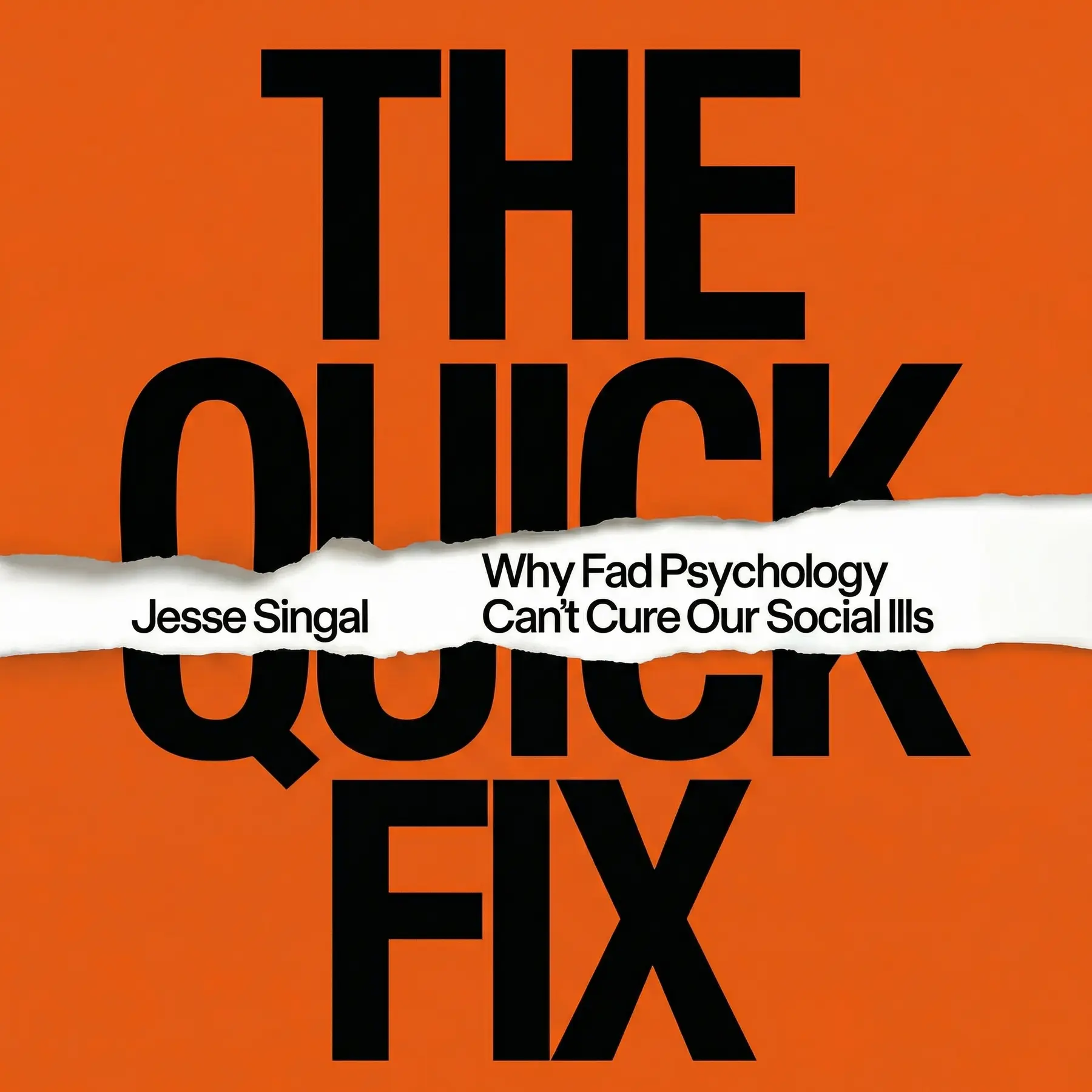
The Quick Fix: Why Fad Psychology Can't Cure Our Social Ills
By Jesse Singal
The Quick Fix examines the rise of fad psychology and why simplistic behavioral interventions fail to solve deep-rooted social problems, urging a shift from individual fixes to systemic change.
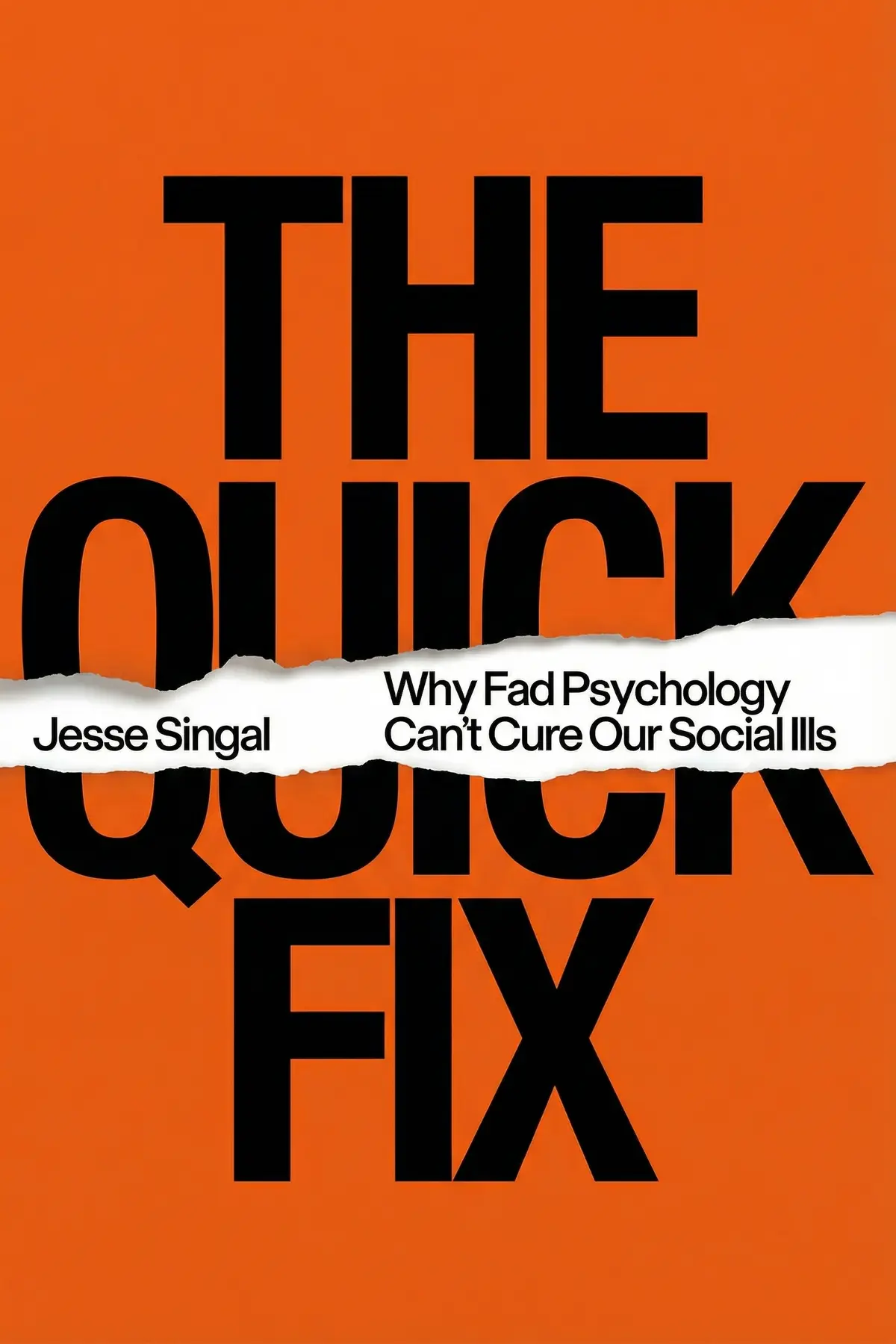
Table of Content
1. Introduction
1 min 49 sec
Have you ever found yourself watching a viral video of a charismatic expert promising that a simple change in your posture or a slight shift in your perspective could revolutionize your life? It’s a compelling vision. In a world fraught with rising crime, persistent inequality, and systemic failure, the idea that a small, psychological intervention can fix everything is incredibly seductive. We want to believe that the solutions to our most profound social ills are right there, hiding in the nuances of our brain chemistry or our subconscious habits.
This desire for an easy button is the heart of what Jesse Singal explores. He takes a hard look at the intersection of psychology and popular culture, revealing a landscape littered with “half-baked” ideas that gained massive influence before they were truly tested. These concepts don’t just live in textbooks; they shape our laws, our corporate training programs, and our military strategies. But when these ideas are built on a foundation of shaky data or biased research, the consequences can be far more serious than a mere waste of time and money.
Over the course of this summary, we’re going to look at why these fad psychology movements gain so much momentum. We will examine the “replication crisis” that has rocked the foundations of social science and explore why ideas that sound good in a twenty-minute presentation often fall apart in the real world. We’ll see how focusing on the individual’s psychology can sometimes be a convenient distraction from the much harder work of changing the systems we live in. By the end, the goal isn’t to dismiss psychology altogether, but to develop a sharper, more skeptical eye for the “quick fixes” that promise to cure our social ills without ever addressing the underlying causes. Let’s begin by looking at how a single, flawed theory about youth crime once reshaped the American legal landscape.
2. The Danger of Scientific Myths in Public Policy
2 min 28 sec
Discover how a single, unproven theory about a new class of violent criminals led to a massive shift in the American legal system with tragic results.
3. The Seduction of Individual Solutions over Structural Reform
2 min 24 sec
Explore why the concept of power posing became a global sensation despite failing to hold up under the scrutiny of scientific replication.
4. The Inefficiency of One-Size-Fits-All Psychology
2 min 22 sec
Learn why the US Army’s multi-million dollar resilience program has struggled to provide the mental health support soldiers truly need.
5. The Limitations of Measuring Character
2 min 19 sec
Question the popular idea that ‘grit’ is the ultimate predictor of success and see why environmental factors often matter more.
6. The Mirage of the Subconscious Bias Test
2 min 32 sec
Investigate why the world’s most famous test for subconscious racism might not be the revolutionary tool for social change we hoped it was.
7. Restoring Credibility to the Social Sciences
2 min 41 sec
Step inside the laboratory to see how the ‘replication crisis’ is forcing psychologists to change the way they conduct and report their research.
8. Conclusion
1 min 58 sec
As we look back at the various psychological trends that have swept through our culture, a clear pattern emerges. We are a society that is hungry for simple stories. We want to believe that the keys to solving crime, ending poverty, and fixing inequality are hidden within our individual minds. This belief is comforting because it suggests that we don’t need to do the hard, expensive, and politically divisive work of changing our laws, our institutions, or our economic structures. If we can just teach more grit, or do more power poses, or take more bias tests, we can fix the world from the comfort of our own skin.
But as Jesse Singal has shown, this reliance on “fad psychology” has real-world consequences. It leads to the misallocation of millions of dollars, the implementation of ineffective laws, and the distraction of the public from the true causes of our social ills. The “quick fix” is almost always a mirage. When we encounter a new, flashy psychological breakthrough, we must learn to ask the hard questions: Has this been replicated? What were the environmental factors? Is this focusing on the individual to avoid looking at the system?
The message here isn’t that psychology is useless. On the contrary, it’s a vital field that can offer profound insights into the human condition. But its true value lies in its complexity, not in its simplicity. Real progress requires us to embrace that complexity. It requires us to move beyond the allure of the charismatic expert and the viral video and do the slow, difficult work of addressing the world as it actually is—messy, structural, and resistant to easy answers. There truly is no such thing as a quick fix, but by letting go of that illusion, we can finally begin the work of creating real, lasting change.
About this book
What is this book about?
In our search for answers to the world's most daunting problems—from racial inequality to mental health crises—we are often seduced by the promise of a simple psychological breakthrough. The Quick Fix explores how popular psychological concepts, frequently promoted through viral TED talks and bestselling books, often rely on shaky evidence and failed replications. From the myth of the superpredator to the questionable science of power poses and grit, author Jesse Singal pulls back the curtain on the replication crisis in social science. This summary provides a critical lens through which to view popular behavioral interventions. It explains why programs like the Army's resilience training or corporate diversity workshops often miss the mark by focusing on individual mindset rather than structural flaws. By understanding the limitations of these fad-driven solutions, listeners will learn the importance of scientific rigor and the necessity of addressing the complex, environmental factors that truly shape human behavior and societal outcomes.
Book Information
About the Author
Jesse Singal
Jesse Singal is a journalist with a deep focus on the social sciences. His work has been featured in prominent publications including New York magazine, the New York Times, and the Atlantic. In addition to his writing, he co-hosts the widely listened-to podcast Blocked & Reported, where he explores and analyzes the various controversies within internet culture. The Quick Fix marks his debut as a book author.
Ratings & Reviews
Ratings at a glance
What people think
Listeners find the book expertly researched and brilliantly written, valuing its thoughtful approach as a voice of reason. They view it as a major success, with one listener noting how it probes overpromising of results. The work’s readability earns praise, with one listener describing it as exciting to read. Finally, the book's approach to replication receives mixed reactions from listeners.
Top reviews
Bank
This book serves as a much-needed splash of cold water for anyone who has ever been seduced by the slick, fifteen-minute promises of a TED Talk. Jesse Singal methodically deconstructs the "quick fix" culture that has permeated our schools and workplaces for decades. He dives deep into the data behind concepts like "power posing" and "grit," showing how flimsy evidence gets packaged into multi-million dollar industries. I found his writing style incredibly accessible without sacrificing the intellectual rigor required to tackle the replication crisis. It’s a thoughtful achievement that prioritizes scientific nuance over easy answers. Frankly, it’s refreshing to see someone challenge the "thought leaders" who profit from oversimplifying complex human behaviors. This is the definitive voice of reason for our era of pop-psychology fatigue.
Show moreWittaya
The chapter on "superpredators" alone makes this book worth the price of admission. Singal meticulously traces how a single poorly-constructed theory influenced devastating policy decisions for an entire generation. It’s a chilling reminder that bad science has real-world consequences beyond just boring TED Talks. The author’s ability to weave together complex statistics and human stories is a testament to his skill as a journalist. Look, this isn't just a book for academics; it's a guide for anyone who wants to be a more informed citizen. He avoids the trap of being a "public intellectual" who just wants to hear himself talk. Instead, he presents a cautious, well-reasoned argument for humility in the face of complex social problems. This is easily one of the most important nonfiction books I’ve read this year.
Show moreHarper
Singal has produced an absolute masterclass in debunking without descending into cruelty. He extends a level of grace to these scientists that they arguably don’t deserve, which only makes his eventual takedown of their data more effective. The way he connects the "self-esteem movement" of the 80s to the current "grit" craze is brilliant. You start to see the patterns of how these fads emerge to fill a specific social need, regardless of whether they actually work. The book is exciting to read because it feels like you're uncovering a massive, accidental conspiracy of optimism. It’s thoughtful, well-researched, and serves as a vital warning against the allure of simple answers to hard questions. If you care about truth in science, you need this on your shelf.
Show moreSam
Ever wonder why those viral life hacks never seem to actually change your life in the long run? Singal explores this phenomenon by investigating how social psychology often prioritizes catchy headlines over reproducible results. I particularly enjoyed the section on the self-esteem craze, as it perfectly illustrated how a well-intentioned idea can spiral into a systemic failure when the science is ignored. The book is remarkably well-researched, providing a clear-eyed look at how the academic incentive structure is fundamentally broken. While the tone is occasionally a bit dense, the author’s wit keeps the narrative moving at a brisk pace. Truth is, we've been sold a bill of goods by many of these "experts." It’s an eye-opening read that will make you look at every "groundbreaking" study with a much more critical eye.
Show moreNook
Picked this up because I was tired of hearing about "implicit bias" as if it were an unshakeable law of nature. Singal does a fantastic job explaining the flaws in the Implicit Association Test without being dismissive of the underlying social issues. He manages to be respectful toward the researchers while simultaneously showing where their data falls apart under scrutiny. The writing is sharp and engaging, making what could have been a dry academic critique feel like a page-turning mystery. My only gripe is that some chapters feel a bit repetitive in their structure, but the core message is vital. It’s a great achievement in science journalism that doesn’t just point out problems but asks why we’re so eager to believe in magic bullets. Definitely a must-read for anyone who values actual evidence.
Show moreFrida
Wow, I didn't realize how much of what I "knew" about psychology was actually just marketing. Singal’s exploration of the military's positive psychology program was particularly enlightening and deeply concerning. He shows how the desire for a "quick fix" for PTSD led to massive spending on unproven methods. The writing is exciting and fast-paced, which is rare for a book that spends so much time talking about p-hacking and data manipulation. Personally, I would have liked to see a bit more nuance regarding the "nudge" theory, as he seemed more dismissive of it than I expected. Still, the book is a great achievement that successfully probes the overpromising of results in the social sciences. It’s a necessary corrective for a culture obsessed with life hacks and easy answers.
Show moreBook
Finally got around to reading this, and I'm glad I did despite my initial hesitation. As someone who grew up during the "self-esteem" era, seeing the lack of data behind it was eye-opening. Singal manages to be analytical without being boring, which is a difficult tightrope to walk. The book does a great job of probing how overpromising results can lead to systemic issues in our education and military institutions. I do wish there was more discussion on how we can move forward as a society without these "fixes," as the ending felt a bit abrupt. But overall, it’s a greatly written piece of investigative journalism that demands your attention. It’s a solid four-star read for anyone interested in the intersection of psychology and policy.
Show moreApichat
As someone who works in HR, I found the chapters on hiring metrics and workplace interventions both fascinating and slightly depressing. Singal’s investigation into "grit" and "power posing" shows how corporations waste billions on programs that have little to no empirical backing. However, I felt the book leaned a bit too heavily on the "replication crisis" without offering enough alternative solutions for organizations. The author is clearly a talented writer, but the sheer volume of debunking can get overwhelming after the fifth or sixth chapter. Not gonna lie, I was hoping for a bit more on how to fix the systems rather than just a list of what's broken. It's an important perspective, but it left me feeling a bit cynical about the entire field of behavioral science. Good, but definitely a bit of a downer.
Show moreChaiwat
In my experience, books about the replication crisis tend to be either too technical or too snarky, and this one lands somewhere in the middle. Singal is a careful writer who clearly respects the scientific method, which makes his critiques even more biting. The discussion on "social priming" was well-handled, but I felt like some of the other sections dragged on a bit too long. Frankly, the book could have been about fifty pages shorter without losing much of its impact. While it’s a solid voice of reason, the mixed reactions regarding his take on replication are understandable. He doesn't always give enough credit to the researchers who are actually trying to reform the field from within. It’s a decent read, but keep your expectations in check if you’re looking for a balanced view.
Show moreJob
Not what I expected based on the glowing summaries I saw on social media. While I agree that many of these psychology fads are overblown, the book often feels like it's picking low-hanging fruit to make a point. The prose is well-written, but the relentless skepticism started to feel a bit one-note after the first hundred pages. To be fair, Singal is a thorough researcher, but he spends so much time on the older "superpredator" myth that the more modern sections felt rushed. I found the chapter on the IAT particularly frustrating because it seemed to dismiss the utility of the test entirely rather than suggesting how to improve it. It’s a voice of reason, sure, but it’s a very loud and repetitive one. If you already follow the replication crisis, there isn't much new here for you.
Show moreReaders also enjoyed

A Biography of Loneliness: The History of an Emotion
Fay Bound Alberti
59 Seconds: Change Your Life in Under a Minute
Richard Wiseman

A Force for Good: The Dalai Lama's Vision for Our World
Daniel Goleman

A Room of One’s Own
Virginia Woolf
Abolish Rent: How Tenants Can End the Housing Crisis
Tracy Rosenthal
AUDIO SUMMARY AVAILABLE
Listen to The Quick Fix in 15 minutes
Get the key ideas from The Quick Fix by Jesse Singal, plus 5,000+ more titles in English and Thai.
- 5,000+ titles
- Listen as much as you want
- 7-day free trial
- Cancel anytime







