
A Year with Peter Drucker: 52 Weeks of Coaching for Leadership Effectiveness
Joseph A. Maciariello
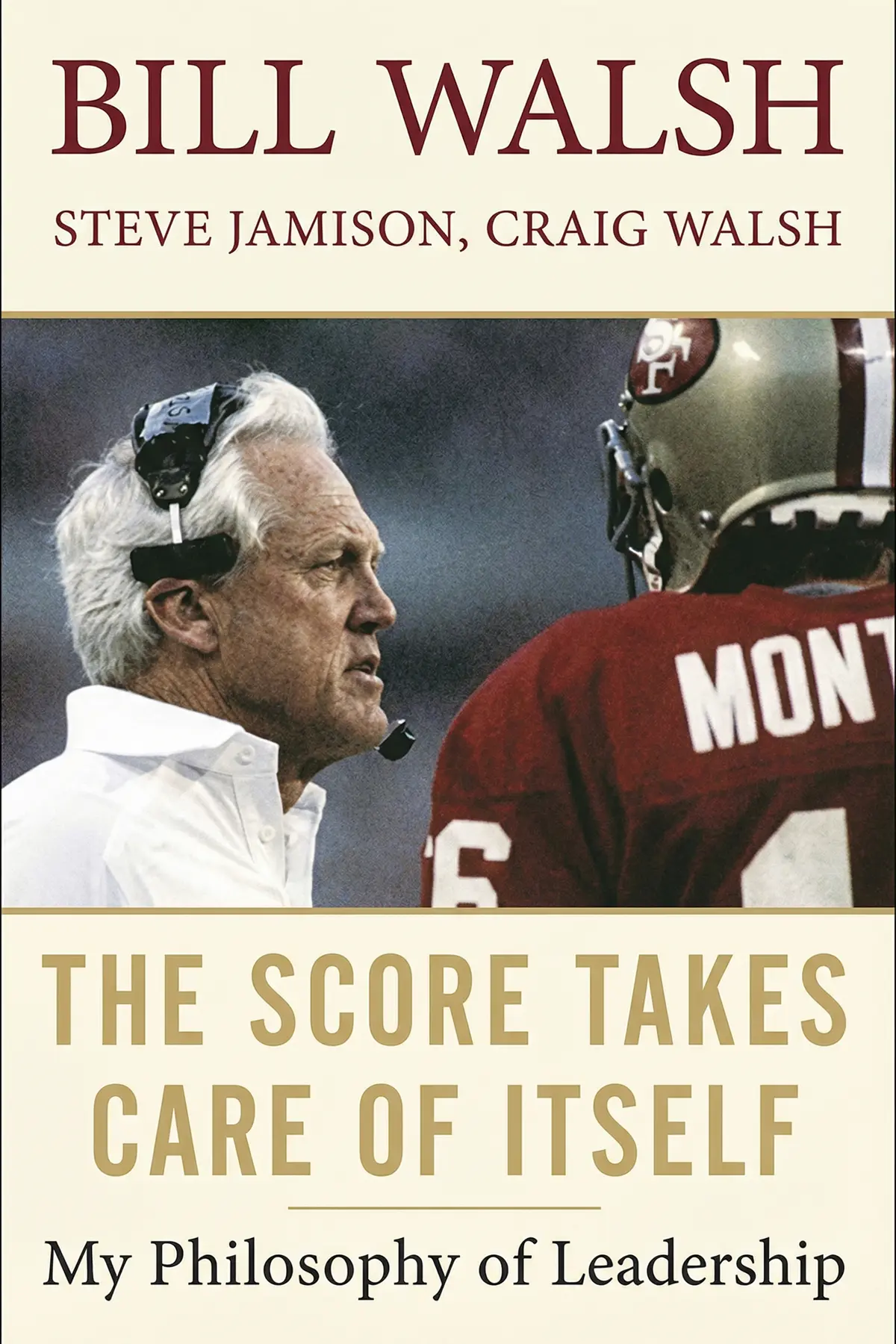
Discover how legendary NFL coach Bill Walsh transformed the San Francisco 49ers by prioritizing process, discipline, and a standard of excellence over a narrow focus on winning and the final score.
1 min 27 sec
In the late 1970s, the San Francisco 49ers were the laughingstock of the National Football League. They were a team defined by losing, suffering through seasons with almost no victories and very little hope. Into this environment stepped Bill Walsh, a man who didn’t promise a quick championship or a magical turnaround. Instead, he promised something much more fundamental and, ultimately, much more radical: a commitment to a specific way of doing things. He believed that if he could change the way people thought, acted, and prepared, the wins would eventually arrive on their own. This is the core throughline of Walsh’s leadership philosophy.
We often live in a culture that is obsessed with the bottom line. We look at the scoreboard, the quarterly earnings, or the win-loss record as the only metrics that matter. But Walsh argued that focusing on the score is actually a distraction. To truly lead a team to greatness, you have to look at the machinery beneath the surface. You have to care about the details that others ignore and build a culture where excellence is a habit, not an occasional act. In this summary, we are going to explore how Walsh’s ‘Standard of Performance’ can be applied to any organization, whether you are on a football field or in a corporate boardroom. We will see how he handled the crushing weight of failure, how he innovated under pressure, and how he ensured that his team stayed hungry even after they reached the top of the mountain. Let’s dive into the principles that prove why the score really does take care of itself.
1 min 57 sec
What if the key to winning wasn’t focusing on the win? Explore how a commitment to micro-level excellence creates the foundation for macro-level success.
1 min 43 sec
Leadership isn’t about avoiding failure; it’s about how you respond when you’re at your lowest point. Learn how one of the greatest coaches survived his darkest hour.
1 min 41 sec
When you don’t have the resources of your competitors, you’re forced to think differently. Discover how a lack of strength led to a revolution in strategy.
1 min 50 sec
High-pressure situations can cloud your judgment. Find out how meticulous pre-planning can keep you calm and effective when the stakes are highest.
1 min 45 sec
You can’t just give yourself a title and expect people to follow. Explore the difference between holding authority and actually leading people.
1 min 51 sec
A collection of stars doesn’t necessarily make a great team. Learn how to align individual talent with a shared organizational vision.
1 min 47 sec
Winning can be more dangerous than losing. Explore why the greatest threat to a champion is often their own previous success.
1 min 56 sec
Greatness isn’t just about what you achieve; it’s about who you help. Discover the importance of passing on knowledge to the next generation.
1 min 34 sec
As we look back at the career and philosophy of Bill Walsh, the message is clear: true leadership is about the relentless pursuit of excellence in the things we can control. We live in a world that often rewards short-term results and flashy wins, but Walsh’s success with the 49ers serves as a powerful reminder that lasting greatness is built on a much quieter, more disciplined foundation. By establishing a Standard of Performance, Walsh didn’t just build a winning football team; he built a culture that expected the best from everyone, at all times, regardless of the score.
Whether you are leading a small team, a large corporation, or just trying to improve your own professional life, the principles of Walsh’s philosophy are universally applicable. Start by defining your own standards—what are the small details that define excellence in your role? Commit to those details with unwavering discipline. When you face setbacks, as Walsh did on that flight from Miami, focus on the very next step. When you find success, guard against the complacency of ‘Success Disease’ by returning to the fundamentals.
In the end, leadership is not about magic formulas or luck. It is about the integrity of your process. If you can create an environment where everyone is aligned, where mistakes are seen as opportunities for innovation, and where teaching and mentorship are prioritized, you won’t need to obsess over the final outcome. You can trust that the work you have put in will speak for itself. You can move forward with the confidence that when you handle the preparation, the discipline, and the culture, the score will, indeed, take care of itself.
The Score Takes Care of Itself explores the leadership philosophy of Bill Walsh, the man who turned one of the NFL’s worst teams into a legendary dynasty. Rather than obsessing over the scoreboard, Walsh focused on creating a rigorous Standard of Performance that governed every aspect of his organization, from how players wore their socks to how the front office handled communication. This book provides a blueprint for any leader looking to build a high-performance culture. It details the importance of resilience in the face of crushing defeat, the power of strategic innovation when resources are limited, and the necessity of meticulous planning. Walsh demonstrates that when you instill a culture of excellence and hold everyone accountable to the highest standards, the results—the wins and the profits—will naturally follow as a byproduct of your collective effort.
Bill Walsh was a Hall of Fame NFL coach who led the San Francisco 49ers to three Super Bowl titles and pioneered the influential West Coast Offense. Steve Jamison is a best-selling author and leadership expert known for his collaborations with coaching legends. Craig Walsh, Bill’s son, provides a personal lens on his father’s enduring leadership legacy.
Listeners find this work to be an exceptional manual on leadership that assists them in crafting their personal management approach. It is packed with excellent narratives and offers useful perspectives, with one listener mentioning how the core concepts transfer to corporate environments. They value the book's emphasis on humanity, with one review specifically noting Walsh's private qualities, and describe the material as motivating and simple to follow.
Ever wonder how a coach takes a 2-14 team to the Super Bowl in just a few seasons? Bill Walsh’s "Standard of Performance" is the blueprint. He doesn't just talk about winning; he talks about the micro-details of how a receptionist answers the phone or how a player runs a practice route. Frankly, the level of organizational discipline described here is staggering. It’s less about the "big speech" and more about the relentless pursuit of excellence in every single department. Some sections feel a bit like a dry textbook, but the wisdom buried in his football anecdotes is pure gold. If you are leading any kind of team, this belongs on your shelf.
Show moreRarely do I find a leadership book that actually explores the heavy personal toll of success. Walsh’s story is ultimately quite moving because it shows that even a "Genius" isn't immune to the crushing weight of expectations. The ending felt surprisingly tragic, revealing how the very standards that made him a legend eventually led to his burnout. It’s a powerful reminder that we should tie our identity to our effort rather than just the final score. Beyond the tactical advice, the human vulnerability shown here makes it a masterpiece of sports literature. I couldn't put it down during those final chapters.
Show moreBill Walsh wasn't just a football coach; he was a philosopher of high performance. This book breaks down his transition from a struggling coach to a dynasty builder with incredible clarity. I love the idea that "champions behave like champions before they are champions." It’s about setting a standard that applies to the janitor just as much as the star quarterback. While some of the business-oriented "top 10" lists felt a bit cheesy, the underlying principles of accountability and preparation are timeless. It’s inspiring to see how a clear vision can reshape an entire culture from the ground up. The storytelling here is what truly anchors the management advice.
Show moreSuccess is usually seen as the end goal, but Walsh flips the script entirely. He suggests that if you obsess over the outcome, you lose control of the process. I’ve applied his "focus on the next play" mentality to my own sales team, and the results have been incredible. The book is filled with grit and real-world examples of how he handled failure, which is often more instructive than hearing about the wins. It’s a beautiful, deep dive into the mind of a man who changed his sport forever. Truth is, this is the most influential management guide I have encountered in years.
Show moreFinally got around to reading this classic, and I’m glad I didn't let my lack of football knowledge stop me. You don’t need to know what a West Coast Offense is to understand the value of high-level preparation and professional conduct. Walsh’s emphasis on teaching and his "actor" approach to leadership—knowing when to snarl and when to smile—is brilliant. My only complaint is that the writing can feel a bit fragmented, likely due to it being compiled from various notes and interviews. Still, it provides a unique, non-corporate perspective on what it takes to build a winning team and sustain excellence.
Show moreThis book provides a fascinating, if slightly uneven, look at the mind of a legendary strategist. I’ve read plenty of sports memoirs, but Walsh’s focus on process over prize is a refreshing shift from the usual "grit and glory" narratives. While the storytelling about Joe Montana and Jerry Rice is gripping, the transition into business-speak feels a bit forced at times. It’s clear the co-authors tried to shoehorn Walsh's philosophy into a corporate manual format with those repetitive lists. However, the core message—that culture must precede victory—is a vital lesson for any professional. It’s a solid 4-star read for the insights alone.
Show morePicked this up after seeing it recommended alongside "Turn the Ship Around," and the parallels are striking. Walsh highlights that leadership is fundamentally about being a teacher, not just a boss. He obsessed over the smallest details, believing that if you execute the process perfectly, the wins will follow naturally. Personally, I appreciated his take on planning; as a fellow introvert, seeing a high-stakes leader value quiet preparation over locker room theatrics was validating. The book can be repetitive, but the sheer volume of actionable notes I took makes it well worth the time spent. It's a masterclass in organizational turnaround.
Show moreAs someone who finds traditional "motivational" books exhausting, this was a breath of fresh air. Walsh argues that fancy speeches are mostly useless because real drive has to come from an individual's inner voice. He focuses on the "Standard of Performance," which is really just a fancy way of saying "do your job better than everyone else every single day." I found his perspective on managing "geniuses" and handling egos particularly insightful for my own career. Not gonna lie, the football jargon can be a bit much at times, but the core leadership nuggets are applicable across any industry.
Show moreTo be fair, the "business book" wrapping on this memoir is its weakest link. Walsh’s voice is strongest when he’s sharing gritty stories from the field, but it fades when the text starts sounding like a corporate HR manual. I found it difficult to reconcile his rigid command structure with my own experience in more collaborative, flat organizations. Many of the "try this at your office" tips felt generic and disconnected from the reality of non-sports environments. That said, his advice on keeping competitors "faceless" to maintain focus on self-improvement is a fantastic takeaway. It’s a decent read but requires some mental filtering to get to the good stuff. I'd recommend it only for those willing to skim the dry parts.
Show moreLook, I wanted to love this given Walsh's legacy, but the execution left me wanting more. The first chunk of the book is undeniably slow, especially if you aren’t a die-hard 49ers fan. My biggest gripe is how the narrative gets bogged down in dry, managerial platitudes that feel like they were tacked on for the airport bookstore crowd. In my experience, applying NFL command structures to a modern tech office doesn't always translate as cleanly as the book suggests. There are definitely gems about preparation and dealing with stress, but you have to wade through a lot of fluff to find them. It felt more like a marketing project than a genuine memoir, which is a shame given how much I respect Walsh's actual career.
Show moreJoseph A. Maciariello

Jonathan Eig
Deborah Gruenfeld
Mike Michalowicz
Hamilton Helmer
AUDIO SUMMARY AVAILABLE
Get the key ideas from The Score Takes Care of Itself by Bill Walsh, plus 5,000+ more titles in English and Thai.







