
60 Seconds & You’re Hired!
Robin Ryan
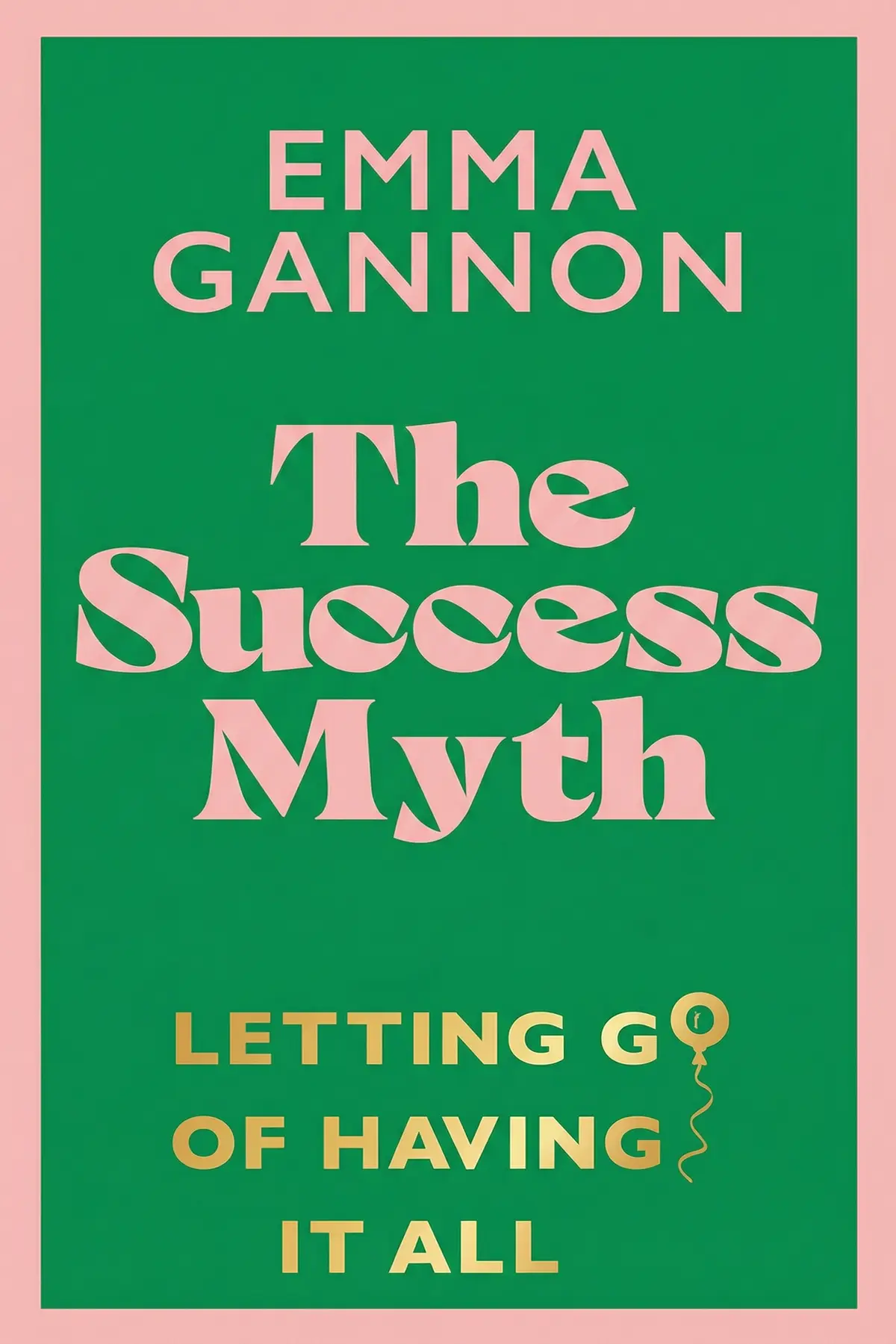
The Success Myth dismantles traditional ideas of achievement, helping you escape the traps of overwork and status to build a life defined by personal fulfillment, emotional authenticity, and genuine joy.
1 min 52 sec
We are often told that success is a destination—a specific point on a map where, once reached, we will finally be allowed to relax and feel content. This map usually features standard landmarks: a high-paying job, a visible platform, a perfectly curated lifestyle, and a non-stop engine of productivity. We are taught to believe that if we just check enough boxes, the puzzle of happiness will finally be solved. But for many of us, the closer we get to these goals, the more the finish line seems to move. We find ourselves exhausted, scanning the horizon for the ‘next big thing’ because the current one didn’t provide the relief we were promised.
This is the core problem explored in The Success Myth. It’s an exploration of why the current blueprints for achievement are making us miserable rather than fulfilled. It challenges the idea that there is a one-size-fits-all formula for a good life and suggests that the pressure to constantly achieve is actually a barrier to genuine well-being. By questioning the stories we tell ourselves about what matters, we can begin to peel back the layers of societal expectation to find what truly resonates with our individual values.
In the following sections, we will break down the various facets of this myth. We’ll look at the impossible standard of perpetual happiness, the dangerous glorification of the ‘hustle’ culture, and the empty promises of fame and excess wealth. We’ll also examine the psychological trap of thinking that we will ‘arrive’ at a state of permanent bliss once we hit a certain milestone. The goal here isn’t just to point out what’s wrong, but to offer a new perspective that prioritizes authenticity and balance over the hollow pursuit of ‘having it all.’ Success doesn’t have to be a burden; it can be something deeply personal and sustainable. Let’s look at how to rebuild your definition of success from the ground up.
2 min 37 sec
Discover why the pressure to stay perpetually happy is actually a barrier to true emotional health and how to embrace the full range of human experience.
2 min 28 sec
Technology was supposed to give us more free time, so why do we feel busier than ever? Explore the dangers of the relentless hustle culture.
2 min 32 sec
Fame is often viewed as the ultimate validation, but the reality of public life reveals a different story about what it means to feel ‘enough.’
2 min 35 sec
We are taught that more money always equals more happiness, but research shows there is a limit to what wealth can provide.
2 min 33 sec
Reaching a major life goal often feels anticlimactic. Learn why the ‘finish line’ is an illusion and how to find joy in the journey instead.
1 min 51 sec
As we wrap up this look at the various layers of the success myth, the most important realization is that you have the power to rewrite your own script. The standards we’ve discussed—the need for constant happiness, the glorification of overwork, the chase for fame, the accumulation of excess wealth, and the belief in a final ‘arrival’—are all external pressures. They are stories told by a society that often prioritizes economic output and public image over individual humanity. But these stories don’t have to be your truth.
Redefining success on your own terms is an act of reclaiming your life. It means acknowledging that you are allowed to be tired, you are allowed to be average in some areas, and you are allowed to prioritize your peace of mind over a promotion. It’s about moving away from the ‘have it all’ mentality and moving toward a ‘have what matters’ philosophy. True achievement isn’t found in a trophy or a bank balance; it’s found in the small, daily moments of connection, the integrity with which you treat others, and the quiet satisfaction of living a life that feels authentic to you.
Take a moment to look at your current goals. Ask yourself: Are these my goals, or are they the goals I think I’m supposed to have? By slowing down and listening to your own needs, you can begin to dismantle the myths that hold you back. Success isn’t a destination you’ll reach someday; it’s the quality of the path you are walking right now. Embrace the journey, honor your emotions, and remember that being ‘enough’ is not something you earn—it’s something you already are. By letting go of the myth, you finally make room for the reality of a life well-lived.
Have you ever wondered why reaching a major milestone—like a promotion, a big purchase, or even a long-awaited personal goal—leaves you feeling surprisingly empty? In The Success Myth, the focus is placed squarely on this disconnect between societal expectations and internal satisfaction. It explores why the modern world pushes us toward a singular, narrow definition of success that relies on constant productivity, endless wealth, and public validation, even when these things rarely lead to lasting happiness. By examining the core pillars of modern achievement, this summary offers a guide to breaking free from the pressure to 'have it all.' You will discover why the pursuit of fame is often a hollow endeavor, how the obsession with high output leads to burnout, and why even significant financial gain has a ceiling when it comes to emotional well-being. Ultimately, the book promises a way out of the exhausting cycle of 'more' and provides the tools to redefine what it means to live a successful life on your own terms.
Emma Gannon is a celebrated author, broadcaster, and podcaster who has become a leading voice on the intersection of work and modern life. Her previous work includes The Multi-Hyphen Method, where she analyzed the evolving nature of careers and digital connectivity. Beyond her books, she is well-known as the creator and host of the acclaimed UK podcast Ctrl Alt Delete, a platform where she engages with diverse guests to explore themes of personal growth, professional development, and the complexities of success in the 21st century.
Listeners find Gannon’s take on contemporary achievement to be a reassuring and relevant manual, though some feel the advice sits within standard self-help themes instead of presenting new research. They value the motivating idea that success ought to be measured by individual happiness and "time-wealth" rather than material status or non-stop work. Additionally, the author’s tone comes across as down-to-earth and supportive, with one listener describing the book as a "warm hug" for individuals getting over burnout. They also point out that the work offers a helpful structure for letting go of the cultural demand to "have it all" in favor of a more genuine, well-rounded existence.
Finally got around to reading The Success Myth and it felt like a collective exhale for my exhausted brain. Gannon speaks directly to those of us who grew up worshipping at the altar of 'girl boss' culture only to find ourselves completely depleted by thirty. While some might find her anecdotes a bit self-indulgent, I found her vulnerability incredibly validating as I try to navigate my own burnout recovery. The focus on 'time-wealth' over material status is a shift I desperately needed. It’s not a rigorous scientific study, but it doesn't try to be; it’s more like a long, honest conversation with a friend who has been through the trenches. If you’re tired of the relentless hustle and the 24/7 grind, this book offers a much-needed permission slip to just be human again. Frankly, we need more voices telling us that it’s okay to step back from the rat race and define joy on our own terms.
Show moreThis book arrived at exactly the right moment in my life. After struggling through a period of intense work-related stress, Gannon’s words felt like a permission slip to finally stop performing and start living. I particularly loved the section on Maslow’s hierarchy and how we often ignore our psychological needs once our basic bills are paid. The way she describes the 'success myth' as a moving goalpost is so accurate; you hit one milestone and immediately start looking for the next one without even pausing to breathe. In my experience, the pressure to be 'on' 24/7 is a recipe for disaster, and this book highlights why that is so beautifully. It’s not about being lazy; it’s about being intentional with your energy and your time. A truly empowering read for those of us who are tired of the constant strive for more.
Show moreWhat does success actually look like when you strip away the titles and the paychecks? That is the question at the heart of Gannon's work, and her exploration of it is both thoughtful and deeply moving. She successfully argues that our modern obsession with being 'constantly on' is not just exhausting—it's unsustainable. I found the quotes from her various podcast guests to be a highlight, providing diverse perspectives on how to build a life that actually feels good from the inside. There’s a certain bravery in admitting that the things we were told to want don’t actually make us happy. The book isn't just about quitting; it's about re-engaging with life in a way that prioritizes joy and connection. It’s a warm, insightful, and much-needed critique of our current capitalist obsession with infinite growth. Truly a five-star read for the weary soul.
Show moreIt’s about time someone spoke the truth about the disillusionment that comes with reaching the 'top' only to find it empty. Gannon’s latest is a refreshing antidote to the hustle-culture manuals that dominate the shelves. I related so much to the 'kick in the guts' moment she describes—that feeling of being burned out despite achieving everything you thought you wanted. The book is less about providing a rigid recipe for success and more about unlearning the myths that keep us trapped in a cycle of dissatisfaction. Some of the references to technology reducing our hours felt a bit repetitive, but the overall message about 'time-wealth' is incredibly powerful. It’s a great reminder that we are allowed to design our lives from scratch based on what we actually value. Highly recommended for anyone feeling stuck in the relentless pursuit of 'more'.
Show moreAs a millennial who spent years chasing every shiny status symbol imaginable, this book hit me right where it hurts. Gannon deconstructs the idea that we all have the same twenty-four hours, acknowledging how much privilege actually dictates our ability to 'succeed' in the traditional sense. I appreciated that she didn't gloss over her own advantages as a white, blonde woman in the media industry. Instead, she uses her platform to question why we wear exhaustion like a badge of honor. Some sections felt a little preachy, particularly the nods to essential workers which felt slightly tacked on, but the core message is solid. It’s a helpful reminder that we don't need external validation to feel worthy. The book encourages a messy, authentic life over a curated, perfect one. For anyone feeling the weight of societal expectations, this is a very grounding read.
Show moreThe concept of 'time-wealth' really resonated with me throughout these chapters. We've been sold a one-size-fits-all version of achievement involving fame and fortune, but at what cost to our mental health? Gannon argues persuasively that we need to unlearn these toxic patterns and stop using busyness as a distraction from our actual feelings. Truth is, I’ve been feeling the itch to quit the rat race for months, and this provided the nudge I needed to re-evaluate my priorities. The writing style is very conversational, which makes for an easy read, though it does occasionally veer into 'self-promotion' territory. However, the message about the law of diminishing returns regarding money and happiness is something everyone should hear. It’s a comforting guide for anyone looking to reclaim their schedule. Success shouldn't mean losing your mind just to pay the bills.
Show moreStop what you're doing and pick this up if you've ever felt like your 'to-do list' is the only thing defining your worth. Gannon does a fantastic job of peeling back the layers of our obsession with productivity and showing the rot underneath. Not gonna lie, I was skeptical at first because self-help can be so cringey, but her voice is grounded and real. She doesn't promise a magic cure-all. Instead, she offers a framework for redefining what success looks like on a personal level, whether that’s a long walk or just saying 'no' to an extra project. The chapter on the evolution of status was particularly eye-opening for me. It’s a solid, practical guide that feels very relevant to the post-pandemic world. It might not be groundbreaking to everyone, but the reminders are necessary and very well-articulated.
Show moreEmma Gannon's voice is undeniably relatable, but I struggled with the lack of structural depth in this latest outing. As someone who appreciates the brevity of authors like James Clear, I found this narrative a bit waffly and prone to redundancy. Much of the advice feels like a retread of basic self-care 101—be grateful, don't overwork, capitalism is the enemy—without providing a truly groundbreaking framework for change. To be fair, her critique of the 'having it all' myth is timely, yet the reliance on podcast interviews and magazine clippings left me wanting more academic rigor. It’s a decent summary of how attitudes toward productivity are shifting in the modern age, but it often reads more like a memoir than a practical guide. If you’re already well-versed in the 'slow living' movement, you might find yourself wondering what the new takeaway is supposed to be.
Show moreTo be fair, the book is quite a quick read, but I'm left feeling a bit 'so what?' about the whole thing. While Gannon is a lovely writer and her podcast is great, this felt more like a long-form essay stretched into a book. I missed having a clear, guiding thread to follow throughout the chapters. One minute we're talking about celebrity culture, and the next we're on to the history of technology, and it doesn't always bridge the gap effectively. Personally, I found the memoir elements a bit distracting; I’m more interested in the 'how-to' than the author’s personal career milestones. That said, it does capture the current cultural shift away from the 'girl boss' era quite accurately. It’s a fine book for a weekend read, but don’t expect a life-changing epiphany if you’ve already been thinking about these themes for a while.
Show moreI wanted to like this more, but it ultimately felt like a collection of ideas I’ve already seen on Instagram a thousand times. The writing is quite repetitive and lacks the sharp, incisive edge of Gannon’s previous work like 'Disconnect.' I found it frustrating that the source material was so limited to the author's own life and her social circle rather than deep-diving into actual sociological research. Look, the central premise—that material wealth is a hollow substitute for fulfillment—is something I agree with, but the execution felt uninspired. It’s essentially a 200-page version of a 'hustle culture is bad' Twitter thread. I was hoping for a more rigorous deconstruction of the systems at play, but instead, I got a lot of anecdotes about podcast guests and celebrity culture. It’s probably a great entry point for someone totally new to the concept of burnout, but for me, it fell flat.
Show moreRobin Ryan
Richard Wiseman
William B. Irvine

AUDIO SUMMARY AVAILABLE
Get the key ideas from The Success Myth by Emma Gannon, plus 5,000+ more titles in English and Thai.







