

A Bigger Prize: How We Can Do Better Than the Competition
Margaret Heffernan
Explore the foundational principles of the Toyota Production System. This summary details how a long-term philosophy, lean processes, and a culture of continuous improvement transformed a loom maker into a global automotive leader.
1 min 44 sec
Imagine standing in a small Japanese weaving shop in the early 1920s. You are watching a man named Sakichi Toyoda as he meticulously tinkers with a wooden loom. His goal isn’t just to make cloth faster; it’s to solve a specific problem: he wants the machine to stop automatically the very moment a thread snaps. This obsession with quality at the source, and the humility to observe work firsthand, became the foundation for a global empire. Sakichi’s son, Kiichiro, would eventually take these lessons from the textile world and apply them to the fledgling automotive industry, founding the Toyota Motor Corporation.
Today, Toyota is more than just a car company; it is the gold standard for operational excellence. Its methods have been studied by hospitals, software firms, and government agencies alike. But often, when outsiders try to copy Toyota, they only see the surface-level tools—the charts, the boards, and the tidy factories. They miss the heartbeat of the organization.
In this exploration of the Toyota Way, we are going to look past the mechanical tools to understand the four pillars that actually support the company’s success: a deep-seated philosophy, a refined process, a commitment to people, and a relentless approach to problem-solving. We will see how a company can prioritize long-term stability over short-term gains and how respect for every individual on the assembly line creates a competitive advantage that no competitor can simply buy. This is a story about how consistent, incremental improvements can lead to world-changing results. By the end of this journey, you’ll understand the mindset required to transform any workplace into a learning enterprise that thrives on challenges and values every contribution.
2 min 04 sec
Discover why prioritizing long-term stability over quarterly profits is the secret to enduring success and how a clear sense of purpose guides every corporate decision.
2 min 05 sec
Learn how the elimination of waste through one-piece flow and pull systems ensures that quality is high and resources are never squandered.
1 min 54 sec
Explore the revolutionary idea that every worker has the power to stop the line to prevent defects and ensure world-class reliability.
1 min 48 sec
See how Toyota develops leaders from within and empowers frontline teams to take ownership of their work and drive innovation.
1 min 58 sec
Understand why Toyota treats its suppliers as an extension of its own company, fostering mutual growth and long-term collaboration.
2 min 10 sec
Learn the power of ‘Go and See’ and how the five-whys method helps uncover the true root causes of any organizational challenge.
1 min 43 sec
Understand why tools alone aren’t enough and how a deep cultural shift is required to sustain a lean transformation over the long haul.
1 min 29 sec
The Toyota Way is a masterclass in how to build a business that lasts. We have seen how the company’s success isn’t the result of a single brilliant idea or a lucky break, but rather the cumulative effect of thousands of small, disciplined actions taken every day. From the long-term philosophy that protects employees during hard times to the lean processes that ruthlessly eliminate waste, everything Toyota does is designed to create value while respecting the people who do the work.
We’ve explored how quality is built in at the source, how leaders are grown from within, and how partners are treated with the same care as family. We have also seen the power of scientific thinking—of going to see the reality of a situation and asking ‘why’ until the true root cause is found.
The ultimate lesson is that any organization can improve by adopting these principles. However, there are no shortcuts. You cannot simply buy a ‘lean system’ and expect it to work. You must cultivate a culture where every person is empowered to be a problem-solver and where continuous improvement is the air everyone breathes. As you look at your own professional life or your own organization, ask yourself: Where is the waste? Where can we stop the line to fix a deep-seated issue? How can we invest more in our people today to ensure success tomorrow? The journey toward excellence is never-ending, but as Toyota has shown us, it is a journey well worth taking. Keep your eyes on the long-term vision, value the humans in the system, and stay committed to the path of constant growth.
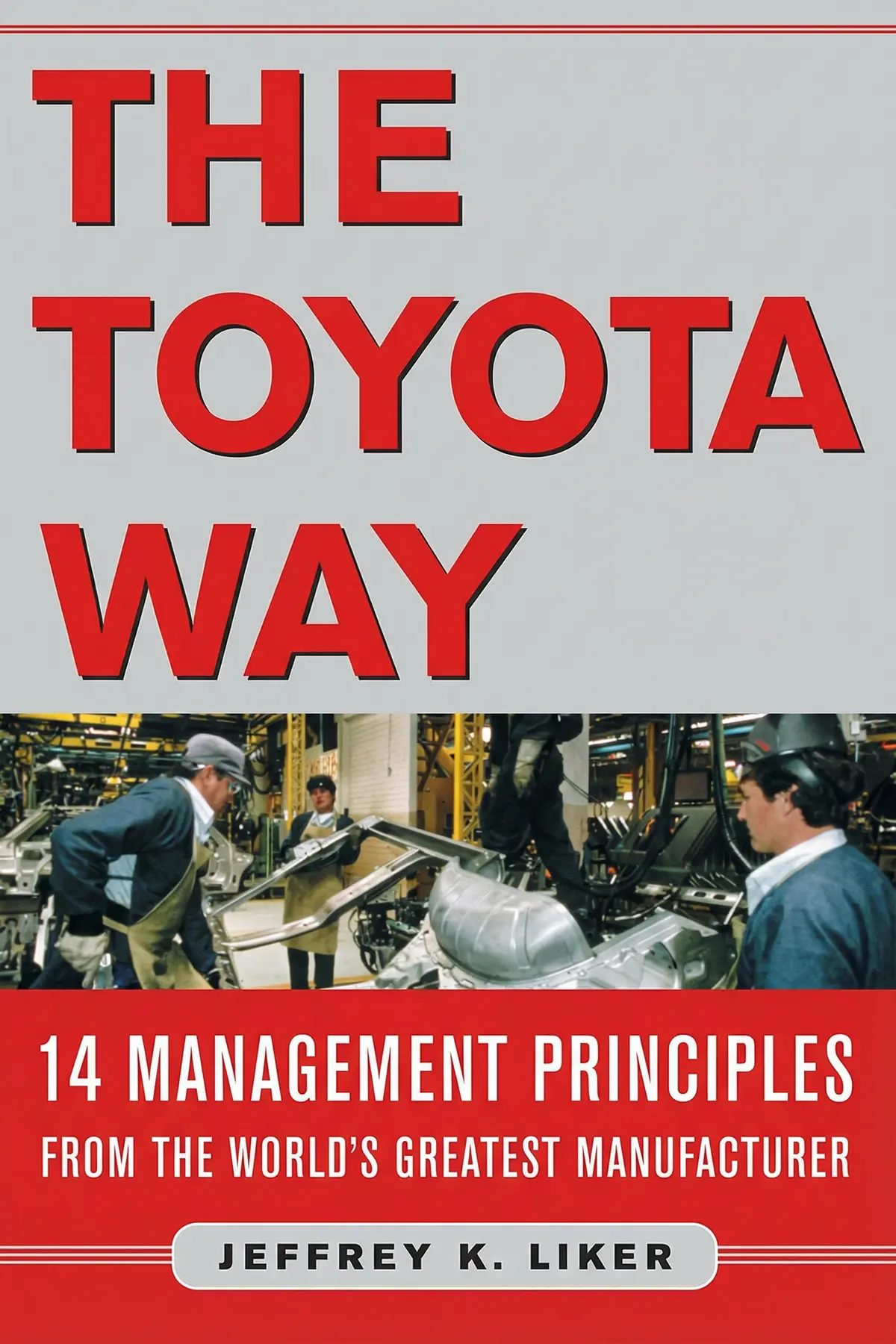
The Toyota Way explores the unique management philosophy and operational strategies that have made Toyota one of the most successful and resilient companies in the world. Rather than focusing solely on efficiency tools, the book examines the underlying culture of respect for people, long-term thinking, and systematic problem-solving. Readers will discover the fourteen principles that guide the company’s decision-making, from eliminating waste through one-piece flow to the importance of growing leaders from within. It promises to provide a blueprint for any organization looking to build a sustainable culture of excellence by balancing technical systems with human ingenuity.
Dr. Jeffrey K. Liker is a professor of industrial and operations engineering at the University of Michigan and an expert in lean methodologies. He is best known for his work on the Toyota Production System. Liker has written numerous books and articles on lean principles, earning him international acclaim and recognition in the field of operations management.
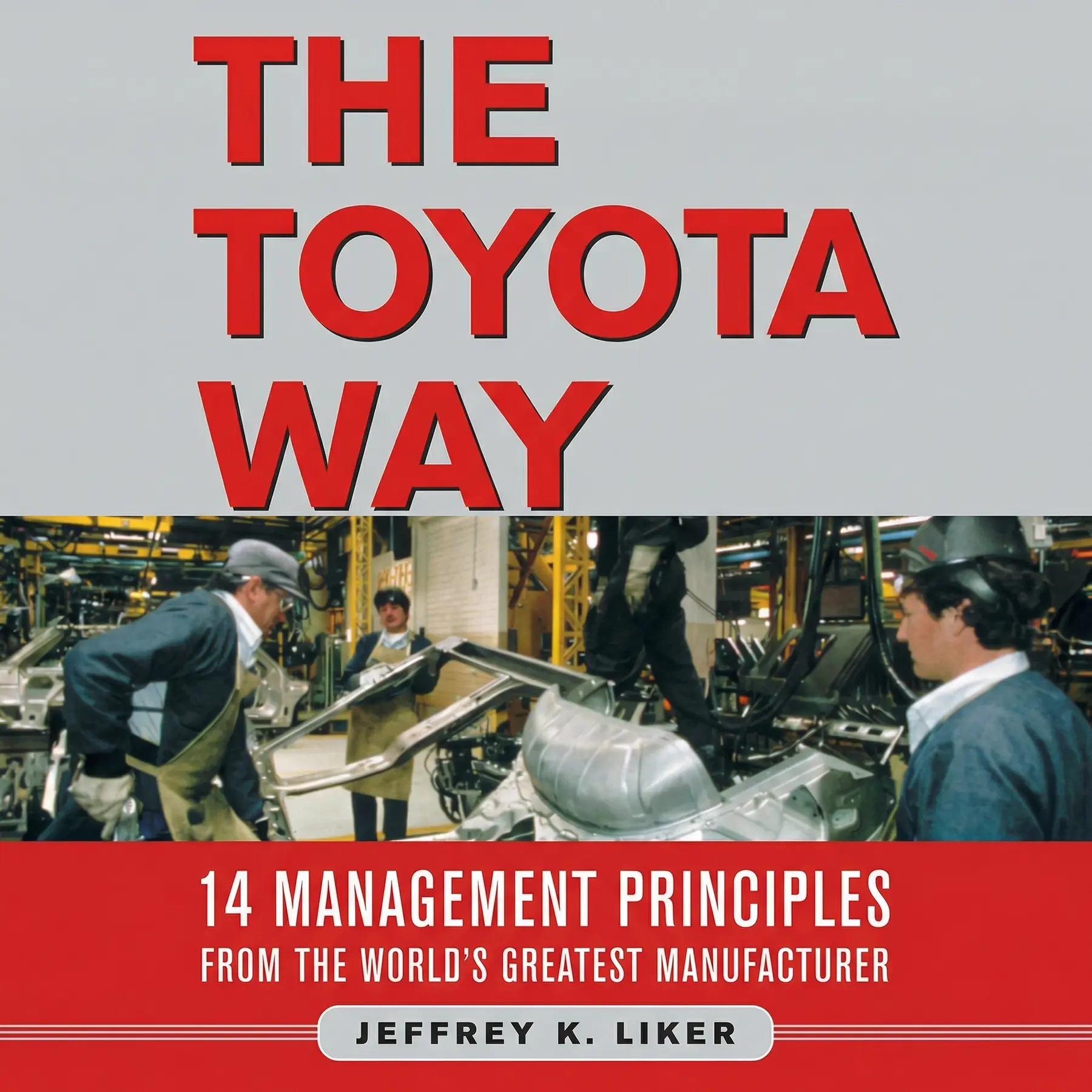
Listeners consider this title essential reading for those curious about Lean manufacturing, as it offers thorough breakdowns of Toyota's techniques and top-tier explanations of Lean principles. Furthermore, the work earns praise for being easy to follow, well-structured, and worth the investment, with one listener mentioning it is especially helpful for industrial engineering courses. Listeners also value the narratives shared throughout the text, with one review emphasizing the inclusion of direct perspectives on Toyota's quality management framework.
Finally got around to reading this staple of industrial engineering, and it lives up to the reputation. Liker does a phenomenal job breaking down the 14 management principles that transformed Toyota from a small loom manufacturer into a global powerhouse. While some parts feel like a love letter to the brand, the first-hand accounts of their quality systems are incredibly valuable for any manager. I found the section on Genchi Genbutsu particularly striking—the idea that you must see the problem with your own eyes is lost in our modern remote-work era. It’s organized logically, making it a great reference even after you finish the initial read. If you want to understand why 'Lean' isn't just a buzzword, start here.
Show moreEver wonder why Toyota cars seem to last forever while other brands crumble? This book uncovers the 'secret sauce' by explaining their 14 principles in exhaustive detail. I was fascinated by the story of the engineer who drove across North America to understand the need for oversized cup holders before designing for that market. It shows a level of dedication to the customer that most companies only pretend to have. Personally, I think the focus on becoming a 'learning organization' is the most vital takeaway here. It’s not just about fixing errors; it’s about creating a system where errors are welcomed as opportunities for growth. It’s definitely a must-read for any aspiring leader.
Show moreThe chapter on 'Heijunka' (production leveling) completely changed how I think about project management in my own office. Liker does an excellent job of showing that the Toyota Way isn’t just for people in hard hats; it’s a mindset for anyone who wants to deliver value. I love how he stresses that the process is just as important as the final result. There's something almost spiritual about their dedication to Kaizen and the constant pursuit of perfection. The book is well-organized and serves as an excellent presentation of Lean principles that are often misunderstood by other authors. It’s easily one of the most influential business books I’ve picked up this year. Highly recommended.
Show moreWow, what an eye-opener regarding the 'autistic-genius' nature of Toyota's operations. They truly do everything differently, from their refusal to overproduce to their obsession with finding the root cause of every single defect. This book captures the essence of a company that is never satisfied with the status quo. I found the 14 principles to be a fantastic roadmap for anyone looking to build a sustainable, quality-focused culture. Not gonna lie, it’s a long read and you have to be in the right headspace to tackle it. But if you are serious about operational excellence and want to learn from the best, you cannot afford to skip this. It’s a foundational text for a reason.
Show moreAs someone who works in manufacturing, I expected a technical manual, but what I got was a deep dive into corporate philosophy. The truth is, the 'Toyota Way' is more about culture than it is about assembly lines or robotics. Liker highlights how they prioritize long-term thinking over short-term financial gains, which feels revolutionary compared to typical Western quarterly-profit obsessions. My only gripe is that it can get a bit repetitive when discussing the elimination of waste. You might find yourself seeing 'muda' everywhere in your house after reading this, from how you load the dishwasher to how you organize your mail. It's a solid, practical guide that every MBA student should probably have on their shelf.
Show moreThis book provides a comprehensive look at how a company's internal values dictate its external success. I particularly enjoyed the history of Kiichiro Toyoda and how he adapted Henry Ford’s ideas to fit a resource-poor post-war Japan. The concept of 'pull' systems versus 'push' systems is explained clearly enough for a novice to grasp. Frankly, some of the analogies feel a bit dated, and the tone is a little too uncritical of Toyota's flaws. Despite that, the practical advice on empowering employees to stop the production line when they see a defect is inspiring. It’s a dense read, but the organization into 14 distinct principles makes it much easier to digest in small chunks.
Show moreAfter hearing about Lean management for years, I finally decided to go to the source. Liker’s breakdown of the Toyota Production System is both informative and intimidating in its scope. It’s fascinating to see how they view inventory as a 'waste' that hides underlying problems, much like lowering the water level in a river to see the rocks at the bottom. The writing style is a bit academic, but the real-world examples from Toyota's plants in Kentucky and Japan keep it grounded. I didn't expect to learn so much about the transition from power looms to automotive manufacturing. It’s a heavy lift, but it provides a very valuable framework for anyone trying to streamline their own business processes.
Show moreTo be fair, it’s easy to see why this is considered a 'bible' in the manufacturing world. The depth of research is staggering, and Liker's access to Toyota insiders provides a level of detail you won't find anywhere else. I was particularly impressed by the sections on the Andon cord and how it empowers the lowest-level employees to take responsibility for quality. It’s a great reminder that people, not just machines, are at the heart of any successful operation. My only hesitation in giving five stars is the occasionally dry tone, which makes it feel a bit like homework. However, the value for money is high considering how much actionable advice is packed into these pages.
Show moreLook, the content here is gold, but the prose is as dry as a desert in July. I read this for a professional development course and struggled to stay awake during the middle sections. Liker clearly knows his stuff, and the specific tactics regarding Heijunka and the Andon system are essential for anyone in operations. However, the book often gets bogged down in corporate-speak and anecdotes that feel a bit sanitized for a PR department. It’s a great resource to keep on your desk for occasional reference, but reading it cover-to-cover is a test of endurance. If you can push through the dense passages, you’ll find a blueprint for efficiency that actually works in the real world.
Show moreI’ll be blunt: this could have been a 20-page white paper rather than a full-length book. While the core ideas of Lean manufacturing are brilliant, they are buried under mountains of filler and repetitive historical summaries. It honestly felt like reading a textbook where the author was getting paid by the word count. I appreciate the legacy of Taiichi Ohno, but I don't need to hear the same story about waste elimination five different times in three chapters. If you’re an industrial engineer, you might find the minutiae interesting, but for the average reader, it’s a slog. I’m giving it two stars because the principles themselves are life-changing, even if the delivery is incredibly tedious.
Show moreMargaret Heffernan

Joseph A. Maciariello

Deborah Gruenfeld
AUDIO SUMMARY AVAILABLE
Get the key ideas from The Toyota Way by Jeffrey K. Liker, plus 5,000+ more titles in English and Thai.







