
A Higher Loyalty: Truth, Lies and Leadership
James Comey
A profound exploration of breast cancer that challenges the commercialized culture of illness, exposing the harsh realities of the medical system and the societal pressures placed on those fighting for their lives.
1 min 42 sec
In the summer of 2014, Anne Boyer was forty-one years old, a poet and an educator navigating the usual rhythms of a busy life. That rhythm was abruptly shattered by a diagnosis that felt less like a medical fact and more like a sentence: aggressive triple-negative breast cancer. This specific variant is notorious for its lethality, claiming the lives of nearly half of those it touches. What followed was a descent into a world of toxic infusions, invasive surgeries, and a profound sense of alienation from her own body.
But this isn’t a traditional story of a ‘cancer warrior.’ It is something much more complex and critical. It took years for Boyer to find the words to describe what she endured, not because the memories were fading, but because the trauma was so systemic that it defied simple storytelling. She found herself at the mercy of a healthcare system that often prioritizes profit over the person, and a culture that demands patients perform their illness with a specific kind of grace and optimism.
As we walk through this account, we’ll see that the struggle wasn’t just against the cells dividing inside her. It was a struggle against the very structures of modern life—the corporations that capitalize on care, the environmental factors that contribute to disease, and the exhausting social expectations that surround the sick. This narrative serves as a bridge between the clinical reality of medicine and the deeply personal, often messy experience of being a human being facing mortality. It’s an invitation to look past the pink ribbons and see the stark, unvarnished truth of what it means to be sick in the twenty-first century.
2 min 40 sec
How do you reconcile feeling completely healthy with a medical report that says you are dying? The journey begins with the surreal shift from person to patient.
3 min 06 sec
Step inside the ‘cancer pavilion,’ a place where the pursuit of health often feels like an assault on human dignity and identity.
2 min 19 sec
Social expectations demand that cancer patients be inspirational and upbeat. But what happens when that performance becomes another burden to carry?
2 min 26 sec
In a capitalist society, the priority of the medical system is often to return the body to a state of productivity as quickly as possible.
2 min 27 sec
Behind the sea of pink ribbons lies a complex web of corporate interest, where ‘awareness’ often serves those who contribute to the problem.
2 min 19 sec
Survival is not a moral victory; it is often a matter of sheer chance. Moving forward requires accepting the messiness of the ‘after.’
1 min 44 sec
The journey through *The Undying* leaves us with a profound and perhaps uncomfortable realization: our modern approach to cancer is as much about politics and profit as it is about biology. Anne Boyer’s experience serves as a stark reminder that the ‘patient’ is often a person caught between the grinding gears of a capitalist medical system and a society that prefers the comfort of pink-ribboned clichés over the messy reality of human suffering.
The throughline of this account is the rejection of the ‘inspirational’ mask. By refusing to play the part of the graceful survivor, Boyer forces us to look at the toxicity of our environment, the cruelty of our economic structures, and the dehumanizing nature of ‘standard’ care. She shows us that the trauma of cancer doesn’t end when the tests come back clear; it lingers in the damaged organs, the thinned memories, and the ongoing struggle to survive in a world that demands constant productivity.
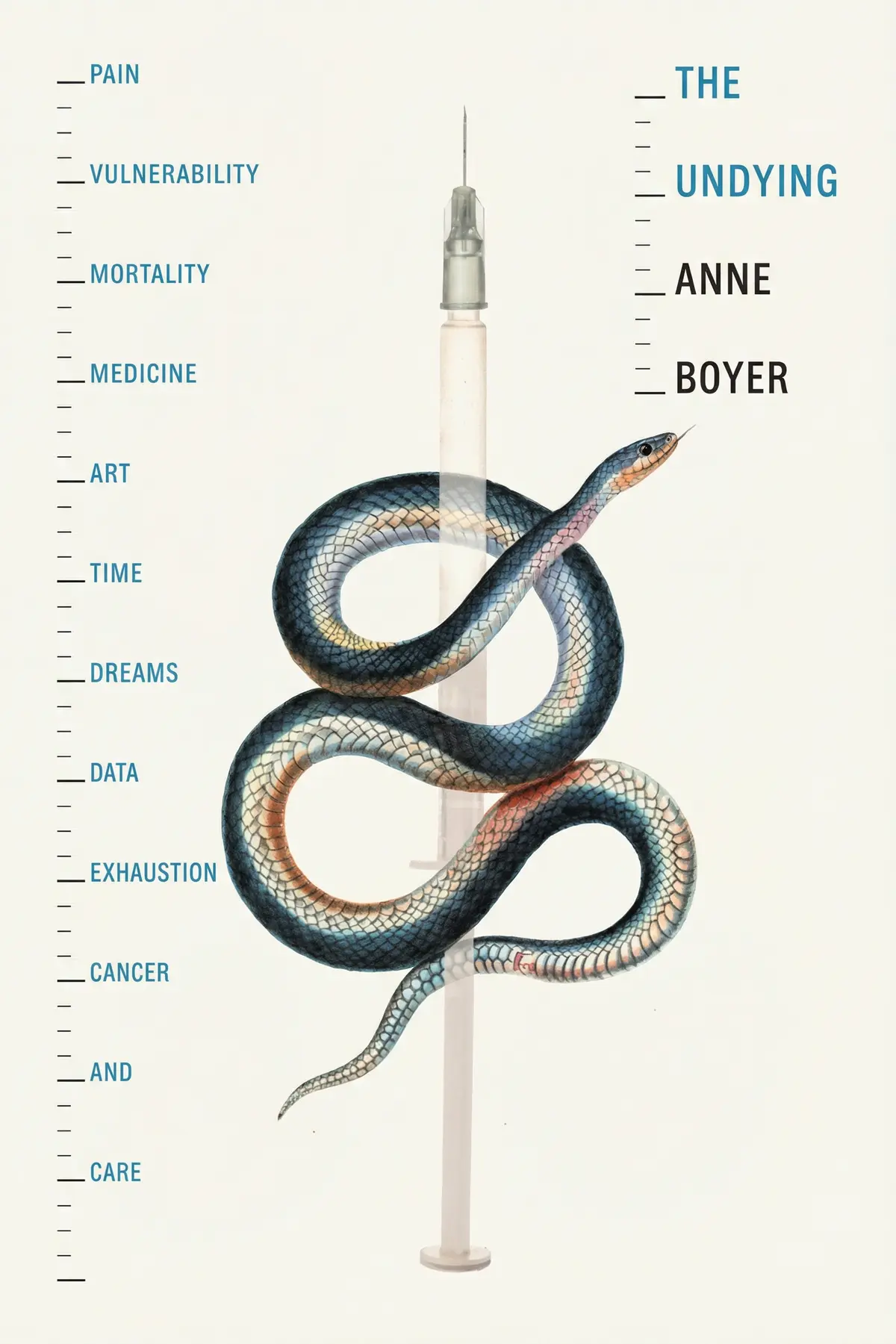
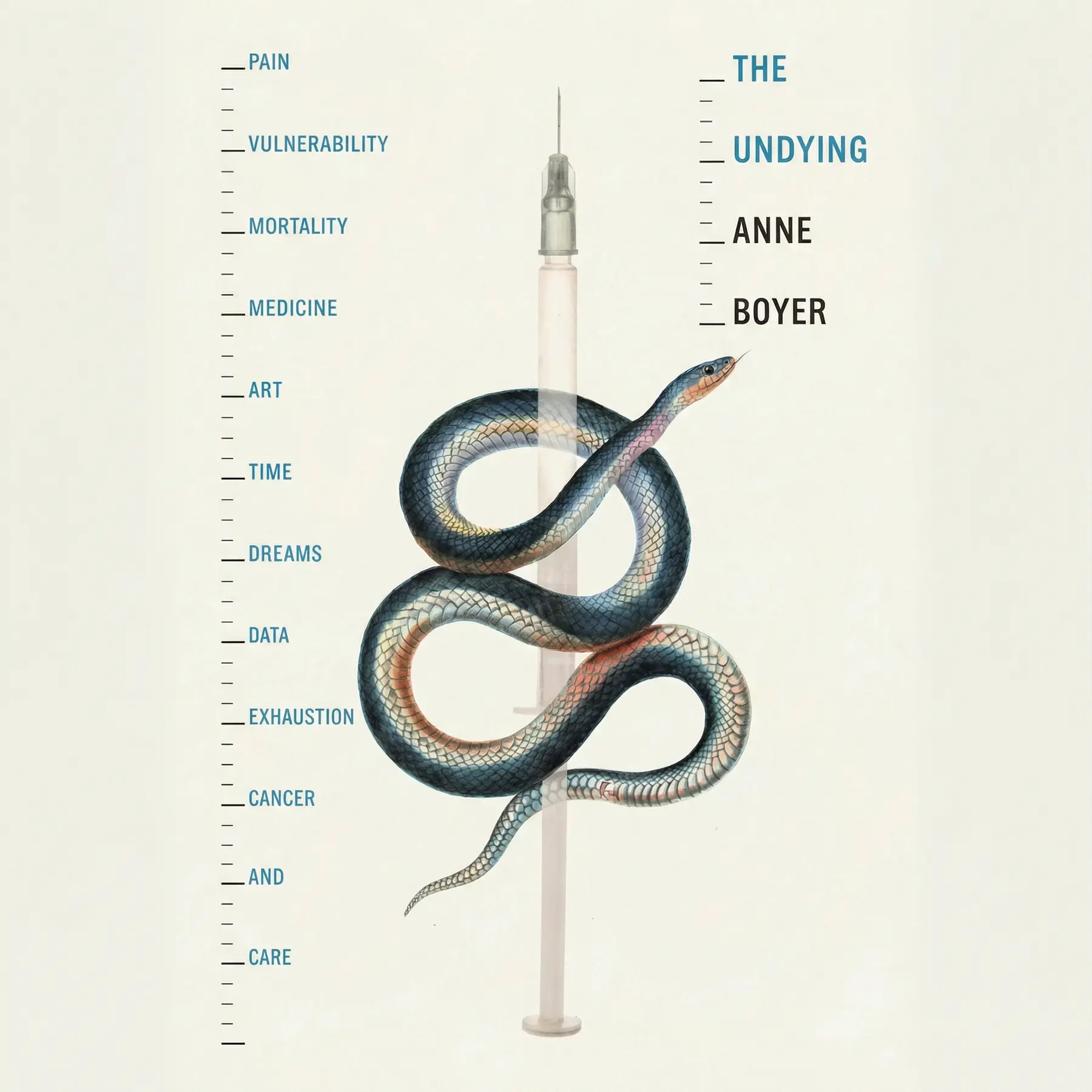
Ultimately, the takeaway is a call for a more honest and systemic form of care. We are challenged to look beyond individual ‘warrior’ narratives and instead demand a world where health isn’t a luxury, where treatment doesn’t require the sacrifice of dignity, and where ‘awareness’ means addressing the root causes of our collective illness. As you reflect on this story, consider the metaphor of the snake. We are all vulnerable, and we will all likely face our own ‘shedding’ at some point. The goal isn’t just to survive the process, but to recognize the systems that make the shedding so much harder than it needs to be, and to seek a life that is defined by more than just the skin we leave behind.
The Undying is a visceral and intellectual reckoning with the experience of aggressive breast cancer. Rather than following the typical narrative of heroic survival, this account dives into the grueling reality of chemotherapy, the physical toll of a double mastectomy, and the systemic failures of a profit-driven healthcare industry. It examines how patients are transformed into data points and how the language of 'awareness' often masks a deeper indifference to human suffering. Through the eyes of a poet and essayist, the narrative dismantles the clichéd 'pink' culture surrounding the disease, revealing the intersection of capitalism, environmental carcinogens, and institutional racism. It offers a promise of radical honesty, stripping away the sanitized versions of illness to show what it truly means to exist within a body that is under attack by both biology and bureaucracy. This is a story about the exhaustion of care, the vulnerability of mortality, and the resilience required to navigate a world that demands poise in the face of devastation.
Anne Boyer is an acclaimed poet and essayist who identifies as a common type of person. She shares her insights and expertise as a professor at the Kansas City Art Institute. Her powerful writing and unique perspective on the human condition earned her the prestigious Pulitzer Prize in 2020.
Listeners find the work deeply thought-provoking, with one noting that it provides flashes of insight on every page. The author's prose is frequently praised, as one listener characterizes the writing style as poetic. Additionally, listeners value the intense emotional weight, with one describing it as a breath-takingly honest memoir of cancer that tugs at the heart strings until the end. The book is regarded as intelligent—one review highlights its brilliance—though listeners find it occasionally angry. However, the sensitivity regarding medical terminology draws mixed feedback, as several listeners mention it is not suitable for newly diagnosed patients.
Anne Boyer has crafted something that feels less like a memoir and more like a high-voltage transmission from the front lines of human endurance. While many cancer books lean into the "warrior" trope, this Pulitzer winner tears it apart with a scalpel-sharp intellect. She doesn't just talk about her triple-negative diagnosis; she interrogates the very language of oncology and the predatory nature of pink-ribbon capitalism. Her prose is dense, demanding, and frequently breathtaking, particularly when she compares the "red devil" chemo to the chemicals used in mustard gas. It is an angry, incandescent work that refuses to offer easy comfort to the reader. To be fair, her heavy reliance on ancient philosophy might alienate those looking for a standard narrative. However, for those willing to sit with her discomfort, the rewards are profound.
Show moreWow. This is a staggering piece of work that rejects the saccharine "survivor" narrative in favor of something much more visceral and true. Boyer captures the surreal horror of the double mastectomy and the bankrupting cost of survival with a poet’s precision. Every page offers a flash of insight that makes you stop and re-read the sentence just to let the weight of it sink in. She is rightfully angry about a healthcare system that treats bodies like data sets and profit margins. I loved the way she wove in the stories of other "undying" women like Audre Lorde and Kathy Acker. It feels like a conversation across time between women who refused to be silenced by their own failing cells. It’s a hard read, but a necessary one for anyone who wants to understand the politics of pain.
Show morePicked this up because of the Pulitzer sticker, but I stayed for the sheer, unadulterated power of Boyer’s voice. This isn’t just a book about cancer; it’s an investigation into what it means to have a body in a world that wants to monetize your every breath. Boyer’s writing is hauntingly beautiful, turning the clinical coldness of a hospital room into a site of profound philosophical inquiry. I was particularly struck by her description of "exhaustion" as a form of experimental literature. It’s a brave, angry, and deeply intellectual book that refuses to play by the rules of the genre. Truth is, I haven't been this moved by a non-fiction book in years. It’s a breath-takingly honest account that will stay with me for a very long time.
Show moreEvery person with a body should read this, though they should be prepared for it to haunt them. Anne Boyer has written a masterpiece that transcends the typical cancer narrative by focusing on the philosophical implications of mortality. Her descriptions of the pain scale and the "minor magic" of literature are just stunning. Not gonna lie, some of the more abstract sections required a second reading, but the effort was always worth it. She captures the unique loneliness of being a single mother facing a terminal-leaning diagnosis with such raw, unvarnished honesty. The book is a protest against the "brave" face women are expected to wear while their bodies are being decimated by toxins. It is an essential, intelligent, and deeply human work that deserves every bit of its acclaim.
Show moreIs it possible for a book to be both devastatingly cold and deeply moving at the same time? Boyer manages it here by blending her experience of aggressive breast cancer with a fierce, academic critique of how we treat the sick. The way she describes the data-driven exhaustion of the modern patient is incredibly accurate, yet the book is thick with jargon and philosophical allusions. Personally, I found the chapters on the history of the sickbed to be a revelation. That said, I would caution anyone currently in the thick of treatment against picking this up too soon. The frankness regarding mortality and the failures of the medical system can be overwhelming when you’re already vulnerable. It’s a brilliant, difficult piece of literature that demands your full attention and rewards it with flashes of insight.
Show moreAfter hearing so much buzz about this memoir, I finally sat down with it and found myself completely unsettled in the best way. Boyer’s exploration of triple-negative breast cancer is a masterclass in blending the personal with the political. She exposes the "culture of the pink ribbon" as a hollow marketing ploy that masks the actual suffering of patients. The book is incredibly intelligent, though I’ll admit I had to Google a few of the more obscure medical and philosophical references. Some sections felt a bit like a fever dream, moving from data sets to dreams without much warning. Look, it’s not an easy beach read, and the tone is frequently cynical. But her honesty about "chemo brain" and the loss of self is something I haven’t seen captured quite this well anywhere else.
Show moreAs someone who usually avoids "illness memoirs," I found Boyer's refusal to be inspirational quite refreshing. She doesn't want your pity, and she certainly doesn't want to be your "hero." Instead, she offers a sharp-edged analysis of how we categorize and commodify breast cancer. The prose is definitely poetic, but it’s a jagged kind of poetry that mirrors the trauma of the treatments she underwent. My only real gripe is that the book can feel a bit repetitive in its disdain for the medical profession. While her points about profit-driven care are valid, the constant cynicism became a bit draining toward the end. Still, the insight she provides into the "body of light" and the digital afterlife of the patient is fascinating. It’s a brilliant, if prickly, addition to the literature of disease.
Show moreFinally got around to this after seeing it on the New York Times best books list, and I can see why it’s so polarizing. Boyer’s writing is undeniably gorgeous, yet she uses that beauty to describe things that are utterly grotesque. The way she weaves together the history of the sickroom with her own struggle against triple-negative cancer is incredibly smart. I did find some of the medical terminology a bit heavy, and I agree with other reviewers that this isn't the best gift for someone in the middle of a health crisis. It’s too heavy, too honest, and perhaps too angry for that. But as a piece of cultural criticism, it’s top-tier. She forces you to look at the "red devil" and the profit margins behind it without blinking. A very powerful, if difficult, read.
Show moreThe premise of a poet looking at the "industry" of cancer was enticing, but the execution was hit-or-miss for me. There are moments of absolute brilliance where Boyer’s prose sings, especially when she’s discussing the physical reality of the "red devil" infusions. However, those moments are often buried under layers of dense, academic theory that felt a bit like wading through molasses. I appreciated her critique of the American healthcare system, but at times the book felt overly nihilistic. It’s a very solitary, interior book that doesn't provide much in the way of hope or community. If you like your memoirs to have a clear narrative arc, you might find this frustratingly circular. It’s a significant work, certainly, but I can’t say I actually "enjoyed" the experience of reading it.
Show moreI really wanted to connect with this, especially given the Pulitzer win, but the writing style felt like a barrier rather than a bridge. Boyer is clearly a gifted poet, but the constant detours into ancient philosophy and abstract theory made the narrative feel incredibly disjointed. It felt less like a story about surviving cancer and more like a doctoral thesis on the sociology of pain. I struggled with the elliptical prose, which often felt intentionally obscure just for the sake of being "literary." If you enjoy Susan Sontag or academic essays, this might be your cup of tea, but for me, it lacked the human pulse I was looking for. To be blunt, the cynicism toward medical professionals felt a bit one-sided, even if I understand her frustration with the system. It’s just too cerebral to be relatable for the average reader.
Show moreJames Comey

Philip Freeman

Jonathan Eig
J. Craig Venter

Ishmael Beah

James Herriot


Barack Obama
AUDIO SUMMARY AVAILABLE
Get the key ideas from The Undying by Anne Boyer, plus 5,000+ more titles in English and Thai.







