
23 min 39 sec
The Upside of Your Dark Side: Why Being Your Whole Self – Not Just Your “Good” Self – Drives Success and Fulfillment
The Upside of Your Dark Side challenges the modern obsession with constant positivity, arguing that negative emotions like anger and anxiety are essential tools for achieving a resilient, high-performing, and meaningful life.
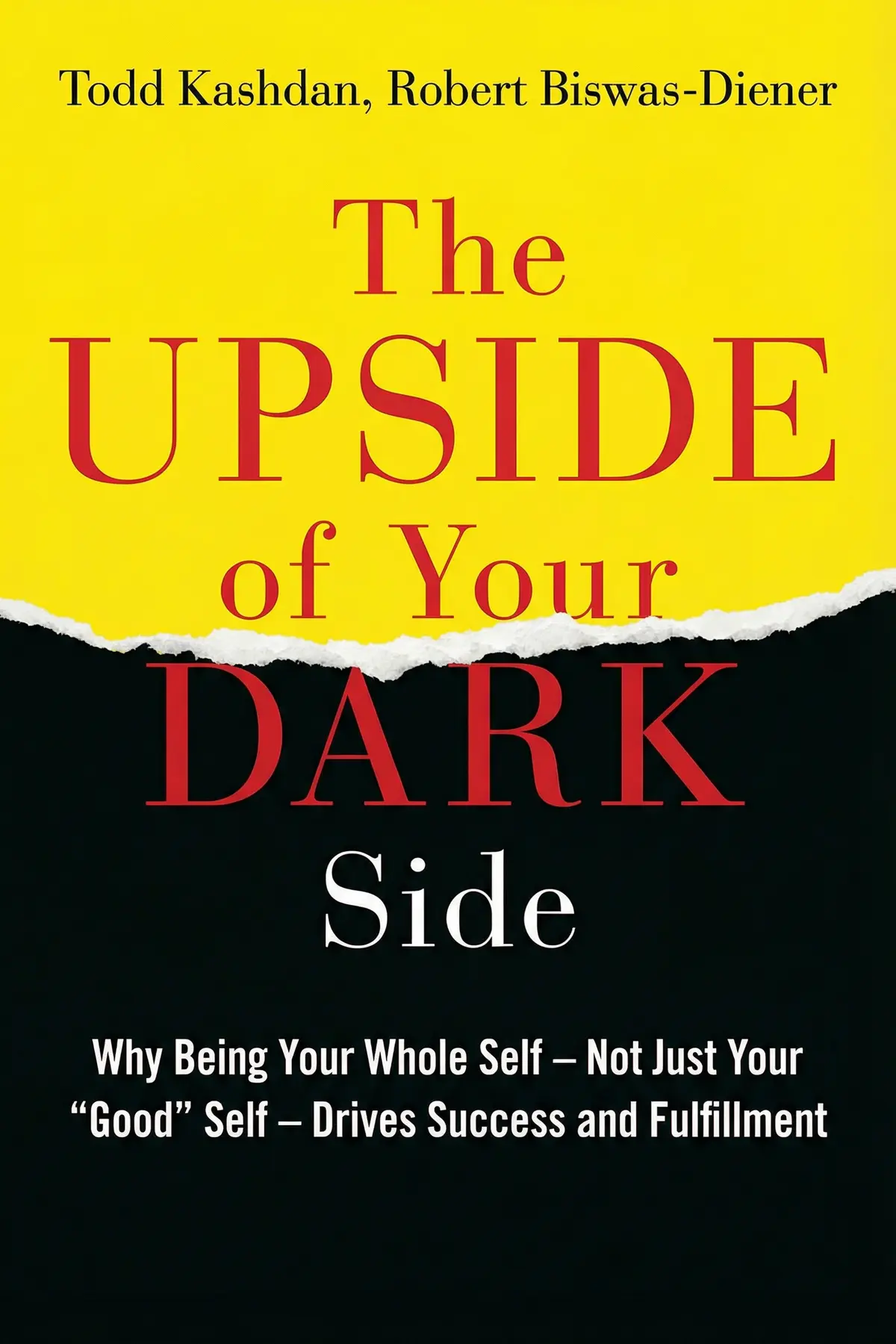
Table of Content
1. Introduction
2 min 07 sec
In the modern era, we are constantly bombarded with the message that happiness is the ultimate goal. From social media feeds filled with inspirational quotes to self-help books promising a life free of stress, the cultural mandate is clear: stay positive, keep smiling, and avoid negative vibes at all costs. But what if this relentless pursuit of positivity is actually making us less capable of handling life’s challenges? What if the very emotions we try to run away from—like anger, guilt, and anxiety—are actually the keys to unlocking our greatest strengths?
This is the provocative question at the heart of The Upside of Your Dark Side. The authors invite us to rethink our relationship with our internal world. They argue that the obsession with feeling good has created a ‘comfort trap,’ where we prioritize short-term emotional ease over long-term growth and effectiveness. By trying to eliminate the ‘dark side’ of our personalities, we are essentially trying to operate with only half of our toolkit.
Instead of chasing a state of perpetual happiness, this summary explores the concept of ‘wholeness.’ Wholeness isn’t about being happy all the time; it’s about having the emotional agility to use whatever feeling is most appropriate for the situation at hand. It means recognizing that every emotion we have evolved to feel serves a specific purpose. When we learn to integrate these darker aspects of our psyche, we don’t just become more resilient—we become more creative, more persuasive, and better equipped to handle the unpredictable nature of the world.
Over the next several minutes, we will look at why the positivity movement has failed us, how specific ‘negative’ emotions provide unique advantages, and how we can stop being afraid of our own shadows. By the end, you’ll see that your dark side isn’t something to be cured or hidden, but a source of power that can help you lead a more authentic and successful life. We’re moving toward a perspective where psychological health is defined not by the absence of pain, but by the ability to thrive in spite of it—and because of it.
2. The False Promise of Eternal Positivity
2 min 35 sec
Discover why the modern obsession with happiness can actually stifle your growth and leave you ill-equipped to handle the inevitable difficulties of life.
3. Harnessing the Productive Power of Anger
2 min 29 sec
Anger is often viewed as a destructive force, but when understood correctly, it can become a powerful engine for change and social justice.
4. The Strategic Value of Anxiety and Fear
2 min 29 sec
Learn how your brain’s alarm system can sharpen your performance and keep you safe, provided you know how to listen to it.
5. Guilt and Shame as Moral Compasses
2 min 35 sec
While these emotions feel heavy, they are essential for maintaining healthy relationships and a strong sense of personal integrity.
6. The Surprising Case for Mindlessness
2 min 26 sec
While mindfulness is all the rage, there are times when letting your mind wander or going on autopilot can actually boost your creativity and skill.
7. The Advantages of Subclinical 'Dark' Traits
2 min 37 sec
Explore how traits like narcissism and Machiavellianism, when present in moderation, can actually help you succeed in competitive environments.
8. Developing Emotional Agility
2 min 10 sec
The most successful people aren’t the ones who are always happy, but the ones who can shift their emotions to match the task at hand.
9. The Path to Psychological Wholeness
2 min 11 sec
True well-being comes from integrating every part of yourself, creating a life that is deep, varied, and authentically human.
10. Conclusion
2 min 00 sec
As we wrap up our look at The Upside of Your Dark Side, it’s clear that the message is a powerful antidote to the superficiality of modern positivity. We’ve explored how anger can be turned into an engine for progress, how anxiety acts as a vital warning system, and why guilt is the moral anchor of our social lives. We’ve seen that even our less-than-perfect traits, like a bit of narcissism or a tendency to zone out, have hidden benefits that can help us succeed and stay sane in a complex world.
The throughline of this entire journey is the shift from the pursuit of happiness to the pursuit of wholeness. Happiness is a transient state—a pleasant but fleeting emotion that we cannot possibly sustain 24/7. Wholeness, however, is a way of being. It is the steady foundation that comes from knowing who you are, including the parts of yourself that aren’t particularly pretty. When you embrace your dark side, you gain the emotional agility needed to navigate any terrain life throws at you.
So, how can you start applying this today? Begin by noticing the next time a ‘negative’ emotion arises. Instead of immediately trying to distract yourself or ‘fix’ the feeling, take a moment to be curious about it. Ask yourself: ‘What is this emotion trying to do for me?’ If you’re feeling anxious, use that energy to prepare more thoroughly. If you’re feeling angry, use it to set a firm boundary. If you’re feeling guilty, use it as an opportunity to make a sincere apology.
Stop aiming for a life that is perfectly happy, and start aiming for a life that is fully lived. The goal isn’t to be a person who never feels pain or anger, but to be a person who is big enough to hold all of it. Your dark side isn’t a defect; it is a vital part of your humanity. By integrating your shadow, you don’t just become more successful—you become more real. And in a world that often demands we wear a mask of constant positivity, being real is perhaps the most courageous and rewarding thing you can do.
About this book
What is this book about?
For years, we have been told that the secret to a good life is to stay positive, avoid discomfort, and chase happiness at all costs. However, this narrow focus on feeling good actually limits our potential and makes us less resilient. The Upside of Your Dark Side suggests that our most uncomfortable emotions—the ones we usually try to hide or suppress—are actually functional assets that help us navigate the complexities of reality. This book introduces the concept of wholeness, which is the ability to access the full range of human experience. By understanding how to harness the energy of anger, the focus of anxiety, and even the strategic benefits of selfishness, we can become more effective in our work and relationships. It is a guide to moving beyond the comfort trap and embracing the difficult emotions that drive creativity, leadership, and true psychological strength.
Book Information
About the Author
Todd Kashdan
Professor Todd Kashdan is a widely recognized expert on anxiety, self-regulation and well-being, who has published more than 150 scholarly articles. In addition to working as a public speaker, he has also won numerous academic awards and wrote the critically acclaimed book Curious. Dr. Robert Biswas-Diener is a positive psychologist who has published numerous scholarly articles and conducted research all around the world. He is currently the managing director of Positive Acorn, and his book Happiness won the PROSE Award in 2008.
Ratings & Reviews
Ratings at a glance
What people think
Listeners find the work captivating and skillfully written, valuing its research-heavy content and the emotional depth found in accepting both positive and negative states. They consider it an excellent resource that is widely beneficial, with one listener highlighting how it offers a practical framework for seeking wholeness. The book helps listeners feel more at peace with their emotions, and one listener notes that it shifted their viewpoint on particular matters.
Top reviews
Suphan
After hearing so much about the 'positive vibes only' movement, stumbling upon this book felt like finally being allowed to breathe again. As someone who has always struggled with 'high-strung' tendencies, the chapter on the Teddy Roosevelt Effect was an absolute lightbulb moment for me. The authors explain how a mix of narcissism and grit can actually drive people to achieve things that others would deem impossible or foolish. It shifted my worldview by teaching me that I don't need to 'fix' my anxiety, but rather learn how to harness it as a source of energy. This isn't your typical fluffy self-help; it’s a research-rich guide to becoming a more integrated, functional human being. I’ve already recommended it to three colleagues.
Show moreVilaiporn
Finally got around to reading this, and it’s easily one of the most important psychology books of the last decade because it finally gives us permission to be whole. Instead of chasing a permanent state of bliss, we are encouraged to accept our full emotional range, including the bits that are usually labeled as 'bad' or 'toxic.' The authors provide a wealth of research to show how being slightly disagreeable or even a bit pessimistic can lead to better decision-making in certain environments. It’s a dense read but incredibly rewarding if you’re willing to sit with the data and reflect on your own behaviors. This book doesn't just offer advice; it supplies a comprehensive framework for navigating life with all your faculties intact. It’s an essential addition to any serious thinker’s library.
Show moreTern
This book provides a refreshing antidote to the toxic positivity that seems to dominate the self-help aisle these days. Kashdan and Biswas-Diener make a compelling case for 'wholeness' rather than just happiness, arguing that our uncomfortable emotions like anger and guilt actually serve a functional purpose. While some of the research felt a bit dense in the middle chapters, the overall framework for accepting our 'dark side' is incredibly liberating. I appreciated how the authors didn't just push one specific tool like mindfulness but looked at the full spectrum of human experience. It really helps you feel more comfortable with the messy parts of being alive. Definitely worth a read if you're tired of being told to just smile more.
Show moreSupaporn
Wow. I didn't expect a book with such a provocative title to be so grounded in actual social science and practical utility. The core idea is that we shouldn't avoid 'dark' feelings because they are necessary for navigating a complex world; for instance, social progress often requires the fuel of collective anger. While the authors' tone can be a bit academic at times, they do a great job of weaving in humor to keep the reader engaged throughout the more technical sections. My only real gripe is that the book feels slightly stretched out, as if it could have been fifty pages shorter without losing much impact. Regardless, it provides a very useful framework for anyone looking to stop fighting their internal weather and start using it.
Show moreBella
The chapter on boredom was the standout for me, as it challenged everything I thought I knew about productivity and 'mindfulness.' Instead of constantly trying to be 'present,' the authors argue that mind-wandering and boredom are actually the precursors to creative insight and discovery. In my experience, we spend so much energy trying to optimize our mental states that we lose the very spontaneity that makes life interesting. The writing style is sharp, though I found the transition between different psychological studies a bit jarring in the later chapters. It’s a great read if you want to understand why your 'negative' traits might actually be your greatest strengths in the right context. It’s certainly changed how I view my own occasional lack of focus.
Show moreHazel
Truth is, I used to think that being polite was always the best policy, but this book completely dismantled that assumption for me. Kashdan explains how forced politeness can actually lead to major miscommunications and even make you appear more offensive to others in the long run. It’s a fascinating look at how our social 'virtues' can sometimes be harmful when they prevent us from being honest about our needs or boundaries. To be fair, some of the analogies using military leaders felt a bit disconnected from everyday life, but the psychological principles behind them remain solid. I came away feeling much more comfortable with my own assertiveness. It’s a very engaging read that will definitely make you question your habitual social masks.
Show moreMatteo
Look, if you’re searching for a clinical manual on how to treat severe depression or trauma, this isn’t the book for you. However, if you want to understand the functional utility of your everyday moods, this provides a brilliant and research-backed perspective. The authors do a great job of explaining how 'anxiety' is often just the body’s way of preparing us for a challenge, rather than a defect to be cured. I did find some of the chapters on manipulation a bit cynical, but they make a fair point that we all influence others whether we admit it or not. The prose is clear and moves at a good pace, making complex social psychology feel relevant to daily life. It’s a solid four-star read that offers plenty of 'aha' moments for the curious mind.
Show moreGai
Ever wonder why every psychologist is suddenly telling us that being sad is actually a superpower? This book hits on some fascinating points regarding the utility of anxiety, yet I found myself skimming through what felt like a lot of filler research. To be fair, the writing is engaging and the concepts are accessible for a general audience, but it lacks the clinical depth I was hoping for. They treat depression more like 'feeling blue' rather than a debilitating medical condition, which felt a bit dismissive to those with real struggles. It’s a decent primer for someone new to psychology, but if you’ve read books like 'Thinking, Fast and Slow,' you might find some of the arguments here a bit redundant or oversimplified.
Show moreLucia
Not what I expected given the sensationalist title, which feels like it was chosen just to grab attention on a crowded shelf. The content itself is quite conservative and academic, focusing mostly on the 'everyday' versions of things like nerves and frustration rather than deep-seated psychological issues. While the authors provide some interesting stories about historical figures, the selection bias is pretty evident throughout their examples. It’s an easy enough read if you want a basic introduction to why you shouldn't feel bad about feeling bad, but don't expect a life-altering epiphany. It works well as a starter book for psychology, but it doesn't quite reach the heights of something like Taleb’s 'Antifragile' in terms of intellectual rigor.
Show morePlernpiriya
Picked this up expecting a deep dive into emotional resilience, but it felt more like a manual on how to use your darker traits to gain a competitive edge. The authors seem to celebrate Machiavellianism and narcissism as tools for success, using outliers like Henry Ford and Napoleon as examples of why we should embrace these traits. Frankly, the argument that we should cultivate psychopathic tendencies to 'dial down' emotions feels like a dangerous stretch that isn't backed by enough robust evidence. It reads more like a contrarian publicity stunt by authors who previously spent years selling us on the benefits of pure mindfulness. There are some okay reminders about not suppressing feelings, but the focus on manipulation really rubbed me the wrong way.
Show moreFeatured in
Readers also enjoyed
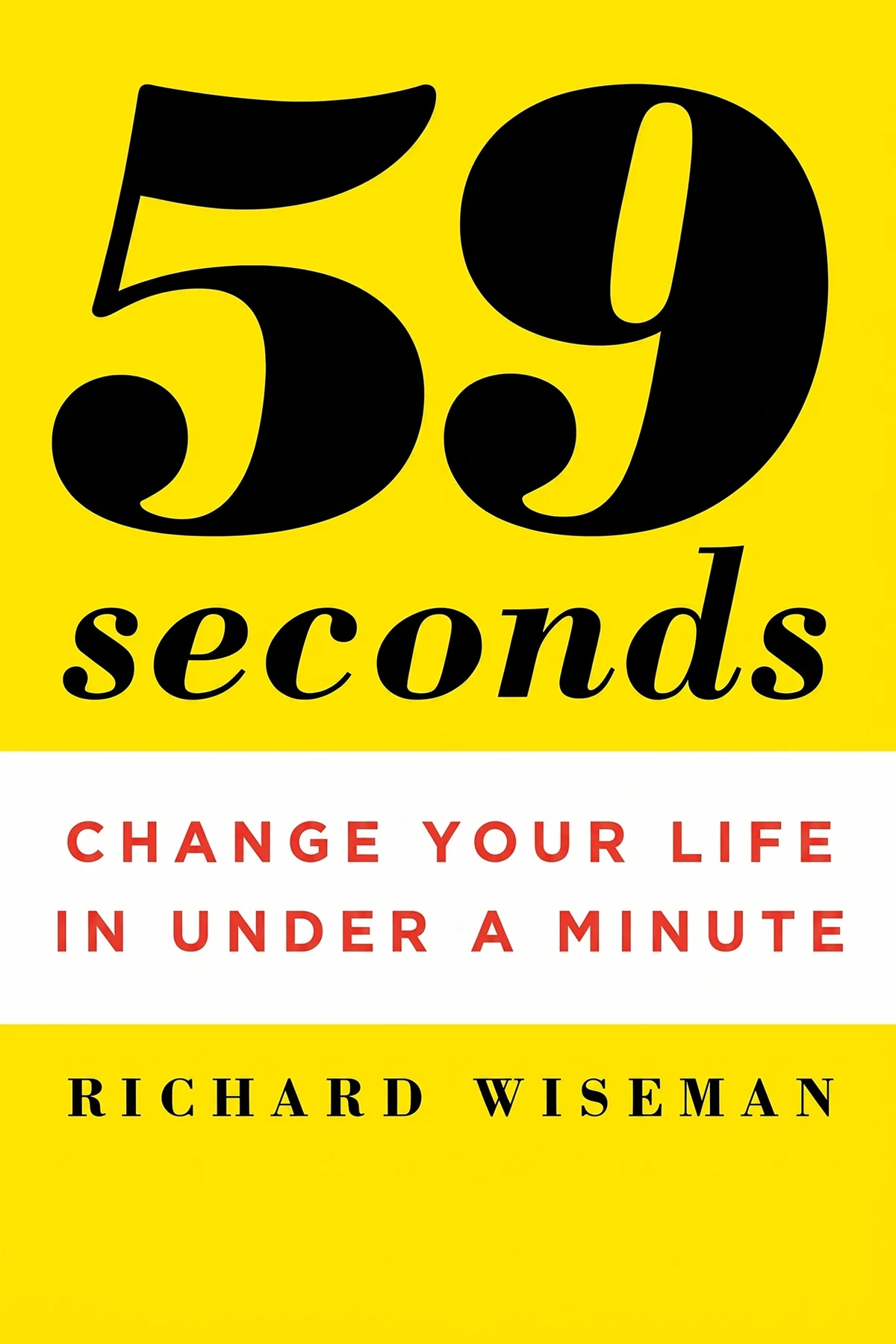
59 Seconds: Change Your Life in Under a Minute
Richard Wiseman
A Liberated Mind: How to Pivot Toward What Matters
Steven C. Hayes
Acting with Power: Why We Are More Powerful Than We Believe
Deborah Gruenfeld
AUDIO SUMMARY AVAILABLE
Listen to The Upside of Your Dark Side in 15 minutes
Get the key ideas from The Upside of Your Dark Side by Todd Kashdan, plus 5,000+ more titles in English and Thai.
- 5,000+ titles
- Listen as much as you want
- 7-day free trial
- Cancel anytime







