
18 min 08 sec
The Art of Insubordination: How to Dissent and Defy Effectively
By Todd Kashdan
Discover how to challenge the status quo and champion new ideas effectively. This guide explores the psychology of dissent, offering strategies to influence the majority while maintaining your integrity and resilience.
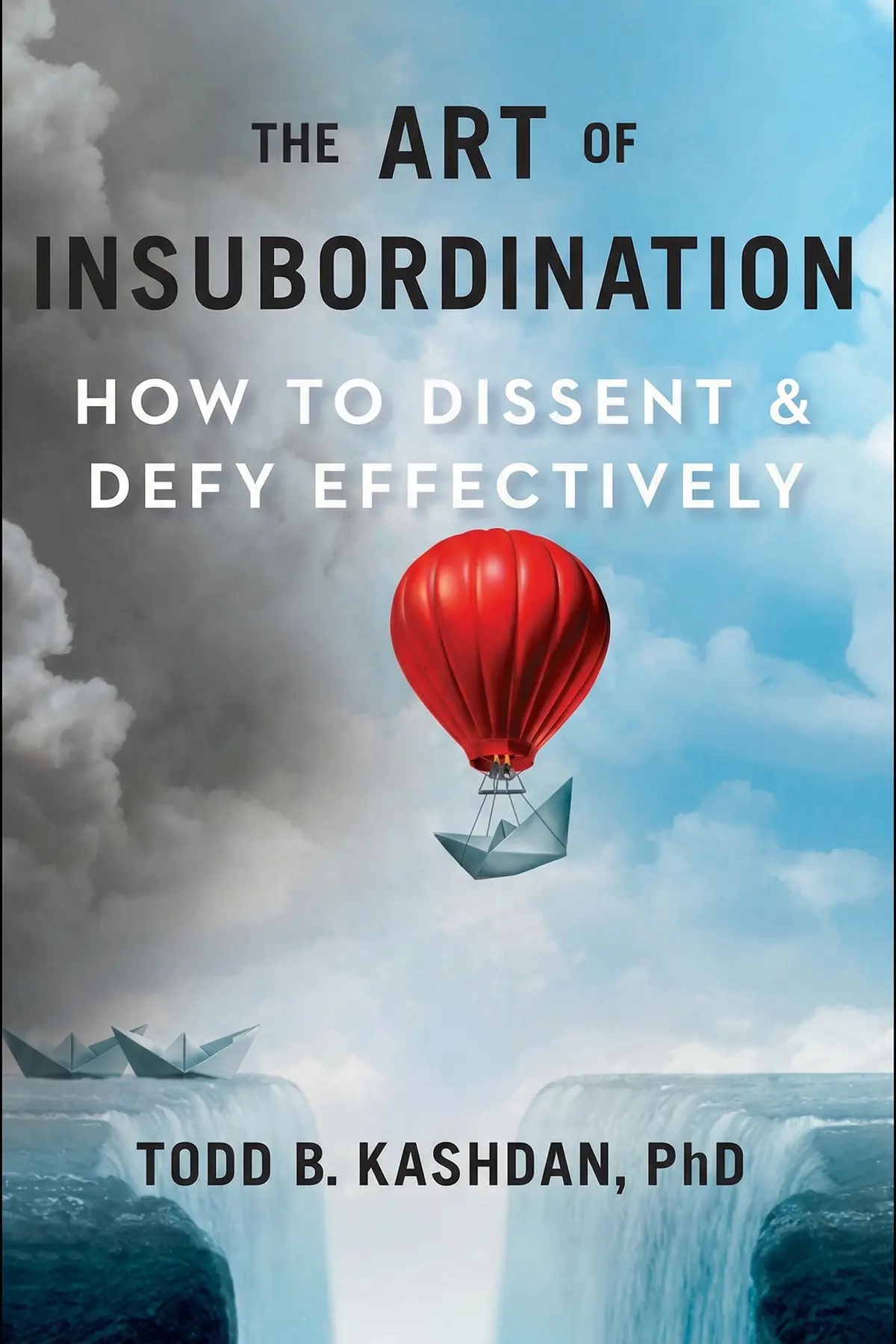
Table of Content
1. Introduction
1 min 56 sec
We have all been there—sitting in a meeting, standing in a crowd, or watching a tradition unfold, feeling a nagging sense that something isn’t right. Yet, most of us stay silent. We follow the rhythm of the group because the social cost of stepping out of line feels too high. But what if that urge to rebel wasn’t a personality flaw, but a vital tool for human progress?
Welcome to a deep dive into the mechanics of principled insubordination. This isn’t about being difficult for the sake of attention or breaking rules just to cause trouble. Instead, we are looking at the art of deviance with a purpose. Principled insubordination is the act of challenging the majority specifically to improve the world around us. It is about supporting ideas that matter, even when those ideas are unpopular, for the ultimate benefit of our communities and societies.
In the pages ahead, we will explore why we are so terrified of being the odd one out and why the “tried and true” way of doing things is often just a mask for mediocrity. We will see how a single person’s refusal to move can change the law of the land, and why a punk band’s refusal to sell out provides a masterclass in persuasion.
This journey is designed to show you that taking a stand is not just a brave act; it is a skill that can be studied and mastered. Whether you are trying to change your workplace culture, push for social justice, or simply introduce a better way of doing things in your personal life, understanding the psychology of dissent is your greatest advantage. We will break down how to get the majority to actually listen to you, how to survive the inevitable discomfort of being a rebel, and how to make sure that once you finally win, you don’t become the very thing you were fighting against. Let’s begin by looking at why we often choose to be wrong just to fit in, and how one unconventional basketball player proved that looking “silly” is a small price to pay for excellence.
2. The Fear of Standing Out
2 min 17 sec
Discover why even world-class experts choose failure over social awkwardness, and what a legendary basketball player can teach us about the high cost of conformity.
3. The Psychological Anchor of the Status Quo
2 min 33 sec
Uncover the hidden biases that trick our brains into believing that the oldest way is always the best way, and how this keeps us trapped in broken systems.
4. The Power of the Lone Dissenter
2 min 32 sec
Learn how a single act of defiance can spark a movement, and the surprising math behind how many rebels it takes to change a group’s mind.
5. Communicating with Flexible Consistency
2 min 15 sec
Unlock the secrets of persuasion by studying how a legendary punk band gained influence without ever preaching, and how you can apply their tactics to your own message.
6. Building Your Mental Fortress
2 min 22 sec
Discover the techniques used by those who survive the greatest social pressures, and learn how to manage the inevitable pain that comes with standing your ground.
7. The Grace of the Victor
2 min 20 sec
What happens after you win? Explore the hidden dangers of gaining power, and how to ensure you don’t become the same kind of oppressor you once fought.
8. Conclusion
1 min 53 sec
As we wrap up this exploration of principled insubordination, let’s reflect on the journey we’ve taken. We began by looking at the staggering power of the status quo—the social gravity that keeps basketball players from using a better shot and keeps societies stuck in broken patterns. We learned that our own brains are often our biggest obstacles, favoring the old simply because it is familiar.
But we also saw the incredible potential of the individual. We saw how a single person’s courage can reach a 25 percent tipping point that changes everything. We learned that communication is a bridge, not a battleground, and that by combining consistency with social grace, we can make our voices heard. Most importantly, we discovered that resilience is a skill. By focusing on our purpose and using mental techniques like cognitive defusion, we can survive the discomfort that comes with being a dissenter.
Now, the challenge is yours. Think about the areas of your life where you’ve been staying silent. Where is there a “standard way” of doing things that you know is inefficient or unfair? The art of insubordination is not a call to arms for chaos, but a call to integrity. It is an invitation to be the person who speaks the truth, not because it’s easy, but because it’s necessary.
Remember that the goal is not just to be different, but to be better. When you step out of line for the right reasons, you aren’t just helping yourself; you are giving everyone around you the gift of a new perspective. You are pushing the boundaries of what is possible. Go forth with the knowledge that being a rebel is a noble craft, one that requires a sharp mind, a thick skin, and a very big heart. Stay flexible, stay consistent, and never lose sight of the better world you are trying to build. The majority is waiting for someone like you to show them the way.
About this book
What is this book about?
Have you ever felt that the way things are currently done is simply wrong, yet felt too intimidated to speak up? This exploration of principled insubordination provides a roadmap for those who wish to defy conventions for the sake of progress. It is not about rebellion for the sake of chaos; rather, it focuses on how individuals can skillfully challenge established norms to foster innovation and social improvement. Through a blend of psychological research and historical examples, you will learn why humans are so wired to conform and how you can overcome the social friction that comes with being a dissenter. The promise of this material is to transform you from a frustrated bystander into an effective agent of change. You will gain insights into the specific communication techniques that win over a skeptical majority and the mental frameworks required to stay resilient when facing backlash. Ultimately, it’s about learning to stand your ground in a way that benefits everyone.
Book Information
About the Author
Todd Kashdan
Todd B. Kashdan is a respected professor of psychology at George Mason University. In addition to his teaching role, he directs the Well-Being Laboratory, a facility dedicated to studying the factors that allow humans to maintain happiness and find deeper meaning in their lives. His contributions to the field were recognized by the American Psychological Association in 2013 when he received the Distinguished Scientific Early Career Award. Kashdan is also a prolific writer, having authored other insightful works such as Curious? and The Upside of Your Dark Side.
Ratings & Reviews
Ratings at a glance
What people think
Listeners find this work both captivating and approachable, noting that its informal prose simplifies complex social science principles. Furthermore, the content is backed by pertinent studies and packed with practical insights, as one listener points out the way it blends empirical data with individual anecdotes. Listeners also value the historical accounts of nonconformists and the book’s empathetic tone, describing the material as motivating, with one review emphasizing how it empowers people to reclaim their personal agency.
Top reviews
Tern
This book is essentially a tactical manual for anyone tired of just nodding along during meetings when they know there's a better way. Kashdan manages to turn dense social science into something that feels like a late-night conversation with a very smart friend. I particularly loved the section on Fugazi and how they maintained their integrity while disrupting the music industry without losing their souls. Truth is, most 'rebel' books are just fluff, but this one provides actual psychological scaffolding for dissent. It’s not just about being loud; it’s about being effective and bringing the 'others' along with you. The writing is snappy, moving from historical anecdotes to lab data without ever feeling dry or academic. If you want to change your community, start here.
Show moreWoramet
Picked this up on a whim and ended up ordering three more copies for my management team the next day. Kashdan has a gift for making complex behavioral research feel immediately applicable to everyday office politics and personal growth. The concept of being a 'principled rebel' resonated deeply with me because it moves away from mindless disruption toward constructive, lasting change. Look, if you’re a leader who wants to foster a culture where the best ideas actually win, you need these tools. The prose is conversational and moves fast, keeping the momentum high even when discussing heavy topics like the history of rape kits or racial insubordination. It’s easily one of the most useful books on organizational psychology I’ve read in years.
Show moreSumalee
The chapter on the tragic accident of the first female fighter pilot was a gut-punch that perfectly illustrated the life-or-death importance of speaking up. Kashdan doesn't just tell you to be brave; he explains the mechanisms of courage and how to lower the social cost of dissent. I appreciated how he wove in the story of Elizabeth Jennings and her act of racial insubordination long before the Civil Rights movement became mainstream. To be fair, this isn't just a history book; it's a deep dive into the psychology of how we can improve our communities through friction. It challenged me to look at my own tendencies to stay silent and gave me the vocabulary to start pushing back effectively. Highly recommended for anyone who feels like a square peg in a round hole.
Show morePhu
In a world that seems increasingly hostile to divergent ideas, this book feels like a breath of fresh air. Kashdan provides a clear, compassionate roadmap for anyone who feels the urge to challenge the status quo but isn't sure how to do it without burning bridges. I love how he stresses that winning isn't the end—you then have the responsibility to lead those you just defeated with grace and strength. The practical strategies for talking persuasively are things I’ve already started using in my own community volunteer work. To be honest, I wish I had read this twenty years ago when I was first starting my career. It would have saved me a lot of heartbreak and helped me be a much more effective advocate for change.
Show moreWanida
Ever wonder why people refuse to adopt a better method even when the proof is staring them in the face? The story about the NBA player using the 'granny style' free throw to achieve 94% accuracy perfectly illustrates our collective fear of looking foolish. Kashdan uses these kinds of compelling narratives to explain why we cling to the status quo even when it’s failing us. Personally, I found the science-backed strategies for building grit and persuasive speaking to be the most valuable parts of the text. It isn’t just a cheerleading session; it’s an analytical look at the costs and benefits of going against the grain. I do think the pacing drags a bit in the middle chapters, but the overall payoff is worth your time.
Show morePatcharaporn
Not gonna lie, I was skeptical about another book telling me how to 'disrupt' my life, but this one actually delivers. Instead of focusing on ego-driven rebellion, Kashdan emphasizes the need for empathy and bringing the opposition along for the ride. The writing style is very accessible, avoiding the jargon-heavy traps that many social scientists fall into when they try to write for a general audience. I particularly enjoyed the research on how to attract allies who actually have your back when things get difficult. My only gripe is that it occasionally feels like it’s trying to cover too many bases—parenting, business, and social justice all at once. Still, the core message about embracing your personal agency is powerful and timely.
Show morePrinya
Finally got around to reading this and I’m struck by how well Kashdan balances storytelling with hard data. This isn't just a collection of 'rah-rah' anecdotes; it's grounded in the latest psychological research about influence and social dynamics. I found the section on how to handle 'newly powerless' groups to be a very interesting, if controversial, take on navigating major cultural shifts. Whether you agree with his political framing or not, the underlying advice on how to communicate across divides is undeniably useful in our polarized world. The book maintains a high level of energy throughout, making it a quick read despite the depth of the material. It’s a provocative look at how we can all be a little more courageous in our daily lives.
Show morePim
After hearing so much buzz about this title, I went in with very high expectations that weren't entirely met. There’s a lot of great stuff here, especially the parts about how to build a 'support tribe' so you aren't fighting uphill battles alone. However, some of the anecdotes felt a bit recycled if you’ve read much in the way of Adam Grant or Malcolm Gladwell. In my experience, the 'art' of being insubordinate is more about timing than Kashdan lets on, though his focus on psychological flexibility is a great addition. It’s a decent read for beginners, but seasoned leaders might find some of the advice a little basic. It's a solid effort that offers some practical wisdom without necessarily reinventing the wheel.
Show moreAhmed
As someone who works in a very traditional corporate environment, I found the strategies for 'winning responsibly' to be quite enlightening. That said, I can see why some readers might find the author’s perspective a little bit skewed toward a specific demographic's worldview. While the science is top-notch, the application of that science sometimes brushes over the systemic barriers that make dissent much riskier for some people than others. Gotta say, the advice is much easier to follow if you already have some level of social capital to spend. It’s a well-written book with plenty of interesting stories, but it lacks a bit of the nuance needed for a truly inclusive guide to rebellion. I’d still recommend it for the free-throw chapter alone.
Show moreNew
Wow. This was a massive disappointment that felt more like a political manifesto than a science book. While the initial advice on principled dissent is solid, the book takes a weird turn into decrying 'political correctness' in a way that feels incredibly out of touch. The chapter regarding the 'Newly Powerless'—referring to groups who have historically held all the cards—asking marginalized people to be extra gentle with them is a very tough pill to swallow. Frankly, it feels like a guide for conservative perspectives to feel better about resisting social progress under the guise of 'independent thinking.' There are some good psychological nuggets buried in here, but the framing is deeply problematic for the current social climate. It claims to be about rebellion, yet it defends the old guard.
Show moreReaders also enjoyed

59 Seconds: Change Your Life in Under a Minute
Richard Wiseman

A Liberated Mind: How to Pivot Toward What Matters
Steven C. Hayes

Acting with Power: Why We Are More Powerful Than We Believe
Deborah Gruenfeld
AUDIO SUMMARY AVAILABLE
Listen to The Art of Insubordination in 15 minutes
Get the key ideas from The Art of Insubordination by Todd Kashdan, plus 5,000+ more titles in English and Thai.
- 5,000+ titles
- Listen as much as you want
- 7-day free trial
- Cancel anytime







