
25 min 34 sec
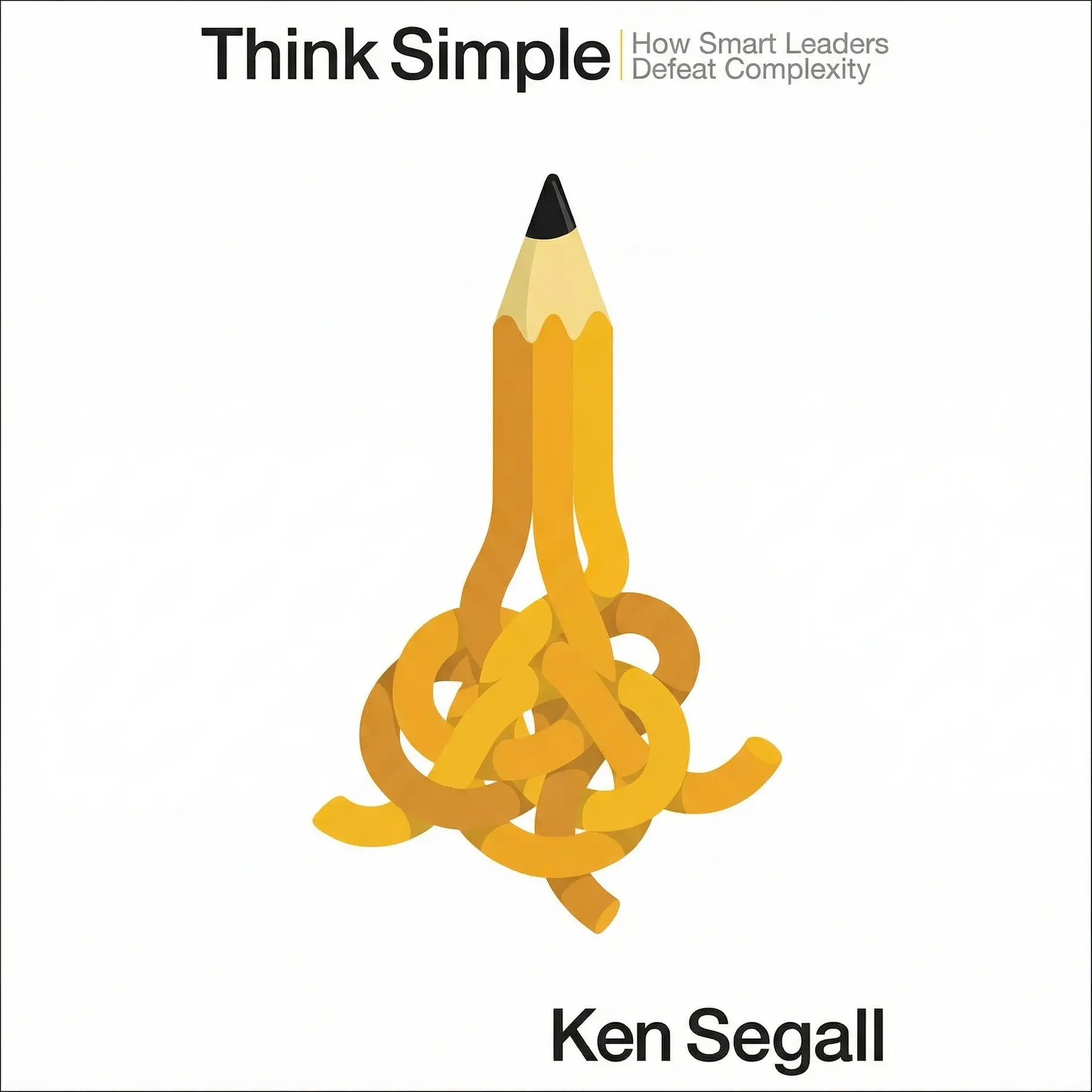
Think Simple: How Smart Leaders Defeat Complexity
By Ken Segall
Think Simple explores the philosophy of radical clarity used by Apple to achieve global dominance. Ken Segall shares insights on stripping away complexity to focus on core ideas and flawless execution.
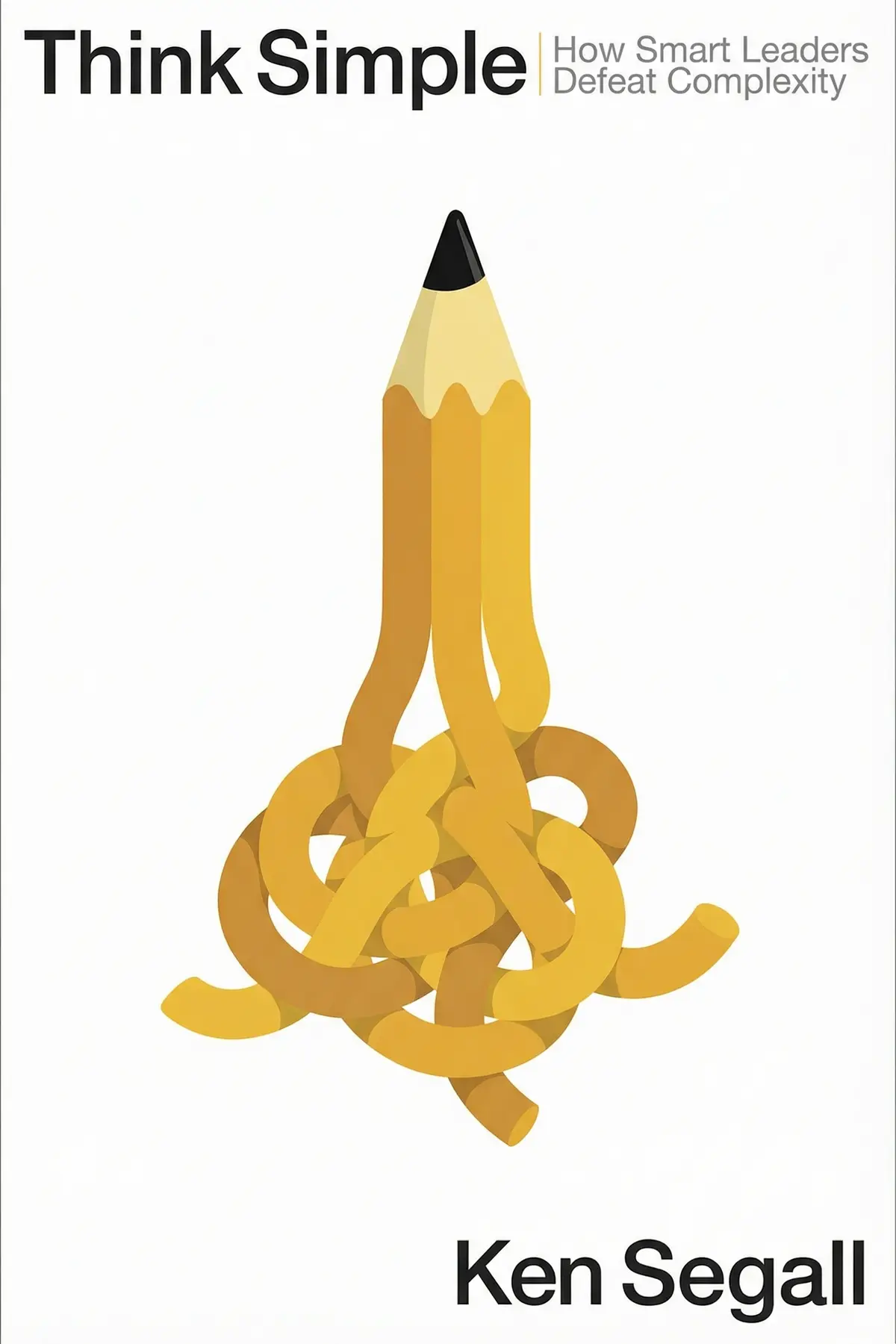
Table of Content
1. Introduction
1 min 45 sec
In a world that seems to celebrate the complex and the intricate, there is a profound, often overlooked power in the straightforward. We are constantly told that more is better—more features, more options, more data, and more layers of management. But what if the real secret to success lies in the exact opposite direction? What if the most effective way to build a world-changing brand or a highly efficient team is to aggressively pursue simplicity? This is the central question explored in Think Simple, a deep dive into the philosophy that helped turn Apple into a global powerhouse.
Ken Segall, the creative mind behind some of the most iconic marketing in history, invites us to look at the internal workings of simplicity through the eyes of someone who lived it. Having spent twelve years working closely with Steve Jobs, Segall witnessed firsthand how simplicity served as a guiding light for every decision, from product design to corporate structure. This wasn’t simplicity for the sake of being minimalist; it was simplicity as a tool for clarity, speed, and focus.
As we move through this summary, we will explore why complexity is such a persistent enemy and how we can train ourselves to identify and eliminate it. We’ll look at the importance of the core idea—that singular, powerful thought that drives a project forward—and why its execution is just as critical as its conception. We will also examine how a commitment to simplicity can define a brand’s identity, using the legendary ‘Think Different’ campaign and the ‘i-branding’ phenomenon as primary examples. By the end, you’ll see how simplicity isn’t just a style, but a rigorous discipline that requires constant maintenance and a willingness to say ‘no’ to the distractions that clutter our professional and personal lives. Let’s begin our journey into the art of thinking simple.
2. The Strategic Advantage of Simplicity
2 min 00 sec
Complexity is often mistaken for depth, but in business, it usually leads to stagnation. Learn why simplicity is a competitive weapon that creates speed and clarity.
3. The Power of the Core Idea
1 min 51 sec
Every great project starts with one central thought. Discover why protecting this core idea from the clutter of complexity is the key to successful execution.
4. Naming as a Tool for Clarity
1 min 55 sec
A name is more than just a label; it’s a reflection of a product’s essence. Explore the lessons behind the creation of the iMac and the i-branding legacy.
5. The 'Think Different' Philosophy
1 min 45 sec
Marketing is at its best when it communicates values rather than features. Revisit the campaign that redefined Apple and the power of emotional simplicity.
6. Simplicity in Leadership and Culture
1 min 55 sec
Simplicity is a top-down discipline. See how a leader’s commitment to clarity can shape the entire culture of an organization.
7. The Execution Gap: From Idea to Reality
1 min 52 sec
A simple idea is worthless without simple execution. Learn how to bridge the gap between a great concept and a successful product.
8. The Human Desire for Simplicity
1 min 47 sec
We are biologically wired to prefer simplicity over complexity. Discover why making things easier for people is the ultimate form of customer service.
9. The Complexity Trap in Organizations
1 min 52 sec
Why do smart people build complex systems? Uncover the psychological and structural reasons why organizations naturally drift toward complication.
10. The Discipline of Subtraction
1 min 51 sec
True simplicity is not about adding the right things, but about taking away the wrong ones. Learn the art of editing your way to excellence.
11. Simplicity as a Competitive Differentiator
1 min 46 sec
In a crowded market, the simplest option often wins. Explore how clarity can be your greatest edge against larger, more complex competitors.
12. Communicating the Simple Way
1 min 48 sec
Effective communication isn’t about how much you say, but how much is understood. Learn to strip your messaging down to its most potent form.
13. The Long-term Commitment to Simplicity
1 min 42 sec
Simplicity is not a destination, but a continuous journey. Discover how to maintain a simple mindset over the life of a project or a company.
14. Conclusion
1 min 45 sec
As we wrap up our exploration of Think Simple, it’s clear that the pursuit of simplicity is much more than a design aesthetic or a marketing tactic. It is a fundamental way of approaching work and life that prioritizes clarity, focus, and human connection. Through the examples of Ken Segall’s time at Apple, we’ve seen how simplicity can be used to build iconic brands, streamline massive organizations, and create products that feel like magic to the people who use them. We have learned that complexity is the natural default, a slow-growing fog that threatens to obscure our goals and dampen our effectiveness. Fighting that fog requires a relentless, daily commitment to the core idea and a fearless willingness to subtract the unnecessary.
The throughline of all these ideas is that simplicity is a form of respect—respect for your own time, respect for your team’s focus, and most importantly, respect for your customer’s experience. When you choose to think simple, you are choosing to do the hard work of distillation so that others can experience the clarity of your vision. You are choosing to be the signal in a world full of noise.
As you head back into your own professional and personal world, take a moment to look at your surroundings with a ‘simplicity lens.’ Where have you allowed complexity to creep in? What ‘one thing’ could you remove today to make your work more effective or your message more clear? Remember that you don’t need to be Steve Jobs to benefit from this philosophy. Whether you are naming a new project, leading a small team, or just trying to organize your daily tasks, the principles of simplicity apply. Identify your core idea, protect it from dilution, and have the courage to say ‘no’ to the distractions. By embracing the art of thinking simple, you aren’t just making things easier—you are making them better. Thank you for joining us on this journey toward clarity.
About this book
What is this book about?
The modern world is filled with noise, bureaucracy, and endless layers of complexity that often stall progress and confuse customers. Think Simple is an exploration of how one of the world's most successful companies, Apple, defied these trends by making simplicity a core business principle. It posits that simplicity is not just a design choice but a strategic weapon that can transform how organizations function and how brands communicate with their audience. Through the lens of creative director Ken Segall, who spent over a decade working alongside Steve Jobs, the book promises to reveal the mindset required to eliminate the unnecessary and focus on what truly matters. By prioritizing the core essence of a product or a message, businesses can cut through the clutter and create lasting impact. It is a guide for anyone looking to streamline their work, sharpen their brand, and embrace the power of thinking simple in an increasingly complicated world.
Book Information
About the Author
Ken Segall
Ken Segall is the author of the New York Times best-seller Insanely Simple. Working with Steve Jobs as Apple’s creative director for twelve years, he led the brand’s Think Different campaign, and named the iMac, leading to the legendary i-branding for products like the iPod and the iPad.
Ratings & Reviews
Ratings at a glance
What people think
Listeners find the book's insights favorable, with one mentioning that the uncomplicated ideas are relevant across all industries. The quality of the storytelling draws a range of opinions from listeners.
Top reviews
Somsak
Finally got around to finishing this, and the final chapter's action plan alone makes it worth the cover price. While many business books just drone on about theories, Segall actually provides a roadmap for stripping away the corporate clutter that kills productivity. It’s true that he leans heavily on his Apple background, but why wouldn’t he? They are the gold standard for this philosophy. I loved the stories about Telstra and Whole Foods, which proved that these concepts aren't just for tech giants. To be fair, if you aren't in a leadership position, some of the advice might feel a bit distant. However, for those of us fighting the 'complexity monster' daily, this is a breath of fresh air. The writing is crisp, moving fast enough to keep you engaged without becoming a chore. Simplicity isn’t just a buzzword here; it’s treated as a sharp weapon for any modern brand.
Show moreHang
Wow, this really changed how I view my startup's workflow. I’ve always been prone to over-explaining and over-complicating our services, but 'Think Simple' gave me the permission to cut the fat. The idea that 'simplicity is the ultimate sophistication' isn't just a quote here; Segall shows how it’s a grueling, necessary process for survival. I loved the emphasis on how a clear mission leads to a better user experience for the customer. Not gonna lie, I was inspired by the way the author describes the labor required to distill a complex idea into something beautiful. The book is easy to read and the chapters are punchy. It’s rare to find a business book that feels this personal and motivating. If you feel stuck in corporate jargon, read this immediately. It’s a game changer.
Show moreAroon
Picked this up on a whim after seeing a summary online, and I’m so glad I did. The truth is, we are all drowning in complexity, and Segall offers a life raft. I particularly enjoyed the sections on how to foster debate without micromanaging. Hearing ideas directly from employees without a dozen layers of approval seems like a dream, and this book provides the framework to make it happen. It’s simple, smart, and incredibly persuasive. Some might find the tone a bit too 'Apple-fan,' but you can't argue with their results. The stories from other global companies were equally fascinating and provided a nice balance to the narrative. It’s a refreshing take on management that doesn’t rely on dry statistics or boring charts. Highly recommended for anyone in a creative or leadership role.
Show moreSuphan
As someone who manages a mid-sized team, I found Segall’s insights into the 'impression of simplicity' to be incredibly profound. We often mistake simple for easy, but this book clarifies that achieving a smooth user experience requires immense behind-the-scenes labor. The truth is, most companies fail because they try to do too much at once. Segall’s interviews with global leaders offer a unique perspective on how to chasten that urge to overcomplicate everything. I did feel the narrative quality dipped slightly in the middle sections when the anecdotes became repetitive. Still, the core message about mission-driven leadership resonated deeply with my current projects. It’s a solid read for anyone trying to refine their brand’s voice. Just be prepared for a lot of Apple-centric examples throughout the chapters, which can be a bit much.
Show moreViolet
Ever wonder why some brands feel intuitive while others feel like a headache? Segall breaks this down by interviewing over 40 different leaders, and the results are quite eye-opening. The book successfully argues that simplicity is a weapon in a world that is becoming increasingly bloated and confusing. I appreciated how he moved beyond just product design to discuss organizational structure and clear communication. The layout is great, making it easy to digest in short sittings. Gotta say, I was skeptical about another business book focused on Apple, but the Australian and European examples added some much-needed variety to the mix. It’s not a perfect manual, but it forces you to rethink your internal processes and mission. Definitely worth a spot on your professional development shelf this year if you want to eliminate complexity.
Show moreAnucha
Segall definitely knows his stuff, and his background in advertising gives the book a unique edge. The way he describes the 'flow' of a simple user experience is brilliant. It’s not just about removing features; it’s about providing an impression of ease. In my experience, this is the hardest thing for a design team to get right. While the book is definitely skewed toward the tech industry, the lessons about clear communication apply to almost any field. I do agree with other reviewers that the Steve Jobs worship is a bit much at times. However, if you can look past that, there are some real gems here regarding organizational focus and creative feedback. It’s a fast, insightful read that actually makes you want to get to work. Four stars for the unique perspective.
Show moreRome
The chapter on leadership and the role of the CEO was the high point for me. Segall argues that the drive for simplicity must come from the top, using Steve Jobs’ iconic black turtleneck as a metaphor for focus. While the sentiment is inspiring, the practicality for small business owners is debatable. Look, I’m a solopreneur who wants to stay small, and this book seems geared toward enterprise-level managers trying to cut through red tape. Some of the examples of success felt more like stories of massive corporations downsizing to increase profit margins rather than genuine 'simplicity.' It’s a well-organized book and Segall is a gifted storyteller, but the actionable information is hit or miss depending on your scale. It's a decent read, but maybe a bit overhyped for the average worker.
Show moreTern
In my experience, the core message here is solid, but the execution feels a bit thin in places. Segall is clearly a true believer in the 'simplicity' gospel, and his passion is evident on every page. However, there’s a nagging feeling that there wasn't enough unique material to fill the entire page count required by the publisher. Many of the points could have been summarized in a long-form article. To be fair, the stories are engaging, especially the bits about the struggle to keep products intuitive. But the constant return to the Apple altar gets old after the fifth chapter. I found myself skimming through the parts that felt like a recycled biography of Jobs. It’s a decent enough weekend read, but don't expect a revolutionary breakthrough if you've already read a lot of management literature.
Show moreWipada
Not what I expected given the title. I was hoping for a broad analysis of various industries, but what I got was essentially a 200-page love letter to Steve Jobs. If you open a random page, you are almost guaranteed to see 'Apple' or 'Steve' mentioned within the first paragraph. Personally, I found the bias distracting and a bit lazy. Segall spends so much time deifying one company that the other case studies feel like mere afterthoughts or filler. There’s a mention of 'simplification' being just a semantic trick for downsizing, and frankly, I see that point. It’s hard to take the philosophy seriously when it feels like a marketing pitch for products I already own. If you’re a die-hard Mac fan, you’ll love it. If you want a balanced business book with new content, look elsewhere.
Show moreBo
I found this book incredibly frustrating because it feels like it was written for a very specific type of corporate elite. As a small business owner, the advice to 'simply' ignore layers of management doesn't apply to my three-person team. The author talks about Apple like they are a God-almighty entity that has never stumbled or done anything wrong. It’s a clear bias from Ken Segall that makes the rest of his advice feel less authentic. By the middle of the book, it becomes a repetitive loop of praising Steve Jobs' intuition. I was looking for practical steps to simplify my life and work, but instead, I got a lot of high-level semantics about 'vision' and 'branding.' It’s just too heavy on the fanboy vibes for my taste. Disappointing given the interesting title.
Show moreReaders also enjoyed
A Year with Peter Drucker: 52 Weeks of Coaching for Leadership Effectiveness
Joseph A. Maciariello
Acting with Power: Why We Are More Powerful Than We Believe
Deborah Gruenfeld
All In: How Great Leaders Build Unstoppable Teams
Mike Michalowicz
7 Powers: The Foundations of Business Strategy
Hamilton Helmer

A Bigger Prize: How We Can Do Better Than the Competition
Margaret Heffernan
AUDIO SUMMARY AVAILABLE
Listen to Think Simple in 15 minutes
Get the key ideas from Think Simple by Ken Segall, plus 5,000+ more titles in English and Thai.
- 5,000+ titles
- Listen as much as you want
- 7-day free trial
- Cancel anytime







