
A Guide to the Good Life: The Ancient Art of Stoic Joy
William B. Irvine
Explore the revolutionary decade of the 1920s through the lives and works of four thinkers—Heidegger, Wittgenstein, Cassirer, and Benjamin—as they redefined the very foundation of modern human thought and existence.
1 min 46 sec
Picture Germany in 1919. The world as people knew it had effectively ended. The monarchy had crumbled, the economy was in tatters, and the physical and psychological trauma of the Great War hung over every street corner. In this void of meaning, people weren’t just looking for new political leaders; they were looking for a new way to think about what it even meant to be human. It was into this atmosphere of desperation and radical possibility that four thinkers stepped forward. They would become the architects of the modern mind, though they rarely agreed on the blueprints.
Over the next ten years, these four men—Martin Heidegger, Ludwig Wittgenstein, Walter Benjamin, and Ernst Cassirer—would engage in an intellectual dance that changed the trajectory of the twentieth century. They weren’t just writing books; they were trying to solve the riddle of existence itself. Some sought the answer in the cold logic of language, others in the warmth of cultural symbols, some in the terror of our own mortality, and others in the quiet observation of everyday objects.
This isn’t just a history of dry theories. It is a story of human drama: of legendary public debates in the Swiss Alps, of vast fortunes given away to live in poverty, of secret love affairs, and of the constant struggle to remain relevant in a world sliding toward fascism. Through these figures, we see a mirror of our own era’s anxieties and hopes. As we walk through this decade of the ‘magicians,’ we’ll discover how their radical shifts in perspective provided the tools we still use to navigate the complexities of life, truth, and society today.
2 min 15 sec
Two philosophical giants face off in a Swiss ballroom, representing a clash between traditional humanism and a new, darker existentialism that defined a polarized era.
2 min 18 sec
Explore how one thinker believed that true freedom is only found by embracing the terror of mortality and the raw ‘scare’ of existence.
2 min 19 sec
Discover the humanist vision where art, science, and religion are not just hobbies, but the very tools that liberate humanity from its primal fears.
2 min 21 sec
A billionaire heir rejects his fortune to solve philosophy’s greatest puzzles, only to conclude that the most important things in life can’t be spoken of at all.
2 min 12 sec
Through the eyes of a perpetual outsider, learn how the mundane objects of a shopping mall can reveal the hidden soul of a century.
2 min 22 sec
Though they agreed on little else, all four ‘magicians’ realized that language is the primary tool humans use to build their worlds—and their traps.
2 min 15 sec
As the natural sciences began to explain everything from the stars to the subconscious, philosophy had to fight to remain relevant.
2 min 35 sec
As the decade of the ‘magicians’ came to a close, their abstract theories faced the brutal reality of a world descending into darkness.
1 min 46 sec
The ten years between 1919 and 1929 were more than just a historical bridge between two world wars. They were a crucible in which the modern mind was forged. Through the stories of Heidegger, Cassirer, Benjamin, and Wittgenstein, we’ve seen four radically different ways of responding to a world in crisis. We’ve seen how one man sought truth in the logic of silence, another in the richness of cultural symbols, a third in the terror of our own mortality, and a fourth in the quiet observation of a changing city.
These ‘magicians’ didn’t provide us with a single, easy answer to the problems of life. Instead, they gave us a set of tools—a new compass for navigating a world that often feels as unstable and uncertain as theirs did. They taught us that language is the house we live in, that our culture is a source of liberation, that facing our fears can lead to a more intense life, and that even the smallest objects hold the secrets of our history.
As we look back at their ‘Davos moments’ and their private struggles, we realize that their questions are now our questions. In an age of rapid technological change and political polarization, the tension between Cassirer’s hopeful humanism and Heidegger’s existential intensity, or between Wittgenstein’s logical rigor and Benjamin’s poetic observation, remains as relevant as ever. The ‘time of the magicians’ may have passed, but the spells they cast—the ideas that define who we are and how we think—continue to shape our world today. We are left with the challenge they all shared: the responsibility to use our minds to build a world that is not only understood but is worth living in.
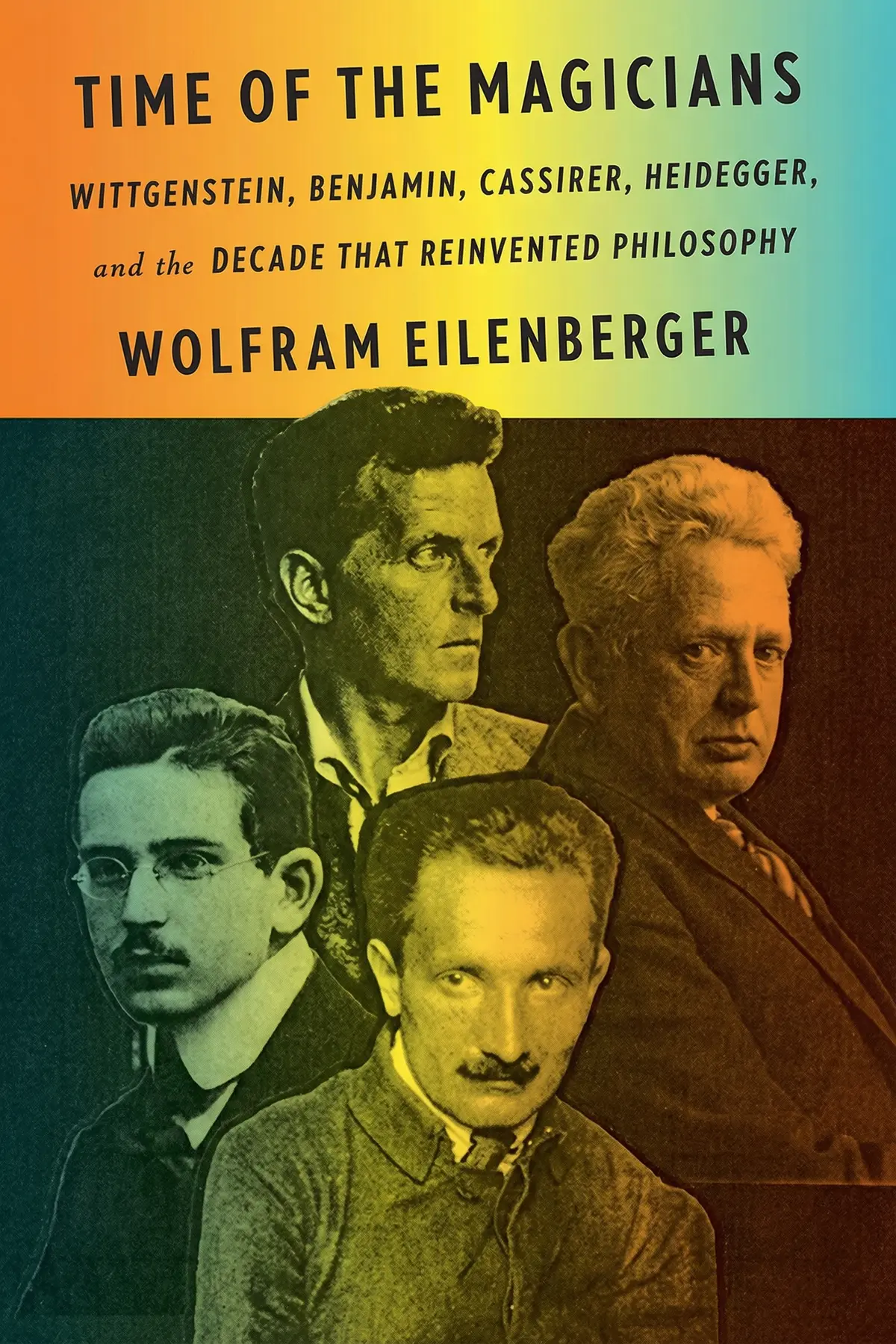
Time of the Magicians takes listeners on an intellectual journey through the formative years of the twentieth century, focusing on the decade between 1919 and 1929. This was a period of immense social and political upheaval in Germany, serving as the backdrop for a total transformation in philosophy. The book weaves together the lives of four monumental figures: Martin Heidegger, Ludwig Wittgenstein, Walter Benjamin, and Ernst Cassirer. Through their interconnected stories, we see how these thinkers grappled with the ruins of World War I and the uncertainty of the Weimar Republic. While their personalities and methods varied wildly—ranging from the isolated mountain-dwelling Heidegger to the cosmopolitan humanist Cassirer—they all shared a common goal: to find a new way to understand reality and the human condition. The promise of this narrative is to show how their complex ideas regarding language, culture, and existence weren't just academic exercises, but desperate attempts to make sense of a world that had lost its traditional moorings. By the end, listeners will understand how these 'magicians' cast the spells of modern thought that still influence us today.
Wolfram Eilenberger is a prominent German philosopher and a celebrated author known for his ability to translate complex intellectual history into engaging narratives. He has dedicated much of his career to examining the modern world through the lens of philosophy, exploring a wide range of subjects including daily culture, political shifts, and even the philosophy of sports. His work, which often bridges the gap between academia and the public, has garnered significant acclaim. His best-selling book Time of the Magicians was honored with the prestigious Bavarian Book Prize, solidifying his reputation as a master of contemporary philosophical analysis.
Listeners value the philosophical depth found in the text, and one individual pointed out the superb breakdown of every philosopher's contributions. Furthermore, the biographical elements are well-received; one listener mentioned it offers a standout perspective on Cassirer. The quality of the prose is also lauded, with one listener calling it well-written for any curious reader. Views on the book’s delivery are varied, as some consider it heavy while others remark on its scholarly approach.
This book manages to breathe life into four titans of thought who usually feel like cold, marble statues in a university hallway. Eilenberger captures the electricity of 1920s Berlin and the sheer desperation of a generation trying to find meaning after the Great War. I was particularly struck by the descriptions of Walter Benjamin’s constant state of flux and his struggle for professional recognition. The author avoids the dry, academic tone you’d expect from a philosophy book, opting instead for a narrative that feels almost like a high-stakes drama. Some might find the focus on their personal lives a bit much, but it helped me understand that their ideas didn't emerge from a vacuum. It is a brilliant group biography that makes the 'magical' decade feel immediate and vital for today’s readers.
Show moreWow, what a ride through the 1920s! I loved the focus on the everyday lives of these men—Heidegger in his mountain hut, Wittgenstein giving away his fortune, and Benjamin constantly on the run. Eilenberger makes the argument that philosophy isn't just about abstract logic, but about how we live our lives in times of crisis. The prose is elegant and fast-paced, which is rare for this genre. I finally feel like I understand why the Davos encounter was such a turning point for European thought. Even if you aren't a philosophy student, the historical context of hyperinflation and social collapse makes for a fascinating backdrop. It is easily one of the most engaging non-fiction books I have read this year.
Show moreFrankly, this is the best group biography I have encountered in years. Eilenberger manages to connect the dots between four very different thinkers in a way that feels organic rather than forced. I was mesmerized by the portrait of Wittgenstein; the image of a war hero returning to teach primary school in rural Austria is just so vivid. The book captures that specific post-war anxiety where old systems of value had crumbled and everything was up for grabs. It’s intellectual history told with the heart of a novelist. I found myself highlighting passages on almost every page, particularly the ones regarding Benjamin’s 'Arcades Project' and the nature of symbols. A truly exceptional work that deserves all the praise it has received.
Show morePicked this up after a recommendation from a philosophy podcast and I wasn't disappointed. The way Eilenberger weaves the personal crises of these four men together with the political instability of the Weimar Republic is genuinely gripping. I’ve always been intimidated by Cassirer, but this book provides an exceptional overview of his symbolic forms that actually makes sense to a non-expert. The chapters are short and punchy, which helps when you're dealing with such dense intellectual material. My only complaint is that the author leans a bit too heavily into the 'unreliable' accounts of their sexual gossip. Still, it’s a compelling intellectual history that should lead any curious reader to go back and check out the original works of the 'magicians' themselves.
Show moreAfter hearing so much about Heidegger’s 'Being and Time,' I finally feel like I have a grasp of the man behind the jargon. Eilenberger doesn't shy away from the darker aspects of Heidegger’s character, and he does a great job showing how his philosophy of 'authenticity' was already leaning toward a dangerous cultural nationalism. The comparison between the four thinkers is brilliant, acting as a prism to show how different minds reacted to the same era of groundlessness. I found the sections on Walter Benjamin particularly moving, especially his obsession with toys and his inability to finish his habilitation thesis. My only minor gripe is that the ending felt a little rushed. It is a very well-written book for anyone who wants to see the human side of abstract ideas.
Show moreFinally got around to reading about the Davos dispute without having to trudge through five hundred pages of primary texts. Eilenberger’s analysis of the clash between Cassirer’s neo-Kantianism and Heidegger’s existentialism is the highlight of the book. He presents it not as a dry academic debate, but as a battle for the soul of the 20th century. I also appreciated the attention given to the 'lesser-known' figures like Cassirer, who often gets overshadowed by the more eccentric Wittgenstein. The writing is smooth and avoids the clunky terminology that usually kills my interest in philosophy books. While it’s true that some historical details are a bit loose, the overall narrative flow is excellent. It’s a solid 4-star read for any history buff.
Show moreAs someone who isn't a trained philosopher, I found Eilenberger's style surprisingly approachable and even a bit exciting. He treats these four men like the rockstars of their era, following them from the lecture halls of Germany to the streets of Paris and the mountains of Switzerland. The book is weighty but never feels like a slog, thanks to the author's ability to switch perspectives just as things are getting too dense. To be fair, he does take some liberties with diary entries, and his claim that 1929 was 'magical' is a bit of a stretch given the impending disaster. However, the way he ties Heidegger's later Nazi involvement to his early work was handled with necessary gravity. It’s a fascinating, if occasionally slightly speculative, look at a decade that reinvented how we think.
Show moreEver wonder if an author actually bothered with a fact-checker before hitting the print button? Eilenberger writes with undeniable flair, but his sloppy errors regarding the Austrian Schilling and calling Wittgenstein’s family 'billionaires' in 1919 are distracting for anyone who knows the history. It is a bit of a 'feuilleton' read—lightweight philosophy for people who want to name-drop at dinner parties without actually reading Being and Time. To be fair, the section on the Davos dispute between Heidegger and Cassirer is well-staged and offers a decent summary of their clashing worldviews. However, the liberal use of 'magical' as an adjective and the constant psychological speculation made me trust the narrator less and less. It is a fun read if you treat it as historical fiction, but take the scholarship with a massive grain of salt.
Show moreLook, the prose is a bit too 'journalistic' for my taste, bordering on tabloid territory at times. Do we really need the intimate details of Heidegger’s affair with a young Hannah Arendt to understand his ontology? Eilenberger is clearly a talented writer, but he has a habit of projecting modern sensibilities onto the 1920s. He also confuses 'unsinnig' and 'sinnlos' when discussing Wittgenstein, which is a massive red flag for anyone who has studied the Tractatus seriously. On the plus side, the book is quite accessible and does a great job of placing these four men in the same room, metaphorically speaking. It’s a decent introduction for a beginner, but scholars will likely find the lack of a rigorous fact-check frustrating. It’s middle-of-the-road for me.
Show moreNot what I expected from a serious work of history. The truth is, the 'magical' framing of 1929 feels like a marketing gimmick designed to sell books to people who read the Sunday arts section. Eilenberger uses a grating, journalistic style that prioritizes flashy anecdotes over any rigorous philosophical interpretation. For instance, his treatment of Wittgenstein’s language games is incredibly superficial. He spends more time talking about Wittgenstein hitting a student than he does explaining the fundamental shift in the Tractatus. It’s a book for the bored intellectual who wants the 'vibe' of the 20s without doing the work. If you want a real biography, go read Ray Monk or Safranski instead of this watered-down version. Very disappointing execution for such a great premise.
Show moreWilliam B. Irvine

Charles C. Mann

James Shapiro
Nigel Warburton
Andrew Ross Sorkin
Pankaj Mishra
John Rawls

Fay Bound Alberti
AUDIO SUMMARY AVAILABLE
Get the key ideas from Time of the Magicians by Wolfram Eilenberger, plus 5,000+ more titles in English and Thai.







