
Wired To Create: Unraveling the Mysteries of the Creative Mind
Scott Barry Kaufman
Transcend reimagines Abraham Maslow’s iconic hierarchy of needs through the lens of modern psychology. Discover how to integrate safety, connection, and purpose to reach your highest potential and live a truly transcendent life.
2 min 03 sec
When you think of human psychology, one specific image almost certainly comes to mind: the five-tiered pyramid of needs. It’s a staple of textbooks and motivational seminars, suggesting that we start at the bottom with food and shelter, and eventually work our way up to the pinnacle of self-actualization. We treat it like a ladder or a video game—once we’ve ‘unlocked’ safety, we stop thinking about it and move on to the next stage. But as Scott Barry Kaufman reveals, this is a profound misunderstanding of how humans actually function. Even Abraham Maslow, the man credited with the hierarchy, never actually drew that pyramid. In his final years, he was moving toward a much more sophisticated, integrated view of the human experience.
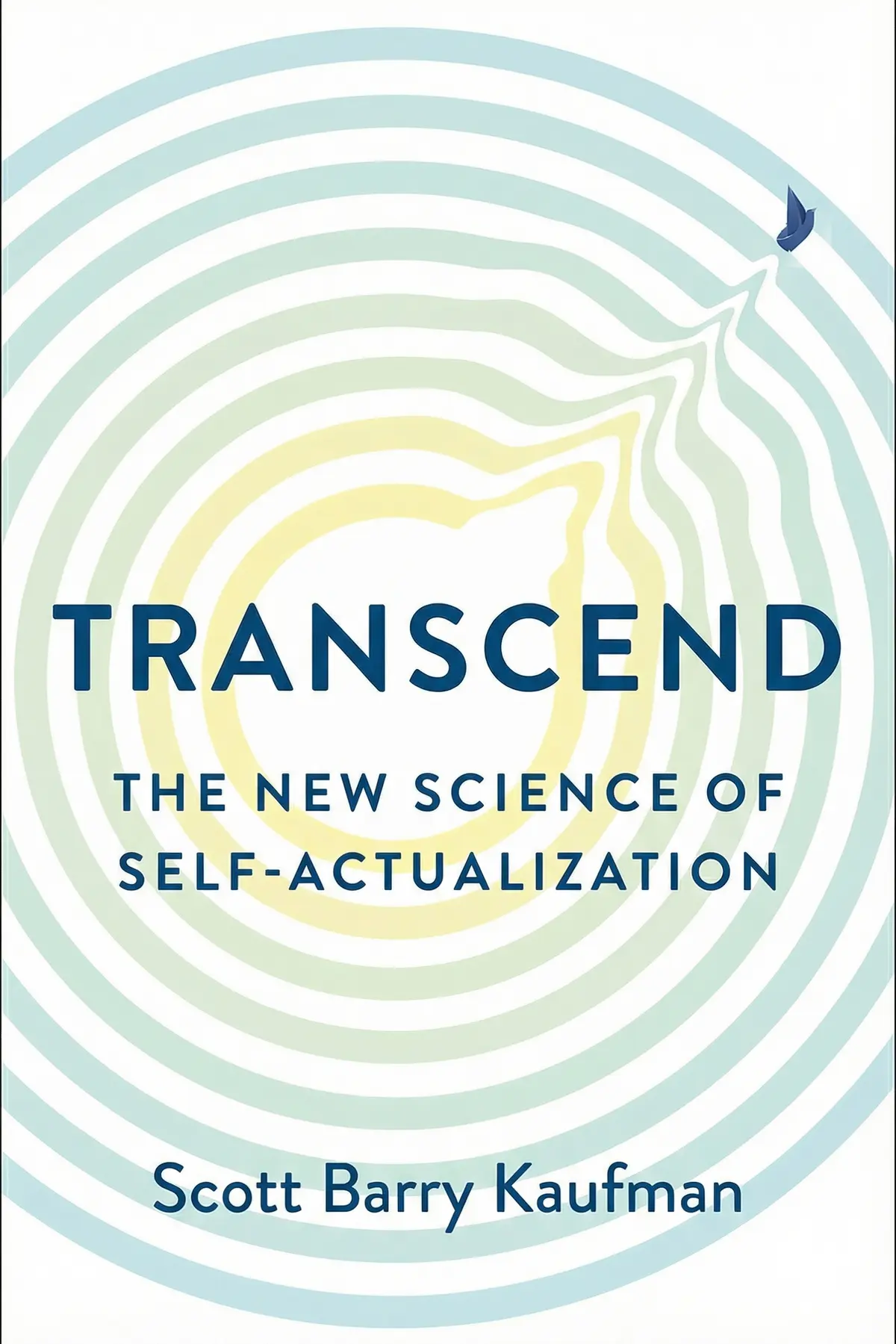
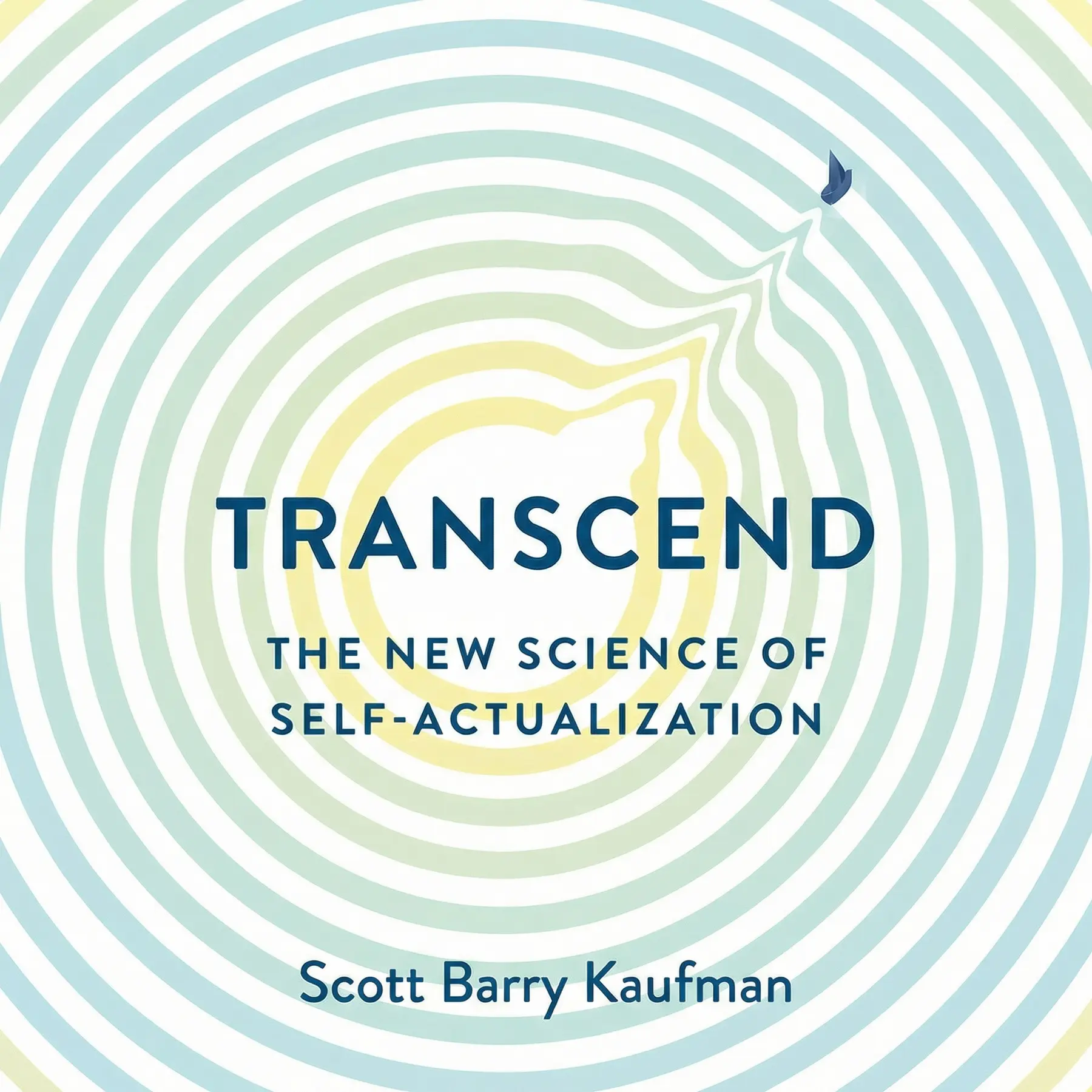
What if, instead of a pyramid, we viewed our needs as a sailboat? A boat requires a secure hull to stay afloat—that’s our need for safety, connection, and self-esteem. But a hull alone doesn’t go anywhere. To truly move through the world, we need a sail. That sail represents our capacity for exploration, love, and purpose. When the hull is secure and the sail is wide open, we don’t just move; we transcend. This shift in perspective is the throughline of our journey today.
In this summary, we are going to explore how self-actualization isn’t a final destination or a trophy to be won, but a process of integration. We’ll look at the fundamental foundations that keep us stable and the growth-oriented forces that propel us forward. Along the way, we’ll see how childhood bonds shape our adult security, how a small Greek island holds the secret to longevity through connection, and how the feeling of ‘awe’ can literally dissolve the boundaries of the self. By the end, you’ll see that transcendence isn’t some mystical, unreachable state reserved for saints—it is a practical, everyday aim for anyone looking to live a more fulfilled, integrated life.
2 min 18 sec
Before we can aim for the stars, we must feel secure on the ground. This exploration of our most fundamental requirement reveals how safety and early bonds dictate our ability to grow.
2 min 08 sec
Humans are fundamentally social creatures, and our health depends on the quality of our bonds. We look at how community and intimacy serve as a vital lifeline for our well-being.
2 min 05 sec
True confidence isn’t about arrogance or ego; it’s a byproduct of living well. Here, we distinguish between healthy pride and the empty pursuit of social validation.
2 min 12 sec
Growth requires us to step into the unknown. We examine how curiosity and adventure-seeking transform our fears into fuel for personal development.
2 min 16 sec
Love is often viewed as something we need to get from others. We explore a higher form of love that is about giving, admiration, and the whole being.
2 min 06 sec
A life without a focal point is a life adrift. We discuss how finding a calling—like a North Star—organizes our efforts and provides lasting meaning.
2 min 09 sec
Moments of profound wonder can change our lives forever. We dive into the science of ‘peak experiences’ and how they help us feel one with the universe.
2 min 12 sec
Transcendence is the ultimate goal—not as a destination, but as a way of being. We look at how the ‘transcender’ integrates all needs into a harmonious whole.
1 min 30 sec
As we conclude our journey through Scott Barry Kaufman’s Transcend, it’s worth returning to that image of the sailboat. If there is one thing to take away from this exploration, it’s that your growth isn’t a linear climb; it’s a dynamic balancing act. You cannot truly set sail if your hull is full of holes, but you also shouldn’t spend your entire life just patching the boat and never leaving the harbor. A fulfilling life requires both the security of your foundations and the courage of your explorations.
Take a moment to look at your own ‘boat.’ Do you feel safe and connected? Are you pursuing mastery in something that matters to you? If so, are you also opening your sail to new ideas, to B-love, and to a purpose that goes beyond your own self-interest? Transcendence isn’t about being perfect; it’s about being whole. It’s about accepting your vulnerabilities while still striving for your highest ideals.
As you move forward, look for those moments of awe that remind you of your place in the universe. Practice a love that admires rather than possesses. And most importantly, find a calling that makes you feel useful to the world. When you integrate these parts of yourself, you don’t just reach the top of a pyramid—you move into the vast, open water of a meaningful life. You become more than just an individual; you become a vital part of the ongoing human story of transcendence.
For decades, the concept of self-actualization has been symbolized by a rigid pyramid, suggesting that human needs are levels to be cleared like a video game. In Transcend, Scott Barry Kaufman challenges this outdated visual, offering a more fluid and integrated model for human growth. Drawing on the late, unfinished work of Abraham Maslow and modern psychological research, the book presents a new framework for understanding what it means to be a fully realized human being. Kaufman guides readers through the essential requirements for a healthy life—starting with safety and connection and moving toward exploration, love, and purpose. The promise of the book is that by understanding and integrating these needs, we can move beyond mere survival or happiness toward transcendence. This state allows us to connect with our best selves while simultaneously feeling a deep, meaningful unity with the rest of humanity and the world at large.
Scott Barry Kaufman is a renowned humanistic psychologist with a deep interest in intelligence and creativity. He earned his PhD in cognitive psychology from Yale University and has shared his expertise as a teacher at several prestigious institutions, including Columbia University, the University of Pennsylvania, and New York University. Kaufman is also the author of acclaimed works such as Ungifted and Wired to Create, where he explores the complexities of the human mind.
Scott Barry Kaufman
Listeners describe this book as intellectually stimulating, with one person calling it a thoroughly compelling exploration of the science of self-actualization. They also value the way it simplifies intricate theories, with one listener remarking that it avoids woo-woo nonsense or superstition. The text garners further praise for its accessible style and writing caliber, while listeners respect its contribution to humanistic psychology. They also highlight its profound resonance, with one review noting its deep dive into transcendence, and enjoy its creative flair. However, listeners express differing opinions on whether the book offers enough actionable advice.
After listening to The Psychology Podcast for years, I knew I had to pick this up. Dr. Kaufman has an incredible gift for making high-level academic concepts feel intimate and urgent. He takes us beyond self-actualization into the realm of transcendence, exploring how we can become part of something greater than ourselves. I was particularly fascinated by the distinction between grandiose and vulnerable narcissism—it’s a nuanced take you don’t see often in pop psych. The book effectively bridges the gap between historical biography and modern neuroscience. Not gonna lie, the "Theory Z" stuff Maslow was working on before he died is hauntingly beautiful. It makes you realize how much of his work was misinterpreted by the business world. This isn't a quick fix or a 10-step guide, but a genuine philosophy for living.
Show moreRarely do I find a psychology book that feels both empirically grounded and deeply poetic. Most authors in this space either lean too hard into the "woo-woo" nonsense or get lost in dry data points that lack soul. Kaufman strikes a perfect balance. He introduces us to the idea of the "Being-Realm," where we aren't just reacting to deficiencies or fears but moving toward integration and wholeness. The chapter on exploration was a personal standout—reminding me that curiosity is just as vital as safety. Look, the world feels incredibly heavy right now, and this book offers a roadmap that doesn't ignore the darkness but helps you navigate through it. It’s a joyous voyage into what humans can actually become if we stop treating our needs as a ladder to climb. Truly a fundamental work for the modern age.
Show moreIn a world obsessed with "hacks" and quick fixes, Kaufman offers something much deeper and more enduring. He has done something remarkable here by rescuing Maslow’s legacy from the oversimplified management models of the sixties. For too long, we’ve been told that we can’t care about "higher" things until every basic need is perfectly met. Kaufman shows that human growth is a fluid process. I loved the sections on "vulnerable narcissism"—it was a real "aha" moment that explained so much about modern social dynamics. The writing style is accessible yet sophisticated, though you definitely need to take your time with it. To be fair, it’s a lot to process, but it’s worth every second. It’s an insightful look at the "quiet ego" and how to balance our personal agency with a sense of community. This is humanistic psychology at its absolute best.
Show moreWow, this was exactly the perspective shift I needed. I’ve always felt like the traditional "hierarchy of needs" was too clinical, like humans were just machines that needed the right fuel to function. Kaufman’s sailboat metaphor feels alive. It acknowledges that we need security (the boat), but that the point of the boat is to carry the sail (growth). The sections on "whole love" and the "right to shine" were particularly moving. He makes a compelling case that becoming your best self is actually the best way to serve others. In my experience, most self-help books are either too selfish or too self-sacrificing, but this finds the harmony between the two. It’s an elegant, rigorous, and ultimately hopeful book. If you’re looking for meaning in a chaotic world, start here.
Show moreFinally finished this deep dive into human potential. Kaufman doesn't just dust off Maslow’s old notes; he builds a completely new framework for understanding the good life. Using the sailboat metaphor instead of that tired old pyramid was a stroke of genius. It captures the fluid, often turbulent nature of existence much better than a static hierarchy ever could. Truth is, I spent years thinking I had to check off boxes to reach the top, but this book taught me that growth is a continuous opening of the sail. While the sections on social psychology and cybernetics got a bit dense, the core message about integration over suppression really hit home. It’s a refreshing departure from the usual fluff you find in the self-help aisle. The science is rigorous, the citations are endless, but the heart is even bigger.
Show moreThe sailboat metaphor is a total game-changer for anyone tired of the rigid pyramid we were all taught in school. Kaufman argues that security isn't a destination but the hull of a boat that allows us to open our sails and explore. I appreciated how he integrated voices like Karen Horney and Viktor Frankl to flesh out Maslow's unfinished business. The discussion on "dichotomy-transcendence" was especially thought-provoking, challenging the "us vs. them" mentality that seems to plague our current society. Personally, I found the technical sections on brain networks a bit of a slog compared to the more philosophical chapters, but the overall insight is worth the effort. It’s a book that demands you slow down and reflect. If you want to understand the science of your own potential without the typical platitudes, this is the one to grab.
Show moreEver wonder what lies beyond just feeling "okay" or "fine" in your daily life? Kaufman’s exploration of transcendence provides some fascinating answers. He posits that we have a drive to move beyond our own skin, to connect with the world in a way that is "sacred" yet entirely secular. The science is there—he references everything from neuroscience to sociology—but he never loses the human touch. I particularly enjoyed the challenges at the back of the book; they provide a much-needed bridge between the dense theory and real-world application. Some parts felt a little long-winded, and the synthesis of so many different psychologists (Frankl, May, Yalom) occasionally felt like it was trying to do too much at once. Still, the message of choosing growth over defense is powerful and perfectly timed.
Show morePicked this up during a particularly rough patch, and it provided a lot of clarity. Transcend is a dense but rewarding exploration of what it means to be truly human. Kaufman’s curiosity is infectious, and you can tell he has a deep respect for Maslow’s original vision. The book does a great job of explaining how the pyramid was actually a misinterpretation by later consultants, which blew my mind. I found the science of "peak experiences" and flow states to be the most engaging parts. However, I’ll be honest: the structure can be a bit wandering. It jumps from biography to data to philosophy quite quickly. Despite that, the "Seven Principles for Becoming a Whole Person" in the appendix are worth the price of admission alone. It’s a book that invites you to be courageous and open to the world.
Show moreThis book feels like it’s caught between two worlds. On one hand, you have a fascinating, meticulously researched biography of Abraham Maslow that corrects decades of academic misconceptions. On the other hand, there’s a self-help component that occasionally feels a bit derivative and repetitive. To be fair, Kaufman’s writing is clear and the sailboat metaphor is a solid upgrade over the pyramid, but the "flow" felt disjointed at times. One minute you’re deep in the weeds of evolutionary psychology, and the next you’re reading somewhat shallow advice about finding purpose. I enjoyed the deep dive into the B-realm and the exploration of "whole love," but I found myself skimming the more prescriptive appendices. It’s a good book, certainly informative, but it lacks the cohesive punch I was hoping for given the hype.
Show moreGotta say, I was expecting a lot more actionable advice. While the research behind "Transcend" is clearly top-notch, the book felt way too academic for a casual reader. I was looking for a deep dive into self-actualization that I could actually apply, but instead, I got a history lesson on Maslow and abstract theories about the "B-realm." The sailboat metaphor is a nice visual, but the writing often felt like a series of interconnected literature reviews rather than a cohesive guide. Frankly, it lacks the 'flow' necessary to keep me engaged through the denser chapters on cybernetics and neuroscience. If you’re a psychology student, you’ll probably appreciate the heavy citations and the way it connects different thinkers. But if you’re looking for a practical, step-by-step roadmap to changing your life, this might leave you feeling a bit shipwrecked. It's more of a textbook than a toolkit.
Show more
Anthony Pratkanis
William B. Irvine
Andrew D. Thompson
AUDIO SUMMARY AVAILABLE
Get the key ideas from Transcend by Scott Barry Kaufman, plus 5,000+ more titles in English and Thai.







