
18 min 04 sec
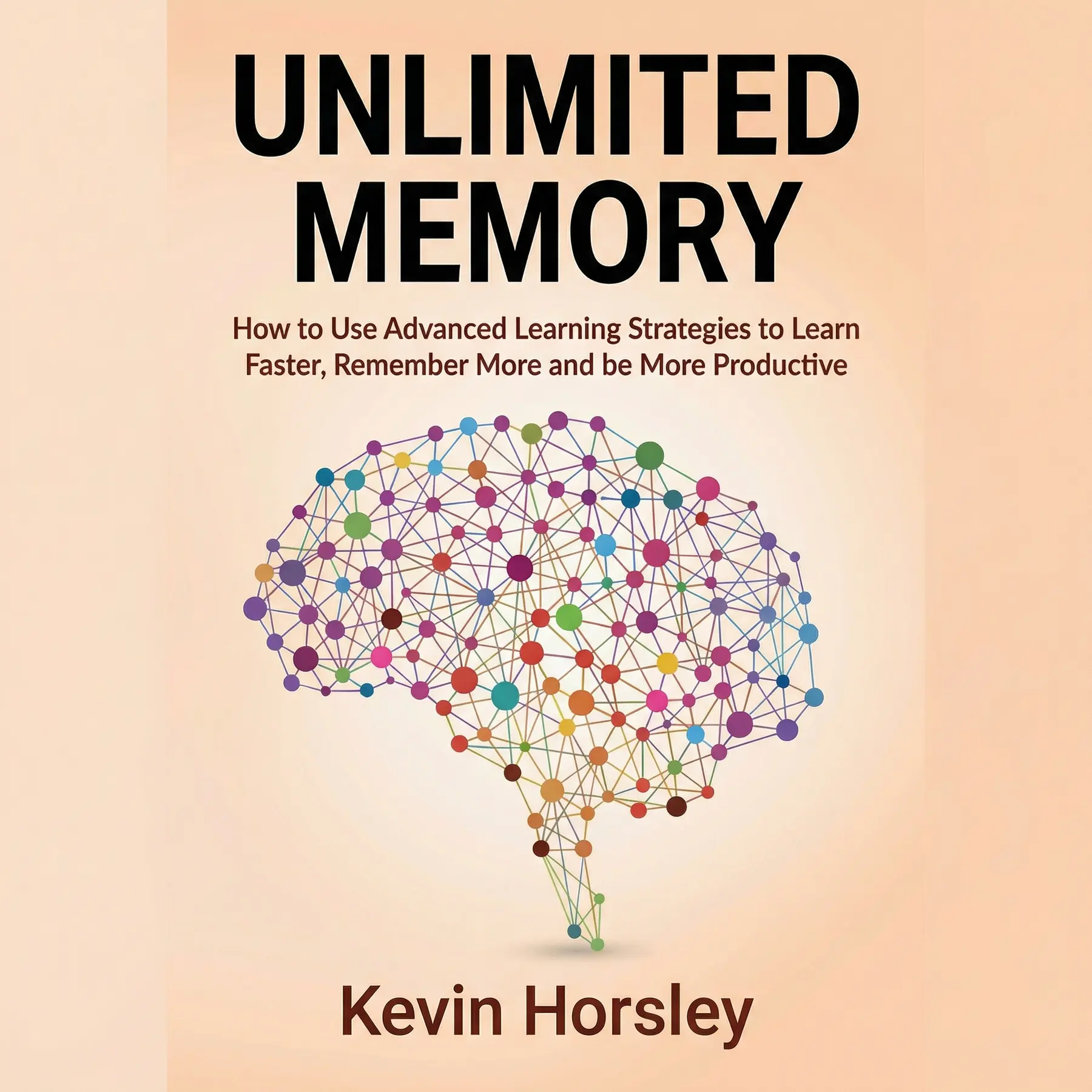
Unlimited Memory: How to Use Advanced Learning Strategies to Learn Faster, Remember More and be More Productive
Unlock the potential of your mind by mastering concentration, visualization, and strategic storage techniques. This guide reveals how anyone can achieve extraordinary recall and learn faster using proven memory systems.
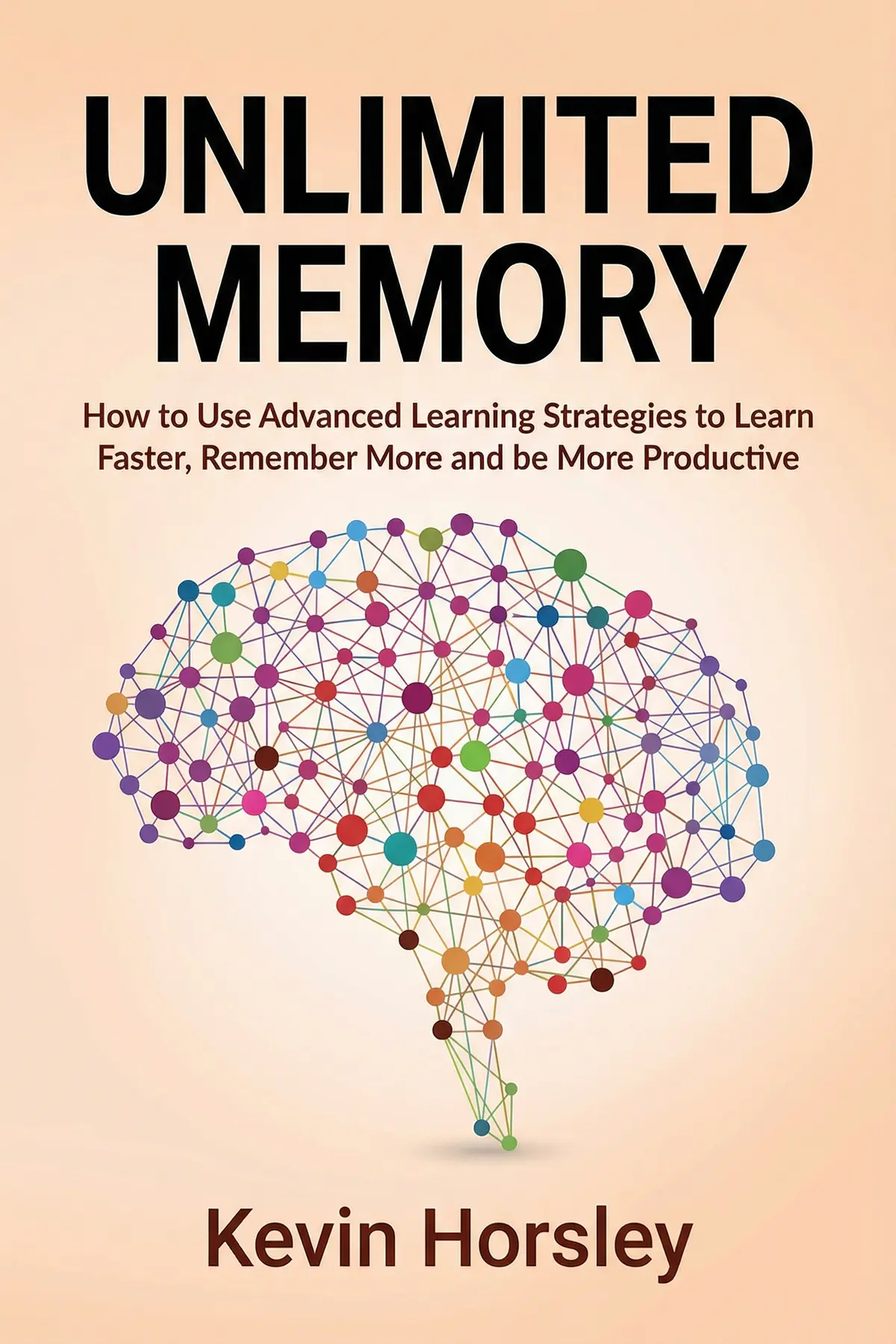
Table of Content
1. Introduction
1 min 37 sec
We have all experienced that sudden, sinking feeling of social awkwardness when we encounter someone we’ve met several times before, only to realize their name has completely vanished from our minds. You might find yourself frantically scanning the room for a mutual friend who can save you, or perhaps you try to navigate the entire conversation using vague pronouns, hoping they won’t notice your lapse in memory. This common struggle leads many of us to conclude that we simply have a ‘bad memory,’ as if recall were a fixed trait like height or eye color. But what if that wasn’t the case at all?
In this exploration of memory mastery, we are going to dismantle the myth of the forgetful brain. You are about to learn that your mind is far more capable than you have ever been led to believe. By shifting from passive observation to active, creative engagement, you can turn your brain into a high-performance engine for learning and retention. We will walk through the specific strategies used by world-record holders to memorize thousands of digits and complex data sets.
Throughout this journey, we will explore the fundamental pillars of a sharp mind: intense concentration, vivid imagination, and structured organization. You’ll discover how to transform abstract data into unforgettable mental movies and how to use your physical environment as a filing cabinet for your thoughts. By the time we finish, you will see that a limitless memory is not a superpower reserved for the elite, but a practical skill that you can start building today.
2. The Power of Undivided Attention
2 min 23 sec
Discover how the hidden cost of multitasking sabotages your brain and why true memory starts with the simple act of being present.
3. Creative Visualization and the SEE Method
2 min 44 sec
Stop trying to memorize dry facts and start creating mental movies that your brain will find impossible to forget.
4. The Ancient Art of the Loci Method
2 min 14 sec
Transform your home or your daily commute into a sophisticated filing system for your memories using spatial awareness.
5. Mastering Numbers and Dates
2 min 43 sec
Stop struggling with digits by converting abstract numbers into a phonetic code that turns any date into a memorable word.
6. The Four Cs of Remembering Names
2 min 11 sec
Never forget a name again by applying a simple four-step process that turns social introductions into memory triumphs.
7. The Essential Role of Review
2 min 06 sec
Learn why the ‘Forgetting Curve’ is your biggest enemy and how a structured review cycle can make your knowledge permanent.
8. Conclusion
2 min 06 sec
As we conclude our journey through the art of memory, it’s important to reflect on the core realization we’ve uncovered: your memory is not a fixed vessel, but a dynamic skill that can be expanded and refined. We have seen that the foundation of all great learning is the ability to clear away the fog of multitasking and give our full, undivided attention to the task at hand. By using the PIC rule—Purpose, Interest, and Curiosity—you can transform your focus from a fleeting resource into a powerful beam of light.
We also explored the transformative power of the SEE method and the Loci system. You’ve learned that by engaging your senses, embracing absurdity, and using the physical world as a mental filing cabinet, you can store information in a way that aligns with how your brain actually evolved to function. Whether you are turning complex numbers into phonetic words or anchoring names to facial features, you are moving away from the struggle of rote memorization and toward a more creative, joyful way of knowing.
However, the ultimate secret to a limitless memory is consistency. The most brilliant mental images will eventually fade without the discipline of spaced repetition and periodic review. Memory is an active process, a continuous engagement with the world and the knowledge you’ve acquired.
Your next step is simple but profound: put these tools into practice immediately. Start small—perhaps by memorizing your grocery list using a route through your house, or by creating a SEE image for the next new person you meet. As you begin to see results, your confidence will grow, and you will find that the ‘bad memory’ you thought you were stuck with was merely an untrained one. By taking control of your focus and your imagination, you aren’t just remembering more; you are unlocking a more productive, capable, and vibrant version of yourself. The world is full of information waiting to be mastered; now, you have the key to keep it all.
About this book
What is this book about?
Have you ever felt like your brain is a sieve, letting names, dates, and important facts slip away right when you need them? Unlimited Memory addresses this universal frustration by challenging the notion that a great memory is an innate gift. Instead, it frames memory as a refined skill that anyone can master with the right strategies. The book promises a total transformation of how you interact with information. By moving away from rote memorization and toward creative, multisensory engagement, you can learn to store vast amounts of data in a way that is both effortless to retrieve and fun to manage. Whether you are a student, a professional, or someone simply looking to stay sharp, these techniques provide a roadmap to cognitive excellence. You will discover how to eliminate the distractions that hinder your focus and how to build mental structures that house your knowledge for a lifetime.
Book Information
About the Author
Kevin Horsley
Kevin Horsley is a leading authority on the mechanics of the human mind and cognitive performance. He is distinguished as one of the few people globally to hold the title of International Grand Master of Memory. Today, he shares his expertise as a consultant, helping organizations around the world improve their approaches to learning, motivation, and the creative process.
Ratings & Reviews
Ratings at a glance
What people think
Listeners find this book effective for enhancing memory, as every method includes illustrative examples and connects to personal experiences to boost recall. Furthermore, the clear organization makes the concepts simple to grasp and apply, and listeners view it as essential reading for students. They also value the inspiring material, mentioning how it encourages people to improve their daily lives through a functional strategy that yields results with consistent effort.
Top reviews
Oak
Picked this up during a particularly brutal semester, and frankly, I wish I’d found it years ago. Kevin Horsley doesn't just lecture; he gives you the tools to turn boring lists into vivid, impossible-to-forget images. I’ve already started using the 'loci' method for my anatomy finals, and the difference in my recall speed is quite shocking. This is more than just a book about memory; it’s a manual for how to actually use your brain efficiently. The structure is incredibly logical, making it easy to practice one technique before moving to the next. If you are a student drowning in information, this is a must-read.
Show morePete
As someone who has always struggled with focus, reading about Horsley’s own journey from dyslexia to World Memory Champion was incredibly inspiring. The book is structured beautifully, moving from basic mindset shifts to complex systems like the peg method. The author manages to be motivational without being overly corny, which is a rare balance in the self-help genre. I loved the quote from Alexander Graham Bell about focusing the sun's rays; it really set the tone for the entire practice. You can tell the author truly believes in the potential of the human mind. My memory feels more like a muscle now—the more I train it using these specific drills, the stronger it gets.
Show moreFord
Wow, I am genuinely stunned by how quickly I was able to memorize a list of twenty random items using the car method. The author refers to legends like Tony Buzan, and you can see that influence in the focus on creativity and mental mapping. This isn't just about rote memorization; it's about making your thoughts more colorful and engaging so they actually stick. The writing is punchy and conversational, which makes the exercises feel more like a game than a chore. I feel more confident in my ability to learn new things now than I did ten years ago. It’s a diamond in the rough that actually delivers on its big promises.
Show moreThawee
Ever wonder why you can remember a random movie quote from 1998 but forget what you walked into the kitchen for? This book explains exactly why that happens and how to fix it by tapping into our natural spatial memory. The techniques are effective, though some of the examples feel a bit dated or overly simplistic for complex professional work. I particularly enjoyed the section on the 'Journey Method' because it’s something you can start using immediately without any special equipment. It takes a lot of practice to make it second nature, but the results are undeniable. I’m finally remembering names at networking events, which is a total game-changer for my career.
Show moreWoramet
This book delivers exactly what it promises on the cover without making things overly complicated for the average reader. I was skeptical about the 'mental movie' concept, but it actually works once you stop being too lazy to try and just let your imagination go wild. Who knew imagining an elephant in a bikini could help me remember my grocery list? The writing style is very accessible, almost like having a personal coach walking you through the drills. My only gripe is that it requires constant maintenance; if you don't use these methods daily, you'll lose the knack for them quite quickly. Still, it’s a powerful toolkit for anyone willing to put in the work.
Show moreSangduan
Finally got around to finishing this, and the biggest takeaway for me was the shift in how I view my own brain. Horsley makes a compelling case that 'bad memory' is just a lack of training, not a fixed trait you’re born with. I've been applying the visualization techniques to my language learning, and I'm finding it much easier to stick vocabulary. The book is short and punchy, which I appreciate because it gets straight to the point without hundreds of pages of anecdotes. It’s a practical guide that empowers you to stop making excuses. I’ll definitely be keeping my notes on the 'Four C's' of learning nearby for future reference.
Show moreKenji
The chapter on the PEG system was the most valuable part of the entire experience for me personally. While I didn't care for the frequent references to other self-help gurus, the practical application of the number-alphabet code is life-changing for remembering dates. It’s fascinating to realize how much we limit ourselves by just assuming we aren't 'naturally' good at remembering things. The book is well-organized, though I think the author could have spent more time on how to apply these methods to abstract concepts rather than just lists. Regardless, the motivational tone is infectious. It’s a solid resource for anyone looking to sharpen their mind and stop losing their keys every morning.
Show moreChan
To be fair, the actual memory systems described here—like the peg method and the journey system—are historically grounded and technically sound. However, the author wraps these useful tools in a thick layer of new-age 'power of positive thinking' fluff that I found quite off-putting. It felt like I was constantly being sold on a specific self-help lifestyle rather than just learning a skill. I had to mentally filter out the pseudo-scientific 'laws' and the constant references to other gurus just to get to the practical exercises. If you can ignore the worldly, 'motivational' filler, there is a good core here, but it takes work to find the substance.
Show moreSelin
After hearing so much hype from fellow students, I picked this up hoping it would solve my massive retention issues in medical school. The truth is, while memorizing a list of twenty random objects using a 'mental movie' is a fun party trick, it doesn't translate easily to the sheer volume of a pathology textbook. These methods require a significant upfront time investment to create images for every single concept. When you are on a tight external schedule, it often feels more practical to just use traditional active recall. It’s a well-structured book with good intentions, but the application feels a bit clunky for high-volume technical data.
Show moreFon
Not what I expected at all, and to be blunt, it was a massive disappointment for someone with aphantasia. The author repeatedly insists that we should just 'see' these vivid mental movies to store information. Look, some of us have a blind mind’s eye, and this book basically implies that we are just lazy or unwilling to put in the effort. It felt incredibly exclusionary and frustrating to be told my brain is just 'unfocused' when it’s actually just neurodiverse. I had to DNF this before the halfway point because the methods are completely inaccessible if you can't visualize. I'll find a way to learn that doesn't require me to pretend I have a projector in my skull.
Show moreFeatured in
Readers also enjoyed
AUDIO SUMMARY AVAILABLE
Listen to Unlimited Memory in 15 minutes
Get the key ideas from Unlimited Memory by Kevin Horsley, plus 5,000+ more titles in English and Thai.
- 5,000+ titles
- Listen as much as you want
- 7-day free trial
- Cancel anytime







