
22 min 06 sec
War: How Conflict Shaped Us
An insightful historical analysis exploring how organized conflict has fundamentally shaped human civilization, examining the biological, cultural, and political forces that make war an enduring partner to social progress.
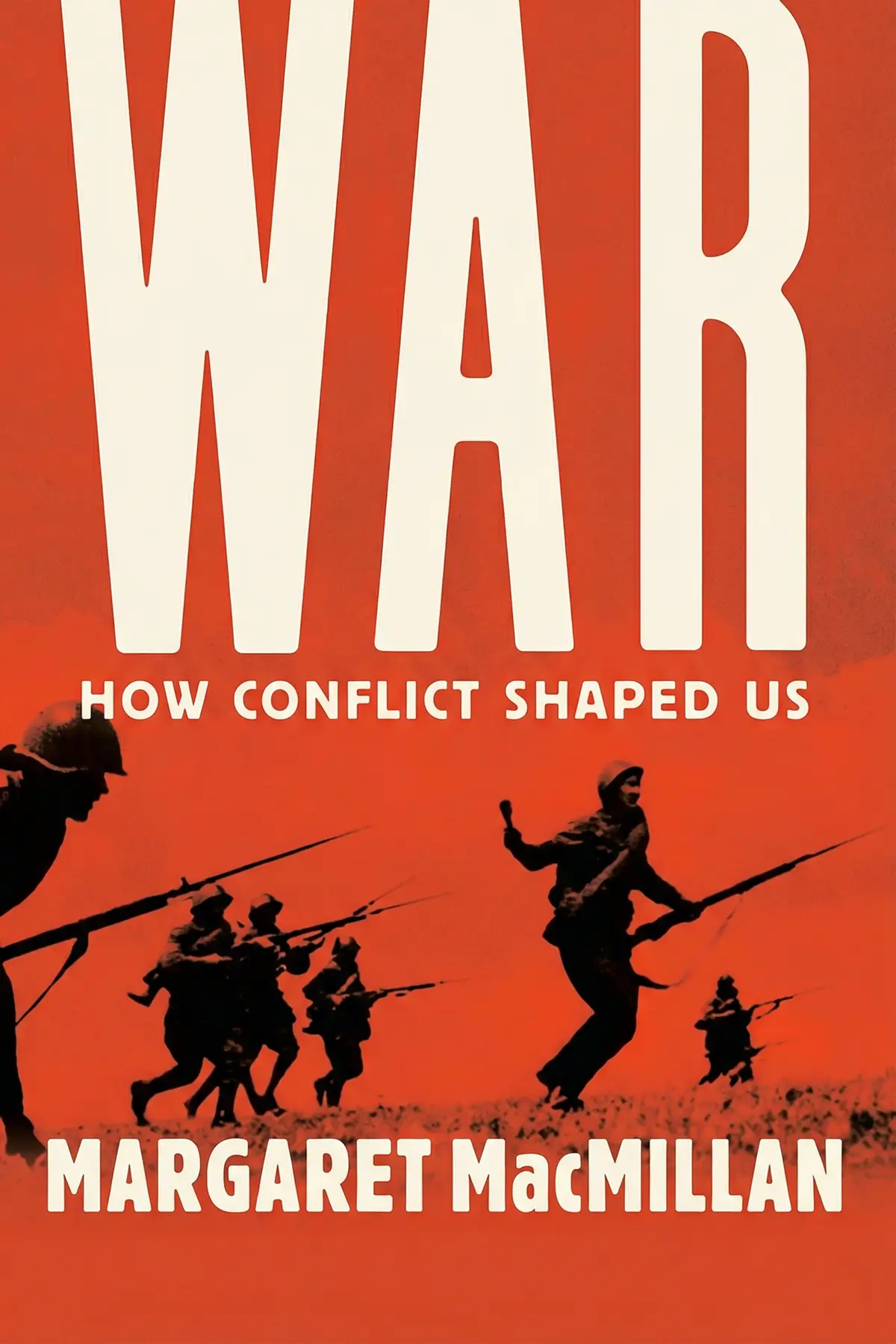
Table of Content
1. Introduction
1 min 51 sec
When we think about the story of humanity, we often like to imagine a long, slow climb toward peace and enlightenment. In this view, war is seen as a tragic interruption—a momentary lapse in our better nature. But what if that perspective is actually backward? What if war isn’t the exception to the rule, but rather one of the primary engines that built the world we live in today?
In this exploration, we are going to confront some uncomfortable truths about our relationship with organized violence. War is undeniably horrific, filled with destruction and unspeakable cruelty. Yet, it has also been a powerful catalyst for change. It has forged modern states, accelerated technological breakthroughs, and even expanded the rights of citizens. It’s a complex, deeply emotional subject that forces us to look at the darker side of human cooperation. After all, war requires an incredible amount of social organization—the same kind of organization we use to build cities or cure diseases.
Over the course of this summary, we will look at how our biology might play a role in our combativeness, but more importantly, how our ideas, our greed, and our cultures drive us to the battlefield. We’ll see how the transition from small tribal skirmishes to massive, industrial-scale conflicts changed the very definition of what it means to be a civilian or a soldier. We will also examine the ways we’ve tried to tame this beast through laws and rules, and how we choose to remember—or misremember—the conflicts of our past.
The goal here isn’t to glorify combat, but to understand it. By tracing the throughline of conflict across thousands of years, we can start to see how war and society have grown up together, inextricably linked. If we want to understand who we are and where we might be going, we have to look at how we’ve fought along the way. Let’s dive into the history of how conflict shaped us.
2. Biological and Social Roots of Violence
2 min 11 sec
Could our drive for conflict be written in our DNA? Explore the forensic evidence of ancient violence and the surprising lessons we can learn from our primate cousins.
3. The Diverse Motives for Conflict
2 min 10 sec
Beyond the convenient excuse lies the real story. Uncover why nations truly go to war—from raw greed and fear to the intangible desires that make people willing to die for glory and belief.
4. Culture as a Weapon and a Guide
2 min 29 sec
From the chivalry of King Arthur to the strategic silence of Sunzi, learn how a society’s core beliefs dictate how it chooses to fight its battles.
5. The Birth of Total and Industrial War
2 min 26 sec
Witness the moment war stopped being a game for professionals and became an all-consuming fire fueled by national identity and factory production.
6. The Psychology and Persuasion of the Soldier
2 min 15 sec
Why would anyone choose to walk into a hail of bullets? Discover the mix of desperation, discipline, and shared identity that keeps soldiers on the line.
7. The Blurred Lines of Civilian Life
2 min 17 sec
War doesn’t just happen to soldiers. Explore the complex role of civilians, from the victims of ‘collateral damage’ to the workers who make the bullets.
8. The Paradox of Regulating the Lawless
2 min 09 sec
Can you really put handcuffs on a tiger? Examine the long and often contradictory history of trying to establish ‘rules’ for the ultimate act of violence.
9. Selective Memory and the Art of War
2 min 17 sec
Discover how our perception of history is shaped by painters, filmmakers, and the shadow of ‘The Good War,’ often obscuring the complex reality of those who fought.
10. Conclusion
2 min 01 sec
As we wrap up this journey through the history of conflict, one thing becomes strikingly clear: we cannot separate the story of humanity from the story of war. It is not some external virus that occasionally infects a healthy society; it is a fundamental part of the way we have organized ourselves, governed ourselves, and defined ourselves for millennia. From the ancient arrow that felled the Iceman to the industrial-scale slaughter of the modern era, war has been the dark shadow walking beside our greatest achievements.
We have seen that while our biology might provide the capacity for violence, it is our culture, our politics, and our ideas that provide the direction. We’ve seen how the rise of the nation-state and the factory transformed war from a professional game into a total, all-consuming fire that blurs the lines between soldier and civilian. We’ve also seen the persistent, paradoxical human effort to put ‘rules’ on the lawless, to find some moral grounding even in our most destructive moments.
If there is an actionable lesson to be taken from this, it’s the importance of clear-eyed analysis. We must be wary of simple narratives that either glorify war as a noble test of spirit or dismiss it as a mere mistake. Both views prevent us from seeing the real mechanisms at work. Understanding war means recognizing the social and psychological forces that make it possible—the pride, the fear, the greed, and the intense desire for belonging.
By acknowledging that war is a product of our social organization, we also acknowledge that we have the power to change that organization. War is not an inevitable act of nature like a hurricane; it is a human choice, even if that choice is often made under extreme pressure. If we want to avoid the conflicts of the future, we have to be brave enough to study the conflicts of the past without blinking. We have to understand how we got here if we ever hope to choose a different path forward. Conflict has shaped us, but it doesn’t have to define our future.
About this book
What is this book about?
This exploration challenges the comforting idea that war is merely a temporary breakdown of the natural order. Instead, it argues that organized violence is woven into the very fabric of our social structures, institutions, and identities. By looking back at the long history of human combat—from the primitive skirmishes of the Stone Age to the industrialized total wars of the twentieth century—we see that our greatest achievements in cooperation and technology are often born from our most violent impulses. The narrative moves beyond just dates and battle maps to look at the deeper motivations behind the fighting. It investigates the varied motives that drive leaders to conflict and the societal pressures that turn ordinary citizens into soldiers. It also addresses the paradox of our attempts to regulate the irregular, highlighting how we try to impose rules and ethics on the inherently lawless nature of the battlefield. Ultimately, this summary promises a more nuanced understanding of why humans fight, how conflict has accelerated social change, and why recognizing our martial past is essential if we ever hope to achieve a more peaceful future.
Book Information
About the Author
Margaret MacMillan
Margaret MacMillan is a historian, professor emerita of international history at Oxford University, and professor emerita of history at the University of Toronto. In 2018, she was the Reith lecturer, giving talks in five major cities on the subject of war. She is also a fellow of the Royal Society for Literature and the best-selling author of Paris 1919, which won numerous awards, and The War That Ended Peace, which was named a New York Times Notable Book.
Ratings & Reviews
Ratings at a glance
What people think
Listeners find this work to be a captivating listen that offers a superb survey of warfare, with one listener highlighting how the author expertly weaves a tale of war and society. Additionally, the book is considered highly informative, accessible, and well-crafted. On the other hand, the narrative style draws varied reactions; while some listeners enjoy the abundance of references, others feel the material becomes repetitive.
Top reviews
Roo
Ever wonder why our world looks the way it does, from the taxes we pay to the rights we enjoy? MacMillan’s "War" explains that almost every modern institution we value has its roots in the mobilization for mass conflict. It’s a fascinating, if sobering, exploration of the human condition that connects the dots between the battlefield and the home front. I particularly loved the chapter on how war drives technological innovation, even when that progress comes at a horrific human cost. The author’s ability to weave together literature, art, and hard history makes this an incredibly readable and informative volume. Some reviewers complained about the meandering style, but I found the constant historical cross-referencing to be the book's greatest strength. It’s an essential read for anyone trying to understand the persistent nature of human violence in the 21st century.
Show moreAmelia
Finally got around to reading this, and I can say it’s one of the most provocative books on history I’ve tackled in years. MacMillan doesn't just describe wars; she explores the human desire to defend honor and expand territory through the lens of sociology. The way she weaves a tale of war and society is expert, showing how even our artistic expressions are inextricably linked to conflict. I appreciated her middle-road approach, acknowledging the horror of war while admitting its role in shaping modern systems like welfare and voting rights. It’s the kind of book that makes you stop every few pages to ponder a specific sentence or a new perspective. Although it has an academic flavor, the tone is never stuffy or boring, making it accessible to anyone with a curious mind. Definitely a must-have for the physical bookshelf.
Show moreSomporn
The chapter on the rules of war alone makes this book worth the price of admission. MacMillan provides an incredible look at how we have tried—and often failed—to civilize the most uncivilized of human activities. Her analysis of the American Civil War's influence on the Geneva Convention was particularly eye-opening for me. The book manages to be both horrifying and enlightening, refusing to look away from the bloodshed while also explaining the societal "benefits" like technological leaps. I found her refutation of Pinker’s "Better Angels" theory to be well-reasoned and grounded in the grim statistics of the 20th century. While it is a broad-strokes overview, it’s an excellent read to brush up on the topic and gain a new appreciation for history's complexity. Truly a stunning tome from one of our best historians.
Show moreSoontorn
This book offers a sprawling, comprehensive look at how conflict is baked into the very fabric of human civilization. MacMillan moves away from just battle maps to explore how our art, gender roles, and even our taxation systems grew out of the necessity of war. While some might find her jumping from the Greeks to the American Civil War in a single paragraph a bit dizzying, it creates a rich tapestry. I appreciated how she challenged Pinker’s optimistic view of modern peace by pointing to the heavy cost of the 20th century. It’s not a deep dive into any one battle, but rather a brilliant overview for anyone curious about why we keep killing each other. Some sections felt a bit like a rehash of stuff you'd find in a basic anthropology course, yet her prose remains elegant and accessible throughout.
Show moreLily
MacMillan’s latest work is a masterclass in synthesis, pulling together disparate threads of human history into a cohesive look at our violent tendencies. She avoids the simplistic trap of blaming religion for everything, instead looking at the complex web of economics, honor, and technology. Look, it’s not a book that will tell you how to win a war, but it will tell you how war has won over humanity. The author transitions smoothly between the gruesome reality for soldiers in the trenches and the political machinations of the state. I found her discussion of the 21st century's "cold conflicts" particularly relevant given the current global climate. While some paragraphs are admittedly a bit lengthy and dense, the insights provided make the effort well worth it. It’s a thoughtful, scholarly, yet accessible look at why the practice of war returns with such renewed force.
Show moreArnav
As someone who usually finds military history a bit dry, I was pleasantly surprised by how much this book focuses on society and culture. Instead of focusing strictly on troop movements, MacMillan examines how the Great War opened up the workforce for women and spurred economic engines. The book is well-written and serves as an excellent overview for the layperson, providing a broad-strokes look at how we’ve evolved (or failed to). I did find the narrative quality a bit uneven, with some chapters feeling much more researched and passionate than others. Occasionally, the frequent references to different wars in a single page can feel repetitive, but the overall message remains powerful. It’s an enthralling read that forces you to confront the uncomfortable reality that our peace is often built on a foundation of past violence.
Show moreThanakorn
After hearing so much buzz about this title, I found the actual experience of reading it to be a bit of a mixed bag. There’s no denying that MacMillan is a capable writer, but this feels less like a book and more like a collection of essays on various aspects of conflict. One chapter might focus on the rules of war and the Geneva Convention, while the next jumps into how war is depicted in poetry. It’s great as an introductory text for someone who hasn't studied the subject, but seasoned history buffs might find it a bit basic. The truth is, it raises many more questions than it provides answers, which can be intellectually stimulating or deeply annoying depending on your mood. I enjoyed the sections on nationalism, though the constant jumping between time periods made it hard to maintain any real momentum.
Show moreMontri
Look, if you want a book with a strong, singular thesis that is proven through meticulous data, this probably isn't the one for you. This is more of a thematic exploration that meanders through history, pointing out interesting talking points along the way without ever really landing on a firm conclusion. I found the constant jumping between Napoleon, the Romans, and modern-day drone warfare to be a bit chaotic at times. To be fair, she writes beautifully, and the book is full of fascinating anecdotes, such as the debate over Margaret Mead's findings. However, it often feels like a series of descriptions rather than a rigorous argument. It’s a decent enough overview of the topic, but it left me wanting something more substantial and less like a general survey course.
Show moreTaw
Picked this up hoping for a rigorous argument about the future of warfare, but instead I got a repetitive stroll through historical anecdotes. MacMillan is clearly knowledgeable, but the structure of this book is frankly frustrating and lacks a cohesive thesis. She raises interesting questions about technology and defense systems, then immediately pivots to a random quote from a WWI soldier without actually answering anything. It felt more like a series of introductory lectures stitched together than a focused piece of scholarship. If you’ve read any pop history before, you’ve already heard the bits about Hobbes, Rousseau, and the difference between chimps and bonobos. I found the writing to be quite pedestrian at times, making the three hundred pages feel twice as long as they actually were.
Show moreMax
Not what I expected at all, especially coming from a historian of MacMillan’s stature. The book starts with a truly banal observation about whether the world would be different if Hitler had won, which set a low bar for the rest of the text. Most of the "revelations" here are just pale echoes of better works, like Lawrence Keeley’s "War Before Civilization." The narrative is incredibly monotonous, following a meandering path through history that feels like a boring, unguided walk through a dusty museum. There is no central point or supporting argument to be found, just a list of things that happened and some vague questions about why. Save your money and just browse a Wikipedia page on military history instead; you’ll get the same information without the pedestrian prose.
Show moreReaders also enjoyed
A History of Iran: Empire of the Mind
Michael Axworthy
A History of the World in 6 Glasses
Tom Standage
A Long Way Gone: Memoirs of a Boy Soldier
Ishmael Beah
A Splendid Exchange: How Trade Shaped the World
William J. Bernstein
A Spy Among Friends: Philby and the Great Betrayal
Ben Macintyre
AUDIO SUMMARY AVAILABLE
Listen to War in 15 minutes
Get the key ideas from War by Margaret MacMillan, plus 5,000+ more titles in English and Thai.
- 5,000+ titles
- Listen as much as you want
- 7-day free trial
- Cancel anytime







