
14 min 32 sec
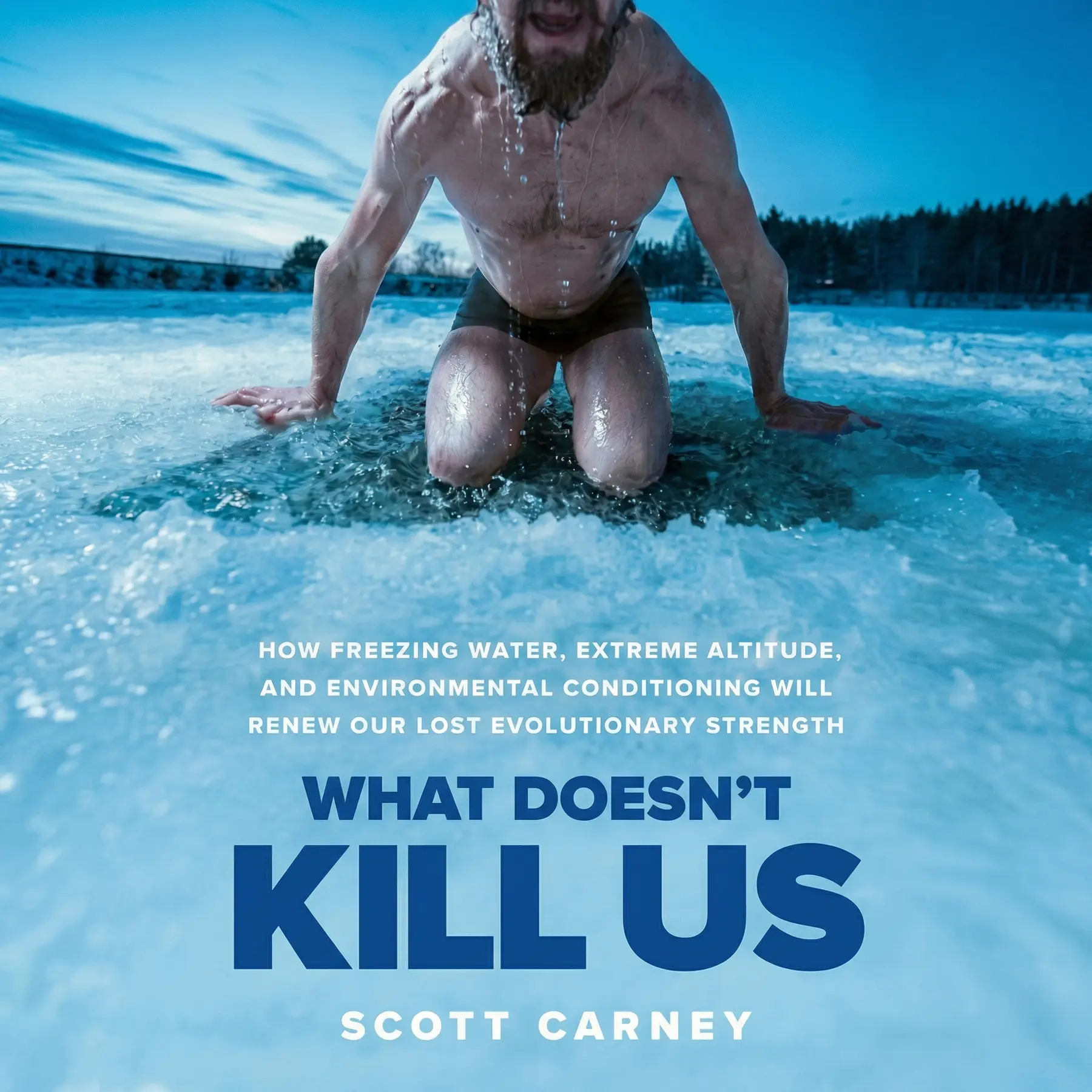
What Doesn’t Kill Us: How Freezing Water, Extreme Altitude, and Environmental Conditioning Will Renew Our Lost Evolutionary Strength
By Scott Carney
Explore how environmental stressors can reawaken the human body's dormant evolutionary strengths. Learn how cold exposure, breathing techniques, and mental focus can improve resilience, boost health, and push the limits of human endurance.
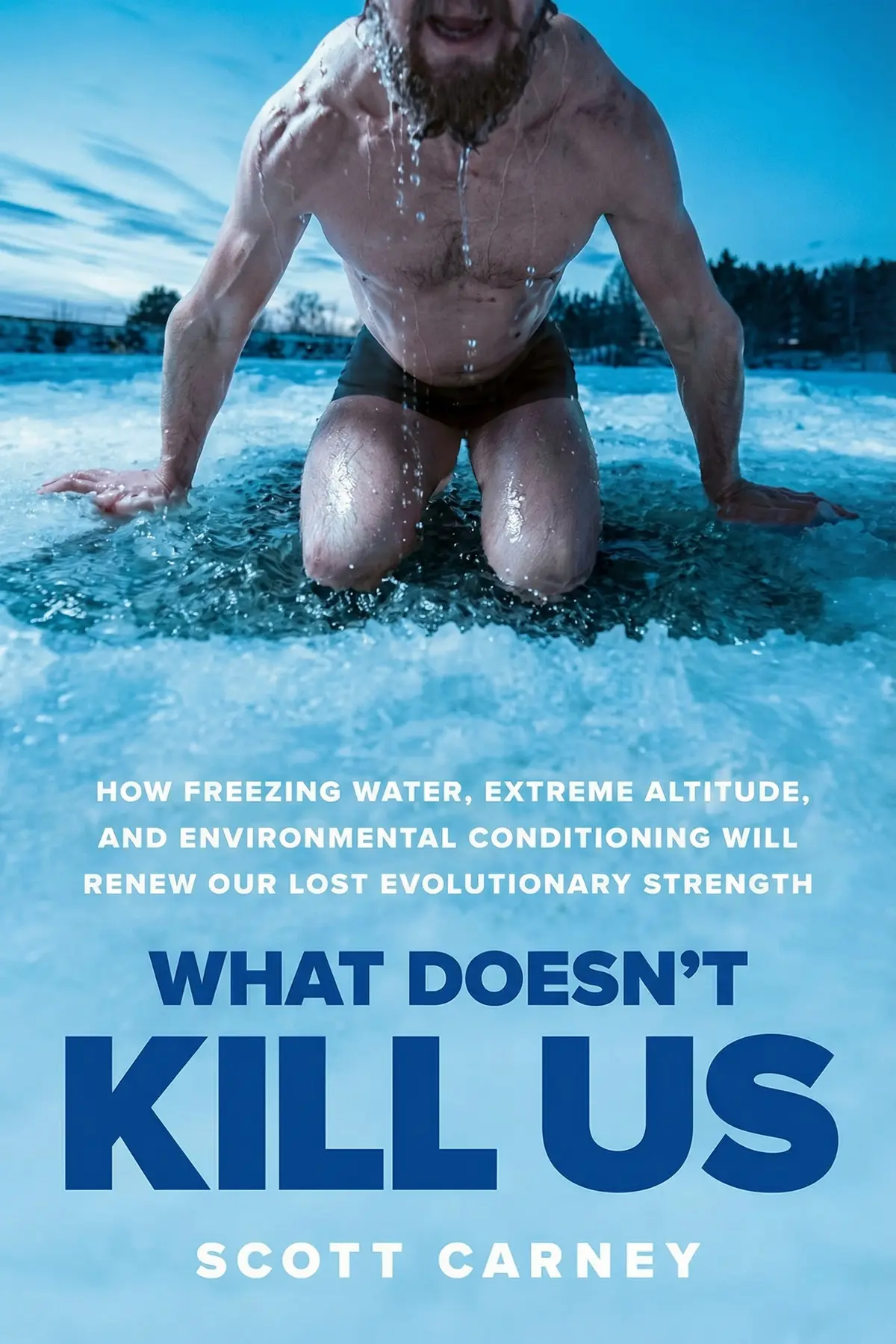
Table of Content
1. Introduction
1 min 54 sec
Consider for a moment the environment you are in right now. Most likely, the air is a steady, comfortable temperature. If you feel a slight chill, you reach for a sweater or adjust a thermostat. If you are hungry, food is only a few steps away. This is the hallmark of modern civilization: we have effectively engineered discomfort out of our daily lives. We live in a permanent state of biological stagnation because our surroundings never demand that we adapt. But what if this constant comfort is actually the very thing making us sick, tired, and weak? This is the provocative question at the heart of our exploration today.
For millions of years, the human body was forged in the crucible of extreme environments. Our ancestors didn’t just survive the cold and the wind; they were physically defined by them. Their bodies knew how to spark internal fires to stay warm and how to suppress the immune system’s overreactions to stay functional. These ancient programs are still written into our DNA, but because we never use them, they’ve become like rusted machinery. We’ve traded our evolutionary resilience for a climate-controlled cocoon, and the result is a surge in autoimmune disorders, obesity, and a general loss of vitality.
In the following sections, we will explore the possibility of reawakening these dormant powers. We’ll follow the path of those who have stepped out of the comfort zone and into the ice, using techniques that blend ancient wisdom with modern physiological science. We will look at how extreme cold and controlled breathing can act as a reset button for the human body, allowing us to reclaim a level of health and endurance that seems superhuman by today’s standards. This journey isn’t just about physical toughness; it’s about reconnecting with the very essence of what it means to be a resilient human being.
2. The High Cost of a Comfortable Life
2 min 08 sec
Discover why our modern obsession with comfort might be the underlying cause of many contemporary health problems and how our ancestors’ survival skills are still within us.
3. Manipulating the Internal Climate via Breath
2 min 11 sec
Explore the mechanics of a specific breathing technique that allows individuals to tap into their autonomic nervous system and change their internal chemistry at will.
4. The Resurrection of Our Metabolic Furnace
2 min 10 sec
Learn about the hidden energy source within our bodies known as brown fat and how cold exposure can turn it into a powerful tool for weight loss and heat production.
5. Cultivating the Mental Wedge Through Challenge
2 min 21 sec
See how elite athletes and ordinary people use extreme environments to expand their mental toughness and gain voluntary control over involuntary reactions.
6. The Natural Pharmacy Within
2 min 14 sec
Explore the potential for environmental stressors to act as a form of medicine, helping the body heal itself from chronic and autoimmune conditions.
7. Conclusion
1 min 34 sec
As we reach the end of this journey, the primary lesson is a shift in perspective. We have spent centuries trying to conquer nature, building walls and heaters to keep the wild at bay. But in doing so, we have inadvertently walled off a part of ourselves. We have forgotten that we are creatures of the earth, designed for the wind, the water, and the cold. The path to our greatest strength doesn’t lie in more comfort, but in the intentional embrace of discomfort. We are not fragile beings meant to live in 72-degree stasis; we are resilient, adaptive survivors with a biological heritage that is nothing short of miraculous.
By incorporating simple practices like cold showers, focused breathing, and occasional exposure to the elements, we can begin to reawaken our dormant evolutionary potential. We can grow our brown fat, strengthen our cardiovascular systems, and build a mental ‘wedge’ that gives us mastery over our own stress responses. This isn’t just about physical performance; it’s about a fundamental sense of vitality and a deep, visceral connection to our own humanity. The strength of our ancestors hasn’t vanished; it’s just waiting for a reason to come back. So, the next time you face a cold wind or a freezing rain, don’t just shiver and run for cover. Take a deep breath, step into the chill, and remember that you were built for this. Your body is capable of far more than you think, and the cold is just a reminder of the fire that already burns within you.
About this book
What is this book about?
For most of human history, our ancestors survived in a world of extremes, battling freezing temperatures and high altitudes without the luxuries of modern technology. Today, we live in a world of constant comfort—climate-controlled homes, warm beds, and endless food—but this ease has come at a hidden cost. Our bodies have grown soft, and our internal biological systems, designed for challenge, have largely gone dormant, leading to a rise in chronic health issues. This exploration looks at the radical premise that we can reclaim our lost vitality by reintroducing these ancient stressors. Following the journey of investigative journalist Scott Carney as he encounters the legendary Wim Hof, the narrative explores a method that combines specific breathing exercises with extreme cold exposure. It promises to reveal how we can influence our own autonomic nervous system, stimulate metabolic heat production, and even modulate our immune response. By examining the science behind brown fat, the psychological power of the 'wedge,' and the limits of elite athletic performance, this summary shows that our potential is far greater than we have been led to believe. It is a guide to shifting from a state of passive comfort to one of active, evolutionary strength.
Book Information
About the Author
Scott Carney
Scott Carney is an investigative journalist and anthropologist whose work blends narrative non-fiction with ethnography. He gained prominence with his best-selling book, What Doesn’t Kill Us, followed by The Wedge, which further explores the body’s capacity to adapt to various forms of stress. Carney’s writings often challenge preconceived notions about human limits and potential, earning him a reputation for immersive, participatory journalism.
Ratings & Reviews
Ratings at a glance
What people think
Listeners find this work both captivating and educational, with one individual mentioning it weaves a narrative filled with numerous scientific details. The prose is lauded as excellent, and listeners value the storytelling, which one listener characterizes as a riveting account. Furthermore, the text acts as a wonderful primer on Wim Hof's methods, and listeners mention feeling stunned by their own cold tolerance. They also appreciate the depth of the material, specifically its investigation into the mind-body connection and human physiology.
Top reviews
Soontorn
Can our pampered, climate-controlled bodies actually handle the wild extremes our ancestors survived daily? Carney takes this central question and runs with it, blending gritty investigative journalism with a wild personal transformation. I was fascinated by the exploration of 'brown fat' and how we have essentially traded our internal furnace for a digital thermostat. The narrative really picks up when he travels to Poland to meet the legendary Wim Hof, moving from a skeptic trying to debunk a guru to a total believer. The writing is punchy and moves fast, though I occasionally wished there was a bit more on the specific breathing patterns for absolute beginners. Still, seeing him tackle the peaks of Kilimanjaro in just shorts makes you question every comfort you take for granted. It is a gripping look at human potential that manages to stay grounded in biology.
Show moreElena
Wow. This is easily one of the most provocative books I’ve picked up in years. Carney argues that we are biologically identical to cavemen, yet we live in a world that never challenges our internal systems. The way he describes his body 'waking up' during the breathing exercises is visceral and incredibly motivating. I started trying the cold showers while reading this, and the immediate shift in my energy levels was undeniable. The book balances the 'how-to' with the 'why' perfectly, explaining the evolutionary benefit of stress. It is not just for athletes; it is for anyone who feels like they’ve lost a bit of their human spark. Truth is, we are capable of so much more than we think, and this book provides the proof.
Show moreWoramet
Look, if you are tired of the same old diet and exercise advice, you need to read this book immediately. Carney introduces a 'third pillar' of health—the environment—and it makes total sense the way he explains it. The descriptions of the Tough Guy race in the UK were so vivid I felt cold just reading them. He captures that weird, masochistic joy of pushing your body to the absolute limit. What really struck me was the section on autoimmune diseases and how people are using these techniques to find relief where traditional medicine failed. It is a hopeful, high-energy book that challenges the modern obsession with constant comfort. It is well-written, backed by just enough science to be credible, and genuinely life-altering if you are willing to try the work.
Show moreAmara
In my experience, books that promise to 'renew your lost strength' are usually snake oil, but Carney won me over with his initial skepticism. He enters this world trying to debunk a conman and ends up discovering a hidden gear in his own biology. The description of the Kilimanjaro climb is the emotional heart of the book, showing the friction between Hof's ego and the safety of the group. It is a very human story that doesn't shy away from the dangers of these practices. I appreciated that he mentioned the risks and the people who didn't make it. It makes the successes feel much more earned and less like a magic trick. Truly a gripping narrative that bridges the gap between ancient survival and modern wellness.
Show moreKwame
This book hits like a bucket of ice water to the face—refreshing but definitely a bit of a shock to the system. Carney does a fantastic job of framing our modern ailments as a direct result of too much convenience. He doesn't just preach the Wim Hof Method; he subjects himself to it, documenting the grueling reality of ice baths and underwater weightlifting. I found the section on Laird Hamilton’s training particularly intense, highlighting how these elite athletes are basically hacking their own nervous systems. My only minor gripe is that the middle sections feel a little like a series of disjointed magazine articles. However, the overarching theme of reclaiming our biological heritage is powerful enough to carry the reader through. It’s an eye-opening read for anyone feeling stuck in the sedentary grind of 21st-century life.
Show moreElias
After hearing so much hype about the 'Iceman,' I expected a typical hagiography, but Carney maintains a surprisingly journalistic distance at first. He dives deep into the physiology of how cold exposure triggers metabolic shifts, making complex science accessible without feeling dumbed down. The storytelling is top-notch, especially the tension during the final mountain ascent where personalities clash in the thin air. It is clearly aimed at the weekend warrior or Spartan Race crowd, which might alienate some readers who aren't into extreme suffering. That said, the core message about environmental conditioning is universally relevant. You will probably find yourself turning down the water temperature in the shower before you even finish the last chapter. It is a solid, informative blend of memoir and science that actually delivers on its bold title.
Show moreMoon
Picked this up on a whim and ended up finishing it in two sittings because the narrative is just that compelling. I loved the mix of personal struggle and metabolic data, especially when Carney returns to the lab to prove his results aren't just placebo. It’s fascinating to see how the 'wedge'—his term for the space between a stimulus and a response—can be widened through training. The book does lean heavily on the Wim Hof persona, who is admittedly a very strange and polarizing figure. However, the results Carney achieves are hard to argue with, even if you find the guru-worship a bit much. It’s a great introduction to the world of environmental training. I'm not ready to climb a mountain in a swimsuit, but I'm definitely reconsidering my relationship with the heater.
Show moreRoo
Not what I expected from an investigative journalist, but in a good way. It reads more like an adventure novel than a dry science text. Carney’s prose is elegant and he has a great eye for the small, telling details of the people he meets. I particularly enjoyed the segments on the US military's interest in these techniques, which adds a layer of institutional validity to the 'Iceman's' wild claims. To be fair, it is a bit repetitive in the middle when he is just visiting different elite gyms. But the ending brings it all together in a way that feels satisfying and intellectually stimulating. It makes a very strong case for the idea that our bodies need a little bit of hardship to function at their best.
Show moreOwen
The chapter on brown fat was easily the highlight for me, offering a genuine scientific hook into why we should even bother freezing ourselves. Unfortunately, the rest of the book felt a bit like a promotional brochure for Wim Hof’s paid seminars. While Carney is an excellent writer with a knack for pacing, I couldn't shake the feeling that he went native a little too quickly. The anecdotes about celebrities like Orlando Bloom felt out of place and added a layer of 'wealthy person hobby' vibes that I didn't love. If you are looking for a step-by-step manual on how to do the breathing, you won't really find it here. It is more of a travelogue through the world of extreme fitness and biohacking. Interesting enough for a weekend read, but lacking the depth of a true scientific inquiry.
Show moreArthit
Frankly, I was hoping for a rigorous exploration of human evolution, but what I got was mostly a collection of 'cool guy' stories. Carney spends way too much time talking about his own push-up counts and hanging out with famous surfers in Malibu. For a book that claims to reveal lost evolutionary secrets, there is precious little about historical tribes or non-Western cultures who lived in these conditions for millennia. Instead, it feels like CrossFit propaganda designed to make overprivileged people feel like they’re being 'primal' while they spend thousands on mountain guides. The science is presented with a breathless, sensationalist intensity that left me skeptical. If you want a long advertisement for the Wim Hof Method, this is it. If you want actual science, look elsewhere.
Show moreReaders also enjoyed
Ali: A Life
Jonathan Eig
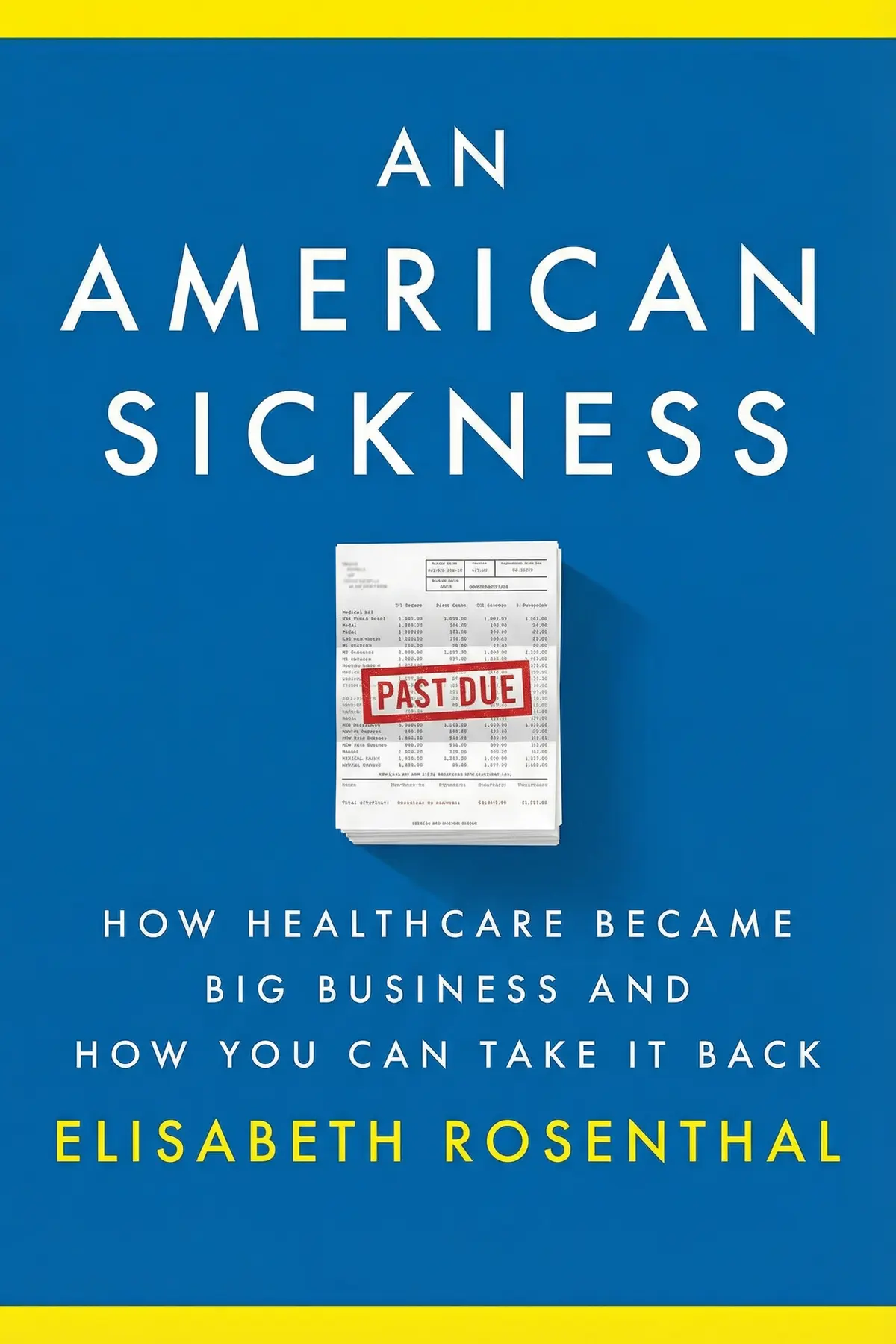
An American Sickness: How Health Became Big Business and How You Can Take
Elisabeth Rosenthal
AUDIO SUMMARY AVAILABLE
Listen to What Doesn’t Kill Us in 15 minutes
Get the key ideas from What Doesn’t Kill Us by Scott Carney, plus 5,000+ more titles in English and Thai.
- 5,000+ titles
- Listen as much as you want
- 7-day free trial
- Cancel anytime







