
19 min 22 sec
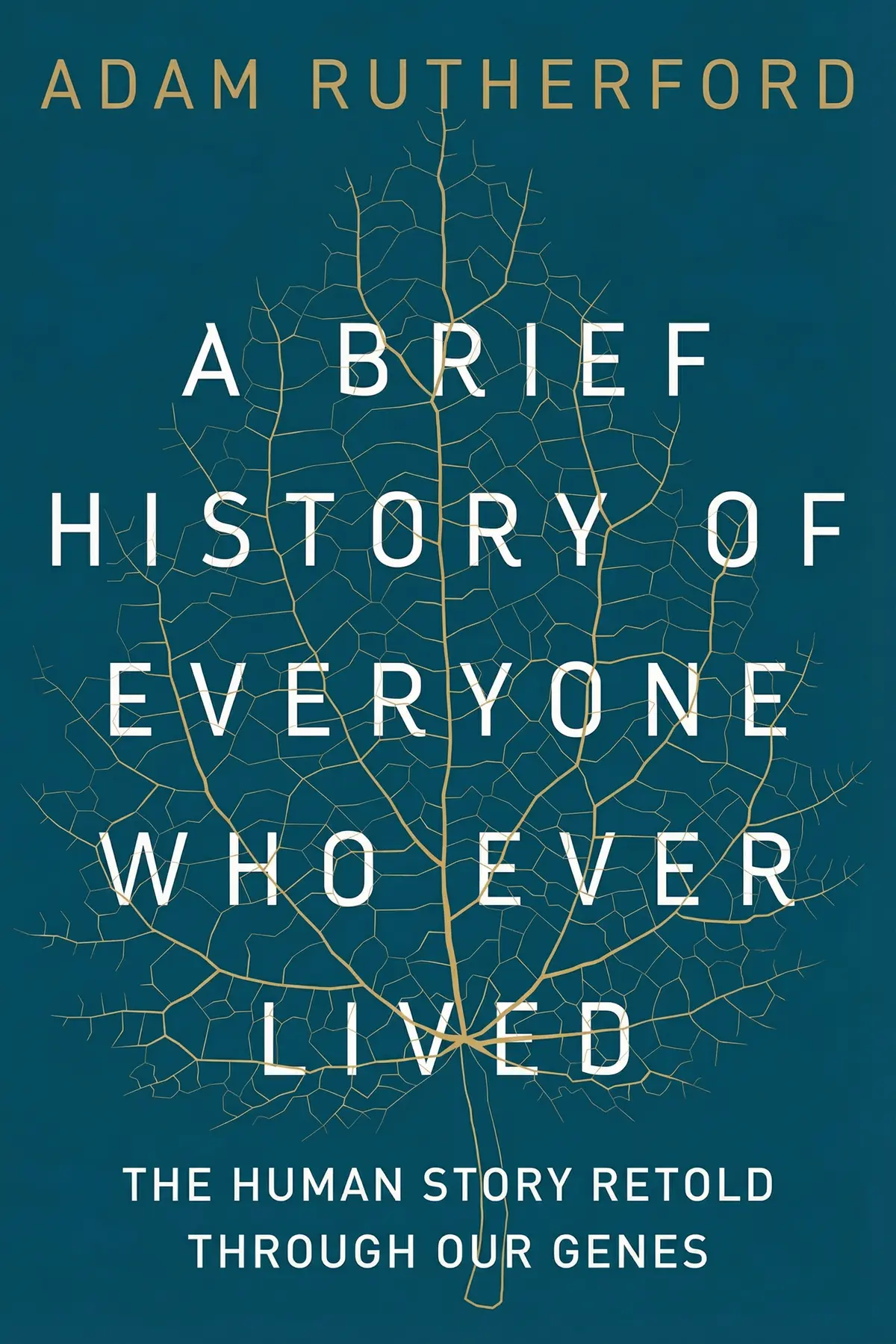
What is Life?: With Mind and Matter and Autobiographical Sketches
A Nobel Prize-winning physicist bridges the gap between quantum mechanics and biology, exploring how tiny atoms produce complex life and how consciousness drives the ongoing evolution of the human mind.
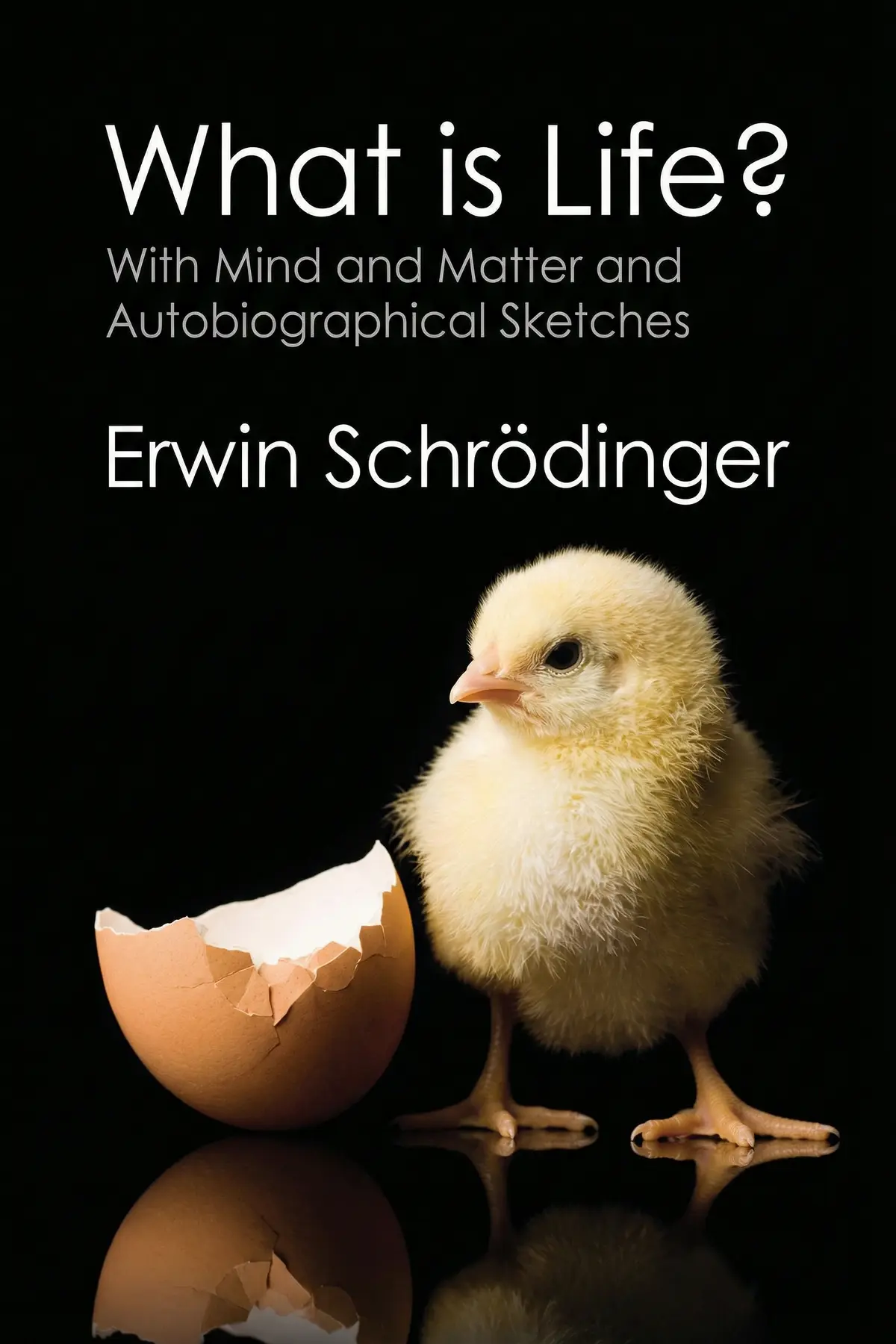
Table of Content
1. Introduction
2 min 06 sec
If you have ever encountered the name Erwin Schrödinger, it was likely in the context of a cat—one that is famously both dead and alive at the same time. That thought experiment, designed to highlight the strange contradictions of quantum theory, cemented his legacy as a titan of physics. But Schrödinger’s intellectual appetite wasn’t confined to the subatomic world. In the mid-1940s, he turned his analytical gaze toward a different mystery: the existence of life itself.
At the time, the worlds of physics and biology were largely viewed as separate kingdoms. Physicists dealt with the cold, predictable laws of matter and energy, while biologists focused on the messy, complex, and seemingly spontaneous behavior of living things. Schrödinger’s goal was to build a bridge between these two realms. He wanted to know how the chaotic movement of individual atoms could ever result in something as stable, organized, and purposeful as a human being or a blade of grass.
His inquiries led to a series of legendary lectures in Dublin, which were eventually gathered into the volume we are exploring today. In these pages, Schrödinger doesn’t just talk about biology; he redefines it through the lens of physical laws. He asks why we are so much larger than the atoms that compose us and how a tiny handful of molecules can hold the entire blueprint for a complex organism. He even ventures into the realm of the mind, questioning how our subjective experiences of the world—the redness of a rose or the heat of a fire—fit into a scientific framework.
What follows is a journey through the mechanics of the cell, the logic of evolution, and the mysteries of consciousness. It’s a story of how life defies the natural tendency toward disorder and how our own awareness might be the ultimate tool for our species’ survival. By the end of this exploration, you’ll see that the laws governing the stars and the laws governing your own heartbeat are more closely linked than you ever imagined. Let’s dive into the fascinating intersection where physics meets the soul.
2. The Necessity of Biological Scale
2 min 26 sec
Have you ever wondered why we are so much larger than the atoms that make us? It turns out our size is a physical necessity for survival.
3. The Microscopic Command Center
2 min 12 sec
How can a tiny group of atoms dictate the entire development of a human being? Discover the secret of the genetic code-script.
4. Quantum Leaps and Evolutionary Change
2 min 17 sec
Evolution doesn’t just happen through tiny, accidental changes. It moves in sudden, definitive jumps that mirror the world of quantum physics.
5. Life's Battle Against Disorder
2 min 04 sec
Discover how living things defy the most fundamental law of physics by feeding on ‘negative entropy’ to stay alive.
6. The Teacher of the Mind
1 min 57 sec
Consciousness isn’t just a byproduct of the brain; it is an active mechanism that helps us learn and adapt to a changing world.
7. Directing Our Biological Destiny
2 min 16 sec
Is human evolution over? Schrödinger argues that our choices and behaviors can actually direct the future of our species.
8. The Unity of Observer and Observed
2 min 22 sec
Explore the gap between scientific facts and human experience, and discover why the world and the mind might be one and the same.
9. Conclusion
1 min 42 sec
Erwin Schrödinger’s exploration of life takes us from the smallest vibrating atoms to the vast, interconnected reality of the human mind. Through his work, we’ve seen that life is not a miracle that violates the laws of physics, but rather a brilliant application of them. We are large because we need the stability of statistics. We are complex because our genes are aperiodic crystals, capable of storing incredible amounts of information in a stable, quantum form. And we are alive because we have mastered the art of drawing order from our environment to keep the chaos of entropy at bay.
But perhaps the most important takeaway is the role of our own awareness. Consciousness is not just a passive witness to our biological processes; it is the active teacher that allows us to learn, adapt, and ultimately direct our own evolution. We are the architects of our future, and our choices today—what we learn, how we work, and how we treat one another—will ripple through the genetic code of the generations to come.
Schrödinger’s final message is one of unity. He reminds us that while science can describe the mechanics of the universe, it is the mind that gives it color, warmth, and meaning. By recognizing the connection between our internal experiences and the physical world, we can move through life with a deeper sense of purpose. We are not just accidental observers in a cold universe; we are the very consciousness through which the universe comes to know itself. As you move forward, remember that every act of learning and every moment of conscious choice is a part of the grand, ongoing masterpiece of life.
About this book
What is this book about?
What is Life? is a foundational exploration into the physical requirements of living systems. Written by Erwin Schrödinger, one of the giants of quantum mechanics, it attempts to solve the riddle of how biological organisms maintain such high levels of order and stability despite being composed of chaotic, microscopic atoms. Schrödinger introduces the concept of aperiodic crystals and the idea that life feeds on negative entropy to resist decay. Beyond the mechanics of genetics, the book delves into the nature of consciousness and the philosophical implications of a scientific worldview. It explores the relationship between sensory experience and physical laws, suggesting that consciousness is inherently linked to the process of learning and adaptation. By merging physics, biology, and philosophy, the work offers a promise of a more unified understanding of existence, illustrating how human behavior and awareness might shape the future of our species’ evolution.
Book Information
About the Author
Erwin Schrödinger
Erwin Schrödinger was a monumental figure in 20th-century science and is widely considered one of the fathers of quantum mechanics. He is perhaps most famous in the public imagination for his Schrödinger’s cat thought experiment, which explored the complexities of quantum theory. In 1933, he was awarded the Nobel Prize for his groundbreaking contributions to atomic theory. His intellectual curiosity extended into various domains, allowing him to apply the rigorous principles of physics to the mysteries of biology and the nature of consciousness.
Ratings & Reviews
Ratings at a glance
What people think
Listeners consider this to be one of the most significant publications in science, with one listener noting its bridge between quantum mechanics and the biological world. The text is exceptionally accessible and stimulating, reshaping listeners' perspectives on life and consciousness. Furthermore, they value its status as a classic, its brief length, and its straightforward yet captivating treatment of intricate subjects, with one listener specifically highlighting the excellent preface by physicist Roger Penrose.
Top reviews
Duang
Schrödinger’s attempt to bridge the gap between the chaotic world of atoms and the organized complexity of biology is nothing short of visionary. Writing years before the actual discovery of DNA, he posits that the hereditary molecule must be an 'aperiodic crystal,' a prediction that essentially laid the groundwork for modern genetics. It is fascinating to watch a physicist grapple with the concept of 'negative entropy,' arguing that life maintains its form by continually sucking orderliness from its surroundings to ward off decay. The prose is remarkably accessible, avoiding dense jargon while still touching on the profound quantum leaps required to explain biological stability. To be fair, some of the later philosophical tangents into the Upanishads might alienate readers looking for pure science, but for me, they added a necessary layer of depth. This is a foundational text that proves how a single, well-placed question can change the entire trajectory of scientific inquiry.
Show moreYulia
Wow, it is truly staggering to realize that these lectures were delivered in 1943, long before the double helix was a household term. Schrödinger’s ability to use the principles of quantum mechanics to explain the permanence of biological traits is nothing short of genius. He frames life as an effective counter-force to entropy, a system that stays alive by importing 'order' from the environment. This conceptual shift—viewing a cell not just as a bag of chemicals but as a physical system resisting disorder—is what makes this book a classic. The writing style is surprisingly humble, with Schrödinger frequently acknowledging his status as a 'naive physicist' venturing into a foreign field. This humility makes the complex topics of thermodynamics and hereditary mechanics feel much more approachable. Every student of science should own a copy of this; it’s a pound-for-pound powerhouse of intellectual history that remains thought-provoking decades later.
Show moreUbolwan
This book is a compact powerhouse that manages to condense the most profound questions of the universe into just over a hundred pages of prose. Schrödinger’s insights into the 'hereditary code-script' are famous for a reason; he essentially described the function of DNA before we knew what it looked like. Looking at life through the lens of physics provides a refreshing perspective, especially his focus on how organisms maintain 'negative entropy.' He argues that by eating and breathing, we are essentially reclaiming the order that the universe is constantly trying to take away from us. It’s an empowering way to view biological survival. The tone is analytical yet deeply curious, reflecting a man who wasn't afraid to look at a frog or a leaf and see the dance of atoms. If you want a book that will make you rethink your place in the physical world, this is definitely it.
Show morePop
Imagine a world where the laws of thermodynamics seemingly break down, only to realize that life is simply an expert at stalling the inevitable. Schrödinger’s 'What is Life?' is a masterpiece of scientific inquiry that treats the cell as a quantum-mechanical system. He brilliantly explains how life maintains its stability through 'jump-like' mutations and the preservation of aperiodic structures. What I found most compelling was his willingness to tackle the problem of consciousness and free will in the final chapters, even if he doesn't provide easy answers. The book is short, but every sentence feels weighted with meaning, forcing you to reconsider what it actually means to be a sentient being in a universe of decaying energy. It’s a rare scientific work that manages to be both technically insightful and deeply moving. Whether you're interested in AI, genetics, or philosophy, this book offers a timeless foundation for understanding the living world.
Show moreSkylar
After hearing about how this slim volume influenced the giants of molecular biology like Watson and Crick, I felt compelled to see the source material for myself. The core argument regarding how living organisms evade the second law of thermodynamics is brilliant, even if the physics occasionally feels a bit dated given our current knowledge. Schrödinger describes life as a mechanism that avoids 'heat death' through metabolism, which he frames as a way of maintaining internal order. Truth is, the first half is much stronger than the latter sections on mind and consciousness. His 'Mind and Matter' lectures take a sharp turn into philosophical mysticism that feels less rigorous than his earlier insights into chromosome structure. However, the way he frames the 'jump-like' nature of mutations remains an incredible example of intuitive scientific reasoning. It’s a very quick read, but you’ll find yourself pausing every few pages to digest the sheer magnitude of his ideas.
Show moreSomrutai
Picked this up on a whim because of the excellent preface by Roger Penrose and ended up staying for the provocative theories on quantum biology. Schrödinger asks why atoms are so small, or rather, why we must be so large compared to them to achieve the stability required for life. The book is remarkably compact, yet it manages to transform your view on everything from nutrition to the very definition of the 'self.' I particularly enjoyed his description of organisms 'drinking order' to delay the inevitable march toward thermal equilibrium. My only real gripe is that some of his socio-biological comments in the later chapters come across as uncomfortably elitist and somewhat Lamarckian in their assumptions. Still, as a historical document of a brilliant mind crossing disciplinary boundaries, it is essential. It’s easy to see why this was called the 'Uncle Tom’s Cabin of biology'—it truly started a revolution.
Show moreLily
Does physics account for every mystery of our existence, or is life something that operates on entirely different laws of nature? This is the central question Schrödinger explores with a level of clarity that is rare among Nobel laureates. He avoids the occupational hazard of over-complicating his language, opting instead for a conversational tone that invites the reader into his thought process. I was particularly struck by his discussion of how life avoids the rapid decay into an inert state of equilibrium. Not gonna lie, the transition into Eastern philosophy near the end was unexpected, but it highlights the mystical streak often found in theoretical physicists. While some of the biological specifics are obviously eclipsed by modern genomics, the fundamental questions about determinism and the 'I' remain deeply relevant. It’s a short, punchy, and intellectually stimulating read that bridges the gap between the hard sciences and the humanities.
Show moreKrisada
Finally got around to reading this classic and was surprised by how approachable Schrödinger’s prose is even for someone without a PhD in physics. He has a gift for metaphors, especially when explaining how life avoids 'the dangerous state of maximum entropy' which we otherwise know as death. The concept of the 'irregular crystal' as a storage device for genetic information is a brilliant piece of deductive reasoning that paved the way for the 20th century's biological revolution. I did find the sections on 'stupidization' and evolutionary selection to be a bit dated and elitist, which took me out of the experience momentarily. Nevertheless, the core of the book is a fascinating exploration of the juncture between life and non-life. It’s a quick read that packs a significant punch, making it clear why it inspired a generation of scientists to switch from physics to biology.
Show moreNam
The first half of the book is a masterclass in scientific speculation, but the second half—comprising the Mind and Matter lectures—felt like a frustratingly sharp left turn. Schrödinger starts by elegantly explaining why life requires physical laws to be 'statistical' and how the hereditary code persists through generations despite the constant thermal agitation of atoms. That part is five-star material. However, when he begins to weave in the Upanishads and the idea of a singular, collective consciousness, the logic becomes quite difficult to follow for a modern reader. Personally, I found his arguments about the 'degeneration of intelligence' due to mechanization to be a bit out of touch and overly pessimistic. While his prediction of the 'aperiodic crystal' is a landmark moment in science, the book as a whole is a bit of a mixed bag. It’s worth reading for the history, but don’t expect a cohesive, unified theory that holds up perfectly today.
Show moreNuk
Frankly, I found the transition from hard physics to Vedantic mysticism jarring and ultimately unconvincing for a scientific text. While I respect Schrödinger’s contributions to wave mechanics, his foray into biology and philosophy feels like a series of educated guesses that haven't all aged well. The middle chapters on 'Mind and Matter' are particularly dense and hard to follow, often drifting into metaphysical claims that seem to lack a solid empirical basis. He spends quite a bit of time on the 'oneness' of mind, which, while poetic, doesn't really help explain the biological mechanisms he set out to investigate. To be fair, his early chapters on entropy are interesting, but they are available in much clearer formats in modern textbooks. I expected a more rigorous scientific journey and instead felt like I was reading the late-night musings of a physicist who had spent too much time in his own head.
Show moreReaders also enjoyed
A Life Decoded: My Genome: My Life
J. Craig Venter
A Planet of Viruses
Carl Zimmer
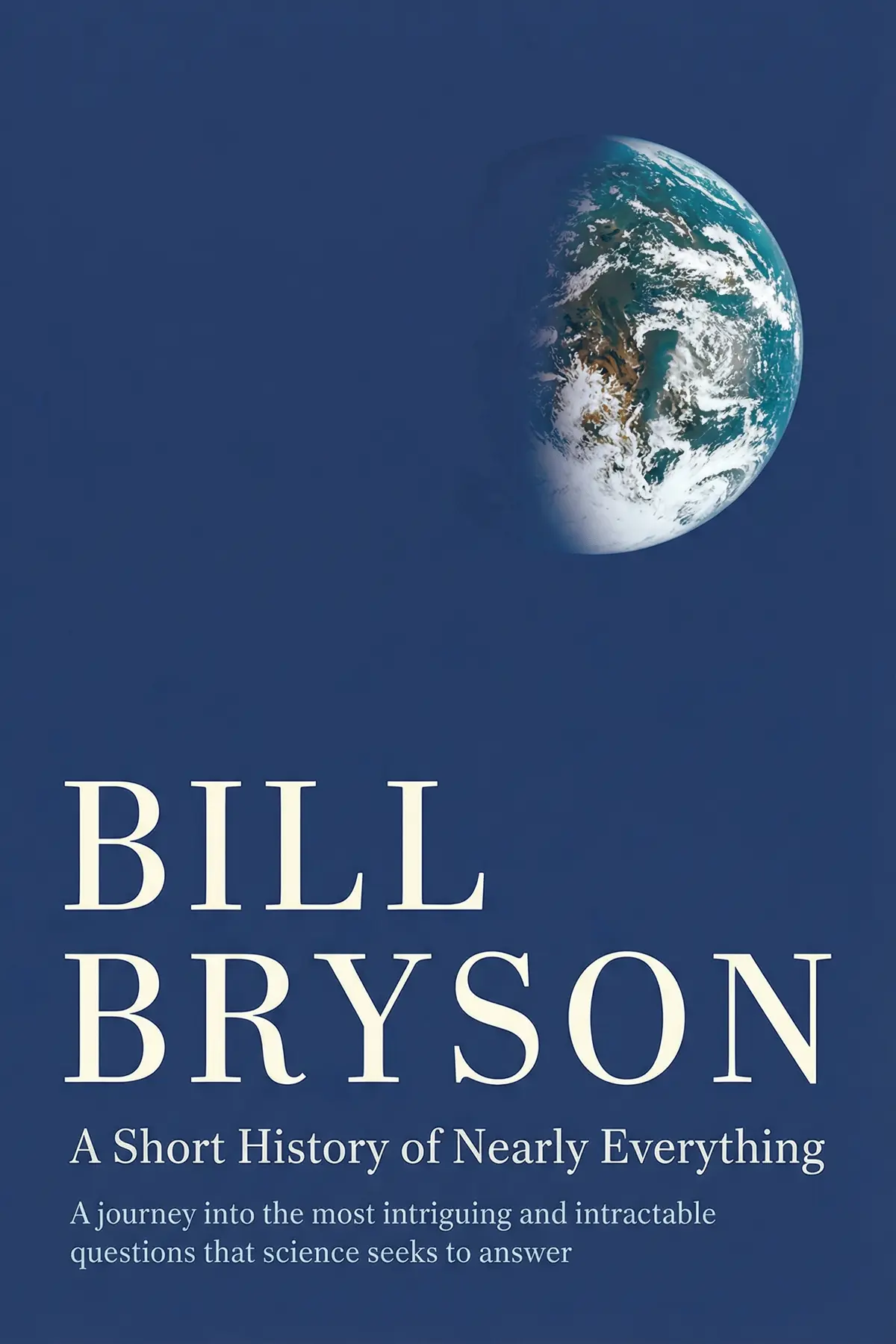
A Short History of Nearly Everything
Bill Bryson
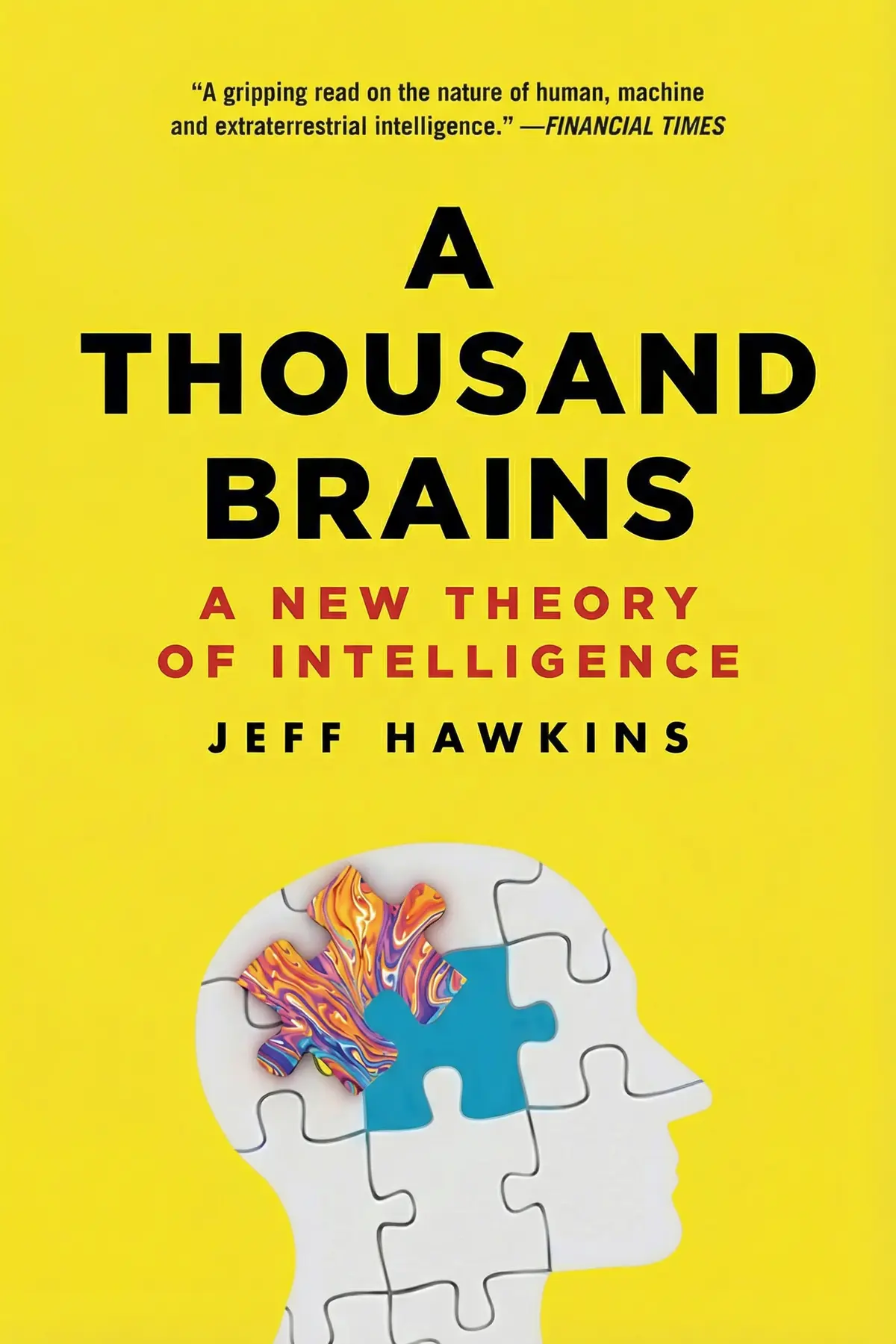
A Thousand Brains: A New Theory of Intelligence
Jeff Hawkins
AUDIO SUMMARY AVAILABLE
Listen to What is Life? in 15 minutes
Get the key ideas from What is Life? by Erwin Schrödinger, plus 5,000+ more titles in English and Thai.
- 5,000+ titles
- Listen as much as you want
- 7-day free trial
- Cancel anytime







