
15 min 57 sec
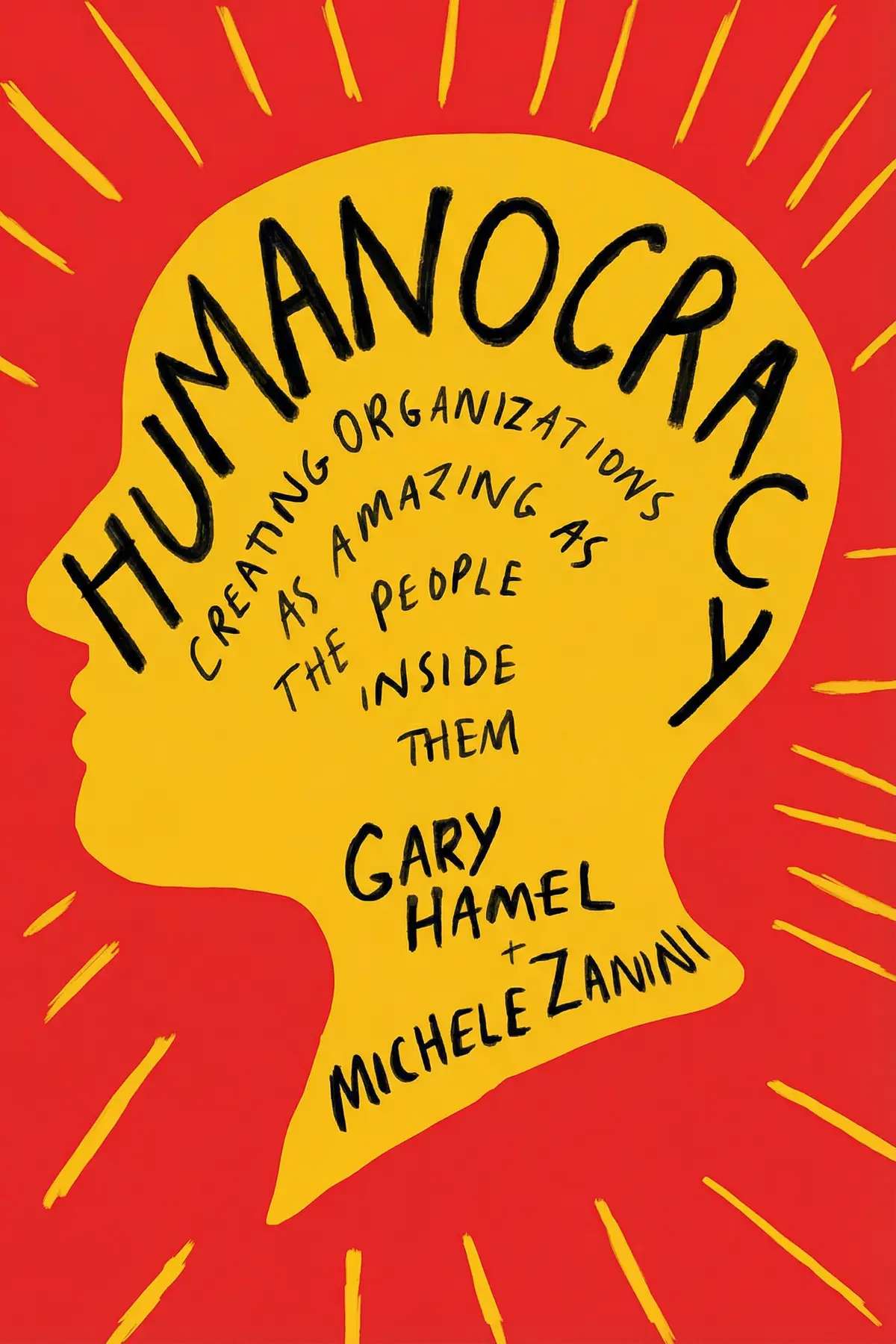
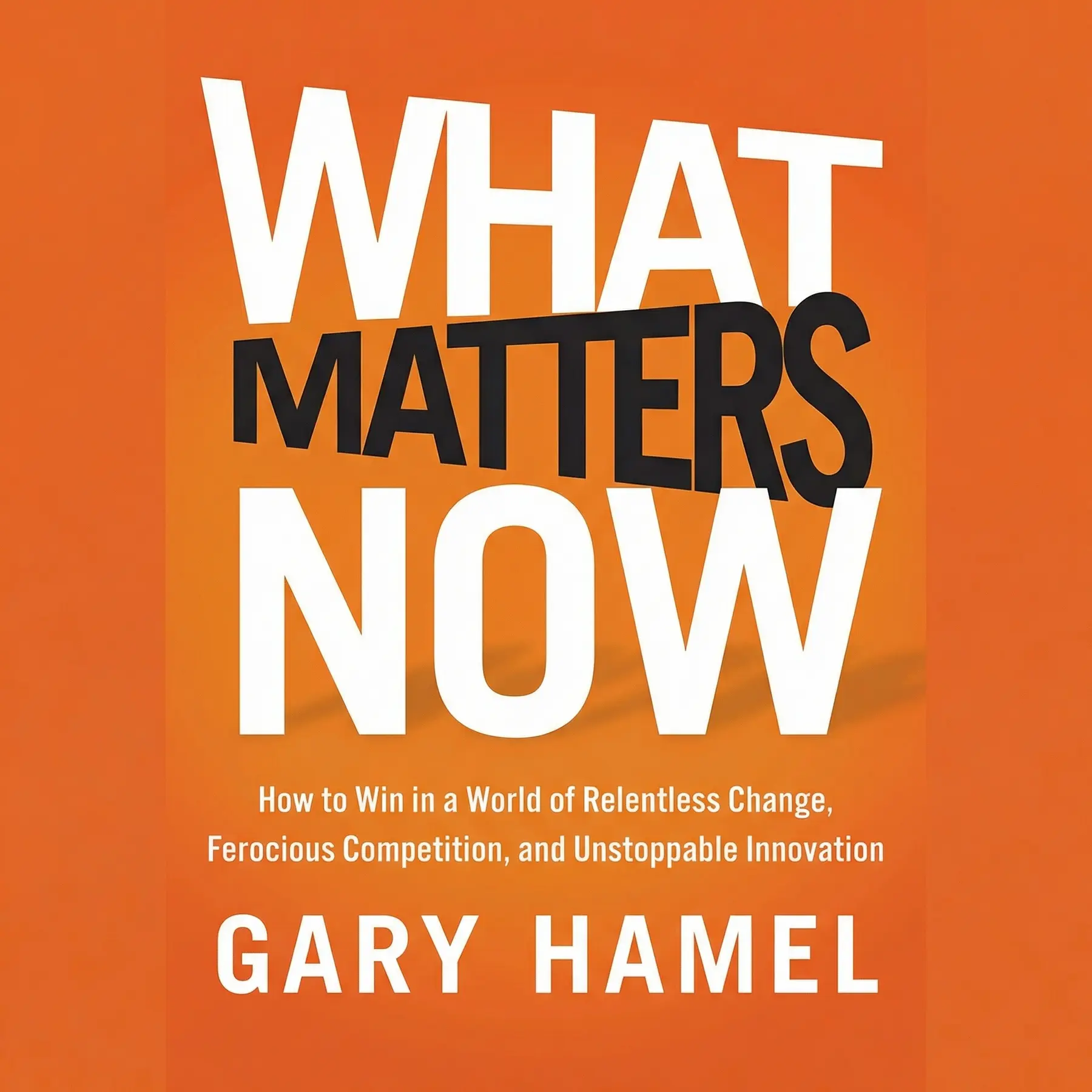
What Matters Now: How to Win in a World of Relentless Change, Ferocious Competition and Unstoppable Innovation
By Gary Hamel
A deep dive into rethinking modern management to thrive in a world of constant change, emphasizing the importance of human-centric leadership, relentless innovation, and dismantling traditional bureaucracy.
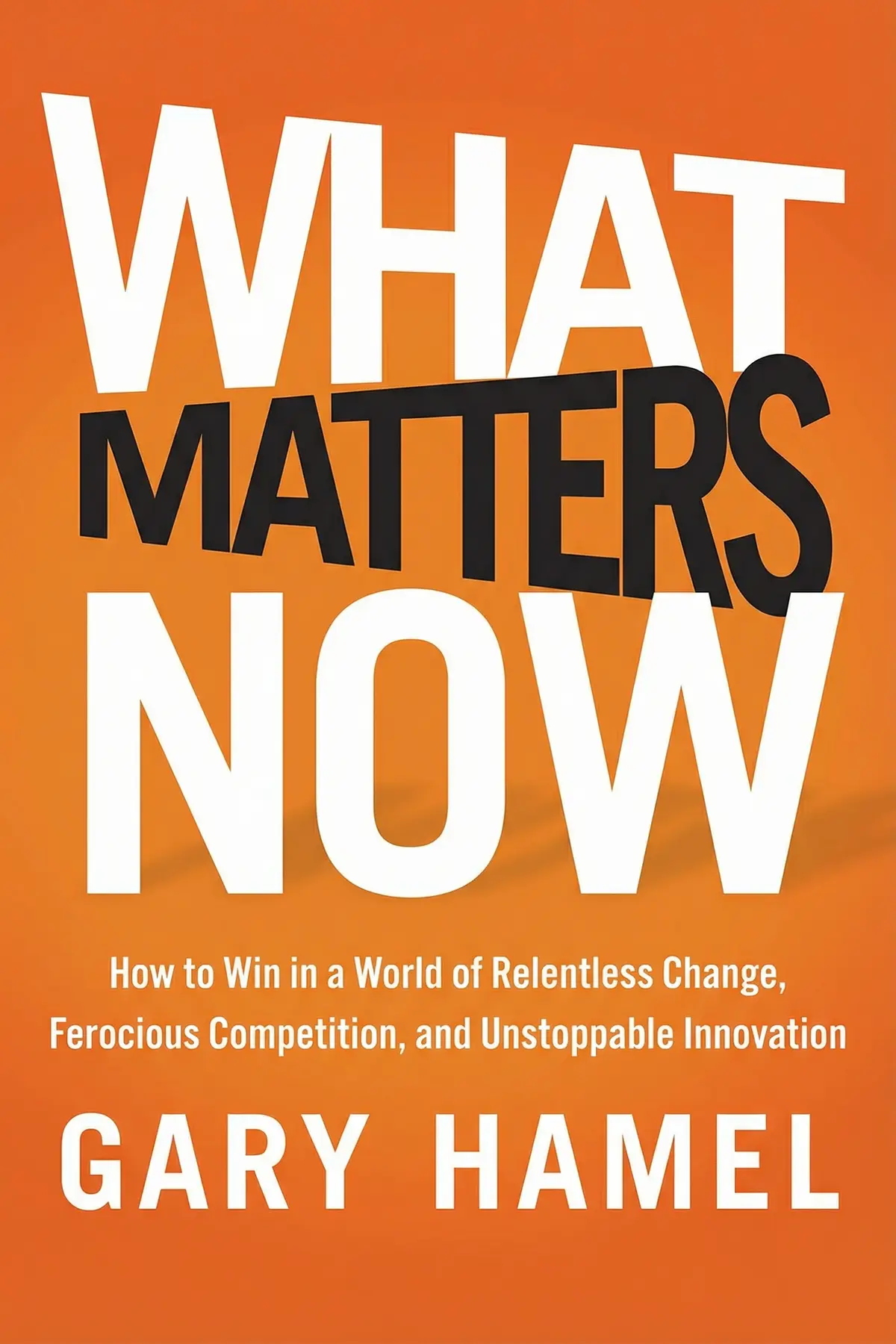
Table of Content
1. Introduction
1 min 32 sec
We are currently living through a period of transition that is as significant as the Industrial Revolution, yet it is moving at a much faster pace. Today, the world is more interconnected than ever, thanks to technological leaps that have effectively erased traditional borders. While this connectivity offers incredible opportunities for growth and collaboration, it also introduces a level of complexity and risk that old-school management techniques are simply not equipped to handle. In this environment, the traditional way of doing business isn’t just failing; it’s becoming a liability.
What worked twenty years ago—standardized processes, strict hierarchies, and a focus on incremental efficiency—is no longer enough to keep a company afloat in a world of relentless change and ferocious competition. To thrive now, we have to look beyond the balance sheet and rethink the very foundation of how we organize human effort. This means moving toward a model that values adaptability over stability, and human passion over mere obedience.
Over the course of this summary, we are going to explore the core pillars of modern success. We will look at why leadership today requires a deeper sense of global responsibility and how a return to fundamental ethics is the only way to build a sustainable future. We’ll also dive into the practical side of things, discussing why bureaucracy is the enemy of innovation and how small, thoughtful details can differentiate a brand more effectively than a massive marketing budget. By the end, you’ll understand that what matters now isn’t just what we build, but how we think and how we treat the people who make our organizations run.
2. Navigating the High Stakes of a Connected World
2 min 15 sec
In an era where local mistakes can trigger global crises, leaders must embrace a new level of accountability and social consciousness.
3. Restoring the Moral Compass of Capitalism
1 min 59 sec
Moving beyond the pursuit of profit, businesses must rediscover their ethical foundations and start treating people as humans, not just consumers.
4. Breaking the Chains of Corporate Bureaucracy
2 min 06 sec
Discover why the top-down structures of the past are stifling modern innovation and why companies must learn to ‘build to think.’
5. Finding Innovation in the Smallest Details
2 min 08 sec
True differentiation often comes from being in tune with a customer’s unspoken needs rather than chasing the next big technological breakthrough.
6. The Power of Bottom-Up Agility
2 min 15 sec
Successful modern organizations prioritize contribution over title, fostering a flexible hierarchy that values every voice.
7. Fueling the Workplace with Human Passion
2 min 04 sec
By adopting the democratic and recognition-based values of the internet, companies can unlock the intrinsic motivation of their employees.
8. Conclusion
1 min 38 sec
As we have seen, the landscape of global business has shifted in ways that make traditional management not just obsolete, but dangerous. The interconnected nature of our world means that our responsibilities are greater than ever, and our mistakes more visible. To navigate this, we must anchor our organizations in a strong moral foundation, treating every stakeholder—from employees to customers—as a human being with inherent value.
The path forward requires a radical dismantling of the bureaucratic structures that have held us back. We must replace rigid hierarchies with flexible systems that prize contribution over title and small-scale innovation over grand, often empty, gestures. By staying in tune with the unspoken needs of those we serve and fostering a culture of agility and ‘building to think,’ we can remain relevant even in the most volatile markets.
Ultimately, the most powerful force in any organization isn’t its technology or its capital; it’s the passion of its people. If we can create workplaces that mirror the democratic, meritocratic spirit of the internet, we can unlock a level of creativity and commitment that was previously unimaginable. What matters now is our ability to adapt, our willingness to be ethical, and our commitment to making the personal more personal.
As an actionable takeaway, try to view your professional world through a more human lens. Treat your company’s capital as if it were the life savings of someone you love, and look at your clients as if they were your own family members. When you stop chasing the quick payout and start focusing on long-term, human-centered value, you ensure that you are not just surviving in the modern world, but truly winning.
About this book
What is this book about?
What Matters Now addresses the fundamental shift required for businesses to survive in an era of hyper-connectivity and intense global competition. It challenges the outdated, top-down structures of the industrial age and proposes a new framework built on ethics, agility, and employee passion. Through various examples, the book promises to show leaders and individuals how to foster a culture where innovation isn't just a buzzword, but a daily practice driven by every level of the organization. It explores why small details often matter more than massive projects and how a company can remain relevant by embracing the democratic, contribution-based values of the internet age.
Book Information
About the Author
Gary Hamel
Gary Hamel is a visiting professor of strategic and international management at the London Business School. The Wall Street Journal named Hamel the world’s most-influential business thinker. His bestselling books include Leading the Revolution and Competing for the Future.
Ratings & Reviews
Ratings at a glance
What people think
Listeners find the work stimulating and captivating, offering solid illustrations that deliver valuable high-level guidance. Furthermore, they value how clear, readable, and creative the content is, as one listener points out its emphasis on fostering environments where innovation flourishes. The pacing also garners praise, with one review remarking on its modern, myth-busting approaches to organizational development. Listeners also prize the text's flexibility, with one review specifically calling attention to its capacity for reacting to shifts in the landscape.
Top reviews
Jin
Hamel hits the nail on the head with this one. If you’re tired of the same old business-as-usual rhetoric, this book offers a myth-shattering perspective on what it actually takes to build a thriving organization today. I was particularly struck by the focus on passion and ideology, which are often dismissed as 'soft' topics but are treated here as essential competitive advantages. The way he breaks down innovators into categories like 'Cyborgs' and 'Laureates' is brilliant and helps you understand where your own company sits. To be honest, the pacing is excellent, and it moves quickly through complex ideas without losing clarity. It’s an engaging read that challenges you to rethink everything about how we treat people in the workplace.
Show moreDao
Finally got around to reading this, and I’m genuinely stoked about the possibilities it lays out. Hamel is clearly passionate about 're-humanizing' the enterprise, and his arguments for flipping the corporate ladder are incredibly persuasive. The book excels at shattering the myth that we need top-down control to ensure productivity. I loved the section on the Bank of New Zealand and how they empowered local branches to make their own rules. It shows that radical autonomy can work even in conservative industries. Not gonna lie, some of the ideological stuff is a bit 'out there,' but it’s exactly the kind of creative thinking we need to move past stagnant bureaucracies. A must-read for any aspiring leader.
Show moreTakeshi
Wow, what a refreshing take on what it means to lead in the 21st century. This book makes me want to completely reinvent my own department from the ground up. I was really moved by the story of the church in Chorleywood and how they turned a passive 'audience' into an active, mission-driven community. It proves that Hamel's theories aren't just for tech giants or manufacturers; they are about human nature. The focus on putting people first and encouraging individual contribution is exactly the 'humanocracy' we need. Personally, I think the pacing is spot on, and the clear distinction between the five pillars makes the concepts easy to digest. It’s creative, bold, and incredibly motivating.
Show moreVipawan
As someone who's tired of seeing innovation squashed by bureaucracy, this book was a breath of fresh air. Hamel’s critique of the traditional 4-year university degree as an elitist credentialing system was a total 'mic drop' moment for me. He gets it. The book is packed with specific, usable insights from companies that are actually doing the work, not just talking about it. Looking at how W.L. Gore allows associates to choose their own projects shows a level of trust that most managers can't even fathom. It’s a brilliant guide for creating an organization that is as resilient and creative as the people within it. I’ve already recommended it to my entire management team.
Show moreMarasri
Look, if you feel like you’re a 'zoo-born lion' stuck in a corporate cage, this book is your escape plan. I loved the way it challenges the 'visionary leader' myth and puts the power back into the hands of the frontline employees. The writing is engaging and clear, though Hamel definitely isn't afraid to go on a bit of a soapbox when it comes to corporate ethics. I found the section on 'Management Moonshots' to be a great brainstorming tool for anyone looking to disrupt their industry. It’s a high-level, thought-provoking read that manages to be both philosophical and practical at the same time. This is definitely Hamel’s best work since 'The Future of Management'.
Show moreJiraporn
After hearing about Morning Star’s radical flat structure, I knew I had to pick this up. Hamel provides a compelling look at how companies can thrive without traditional supervisors, which is fascinating. The case studies, especially W.L. Gore and HCL, are definitely the highlights for me. Truth is, the book starts a bit slow with a heavy focus on ethics and the 2008 economic fallout, which feels a little dated in some chapters. However, once he gets into the meat of adaptability and innovation, it really picks up. It’s a thought-provoking vision of the future that isn't afraid to be critical of Fortune 500 giants. It’s worth the read just for the 'Management Moonshots' at the end.
Show moreGift
The truth is, Hamel isn't offering a cookie-cutter formula here, and that’s what makes it so valuable. Instead of a prescriptive path, he gives you five core areas—Innovation, Adaptability, Passion, Ideology, and Values—that demand your attention right now. I found the chapter on Vineet Nayar’s work at HCL particularly inspiring; the idea of 'destroying the concept of the CEO' is exactly the kind of radical shift we need. To be fair, the book can be a bit dense in the early sections when he's tackling ethics. But if you can stick with it, the insights on how to build a culture of constant innovation are gold. It’s a very current, relevant read for anyone dealing with organizational bloat.
Show moreHunter
Is it just me, or does this feel a bit uneven? Part 3 was easily my favorite section, focusing on how companies can stay resilient and flexible in a chaotic market. But before you get there, you have to wade through a lot of soapbox preaching about the evils of Wall Street. I don't necessarily disagree with him, but it felt a bit like a rambling lecture at times. In my experience, if you stay current with modern business thought, a lot of the 'new' ideas here won't actually be that surprising. The 25 management moonshots are a nice inclusion, though they tend to get repetitive toward the end. It's a decent overview, but it doesn't quite live up to the hype for me.
Show moreYothaka
I really wanted to like this book, especially given Hamel's reputation, but the prose is just exhausting. To be fair, he makes some valid points about corporate greed, but the 'zoo-born lion' metaphor on page 243 had me rolling my eyes so hard it hurt. It felt less like a strategic guide and more like a soapbox for his personal grievances against the 2008 financial crisis. While the sections on resilience have some meat, they are buried under layers of rambling filler that could have been edited down significantly. Frankly, I found the tone to be overly dramatic and the 'revolutionary' advice felt more like generic fluff in many places. It’s a struggle to finish when the writing style actively pushes you away from the core message.
Show moreEthan
Absolute waste of time. I can count on one hand the number of books I couldn’t finish, and this is unfortunately one of them. The writing is just so unnecessarily flowery and dramatic—Hamel actually writes about humans flourishing in an 'organizational savannah' as if he’s a nature documentarian rather than a business consultant. It’s embarrassing. The first hour is nothing but a rant against bankers and the system, with very little actionable advice to show for it. I found it to be a rambling, pointless mess that tries to sound deep but offers nothing but generic observations. Save your money and read a blog post on flat hierarchies instead; you’ll get the same info without the headache.
Show moreReaders also enjoyed
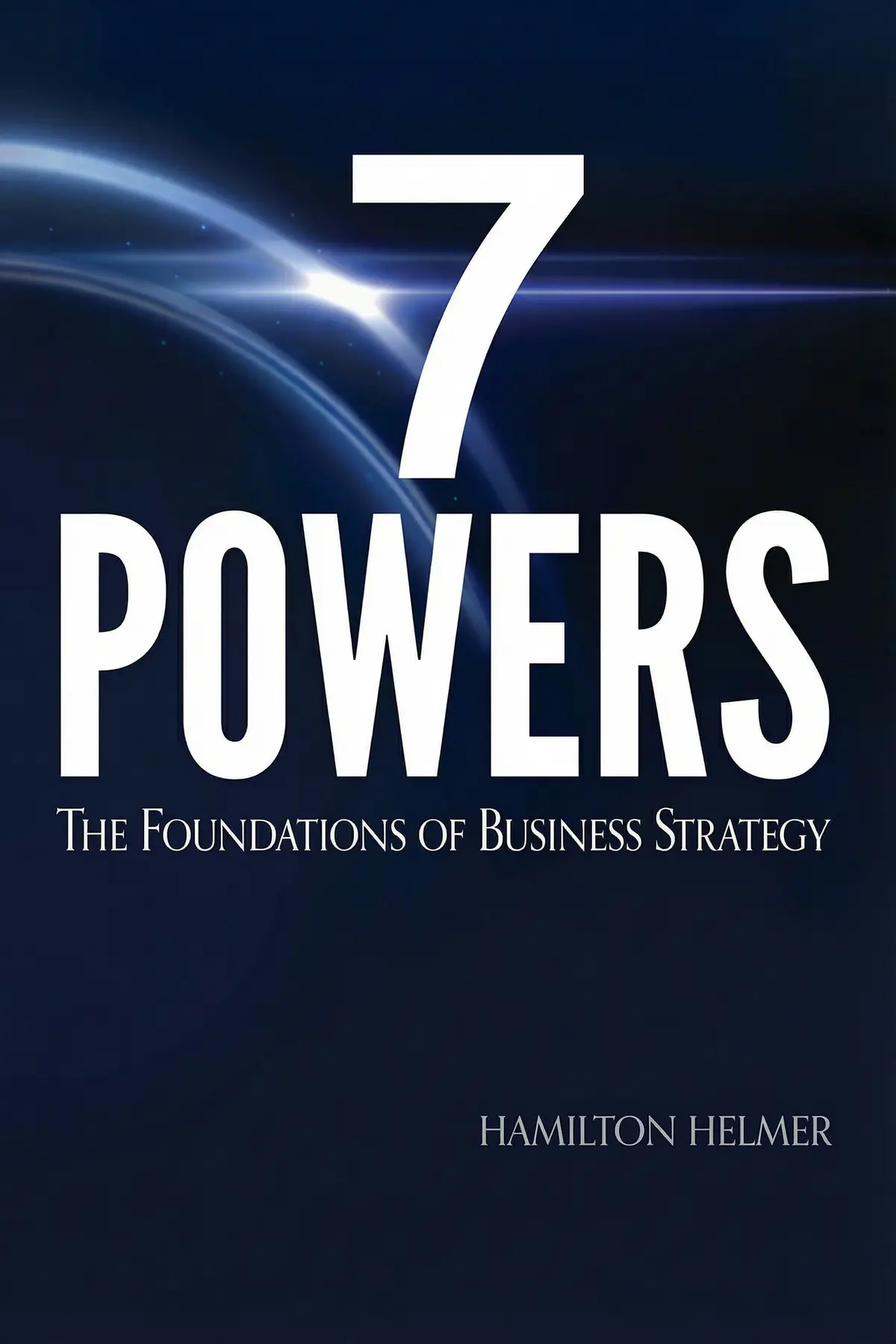
7 Powers: The Foundations of Business Strategy
Hamilton Helmer
A Bigger Prize: How We Can Do Better Than the Competition
Margaret Heffernan
A Year with Peter Drucker: 52 Weeks of Coaching for Leadership Effectiveness
Joseph A. Maciariello
AUDIO SUMMARY AVAILABLE
Listen to What Matters Now in 15 minutes
Get the key ideas from What Matters Now by Gary Hamel, plus 5,000+ more titles in English and Thai.
- 5,000+ titles
- Listen as much as you want
- 7-day free trial
- Cancel anytime







