
23 min 04 sec
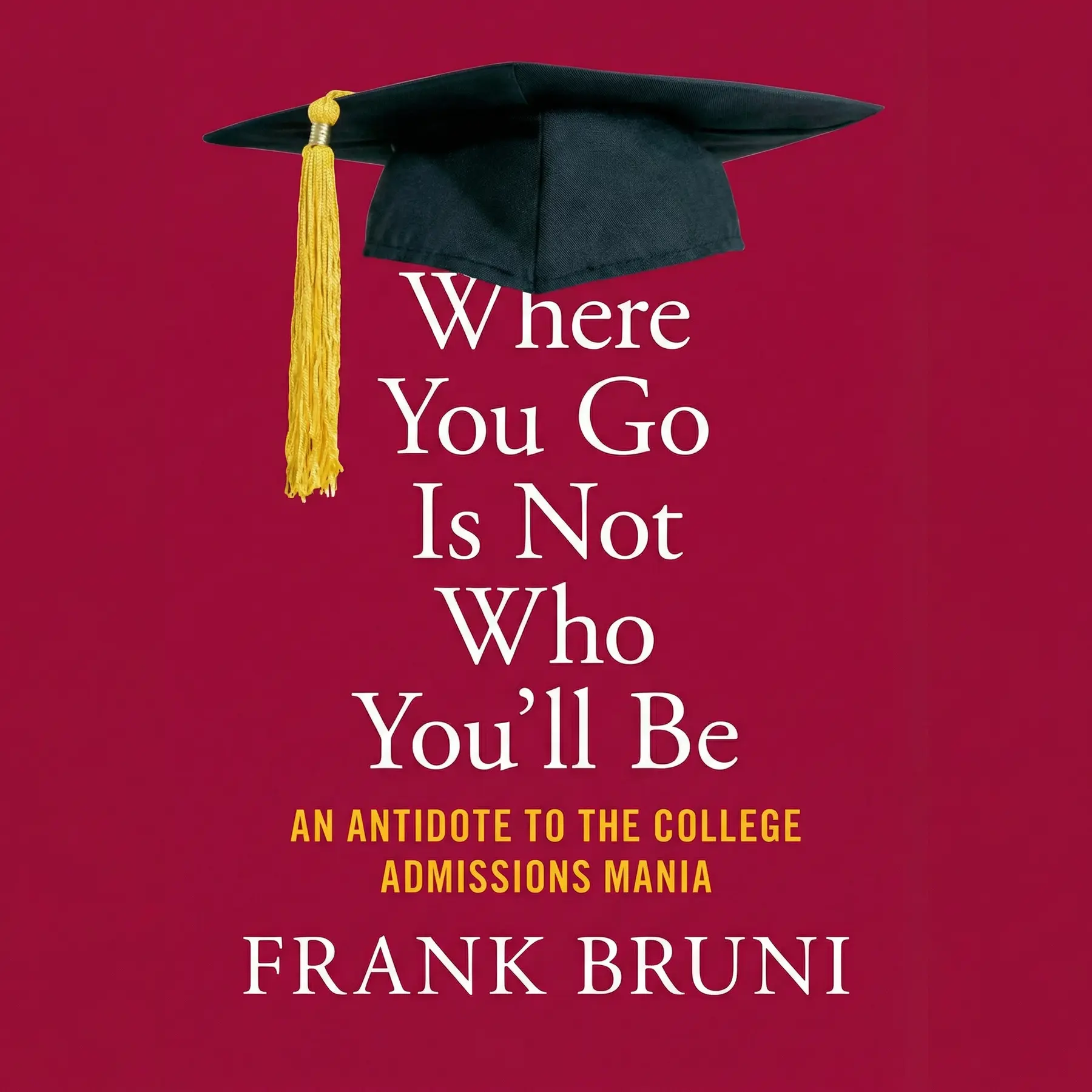
Where You Go Is Not Who You’ll Be: An Antidote to the College Admissions Mania
By Frank Bruni
Frank Bruni dismantles the myth that elite college admissions dictate lifelong success, offering a refreshing perspective on how grit, character, and engagement matter far more than a prestigious name on a diploma.
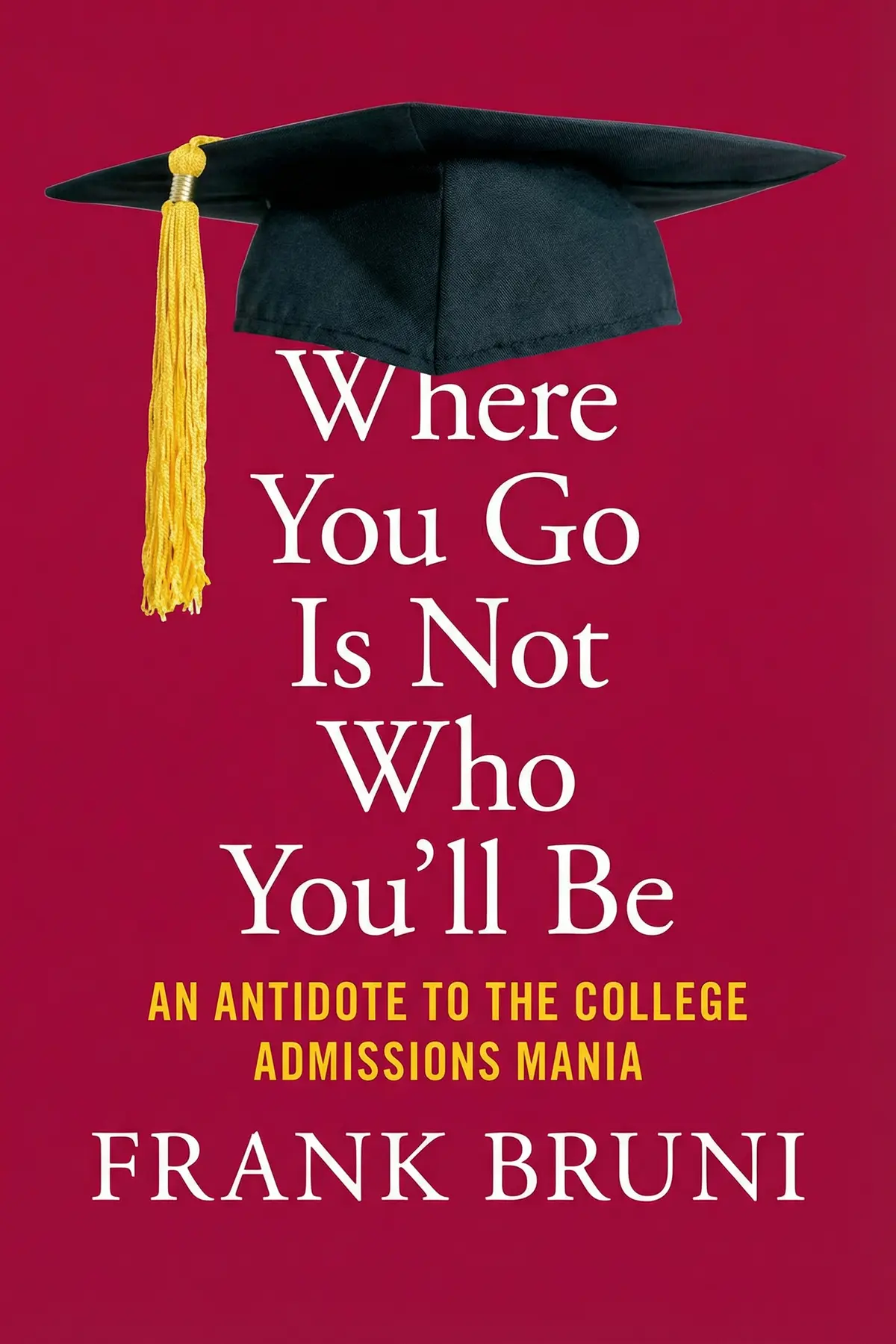
Table of Content
1. Introduction
1 min 52 sec
Every spring, a wave of anxiety washes over thousands of households across the country. It’s the season of college acceptance letters, a time when many young people believe their entire future hangs on the decision of a handful of admissions officers at a few select institutions. We’ve reached a point where the quest for an elite education has become a kind of national fever. We see it in the headlines—stories of wealthy parents engaging in elaborate schemes to bribe their way into the Ivy League, or students spending every waking hour of their high school careers checking off boxes to build the perfect, most impressive resume.
But what if we took a step back and asked: what is all this for? In this summary of Frank Bruni’s insightful work, we’re going to look at the reality behind the prestige. The central throughline here is a powerful one: the name on your college diploma is not a crystal ball that predicts your happiness or your professional achievements. We’ll explore how the admissions process has become a game designed to serve the institutions rather than the students, and why the most successful people in the world often come from schools you’d never find at the very top of a magazine’s ranking list.
This isn’t just about debunking myths; it’s about regaining a sense of perspective. We will look at why the obsession with exclusivity is actually narrowing the horizons of our best and brightest, and how we can find a more sane, more productive way to think about higher education. By the time we’re finished, you’ll see that the secret to a thriving life isn’t found in a specific zip code in Massachusetts or New Jersey, but in the qualities of character and the depth of engagement that a student brings to whatever campus they choose to call home. Let’s dive into the reasons why the mania started, why it’s misguided, and what actually matters for long-term fulfillment.
2. The Diverse Roots of Success
2 min 51 sec
Think an Ivy League degree is the only ticket to the top? Discover why the world’s most influential leaders often come from schools you wouldn’t expect.
3. The Numbers Game of Admissions
2 min 34 sec
Uncover the hidden tactics universities use to slash their acceptance rates and why a school’s selectivity might be a marketing ploy rather than a sign of quality.
4. The High Price of Standing Out
2 min 13 sec
From five-figure tutoring to bizarre personal essays, explore the extreme and often absurd lengths families go to in order to win the admissions lottery.
5. The Flawed Science of Rankings
2 min 13 sec
Why the most famous college lists are based on subjective opinions and ‘reputation’ rather than actual educational quality or graduate outcomes.
6. The Elite Bubble and the Value of the Uncomfortable
2 min 12 sec
Discover how the lack of diversity at top-tier schools can insulate students from the real world, and why leaving your comfort zone is the ultimate education.
7. The Real Metrics of Thriving
2 min 19 sec
Forget the name on the sweatshirt. Learn which specific college experiences actually lead to long-term career satisfaction and personal happiness.
8. The Funnel Effect and Fragile Thoroughbreds
2 min 14 sec
Is an elite education actually narrowing your child’s future? Explore why prestigious schools often push students toward the same few high-paying careers.
9. The Advantage of the Personal Touch
2 min 26 sec
Why smaller, less ‘famous’ schools might offer the mentorship and creative freedom necessary to launch a truly extraordinary career.
10. Conclusion
2 min 10 sec
As we wrap up this look at the college admissions landscape, let’s return to our central theme: where you go is truly not who you will be. The mania surrounding elite admissions is built on a series of myths—the myth that there is only one path to success, the myth that rankings represent quality, and the myth that a rejection letter is a judgment on your potential.
We’ve seen that the world is led by people from every imaginable educational background. We’ve seen that the admissions game is often rigged to serve the institutions’ reputations rather than the students’ futures. And most importantly, we’ve learned that the qualities that actually lead to a thriving life—grit, engagement, curiosity, and deep involvement—are things you carry with you, not things that are handed to you with a specific diploma.
So, what is the actionable takeaway here? It’s to reclaim your agency. If you’re a student or a parent, stop looking at the top of the U.S. News & World Report list and start looking at the schools themselves. Ignore the ‘reputation’ and look for the facts. Look for schools where the classes are small enough that professors will know your name. Look for environments that will challenge you to step out of your comfort zone and meet people who are nothing like you. Look for a place that will support your specific passions rather than funneling you toward a safe, prestigious career.
Remember the example of Arizona State University. Often unfairly dismissed as a ‘party school,’ it actually offers many small classes and incredible resources if you look past the stereotypes. Do your own homework. Be unbiased. If you approach higher education as a search for a place where you can grow, rather than a search for a trophy to display, you will find that the ‘right’ school is not a single, elusive destination, but any place where you are ready to do the work. Your future is not determined by the gatekeepers of the Ivy League; it is determined by the fire you bring to whatever campus you choose. Success is not where you land; it is how you fly.
About this book
What is this book about?
This exploration dives deep into the high-stakes world of modern college admissions, a landscape where parents and students often feel that a rejection from an Ivy League school is a verdict on their future. Bruni reveals the machinery behind college rankings and the calculated tactics universities use to appear more exclusive than they actually are. The book promises to lower the collective blood pressure of families everywhere by proving that success is not a limited resource reserved for those at top-tier institutions. By looking at the actual backgrounds of business leaders, artists, and innovators, it demonstrates that a fulfilling life is built through individual effort and curiosity rather than the perceived status of one's alma mater.
Book Information
About the Author
Frank Bruni
Frank Bruni is a distinguished journalist who has spent much of his career with the New York Times. His versatile tenure at the paper includes serving as the chief restaurant critic from 2004 to 2009 and working as a prominent op-ed columnist. Beyond his journalism, Bruni is a celebrated author of several bestsellers, including Born Round, published in 2009, and Ambling Into History, released in 2002.
Ratings & Reviews
Ratings at a glance
What people think
Listeners consider this a vital read for families and students, highlighting its deep research and useful insights for those applying to college. Furthermore, the writing is engaging, insightful, and comforting, as one listener remarked that it completely restored sanity to the college admissions process. Listeners also value the convincing arguments backed by multiple approaches and find the experience calming, with one mentioning how it took the stress out of the application process.
Top reviews
Kaen
Finally got around to reading this during the height of my daughter's college application frenzy, and it was exactly the reality check we needed. Bruni tackles the toxic culture surrounding elite admissions with a calm, data-driven perspective that immediately lowered the collective blood pressure in our house. It’s a compelling argument that your worth isn’t tied to a window decal or a prestige ranking. Truth is, we’ve been conditioned to believe that only 20 schools matter, which is total nonsense when you look at the actual career trajectories of successful people. While it leans a bit heavily on anecdotes toward the end, the core message remains powerful and incredibly reassuring. Every high school counselor should keep a stack of these in their office to help families maintain their perspective.
Show morePiyanart
Wow, I wish I had read this years ago when I was choosing a university. Bruni’s writing style is engaging and empathetic, making it feel like a long conversation with a wise mentor rather than a dry academic text. He successfully shifts the focus from the 'brand name' on the diploma to the actual growth and experiences a student has on campus. Frankly, the college admission process has become a circus, and this book is the perfect way to step out of the tent. It completely restored my sanity during a very stressful time. While some might find it anecdote-heavy, those stories provide the emotional weight needed to make the statistics feel real and relatable to any student feeling like a failure.
Show moreMo
Picked this up during the height of application season, and it was the best decision I could have made. This book is a warm, reassuring hug for every student who feels like their life is over because they didn't get into Harvard. Bruni’s thorough research takes the stress out of the process by proving that success is what you make of it, not where you sit in a lecture hall. It's thought-provoking and far less stressful than any other college guide I’ve ever looked at. I especially liked the analysis of how 'average' schools often offer more resources and individual attention to their students. This should be mandatory reading for every high school senior and their parents before they submit a single application.
Show moreSumalee
As a parent of a high school junior, I found this to be an absolute sanity-saver. Bruni provides a much-needed antidote to the madness of hiring $50,000 consultants just to get into a top-ten school. The chapter on 'Strangled with Ivy' was particularly eye-opening because it reminds us that high-pressure environments aren't always the best fit for every student. Look, we all want the best for our kids, but we’ve confused 'prestige' with 'quality of education.' This book uses research to prove that ambition and character matter far more than where you spend those four years. It’s well-written, thought-provoking, and something I’ll be recommending to everyone in my district who is currently panicking over SAT scores.
Show moreOak
Ever wonder why we've collectively lost our minds over college rankings that seem totally arbitrary? Frank Bruni explores this obsession with a sharp, analytical eye, showing how the 'lottery school' frenzy is actively harming our children's mental health. The data he presents about CEO backgrounds and scientific innovators is genuinely surprising and helps debunk the myth of the Ivy League golden ticket. I loved the focus on the 'big fish in a small pond' theory, which suggests that being a top student at a less selective school can actually be more beneficial. It’s a must-read for anyone feeling crushed by the weight of expectations. My only gripe is the lack of trigger warnings regarding some heavy topics like self-harm mentioned in the anecdotes.
Show morePete
Bruni does a stellar job of dissecting the prestige obsession that has taken over the American middle class. He argues that we are setting our kids up for failure by teaching them that their identity is tied to an acceptance letter. The book is well-researched, citing various studies that show how drive and persistence are the real predictors of success. I found the section on how elite schools sometimes 'strangle' creativity and risk-taking to be the most compelling part of his argument. To be fair, some chapters do feel a little long-winded, but the overall message is so vital that I'm willing to overlook the pacing issues. It’s a necessary wake-up call for our achievement-obsessed culture and a helpful analysis for applicants.
Show moreKanokwan
In my experience, the 'brand name' degree is often just a security blanket for parents' egos. Frank Bruni hits the nail on the head here, exposing the vanity behind the ivy-covered walls. He reminds us that education is a gift, not a trophy to be won through high-priced tutors and manufactured resumes. The writing is clear and direct, though it occasionally veers into being a bit preachy. Still, the core truth that your character defines your trajectory—not your alma mater—is something we desperately need to hear. It’s an excellent reminder to look for the right fit rather than the highest rank. Definitely a helpful analysis for anyone navigating the current higher education landscape without losing their mind.
Show moreRotjanee
The premise here is fantastic, but the execution felt a bit repetitive after the first few chapters. Bruni makes an essential point about the 'Ivy or bust' mentality being a recipe for misery, yet he keeps hitting the same notes over and over. I appreciated the data debunking the myth that elite grads automatically earn more, but honestly, some of the stories about successful people from obscure schools started to blend together. It’s a good book that probably could have been a great long-form essay. If you’re a stressed parent, you’ll find some comfort here, but you might find yourself skimming once you get the gist of his argument. It's a vital message, just a bit thin on variety as the book progresses.
Show moreWaree
To be fair, the message is vital, even if the delivery gets a bit sluggish in the middle. I picked this up because I was curious about the 'elite' university myth, and Bruni definitely brings the receipts. He does a great job of showing that the path to a fulfilling life is a patchwork, not a single, narrow golden road. However, I agree with other reviewers that it becomes repetitive, almost as if he was trying to meet a word count. It’s still worth a read for the perspective shift, especially if you’re currently in the thick of SAT prep and admissions essays. Just be prepared for a lot of similar stories about people who went to state schools and still became successful in their fields.
Show moreYam
This felt like a New York Times op-ed stretched way too thin for a full-length book. I understand the message—where you go doesn't define you—but did we really need 200 pages to say it? It’s very America-centric, so if you’re an international student or looking at grad schools abroad, most of this won't apply to your situation. I also felt it was a bit dismissive of the actual academic differences between institutions, assuming that the 'work' is the only variable. Not gonna lie, I was bored by the halfway point. It’s an important conversation, but this specific delivery just didn't justify the time it took to read it. I'd recommend just reading the author's articles on the subject instead.
Show moreReaders also enjoyed
AUDIO SUMMARY AVAILABLE
Listen to Where You Go Is Not Who You’ll Be in 15 minutes
Get the key ideas from Where You Go Is Not Who You’ll Be by Frank Bruni, plus 5,000+ more titles in English and Thai.
- 5,000+ titles
- Listen as much as you want
- 7-day free trial
- Cancel anytime







