
17 min 37 sec
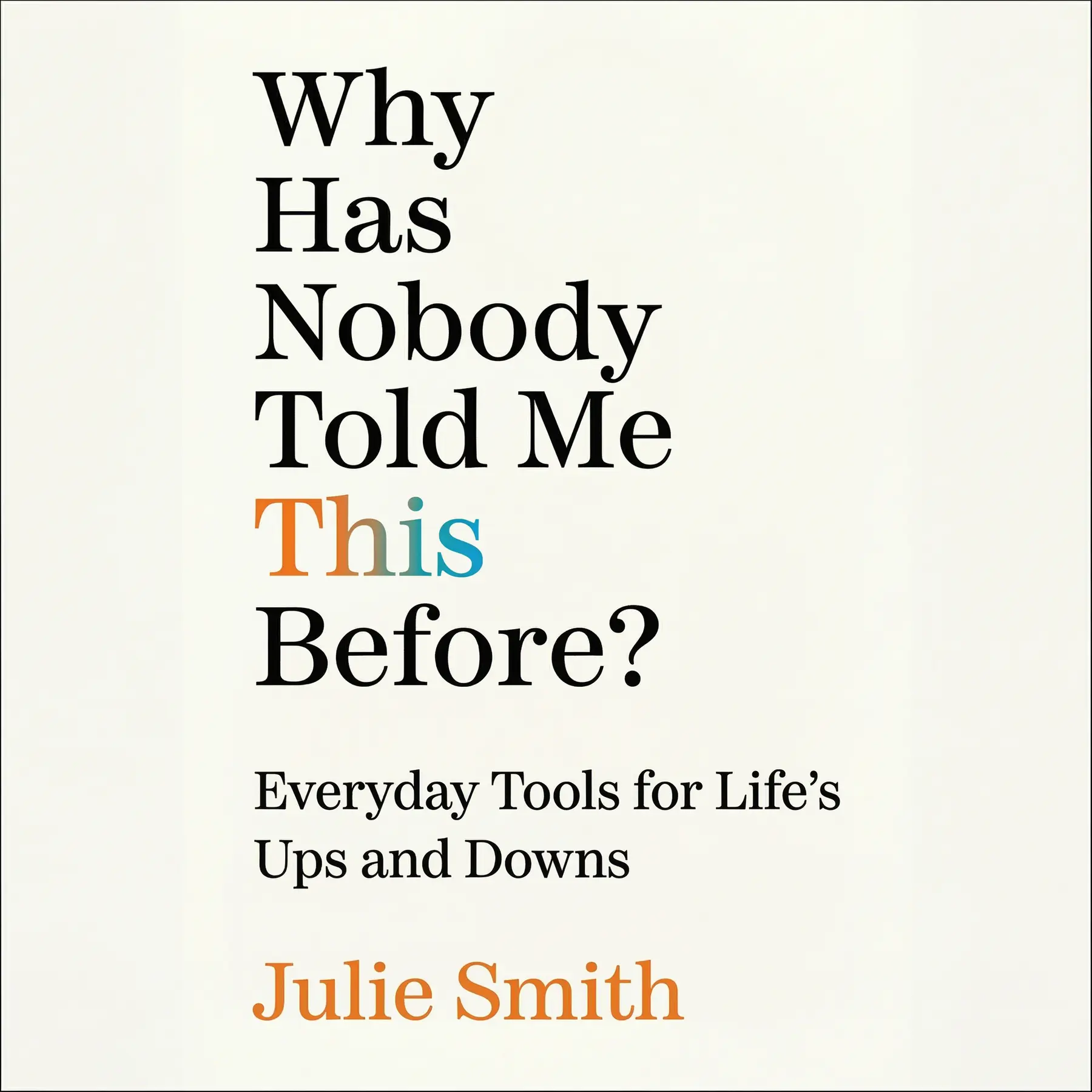
Why Has Nobody Told Me This Before?: Everyday Tools for Life’s Ups and Downs
By Julie Smith
Clinical psychologist Dr. Julie Smith offers a practical toolkit for managing emotional health, explaining how to handle low moods, anxiety, and the importance of social connection through actionable, evidence-based strategies.
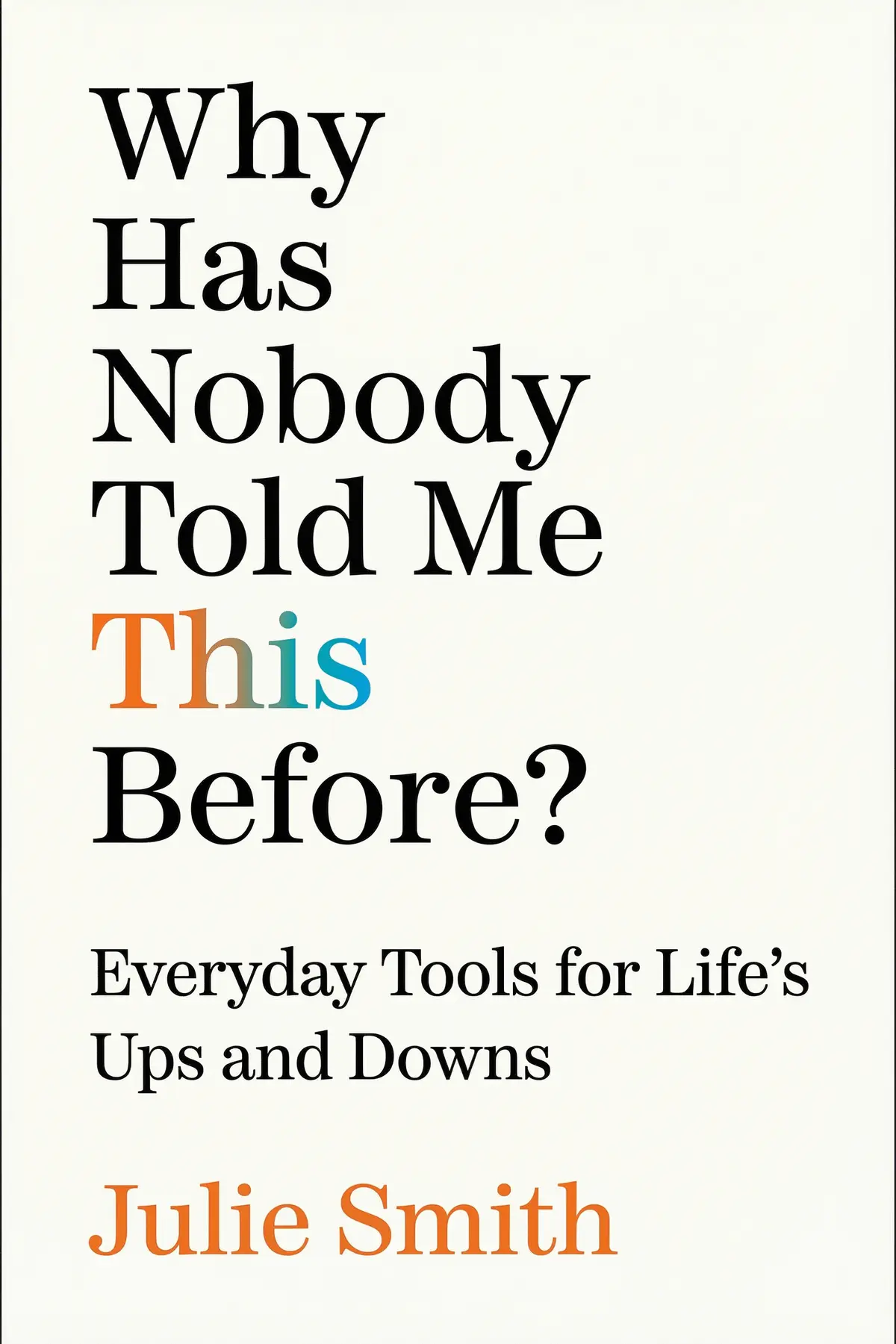
Table of Content
1. Introduction
1 min 48 sec
Have you ever felt like your emotions were a runaway train, and you were just a passenger with no access to the brakes? Many of us go through life believing that our moods are something that simply happen to us—that they are the result of fixed brain chemistry or a lack of natural resilience. We watch others who seem to navigate life with ease and wonder what secret they possess. The truth is often much simpler, yet it is rarely taught in school or at home.
In our modern world, we are often overwhelmed by expectations and stressors that leave us feeling depleted, yet we lack the fundamental understanding of how our minds and bodies actually collaborate to produce those feelings. Dr. Julie Smith, a clinical psychologist who has reached millions through her educational work, suggests that the tools for managing these states are not reserved for the therapy room. They are practical, everyday strategies that anyone can learn.
This guide isn’t about achieving a state of permanent, unwavering happiness. That would be impossible and unnatural. Instead, it’s about understanding the mechanics of your emotional life so you can handle the inevitable low points without becoming stuck in them. We are going to explore how to decode the signals your body is sending you, how to break the cycles that keep you trapped in a low mood, and how to reclaim your life from the grip of anxiety.
By the time we finish, you will have a better understanding of why you feel the way you do and, more importantly, what you can do about it. The goal is to move from a place of helplessness to a place of agency. You’ll see that mental well-being is a skill that can be developed, practiced, and refined over time. Let’s start uncovering these essential insights that, for many of us, come with the realization: Why has nobody told me this before?
2. Understanding the Construction of Emotions
3 min 01 sec
Explore why your feelings aren’t just random events, but complex signals created by your physical state, environment, and history, offering you a path to influence them.
3. Escaping the Perfectionism Trap with Small Wins
2 min 43 sec
Discover how the urge for instant relief and the pressure of perfectionism keep us stuck in low moods, and why the ‘good enough’ approach is the secret to lasting change.
4. Expanding Your World by Facing Anxiety
2 min 41 sec
Learn why avoiding what scares us actually makes our lives smaller and how a gradual approach to facing fears can help you regain your freedom and confidence.
5. Managing the Body’s Panic Response
2 min 52 sec
Understand the physical mechanics of panic and discover a simple, discreet breathing technique that can ground you when your stress levels start to spiral.
6. The Essential Role of Social Connection
2 min 45 sec
Challenge the myth that being down makes you a burden and learn how human connection serves as one of our most powerful defenses against mental health struggles.
7. Conclusion
1 min 47 sec
As we conclude this exploration of Dr. Julie Smith’s psychological toolkit, the most important takeaway is that your mental health is not a fixed state of being. It is a dynamic, living system that is constantly influenced by the world around you and the choices you make within it. We’ve seen that moods are not random; they are constructions built from your physical health, your environment, and your history. By becoming a curious observer of your own life, you can begin to identify the unmet needs that lead to emotional pain.
We’ve also discussed how to push back against the paralyzing influence of perfectionism. By choosing ‘good enough’ actions over the impossible ‘perfect’ ones, you can slowly rebuild your self-trust and establish habits that sustain you during difficult times. When it comes to anxiety, we learned that avoidance is a trap that shrinks your world, and that the path to freedom lies in facing your fears with courage and patience, supported by practical tools like square breathing.
Finally, we addressed the vital importance of human connection. Breaking the cycle of isolation is perhaps the most courageous thing you can do when you are feeling low. Whether you are the one seeking support or the one offering it, remember that we are meant to navigate these ups and downs together.
Life will always have its challenges. There will be seasons of grief, stress, and uncertainty. But you are no longer a passive passenger. You have the tools to understand your mind, the strategies to steady your body, and the knowledge that you don’t have to face any of it alone. By applying these insights daily, you can build a foundation of resilience that will serve you for the rest of your life. The next time you face a hurdle, you can do so with the confidence of someone who finally knows the secrets to their own well-being.
About this book
What is this book about?
Life doesn’t come with a manual, and when our mental health dips, it often feels like a personal failure or a biological glitch. Dr. Julie Smith challenges this notion, presenting a series of accessible psychological tools that anyone can use to navigate the inevitable ups and downs of existence. This summary explores the construction of emotions, the trap of perfectionism, and the path toward resilience. It promises to demystify why we feel the way we do and provides a roadmap for taking back control. From managing panic attacks to rebuilding self-confidence, it offers the essential guidance many wish they had received much earlier in life.
Book Information
About the Author
Julie Smith
Dr. Julie Smith is a clinical psychologist with over a decade of experience, and an online educator with over 3 million followers. Why Has Nobody Told Me This Before?, her first book, is a No. 1 Sunday Times best seller.
Ratings & Reviews
Ratings at a glance
What people think
Listeners find this psychology book easy to digest and full of functional guidance, with one listener noting it provides methods for managing various life situations. Furthermore, the work offers new perspectives on mental and emotional wellness, with one listener mentioning it helps with anxiety. Additionally, listeners value the well-explained material and insightful diagrams, finding the book to be succinct and well worth the cost.
Top reviews
Manop
Dr. Julie Smith has basically created a mental health first-aid kit that everyone should keep on their nightstand. The chapters are incredibly short and punchy, which is perfect for when you’re actually feeling anxious and can't focus on long academic texts. I loved the eye-opening diagrams particularly because they make abstract concepts like the 'low mood cycle' feel tangible and manageable. To be fair, some people might find the advice simple, but when you are in a dark place, simple is exactly what you need to survive. It’s not about revolutionary new science; it’s about making therapy techniques accessible to people who can't afford a weekly session. The focus on values and meaningful living toward the end really tied everything together for me.
Show moreNathan
Finally, a book that doesn't treat the reader like they are broken or stupid for having human emotions. I’ve struggled with anxiety for years and often find psychology books too dense to finish, but this one was different. The structure allows you to treat it like a reference manual, which is much less intimidating than a 300-page narrative. Smith explains the 'why' behind our feelings using great metaphors and diagrams that really stick in your brain. Truth is, I actually cried a little during the chapter on self-doubt because it was the first time someone explained my brain's patterns so clearly. It’s practical, it’s kind, and it feels like having a warm conversation with a professional who genuinely cares about your progress. Highly recommend for anyone feeling overwhelmed by life.
Show moreNattapong
Truth is, I was skeptical about a 'TikTok doctor' writing a book, but Julie Smith actually knows her stuff. She avoids the toxic positivity that plagues a lot of self-help and instead offers grounded, clinical advice that feels achievable. The focus on values and meaningful living toward the end really tied the whole experience together for me. My only real gripe is that some chapters felt a bit rushed, almost like they were just scratching the surface before jumping to the next bulleted list. Even so, it is a solid resource that I’ll definitely be keeping on my shelf for whenever my anxiety starts to flare up again. The diagrams are actually helpful visual aids rather than just filler. Worth every penny for the peace of mind it provides.
Show moreRay
This is exactly the kind of book I wish I had been given in school years ago. It’s essentially a user manual for the human brain, explaining all the things that should be common knowledge but rarely are. I loved the way Smith breaks down the connection between physical sensations and emotional states, making the 'toolbox' concept feel very real. The advice on handling failure and building a meaningful life was particularly resonant for me during a recent career transition. In my experience, most psychology books are either too academic or too 'woo-woo,' but this strikes the perfect balance of being evidence-based and deeply human. Even if you only read the sections that apply to your current situation, it is worth the price for the clarity it provides.
Show moreA
Picked this up after seeing a few of the author's viral clips, and I have to say the transition to long-form writing works well. Unlike many self-help gurus, Smith doesn't come across as preachy or toxicly positive, which I found refreshing. She acknowledges that life can be genuinely hard and that there isn't always a 'cure' for grief or stress, only management tools. The section on emotional pain was the highlight for me, especially the part about not beating yourself up when you're already down. Gotta say, some chapters felt a bit rushed, almost like they were just scratching the surface before jumping to the next topic. Still, it’s a solid resource that I’ll definitely be dipping back into whenever my anxiety starts to flare up again.
Show moreDimitri
What sets this apart from the sea of self-help books is the sheer practicality of every single page. There is no fluff here; Dr. Smith gets straight to the point with techniques for managing stress and navigating dark patches. I found the 'toolkits' at the end of the chapters to be the most valuable part because they offer actionable steps rather than just theory. It’s very grounded in Cognitive Behavioral Therapy, which I appreciate because it’s a proven method that actually works for a lot of people. Some might say it’s too basic, but I think there is real value in distilling complex ideas into plain language that a regular person can use. My copy is already covered in highlighter marks and sticky notes, which is always a sign of a useful read.
Show moreNiramai
After hearing about her TikTok presence, I decided to give the audiobook a try and ended up buying a physical copy too. Smith has a very calm, empathetic voice that makes the information feel safe and easy to digest. She covers everything from grief to motivation with a level of nuance that you don't usually see in mainstream self-help. The chapters on the 'fight or flight' response were particularly eye-opening for me, as they helped me understand my own physical reactions to stress. I do think the physical book is slightly better because you can see the diagrams and quickly flip to the summaries when you're in a hurry. It isn't rocket science, but it provides a very solid foundation for anyone looking to understand their mental health better.
Show moreAiden
Is it just me, or is the title a little misleading? If you have ever been to a single therapy session, your therapist has almost certainly told you most of this before, so don't expect any massive secrets. However, having all these tools in one organized place is quite handy for quick reference when you’re in a pinch. I appreciated how she categorized the book so you can skip directly to the section on fear or motivation without reading cover-to-cover. Personally, the writing style is very approachable and stays away from heavy academic jargon, which makes it an easy read before bed. I did feel that it became quite repetitive toward the middle, echoing the same basic ideas about changing thoughts to change feelings. It’s a fine book, just not the life-changing manifesto social media promised.
Show moreTom
As a psychology student, I found myself waiting for a depth that just never arrived throughout the chapters. The title is provocative, suggesting hidden secrets of the trade, but everything inside is just standard CBT and mindfulness 101. If you have ever spent ten minutes on a mental health blog, you have already heard about the importance of sleep, exercise, and challenging your thoughts. Frankly, it felt like a collection of scripts for TikTok videos rather than a cohesive deep-dive into the human psyche. It is probably a decent entry point for someone who has never touched a self-help book before, but for anyone else, it’s a bit of a snooze. The summaries at the end of every short chapter felt redundant and padded the page count unnecessarily.
Show moreKwame
Full disclosure: I am not a big non-fiction reader and this book reminded me exactly why the genre can be so hit-or-miss. It was incredibly dry and I felt like I was reading a textbook designed for a younger audience. Most of the 'revelations' are things you’ve probably heard since childhood, like the importance of getting enough sleep or going for a walk to clear your head. I understand the author has a huge following on TikTok, but a few catchy videos don't always translate into a deep or engaging book. Maybe it’s just me, but I found the tone a bit patronizing at times, as if the author assumed the reader had zero awareness of their own thoughts. I forced myself to finish it for a challenge, but it was a total slog to get through the repetitive bullet points.
Show moreFeatured in
Readers also enjoyed
Alcoholics Anonymous
Alcoholics Anonymous World Services
A Liberated Mind: How to Pivot Toward What Matters
Steven C. Hayes
ADHD an A-Z: Figuring It Out Step by Step
Leanne Maskell
AUDIO SUMMARY AVAILABLE
Listen to Why Has Nobody Told Me This Before? in 15 minutes
Get the key ideas from Why Has Nobody Told Me This Before? by Julie Smith, plus 5,000+ more titles in English and Thai.
- 5,000+ titles
- Listen as much as you want
- 7-day free trial
- Cancel anytime







