
17 min 46 sec
Why Simple Wins: Escape the Complexity Trap and Get to Work that Matters
By Lisa Bodell
Why Simple Wins explores how organizational complexity kills productivity. Lisa Bodell provides practical tools to streamline workflows, eliminate redundant rules, and empower employees to focus on high-impact work that actually drives innovation.
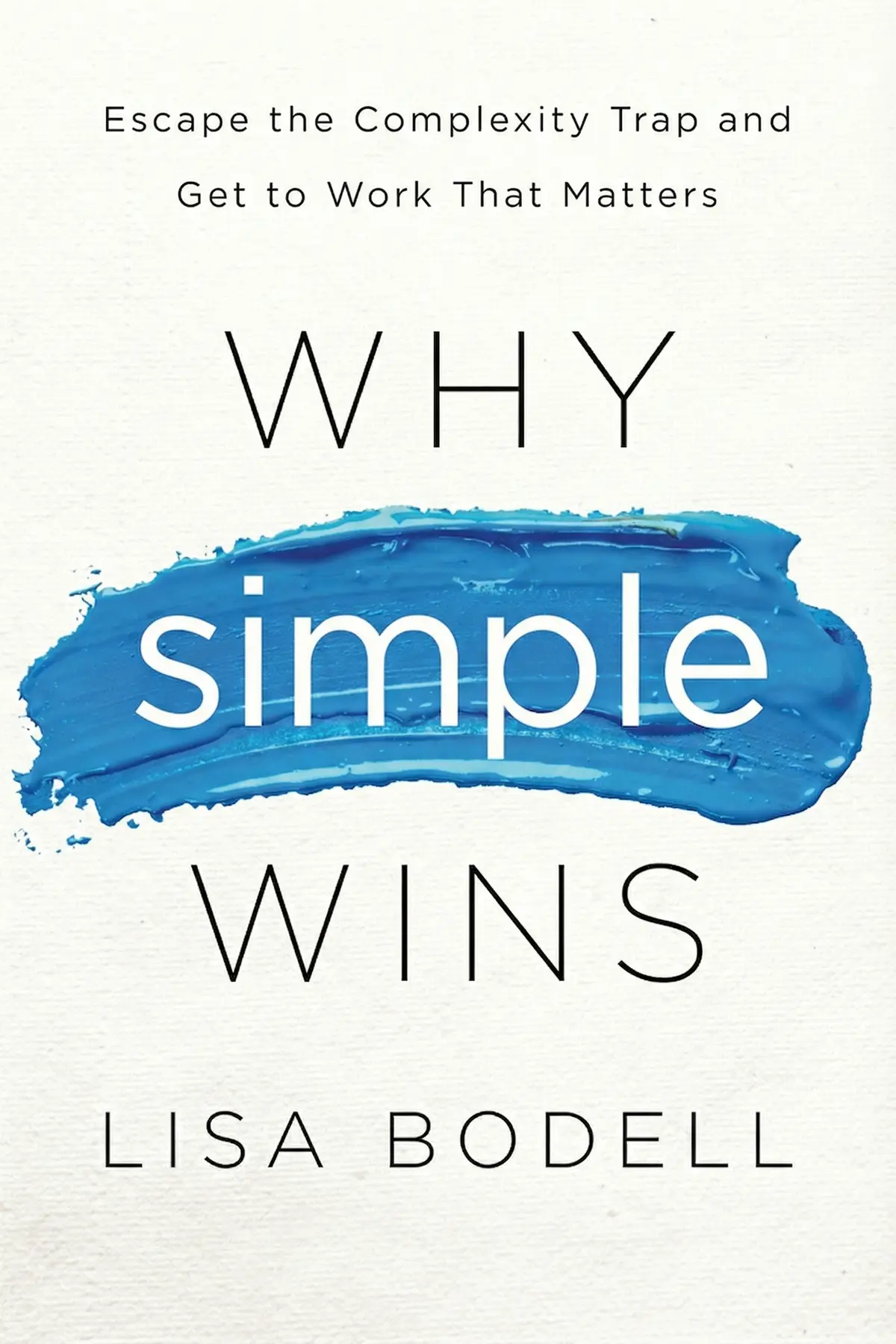
Table of Content
1. Introduction
1 min 39 sec
Imagine your ideal workday. You likely see yourself diving into creative problem-solving, collaborating on big-picture strategies, and making tangible progress on projects that excite you. But for most of us, that vision is a far cry from the daily reality. Instead, we find ourselves drowning in a sea of CC’d emails, redundant reports, and back-to-back meetings that seem to exist only to schedule more meetings. We start the day with high ambitions and end it feeling exhausted, yet strangely unproductive. This is the ‘complexity trap,’ and it is the silent killer of modern innovation.
In this summary of Lisa Bodell’s insights, we are going to explore why simplicity is the ultimate competitive advantage. We often think of complexity as a byproduct of growth or a necessary part of a large organization, but the truth is that complexity is often self-imposed and unnecessary. It creates a thick fog that prevents us from seeing our true goals. To break free, we need more than just a few time-management tips; we need a fundamental shift in how we view work itself.
Simplicity isn’t about being lazy or doing the bare minimum. In fact, making things simple is often much harder than making them complex. It requires the courage to say no, the discipline to cut out the noise, and a commitment to clarity above all else. Over the next few chapters, we will walk through the tools and mindsets necessary to strip away the deadwood of bureaucracy and get back to the work that actually matters. By the end, you’ll have a roadmap for transforming your workplace into a leaner, faster, and much more fulfilling environment.
2. The High Cost of the Busywork Paradox
2 min 26 sec
We often mistake constant activity for genuine progress, but modern tools might be making us less effective than ever before.
3. Why Humans Naturally Drift Toward Complexity
2 min 29 sec
Our own instincts and fears often lead us to create more rules and layers than we actually need for success.
4. Conducting the Complexity Diagnosis
2 min 26 sec
Before you can fix the problem, you have to find where it’s hiding. A structured survey can reveal the true bottlenecks.
5. Building a Culture Where Simplicity Thrives
2 min 25 sec
Simplicity isn’t just a process; it’s the foundation of a healthy, innovative, and engaged workplace culture.
6. Tools for Immediate Impact: Killing the Stupid Rules
2 min 21 sec
Practical exercises like ‘Kill a Stupid Rule’ can provide quick wins and build momentum for larger organizational changes.
7. The Leader as Chief Simplifier
2 min 20 sec
The most effective modern leaders don’t just provide vision; they actively clear the path for their teams by removing obstacles.
8. Conclusion
1 min 40 sec
As we wrap up our journey through the strategies of Why Simple Wins, the core message is clear: the path to greatness isn’t found by doing more, but by clearing away everything that doesn’t matter. Complexity is a weight that we have slowly and often unconsciously added to our shoulders, and it is time to put that weight down. We have seen how our own behaviors and the tools we use can trap us in a cycle of meaningless busyness, and we have explored the practical tools—like the complexity diagnosis and the ‘Kill a Stupid Rule’ exercise—that can help us break free.
But the most important thing to remember is that simplicity is a continuous practice, not a one-time event. It requires constant vigilance. The moment we stop paying attention, the rules, the reports, and the redundant meetings will start to creep back in. To prevent this, we must make simplicity a fundamental part of our identity, both as individuals and as organizations. We must celebrate clarity, reward focus, and have the courage to keep things lean.
Now, it’s time for you to take the first step. You don’t have to overhaul your entire company today. Start small. Look at your own calendar or your own inbox. Is there a meeting you can cancel? A report you can shorten? A rule you can challenge? By reclaiming just a small fraction of your time and energy today, you create the momentum for a larger transformation tomorrow. When we choose simplicity, we aren’t just making our work easier; we are making it better. We are creating the space for innovation, for connection, and for the kind of work that truly changes the world. Get started today, and discover how much you can achieve when you finally let simple win.
About this book
What is this book about?
Have you ever finished a long workday feeling like you accomplished nothing because you were trapped in meetings and emails? Why Simple Wins addresses this universal frustration by identifying complexity as the primary obstacle to modern business success. The book argues that complexity isn’t just a nuisance; it is a strategic drain that stifles creativity and burns out talented teams. Lisa Bodell offers a transformative promise: by adopting a mindset of simplicity, organizations can reclaim their time and energy. The book provides a structured roadmap to diagnose unnecessary friction, eliminate 'stupid rules,' and foster a culture where clarity is the default. Readers will learn how to transition from being merely 'busy' to being truly productive. Through actionable frameworks and leadership strategies, the book demonstrates that the most successful companies aren't those that do the most, but those that focus on what truly matters by clearing away everything else.
Book Information
About the Author
Lisa Bodell
Lisa Bodell is a prominent author and public speaker who has dedicated her career to helping businesses simplify their operations to fuel innovation. She is the founder and CEO of FutureThink, a specialized consulting firm. Her work focuses on providing organizations with the strategic tools needed to eliminate complexity and embrace the growth-driving power of simplicity.
Ratings & Reviews
Ratings at a glance
What people think
Listeners find the book to be both perceptive and accessible, packed with hands-on examples and drills. They value its approach to stripping away needless complications, with one listener noting that the included prompts and tools are easy to implement. Feedback regarding the pacing is varied, as several listeners observe a significant amount of repetition within the content.
Top reviews
Ahmed
Finally got around to reading this after seeing my manager use the 'Kill a Stupid Rule' exercise in our retreat. It is a highly practical manual for anyone drowning in corporate red tape and endless email chains. The matrix comparing simplicity and value was a major lightbulb moment for me personally. Not gonna lie, some sections feel redundant, but the worksheets are where the real value lies. We often overcomplicate things just to feel busy, and Bodell gives you the permission to stop. The distinction between what is essential and what is just habit is crucial for modern productivity. I have already started applying the 'Is it repeatable?' filter to our weekly reports with great results. It is not perfect, but it is a solid toolkit for organizational change.
Show moreSuwit
As someone who spends eight hours a day in meetings that should have been emails, this book felt vital. Bodell identifies the culture of 'busyness' that is currently poisoning our offices and making us all less productive. Since finishing the chapters on identifying low-value tasks, I have managed to cut my administrative load significantly. The worksheets are incredibly straightforward and helped me realize that most of my urgent work was not actually valuable. Look, the book can be repetitive at times, but sometimes you need to hear a message twice before it sinks in. It is about building a mindset where simplicity becomes the default rather than a special project for the team. My department is now using the simplification mindset to audit our monthly goals with great success.
Show morePaisley
Ever wonder why we have made work so much harder than it actually needs to be for everyone? This book dives deep into the 'complexity trap' that most corporations fall into as they grow much larger. I loved the focus on 'killing stupid rules' because it empowers employees to question the status quo daily. The pacing is a bit hit-or-miss, and some examples feel like they are pulled from a generic deck. Still, the underlying message is powerful because simplicity is a competitive advantage in a world of constant noise. The tools provided are accessible enough for a small team lead but robust enough for a department. Gotta say, it really changed how I view 'value-added' work versus just being productive for the sake of it.
Show moreIce
Not what I expected, but exactly what I needed to peel away the unnecessary layers of my workday. I thought this would be another vague business book full of buzzwords, but the exercises are actually quite rigorous. The matrix for simplicity versus value helped me prune my to-do list for the first time in years. To be fair, it could have been shorter, as there is a lot of redundancy in the first half. But the actionable steps for breaking down tasks into their smallest parts are worth the price of admission. It is a great guide for anyone looking to reclaim their time from the jaws of bureaucracy. This book provides real business value if you actually follow the provided instructions and checklists.
Show moreMilk
After hearing Lisa Bodell speak at a conference, I had high hopes for this book and its core message. It mostly delivers on the promise of showing you how to cut through the workday clutter and useless tasks. The emphasis on creating a 'simplification mindset' among employees is a fresh take on modern organizational culture. Instead of just giving us a set of rules, she gives us a way to think about work. I will admit that the 50 questions were a bit much to digest all at once during one sitting. However, picking five or six to focus on was a total game changer for our specific department goals. The writing is clear, the tone is encouraging, and the examples are relatable for anyone in a corporate environment.
Show moreSureerat
Why do business books always insist on being two hundred pages when forty would do the trick? Bodell clearly has experience in the field, but the writing here is quite thin and frequently cycles back. The distinction between 'complex' and 'complicated' is handled loosely, which might irritate those looking for a rigorous framework. To be fair, the actual tools and checklists provided in the later chapters are quite useful for identifying friction. It is a bit of an odd duck, caught between being self-help and a strategic manual for CEOs. If you can skim past the repetitive anecdotes, you will find a few gems about your locus of control. It is a decent weekend read, just do not expect any deep philosophy from the author.
Show morePawinee
This book is a bit of a strange mix of high-level business strategy and basic self-help advice. One moment you are learning to re-engineer a supply chain, and the next you are cleaning your desk. This dichotomy feels a bit disjointed, but the core thesis remains strong and relevant for most modern workers. I appreciated the specific document samples and the detailed process descriptions for cutting through the daily clutter. However, the author’s tendency to use 'complex' and 'complicated' interchangeably makes the logic feel a bit sloppy in places. In my experience, the best way to read this is to treat it as a practical workbook. Grab the templates from the website, do the exercises, and skip the fluff in the middle chapters.
Show moreWanphen
The concept is great, but the execution of the writing is a bit uneven across the different chapters. Bodell makes a compelling case for why simple wins, but she occasionally misses the nuance of why complexity exists. My main concern is that following these 'quick fixes' might lead to local maximums with far-ranging limitations. The book is at its best when it provides concrete worksheets and planning documents for the reader to use. It is at its worst when it leans into repetitive anecdotes about unnamed companies that feel quite fake. Personally, I found the chapter on 'simplification behavior' to be the most insightful part of the entire text. It is a decent resource to have on the shelf, even if you only read the exercises.
Show moreAey
The irony of this book is almost painful to witness. Bodell tries to sell the idea of simplicity by providing a list of fifty questions. Fifty questions is far too many for a book on this topic. If I had the time to answer fifty questions about my workflow, I would not need a book. While the core message about killing stupid rules is valid, the delivery feels like it is drowning in complexity. It reads like a long-winded consulting pitch that could have been a short blog post. Frankly, the pacing is sluggish because the author repeats the same three points in every chapter using different anecdotes. I expected a streamlined guide but instead received a mountain of unnecessary busywork. It is truly disappointing to see such bloat in a volume dedicated to minimalism.
Show moreA
I wanted to love this, but the filler is just overwhelming for a book about being simple. The text argues for minimalism while being incredibly verbose and repetitive throughout the chapters. Why are there so many pages of anecdotal testimonials that do not actually add any new information to the thesis? It felt like I was being sold a service I had already purchased. Truth is, the author seems to confuse being thorough with being helpful to a busy professional. There is a good message buried under all the corporate jargon about synergy and innovation through reduction. I found myself flipping through pages just to find a single actionable step that was not common sense. Sadly, it fails its own test of being minimal and accessible to the reader.
Show moreFeatured in
Readers also enjoyed
7 Powers: The Foundations of Business Strategy
Hamilton Helmer

A Bigger Prize: How We Can Do Better Than the Competition
Margaret Heffernan
A Year with Peter Drucker: 52 Weeks of Coaching for Leadership Effectiveness
Joseph A. Maciariello
AUDIO SUMMARY AVAILABLE
Listen to Why Simple Wins in 15 minutes
Get the key ideas from Why Simple Wins by Lisa Bodell, plus 5,000+ more titles in English and Thai.
- 5,000+ titles
- Listen as much as you want
- 7-day free trial
- Cancel anytime







