
59 Seconds: Change Your Life in Under a Minute
Richard Wiseman
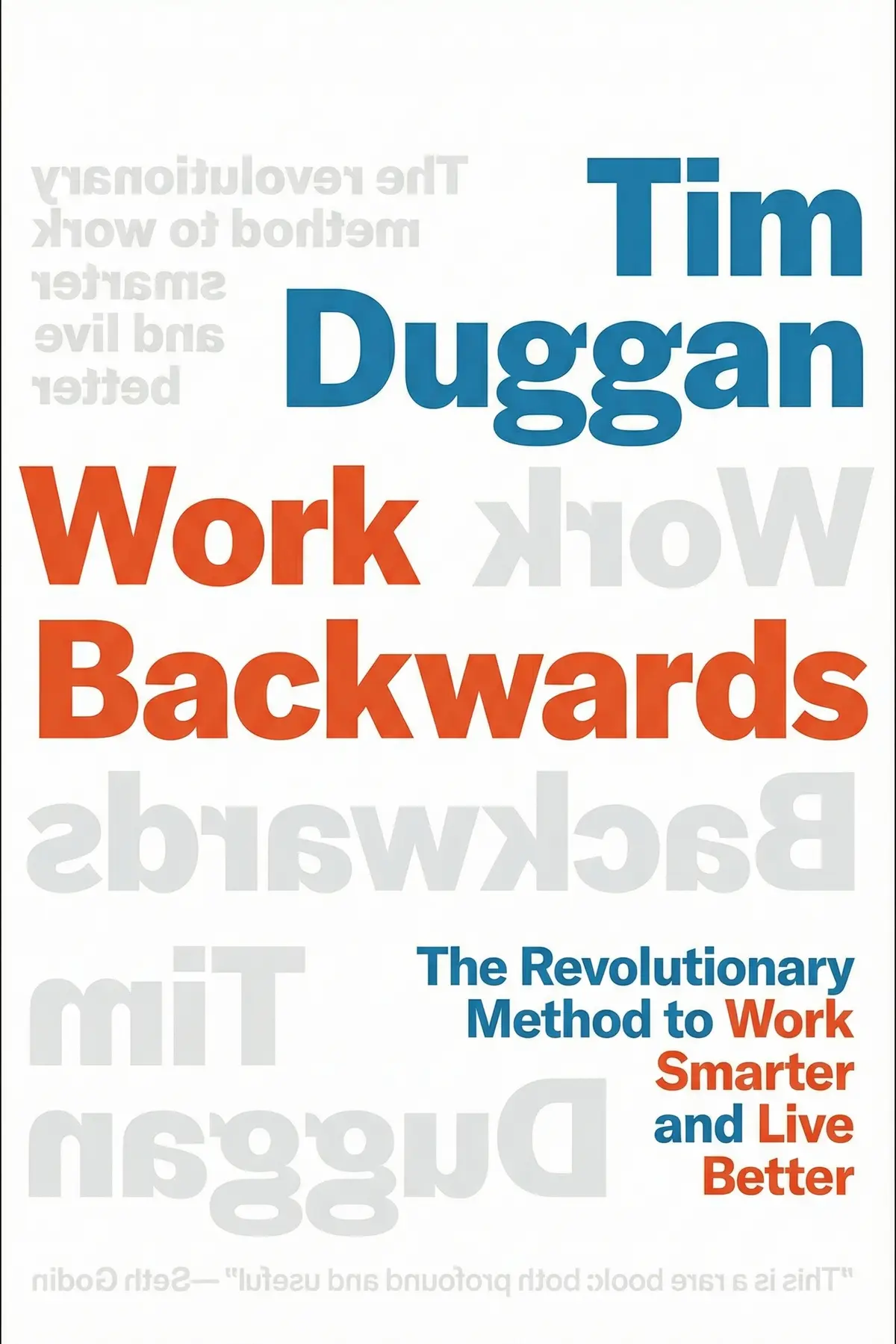
Discover a transformative framework for reclaiming your life from the grind of overwork. This guide explores how to prioritize personal well-being, relationships, and mental health by restructuring your entire approach to professional labor.
2 min 12 sec
Have you ever found yourself sitting at your desk long after the sun has gone down, staring at a screen while your personal life feels like it’s slipping through your fingers? You aren’t alone. In our hyper-connected, high-pressure world, the boundary between our professional duties and our personal peace has become increasingly frayed. We are living in an era where work-related exhaustion isn’t just a common complaint; it has become a global epidemic. Statistics show a staggering rise in workplace stress over the last decade, with some cultures even coining specific terms for the tragic phenomenon where people literally lose their lives to excessive labor.
But what if we’ve been looking at the problem from the wrong angle? For decades, we’ve been told to strive for ‘work-life balance,’ a phrase that subtly suggests work is the primary anchor and life is something that must be carefully balanced against it. This summary presents a radical alternative: the concept of working backwards. The idea is to stop letting your job dictate the terms of your existence and instead start with the life you want to lead.
Recent global events have acted as a massive, unplanned experiment, proving that the old ways of the 9-to-5 office grind aren’t the only way to function. We have seen that flexibility is possible and that the traditional barriers between our homes and our offices can be reimagined. This isn’t just a theoretical discussion about corporate culture; it’s a practical survival guide for the modern worker. We will explore how to re-evaluate your priorities, manage your time with intention, and even redefine your relationship with money and meaning. By the end of this journey, you’ll have the tools to move away from a work-first mentality and toward a way of living where your job serves you, rather than the other way around. Let’s explore how to flip the script and start living with a life-first perspective.
3 min 19 sec
Think of your life as a pie divided into four essential segments. Discover why treating work as just one of these slices—rather than the whole pie—is the key to long-term happiness.
2 min 47 sec
How would you spend your time if you only had 112 waking hours each week? Learn the surprising benefits of a shorter work week and how to distribute your time for maximum well-being.
2 min 20 sec
Most people work to earn as much as possible, then spend what they have. Discover a ‘backwards’ budgeting method that prioritizes your happiness over your paycheck.
2 min 36 sec
The pressure to ‘do what you love’ can lead to profound burnout. Learn why it’s perfectly okay—and even healthy—to view your job as just a job.
2 min 39 sec
Do you need a hard line between the office and the home, or do you prefer to blend the two? Understanding your boundary style is crucial for avoiding exhaustion.
1 min 49 sec
We have spent far too long viewing our lives through the narrow lens of our professional output. The ‘work backwards’ approach is more than just a time-management strategy; it is a fundamental reclamation of your humanity. By visualizing your life as a four-part circle—balancing work with your relationships, your mind, and your body—you begin to see that professional success is hollow if it comes at the expense of everything else.
Remember the key shifts we’ve discussed: Move from ‘work-life balance’ to ‘life-work balance.’ Aim for that 28-hour ideal where possible, and use the ‘backwards budget’ to find your ‘enough’ number so you can stop running a race that has no finish line. Give yourself permission to let your job be ‘just a job’ if that’s what brings you peace, and set boundaries that align with your natural style as a segmenter or an integrator.
The throughline of this entire philosophy is intentionality. Most people drift into overwork because it is the path of least resistance in our current culture. Choosing to work backwards requires courage and a willingness to define success on your own terms. As you step away from this summary, take one small, immediate action. Look at your calendar for the coming week and find one ‘slice’—whether it’s your health, your mind, or your friends—that has been neglected. Carve out time for it first, and let your work fit around that commitment. You aren’t just a worker; you are a person with a life to live. It’s time to start living it from the inside out.
Modern professional life is often characterized by a relentless drive for more—more hours, more output, and more stress. This summary explores the philosophy of turning the traditional work-centric model on its head. Instead of fitting your life into the gaps left by your job, you will learn how to design a life of fulfillment first and then build a work schedule that supports it. Through practical strategies like the four-slice life model, the backwards budget, and understanding your specific work style, this guide provides a roadmap for anyone feeling the weight of burnout. It challenges the common myths of the modern office and offers a grounded, achievable path toward true life-work balance, proving that success is not measured by how much you produce, but by how well you live.
Tim Duggan is a prominent figure in the Australian digital media landscape and the co-founder of Junkee Media. He is an acclaimed author whose debut work, Cult Status, was recognized as the Best Entrepreneurship and Small Business Book at the 2021 Australian Business Book Awards. His subsequent book, Killer Thinking, was honored as one of the best releases of 2022 by Apple Books. Beyond his writing, Duggan serves as the Chair of the Digital Publishers Alliance, where he represents over 150 independent digital titles.
Listeners view the work as a genuine effort to rethink how labor fits into our existence, though views differ on how actionable the suggestions are for those lacking substantial career autonomy. Numerous people enjoy the "IRL exercises" and the transition from "work-life balance" to "life-work balance," a concept highlighting personal health and establishing limits. Furthermore, they find value in the author’s discussion of "job crafting" and the way he redefines productivity based on boundaries instead of grand gestures. They also point to the compelling case studies included, with one listener remarking that the text acts as a crucial nudge that it is a "fallacy to think that a lot of our emotional needs can be fulfilled at work."
What if we stopped treating our careers like a secular religion? This book poses that exact question, and the answers are both challenging and refreshing. Duggan argues that we’ve overloaded our jobs with emotional expectations they simply cannot fulfill, leading to an inevitable sense of moral injury. I loved the deep dive into 'job crafting'—the idea that you can reshape your current role to better align with your values. It’s a smart, sincere attempt to rescue our identity from our paychecks. The case studies provided real-world context that made the abstract theories feel tangible and applicable. Some might find the tone a bit too 'gentle coach,' but I appreciated the sincerity. If you’re tired of answering emails at midnight and feeling like a failure for wanting a life, buy this. It’s a vital reminder that our calendars shouldn't be our masters.
Show moreWow, this was exactly the wake-up call I needed after a decade of chasing a 'calling' that didn't actually exist. I’ve been living the 'learn-earn-burn' cycle for so long that I forgot there were other options. Duggan’s suggestion to run learning and earning in parallel, rather than waiting for retirement to enjoy life, is brilliant. I’m already planning how to implement a mini-sabbatical thanks to the frameworks provided here. The book is part life manual, part toolkit, and entirely inspiring. It’s not just about working smarter; it’s about working differently to ensure your happiness and relationships don’t fall by the wayside. Some of the corporate-speak can be a bit grating, but the heart of the book is in the right place. It’s a refreshing way to examine the component of work in your life and find joy again.
Show moreEver wonder why we wait until we're sixty-five to actually start living? This book challenges that linear trajectory and offers a new way of thinking about our time. I loved the focus on 'job crafting' and the examination of the '3 Cs' in a remote-working world. Tim Duggan has written a guide that feels very 'now,' addressing the transformation of work after the pandemic. It’s about understanding what you value and working backwards from that point. While I agree with other reviewers that it assumes a bit of professional flexibility, the core principles of connection and collaboration are universal. If you want to stop feeling like a hero for being busy, read this. It’s a refreshing, well-intentioned toolkit for anyone looking to reclaim their joy outside of the office.
Show moreTim Duggan has a knack for making you question the grind. While the business world often preaches a 'hustle harder' mentality, this book advocates for the opposite—a total inversion of priorities. I found the shift from 'work-life balance' to 'life-work balance' to be more than just clever wordplay; it’s a necessary psychological pivot that we all need after the chaos of the last few years. By putting life first, the author forces you to define what 'enough' actually looks like before you burn out entirely. The writing is accessible and engaging, though some chapters feel a bit more grounded in the reality of a corporate CBD office than a blue-collar workplace. Still, the core message about setting limits rather than performing heroics is something every modern professional needs to hear. It’s not about doing more; it’s about doing what matters so you can actually enjoy your time off. If you are looking for a refreshing way to examine your life, this is a solid choice.
Show moreFinally got around to reading this, and the exercises alone make it worth the price of admission. Duggan doesn't just theorize; he provides actual tools to help you identify your 'anchors' and rethink your trajectory. I was particularly struck by the discussion on the '3 Cs'—connection, communication, and collaboration—and how remote work has shifted those dynamics. We often think of productivity as a series of heroic acts, but this book reframes it as a set of healthy limits. It’s about creating a sane life by design. Regardless, for anyone feeling overworked and disconnected, this is a solid toolkit for change, especially if you focus on the practical ways to reclaim your time from the ever-expanding demands of the modern office. It is an invitation to stop drifting and start choosing how you spend your energy.
Show moreLook, the concept of 'life-work balance'—putting life first—might sound like a simple semantic shift, but it changed my perspective. Duggan validates the choice to prioritize mental health over an overflowing inbox. While some advice feels tailored for the corporate crowd, there are nuggets of wisdom for everyone. We often take the path of least resistance, and this book offers a way to tackle that tendency. It’s an inspiration for anyone feeling apprehensive about the future of their career. Grab a copy if you’re ready to reset your priorities and create a life full of meaning, satisfaction, and happiness.
Show moreAs someone who lives and dies by their Outlook calendar, the reminder to stop seeking salvation in a schedule hit home. Duggan identifies that we’ve made work a bloated religion, and his attempt to rescue our lives from that trap is sincere and well-timed. The book shines when discussing how work expands to fill time and how we can set boundaries to prevent that. While I did find the author's economics a bit lacking in places, the 'IRL exercises' kept me engaged and made me reflect on my own values. It’s a book you hand to a friend who is answering emails at midnight. It's a smart step toward a sane existence.
Show moreTo be fair, much of the advice here feels like it was written for a very specific subset of society—specifically those with the financial cushion to take a sabbatical. Duggan is a thoughtful writer, and his critique of work as a 'bloated religion' is spot on, but I kept waiting for tips that felt applicable to people who aren't digital entrepreneurs. If you’re pushing paper in a high-rise in Sydney, you’ll find this revolutionary. For those of us in different sectors, it feels like a glimpse into a bubble of privilege. The IRL exercises are a nice touch, especially the ones focused on 'job crafting' to find meaning in the mundane. However, the assumption that we all have the agency to simply 'work backwards' from a dream life is a bit simplistic. It's a pleasant read, but it lacks the grit needed for a broader audience whose realities don’t align with Duggan's assumed baseline.
Show moreThe truth is that Duggan’s exploration of 'productivity as limits' is the book's strongest asset. Most of us are stuck in the trap where work expands to fill every available hour, a phenomenon known as Parkinson’s Law. This book provides a modern suit for those ancient truths, making them feel urgent and applicable to the post-pandemic world. I appreciated the distinction between a job, a career, and a calling, though the advice for those in 'callings' felt a bit underdeveloped. The author’s 'gentle coaching voice' is pleasant, if occasionally a bit too tidy for the mess of real life. It’s a smart read, but it’s best consumed with a grain of salt regarding the statistics mentioned. Still, the core message is sound: stop demanding salvation from your desk. It’s a useful guide for anyone on the verge of a breakdown who needs a push toward sanity.
Show moreHonestly, I went in with high hopes but ended up feeling like this was a manual for the already-comfortable. The author’s suggestions are well-intentioned, yet they frequently overlook the financial realities of most everyday readers. It’s easy to talk about sabbaticals and 'life-work balance' when you have professional flexibility, but what about the person living paycheck to paycheck? I found the tone a bit patronizing at times, as if the solution to burnout is just a few mindset shifts and a new perspective on Parkinson’s Law. While the writing is clean and Duggan seems like a reasonable person, the book operates in a vacuum. It assumes a level of luxury and choice that simply doesn’t exist for many. It’s practical if you’re already in upper management, but otherwise, it’s just another self-help book that misses the mark on accessibility for the average worker.
Show moreRichard Wiseman
Margaret Heffernan
William B. Irvine
AUDIO SUMMARY AVAILABLE
Get the key ideas from Work Backwards by Tim Duggan, plus 5,000+ more titles in English and Thai.







