A Bigger Prize: How We Can Do Better Than the Competition
Margaret Heffernan
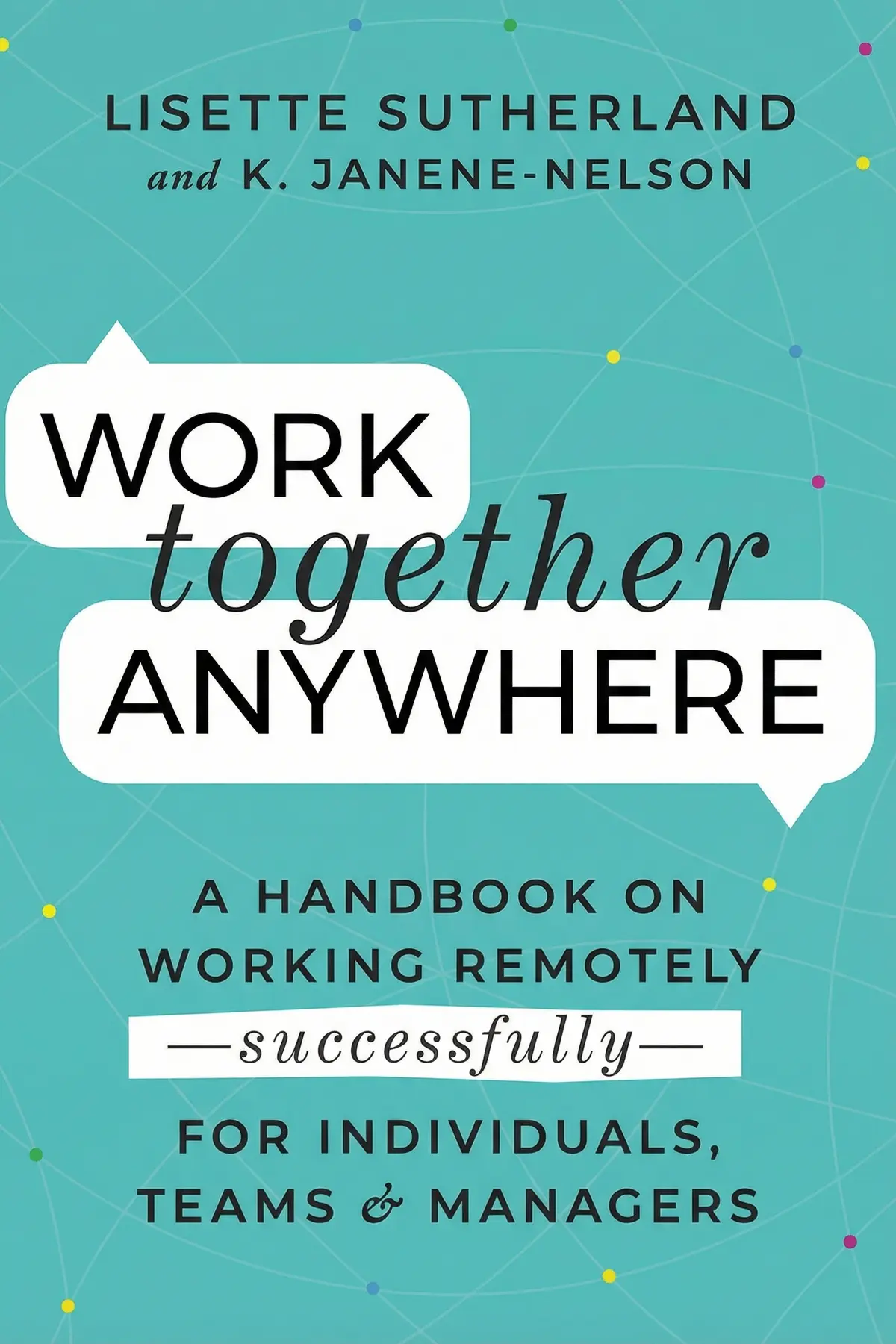
Work Together Anywhere offers a comprehensive roadmap for navigating the shift toward remote work. It provides actionable strategies for managers and employees to foster productivity, build trust, and maintain seamless digital collaboration.
1 min 42 sec
For decades, the concept of work was synonymous with a specific physical location. You woke up, fought through traffic, and spent your day in a cubicle, largely because that was the only way to access the tools and people you needed to be productive. But the landscape has shifted beneath our feet. Today, the technology required to run a global enterprise often fits inside a laptop bag, yet many of us are still operating under the outdated assumptions of the twentieth-century office. This transition can be jarring, and it is natural to feel a sense of hesitation. Managers worry about how to ensure their teams are actually working when they aren’t visible, and employees often fear that stepping away from the physical office might lead to a loss of job security or professional connection.
In this exploration of Work Together Anywhere, we are going to bridge that gap. We will look at why the transition to remote work is not just a convenience, but a strategic advantage that can lead to higher engagement and massive cost savings. We will address the core competencies required to thrive in a digital workspace—from the technical basics to the nuanced communication skills that keep a team synchronized.
This isn’t just about working from home; it’s about a fundamental rethinking of how we measure success and build professional relationships. We will move away from the idea of ‘punching the clock’ and toward a philosophy of results-oriented collaboration. Whether you are a leader trying to manage a scattered workforce or an individual looking to reclaim your time and autonomy, the insights ahead provide the blueprint for the future of work. We’ll cover everything from the initial pilot programs to the long-term rituals that keep a remote culture thriving. By the time we finish, you’ll see that the office is no longer a place you go, but a thing you do—and that you can do it successfully from anywhere in the world.
1 min 36 sec
Traditional office environments often create more obstacles than they solve, making the shift to remote work a logical step for modern professionals seeking efficiency.
1 min 34 sec
Scientific studies prove that remote employees consistently outperform their office-bound counterparts by working more efficiently and taking fewer breaks.
1 min 30 sec
Offering flexible work options is no longer a perk but a vital strategy for retaining top talent and building strong employer-employee bonds.
1 min 34 sec
Transitioning to a distributed workforce allows companies to slash real estate costs while accessing a global pool of elite talent.
1 min 41 sec
To successfully manage remote teams, leaders must stop monitoring ‘time at desk’ and start focusing on measurable results and clear goals.
1 min 37 sec
Thriving in a distributed environment requires a specific set of skills, ranging from self-sufficiency to exceptional written communication.
1 min 36 sec
Avoiding the traps of multitasking and overworking is essential for maintaining both productivity and mental well-being in a home office.
1 min 29 sec
Organizations should move toward remote work through measured pilot programs, allowing them to refine processes before scaling the model.
1 min 33 sec
Vetting for remote-specific skills during the interview process and providing a structured digital ‘buddy’ system are keys to successful hiring.
1 min 34 sec
Maintaining human connection in a digital space requires intentional rituals like virtual stand-ups and dedicated feedback sessions.
1 min 28 sec
Transparency is the antidote to micromanagement; by making work visible through digital tools, teams build trust and eliminate unnecessary check-ins.
1 min 33 sec
Most traditional office perks can be reimagined for remote teams, ensuring that employees feel supported and valued regardless of their location.
1 min 35 sec
As we have seen, the transition to a distributed workforce is far more than a temporary trend; it is a fundamental shift in the global professional landscape. The old model of the centralized office, with its rigid schedules and constant distractions, is giving way to a more fluid, results-oriented approach that prioritizes autonomy and efficiency. By embracing remote work, companies can unlock levels of productivity that were previously thought impossible, while simultaneously cutting costs and accessing the best talent the world has to offer.
The journey toward a successful ‘work anywhere’ culture requires intentionality. It demands that we move away from surveillance and toward trust, from counting hours to measuring outcomes. It requires us to sharpen our communication skills and invest in the right technological foundations. Most importantly, it asks us to rethink our definition of a team. A team is not a group of people who sit in the same room; it is a group of people who share a common vision and have the tools and rituals to pursue it together.
To put these ideas into practice, start by establishing regular feedback loops within your own team. Whether you are a manager or an individual contributor, creating a space for honest communication about what is working and what isn’t will strengthen your professional relationships and improve your output. The future of work is not confined by four walls. It is happening right now, across time zones and borders, and it is available to anyone willing to embrace the change. The office is wherever you choose to make it, and the potential for what we can achieve together, anywhere, is truly limitless.
This guide addresses the fundamental shift from traditional, location-based office cultures to the modern world of distributed teams. It explores the practical and psychological hurdles that often prevent organizations from fully embracing remote work, such as fears regarding productivity and the perceived loss of managerial control. The book promises to dismantle these myths by presenting data-driven evidence that flexible work arrangements actually boost output and employee loyalty. Beyond just making the case for remote work, the authors provide a tactical handbook for implementation. Readers will learn how to vet potential hires for remote-specific skills, how to set up a robust technological infrastructure, and how to maintain a high-performance team culture across different time zones. By focusing on results rather than hours spent at a desk, the guide shows how any organization can leverage a global talent pool while significantly reducing overhead costs. It is an essential manual for anyone looking to master the art of working together, no matter where they are located.
Lisette Sutherland is an accomplished public speaker, entrepreneur, and podcaster who has dedicated her career to the study of remote collaboration. As a remote worker herself, she leads Collaboration Superpowers, an organization that hosts workshops to help teams succeed in distributed environments. This guide marks her debut as an author. Kirsten Janene-Nelson is a seasoned freelance editor and book-publishing consultant. She has collaborated with a diverse range of authors across multiple genres. Her work on this project reflects her own professional experience in remote collaboration, as she partnered with Sutherland to produce this work from a distance.
Listeners offer conflicting perspectives on the book's overall length and redundancy, with some suggesting the information would be more effective if condensed. Nevertheless, many value the deep dive into practical guidance and the specific software suggestions tailored for remote work environments. The authors' functional frameworks are frequently praised, with one listener highlighting that principles like "working out loud" and "assuming positive intent" are superb reminders for fostering strong team communication. Additionally, the checklists and expert interviews provide beneficial support for managers and staff aiming to refine their remote collaboration strategies.
Finally got around to reading this, and I wish I'd had it years ago. Sutherland and Janene-Nelson have compiled an incredibly comprehensive guide that covers everything from individual mindset to corporate policy. What sets this apart is the sheer volume of real-world stories and interviews from people actually doing the work. It’s not just theory; it’s a collection of hard-won wisdom about time zones, team agreements, and conflict resolution. I’ve started implementing the "assume positive intent" framework in my emails, and the change in team morale is already visible. This is essential reading for any modern manager looking to optimize their distributed workforce.
Show moreLisette Sutherland has essentially created the definitive bible for anyone wanting to escape the traditional office grind forever. The book is packed with resources and tools that make the transition to remote work feel manageable rather than overwhelming. I loved the "remote-first" posture the book encourages; it’s a brilliant way to future-proof any organization against sudden shifts in the market. Whether you are a freelancer or a CEO, there is something in here for you. The real-life anecdotes ground the advice in reality, making the strategies feel achievable. It’s an inspiring read that proves collaboration doesn’t need a physical office to thrive.
Show moreAs a team lead who transitioned to remote work during the pandemic, I found this handbook quite grounding. The authors provide a wealth of practical tips that go beyond just "set up a desk." I particularly liked the focus on "working out loud" to keep everyone in the loop without micromanaging. The checklists at the end of the chapters are gold for anyone trying to build a remote-first culture from scratch. While it does get a bit wordy in the middle, the specific tool recommendations and expert interviews make it a valuable resource. It serves as a great reminder that communication must be intentional when you aren't in the same room.
Show morePicked this up specifically for the checklists and the "working out loud" frameworks mentioned by colleagues. It didn’t disappoint in that regard. The book is a bit on the long side, sure, but it acts more like a reference manual than a narrative you read cover-to-cover. I found the sections on managing cross-timezone teams particularly insightful because that’s where my own team struggles most. Being explicit about how we interact and setting clear team agreements has already smoothed out some of our daily friction. It’s a practical, hands-on guide for anyone looking to optimize their distributed workforce without losing their mind.
Show moreLooking back at my team's recent friction, the chapter on assuming positive intent was a total lightbulb moment for me. In a remote setting, it is so easy to misread the tone of a quick message or a missed deadline. This book teaches you how to step back and prioritize the human element of collaboration. The authors provide actionable advice on building trust and maintaining relationships when you can't grab a coffee together. I did find some of the chapters a bit repetitive, but the core message is so important that I didn't mind the reminder. It’s all about being intentional in every interaction.
Show moreThis book covers a staggering amount of ground, ranging from basic home-office setups to complex cross-timezone management strategies. I appreciated the diversity of industries represented in the expert interviews, which showed that remote work isn't just for tech companies. Frankly, it’s a bit long-winded at times, and you’ll definitely notice some ideas being recycled across different chapters. But the actionable frameworks for showing appreciation and handling staff transitions are too good to ignore. It’s a solid resource that provides a roadmap for healthy team communication in a digital world where the old rules no longer apply.
Show moreEver wonder if your home setup is actually hindering your productivity? This book tackles that question and many others, though the results are a mixed bag. On one hand, the specific tools for collaboration mentioned were things I hadn't heard of before. On the other hand, some of the suggestions felt a bit bizarre, like taking heated arguments to a dedicated "pillow-fight" channel on Slack after a failed one-on-one. That seems like a recipe for HR disasters. It’s a decent starting point for beginners, but experienced digital nomads might find it a bit too basic. The redundancy is also quite noticeable if you read it straight through.
Show moreTo be fair, the audiobook narration by Megan Tusing is excellent even if the text itself feels a bit bloated. I listened to this while commuting—ironic, I know—and found some gems among the repetition. The idea of creating a communicative environment through frequent feedback loops is vital for any team's success. However, the audiobook format makes the interactive parts, like the quizzes, a bit clunky to follow without the PDF references. I think this could have been a much stronger book if it were about 100 pages shorter. It’s useful, but you have to dig for the best parts through layers of redundant phrasing.
Show moreNot what I expected from the glowing blurbs. While the core message about remote work being a necessity rather than a luxury is solid, the execution is incredibly repetitive. I felt like the authors were saying the same three things in every chapter just to hit a page count. Honestly, you could probably find most of this information by spending twenty minutes on a decent business blog or doing a quick Google search. It’s not that the advice is bad—it’s just very thin. If you’ve worked remotely for more than a month, you likely already know half of what is written here. I found myself skimming large sections because the anecdotes felt like filler.
Show moreThe truth is that most of this information feels dated in a post-2020 world where everyone has already adapted to Zoom and Slack. While the authors clearly know their stuff, the book suffers from extreme redundancy that makes it a chore to finish. I kept waiting for a deep dive into advanced strategies, but it stayed on the surface level of "use video" and "have meetings." The quotes from interviews were interesting at first, but eventually, they just started to feel like they were padding the length. It’s a lot of common sense dressed up as professional insight. I wouldn’t recommend it unless you are completely new to the concept of working from home.
Show moreAUDIO SUMMARY AVAILABLE
Get the key ideas from Work Together Anywhere by Lisette Sutherland, plus 5,000+ more titles in English and Thai.