
13 min 36 sec
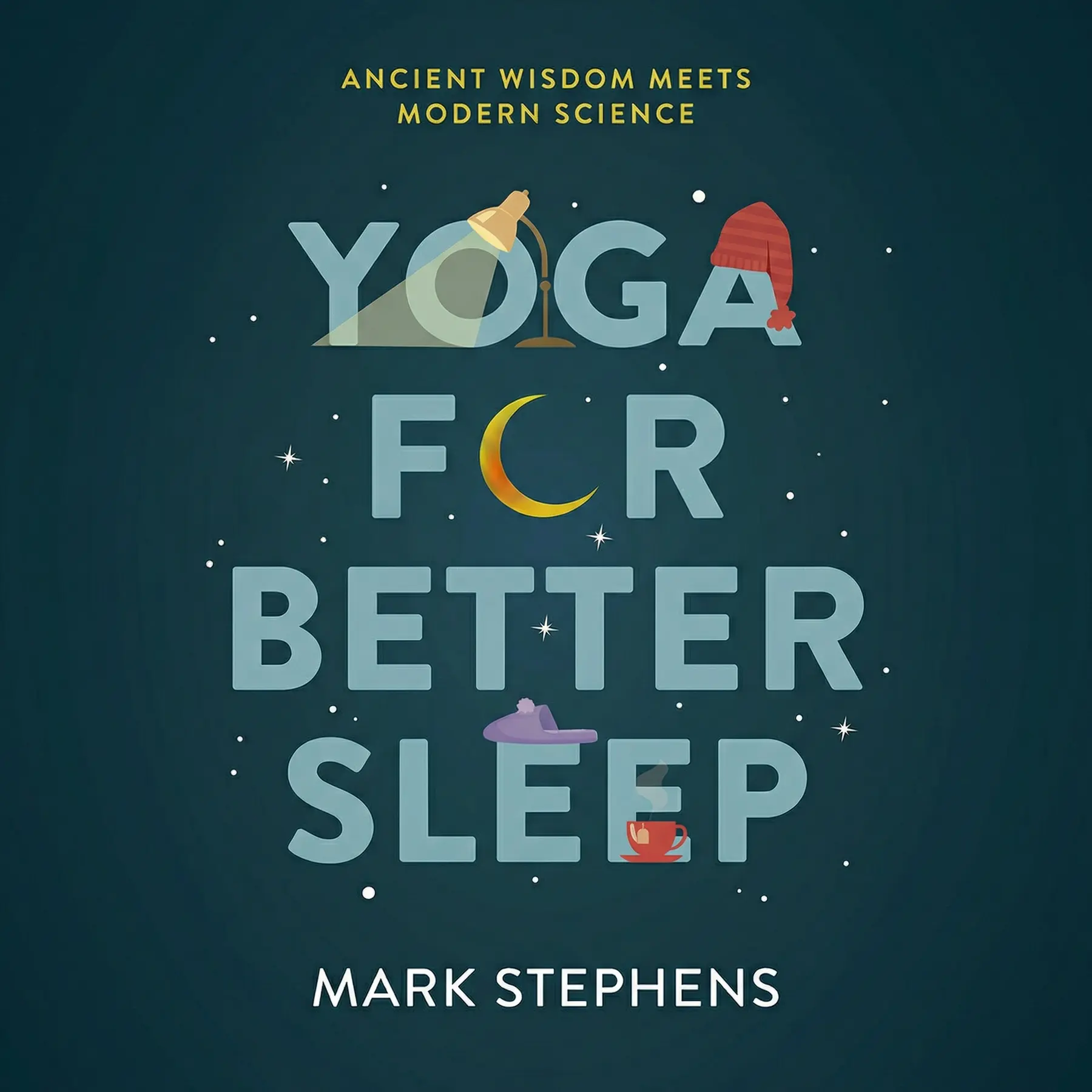
Yoga for Better Sleep: Ancient Wisdom Meets Modern Science
Discover how ancient yogic wisdom and modern science converge to solve sleep issues. This guide offers practical yoga sequences, breathing techniques, and mindfulness practices to help you achieve deep, restorative rest.
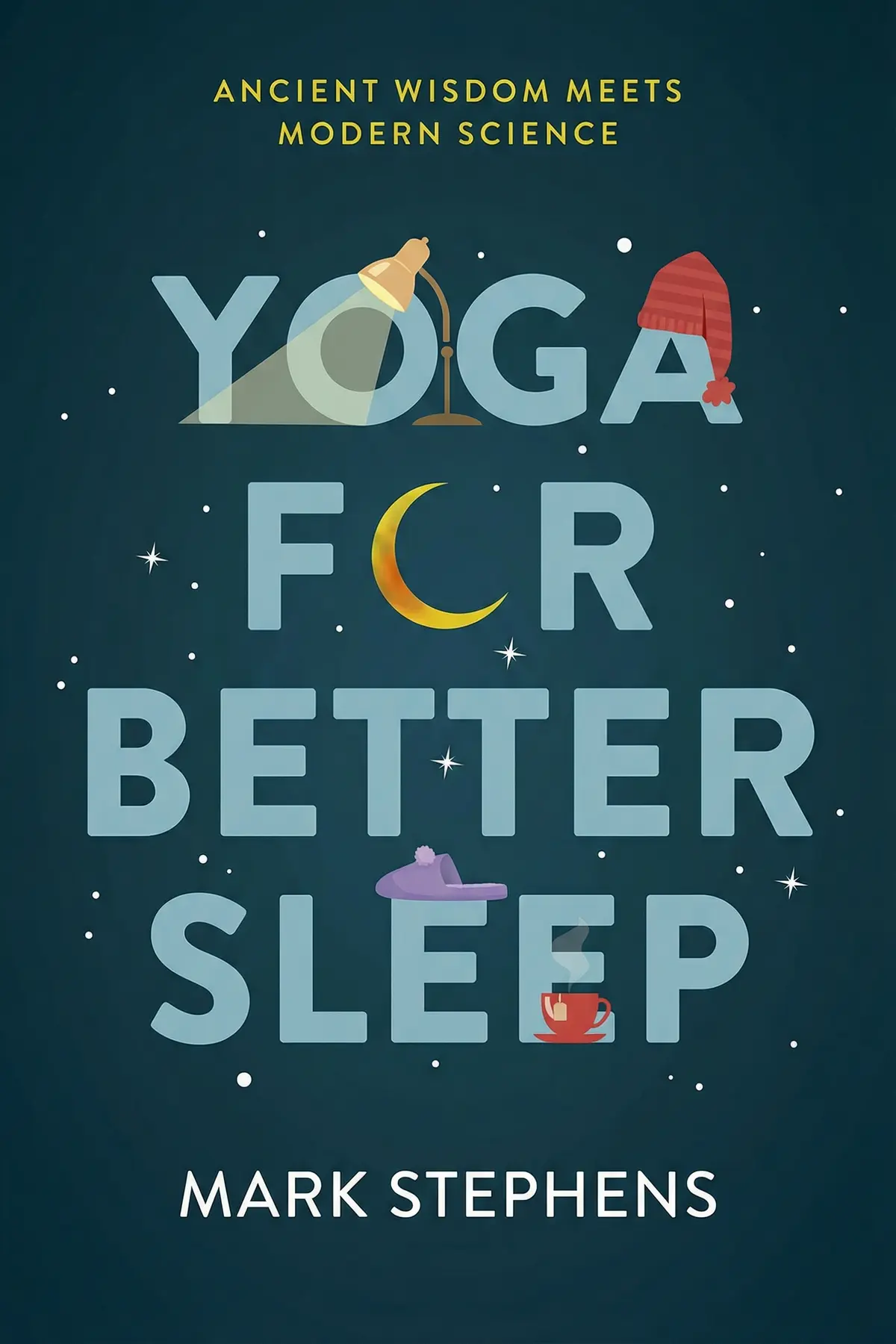
Table of Content
1. Introduction
1 min 35 sec
Have you ever considered that sleep is more than just a biological necessity? In the ancient tradition of yoga, sleep is viewed as a vital component of a balanced life, a state where the body and mind find a unique kind of harmony. But in our modern, fast-paced world, that harmony is often the first thing we lose. We find ourselves tossing and turning, our minds racing with the day’s worries, while our bodies remain locked in a state of tension. This is where the wisdom of Mark Stephens comes in, offering a bridge between the physical practices of the East and the neurological insights of the West.
The core idea here is that we can actually train our bodies to sleep better. It isn’t just about luck or having the right mattress; it’s about achieving what yogis call ‘samatvan,’ or a state of homeostatic balance. When we are in this state, we feel clear-headed, vibrant, and emotionally stable. When we lose it, we descend into a fog of irritability and exhaustion. Throughout this summary, we are going to explore how specific movements, breathing patterns, and shifts in awareness can act as a key, unlocking the door to the deep, restorative rest your body craves. We will walk through structured routines that address the physical and mental barriers to sleep, providing you with a toolkit to transform your nights and, by extension, your days. By the end of this journey, you’ll understand how to use your own body and breath to navigate the transition from the chaos of the day to the stillness of the night.
2. The Philosophy of Equilibrium and the Consequences of Imbalance
2 min 06 sec
Explore the yogic concept of samatvan and discover why sleep is the ultimate foundation for mental clarity and physical vitality in an overstimulated world.
3. Harnessing the Nervous System Through Three Pillars of Yoga
1 min 57 sec
Learn how the synergy of asanas, pranayama, and meditation can shift your body from a state of high alert to one of deep relaxation and safety.
4. A Foundation for Rest: The Basic Sleep Sequence
1 min 58 sec
Discover a gentle, thirty-minute routine designed to dissolve tension and quiet the mind, creating a perfect bridge between your day and your dreams.
5. Defeating Hyperarousal: Targeted Practice for Stress and Anxiety
2 min 19 sec
Understand the impact of cortisol and hyperarousal on your sleep, and learn specific techniques to root out deep-seated anxiety and muscle tension.
6. The Science and Art of the Breath as a Sleep Aid
2 min 06 sec
Dive deep into the mechanics of yogic breathing and discover how simple shifts in your respiratory rhythm can instantly lower your heart rate and calm your brain.
7. Conclusion
1 min 35 sec
As we bring this exploration of yoga for sleep to a close, it’s important to remember the central throughline: your body already knows how to find balance; it just needs the right environment and the right cues to get there. Sleep is not a luxury, but the very foundation upon which your physical health and mental clarity are built. By incorporating the asanas, breathing techniques, and meditative practices we’ve discussed, you are doing more than just stretching; you are actively retraining your nervous system to move from a state of alert to a state of rest.
The beauty of this approach is its holistic nature. It recognizes that the tension in your shoulders, the speed of your breath, and the noise in your mind are all interconnected. When you address one, you help the others. Whether you choose the basic thirty-minute sequence to unwind after a long day or the more targeted practices to combat deep-seated anxiety, the goal remains the same: to reach that state of samatvan where your mind and spirit are in harmony.
As you move forward, try to view your pre-sleep routine as a sacred window of time. Instead of looking at screens or worrying about tomorrow, use your breath and your body to signal to yourself that the day’s work is done. With consistency, these practices will help you bid farewell to those restless nights and morning grogginess. You’ll find yourself waking up with a renewed sense of vitality, ready to face the world with a clear mind and a rested heart. The path to better sleep is literally within your own breath and movement—all you have to do is begin.
About this book
What is this book about?
Yoga for Better Sleep explores the profound connection between our physical state and the quality of our rest. It posits that sleep isn't just something that happens to us, but a state of equilibrium we can actively cultivate. By merging the ancient traditions of yoga with contemporary sleep science, the book provides a holistic roadmap for anyone struggling with insomnia, restlessness, or general stress. The promise of this work is a transformation of your nightly routine. It moves beyond simple advice to offer specific, actionable sequences designed to trigger the body’s internal relaxation mechanisms. You will learn how the combination of physical postures, or asanas, intentional breathwork, and meditation can quiet a racing mind and release the physical tension that often keeps us awake. Whether you are dealing with chronic sleep disorders or just looking for more vitality, these practices aim to restore your natural rhythm and help you wake up feeling truly rejuvenated.
Book Information
About the Author
Mark Stephens
Mark Stephens is a renowned yoga instructor and author who has dedicated his career to helping people overcome insomnia and sleep issues through the practice of yoga.
Ratings & Reviews
Ratings at a glance
What people think
Listeners offer diverse perspectives on the book's heavy, scholarly prose, with some feeling it functions more like a dense textbook than an easy-to-read handbook. That said, many value the profound scientific analysis regarding sleep patterns and the extensive bibliography provided. The guide also receives acclaim for its accessible yoga sets and visuals, with one listener remarking that it includes superb variations for each movement to suit varying degrees of flexibility. Furthermore, they highlight that the specific protocols for concerns like jet lag and hyperarousal establish this as a thorough tool for anyone looking to improve their nighttime rest.
Top reviews
Tun
Mark Stephens has created what I would call the definitive encyclopedia for rest. Most yoga books just show you a child's pose and tell you to breathe, but this goes into the nitty-gritty of circadian rhythms and hormonal shifts. The bibliography alone is massive, proving that every suggestion is rooted in legitimate scientific research rather than just vague wellness trends. I was particularly impressed by the 'hyperarousal' sequence, which helped me calm my racing thoughts after a particularly stressful week at the office. To be fair, you probably won't read this cover to cover in one sitting because of the academic tone. Instead, it’s a resource you’ll keep coming back to whenever your sleep patterns start to drift. The modifications for each pose ensure that even if you aren't flexible, you can still find a restorative position that works for your body.
Show moreValentina
Finally got around to trying the sequences in this book, and the results have been genuinely transformative for my nighttime routine. What sets this apart from other guides is the incredible inclusivity; Stephens provides multiple modifications for every single pose. Each asana comes with a list of 'special sensitivities' so you know exactly what to watch out for if you have injuries. I love that he doesn't assume everyone is a master yogi with perfect flexibility or a young body. The focus on breathing techniques combined with gentle movement has significantly lowered my bedtime anxiety over the last few weeks. While it is a heavy, information-rich book, the clarity of the photos makes the practical side very accessible for beginners. This is a must-have for anyone who wants a more scientific, grounded approach to their personal yoga practice.
Show morePensri
This is quite possibly the most comprehensive book on the intersection of yoga and sleep science currently on the market. I’m a healthcare professional, and I was genuinely impressed by the 26-page bibliography and the thoroughness of the glossary. It’s rare to find a wellness book that doesn’t rely on anecdotes, but Stephens backs up every claim with hard data and clinical studies. The way he breaks down the stages of sleep makes the subsequent yoga sequences feel much more purposeful and effective. I especially appreciated the sections tailored to depression and lethargy, which offer a different approach than the standard 'relaxing' routines. Even though it's formatted like a textbook, the layout makes it easy to flip to the specific index or sequence you need. It’s an investment in your health that pays off in much better mornings.
Show moreTalia
As someone who has struggled with chronic insomnia for years, I found the level of detail here both impressive and slightly daunting. It isn't just a list of poses; Mark Stephens dives deep into the actual neurobiology of why our brains refuse to shut down at night. Truth be told, it feels more like a college-level syllabus than a breezy bedside guide, which might turn off some readers looking for quick fixes. However, once you get to the actual sequences, the black-and-white photos are incredibly clear and the instructions are easy to follow even when you're exhausted. I particularly appreciated the section on 'sleep pressure' and how my afternoon naps were actually sabotaging my night. It’s a dense read, but if you’re serious about fixing your rest, the science-backed approach is worth the effort.
Show moreJib
After hearing so many good things about Mark Stephens, I decided to give this a try to help with my fatigue and general sleep quality. The depth of the research is staggering, and I actually learned quite a bit about how my environment was working against me. His tips on sleep hygiene—like keeping the room cool and sticking to a rigid schedule—were simple but effective reminders of what I should be doing. The yoga sequences themselves are the real highlight, featuring real people of various ages and body types in the demonstrations. Look, it’s a bit of a dense slog to get through the theoretical parts, but the practical applications are top-notch. I’ve started doing the basic sleep sequence every night, and I’ve noticed a significant decrease in the time it takes me to actually drift off.
Show morePooja
Using the Basic Yoga Sleep Sequence has become a staple in my nightly ritual over the past month. I appreciate how the book addresses specific issues like jet lag and shift work, which are often ignored in general yoga guides. The photographs are helpful for ensuring proper alignment, and the instructions are detailed without being overly confusing. One minor gripe is that the book is quite physically large and heavy, making it a bit awkward to use while you're actually trying to follow the poses. However, the content is stellar, especially the way Stephens explains how different types of yoga can either stimulate or calm the nervous system. If you can handle the academic tone, you’ll find a wealth of knowledge that most other sleep books simply gloss over. It’s a very thorough, well-researched guide for serious seekers of rest.
Show moreCharles
I was initially drawn to the sections on jet lag and shift work, which was the main reason I picked this up. While the information provided was solid, I found the delivery to be incredibly dry and clinical. I wasn't expecting a 300-page manual that reads like a medical journal, and I found myself skimming large chunks of the introductory theory. Not gonna lie, I felt like I needed a nap just trying to process the data on sleep cycles and REM stages. That said, the actual yoga sequences are very well thought out and the black-and-white photos help immensely with my alignment. If you can push past the dense academic language, there is a lot of practical gold hidden in these pages. It’s just not the 'fun' yoga book I was hoping for when I first placed my order.
Show moreNongnuch
Ever wonder why you can't fall asleep even when your body feels like lead? This book explains the 'why' in exhaustive detail, though sometimes I felt like I was back in a high school biology class. Mark Stephens is clearly an expert, but he doesn't use a light touch when explaining things like the glymphatic system or sleep architecture. I found the section on avoiding blue light and late-night meals a bit repetitive since that info is everywhere nowadays. However, the specific routines for lethargy versus hyperarousal were a fresh perspective that I hadn't encountered in other yoga books. It’s a solid reference tool to keep on the shelf, but it's definitely not a light read to enjoy before you drift off. Use it as a textbook, not a novel, and you won’t be disappointed by the heavy style.
Show moreYothaka
Picked this up because I’ve been struggling with middle-of-the-night wakefulness lately. Frankly, the book is a bit of a mixed bag; the information is fantastic, but the presentation is so academic that it’s hard to stay engaged. I was hoping for more 'how-to' and a little less 'why-this-happens-at-a-cellular-level,' if I'm being honest. The instructions for the asanas are clear, but there’s so much preamble that it feels like forever before you actually get onto the mat. On the plus side, the modifications for those of us who aren't super bendy are excellent and very well-illustrated. It’s a high-quality resource, but you need to be prepared for the dry, textbook-style writing that characterizes the first half. It’s a useful tool, but maybe not the most 'relaxing' read for your nightstand.
Show moreRania
Not what I expected when I purchased a book about yoga, as I was looking for a simple guide to help me unwind at night. This reads like a PhD thesis on sleep science rather than a practical manual for a beginner. There is so much text and so much technical jargon that it actually made me more stressed trying to understand the 'mechanisms' of my insomnia. I appreciate the research, but the bibliography is almost thirty pages long, which tells you everything you need to know about the tone. It’s very dense, very academic, and quite frankly, a little boring for the average reader. If you want to study sleep in a lab, buy this; if you just want five minutes of stretching before bed, look elsewhere. The photos are okay, but they are buried under mountains of data.
Show moreFeatured in
Readers also enjoyed


AUDIO SUMMARY AVAILABLE
Listen to Yoga for Better Sleep in 15 minutes
Get the key ideas from Yoga for Better Sleep by Mark Stephens, plus 5,000+ more titles in English and Thai.
- 5,000+ titles
- Listen as much as you want
- 7-day free trial
- Cancel anytime







