Alexander Hamilton
Ron Chernow
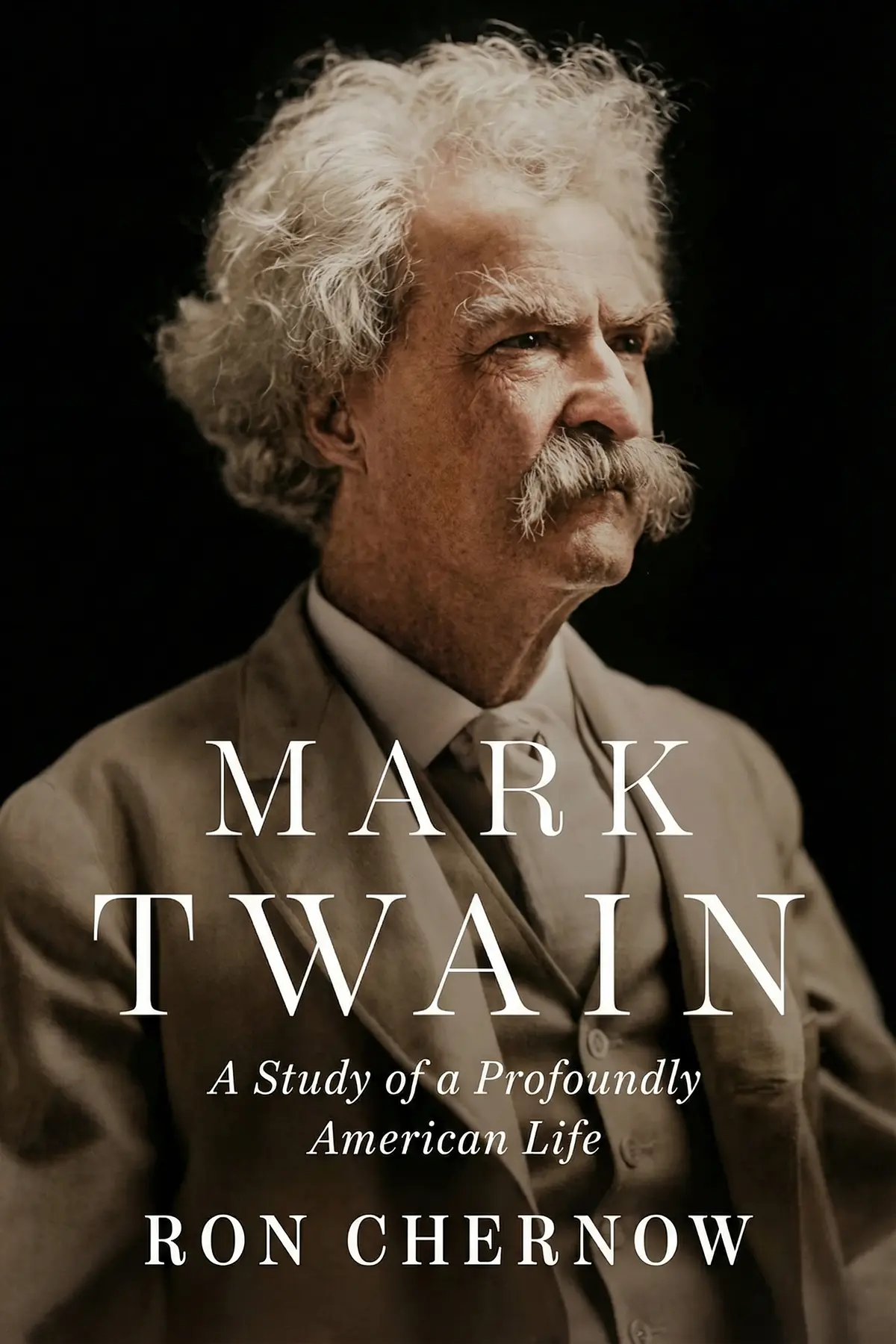
An expansive look at the life of Samuel Clemens, the man behind Mark Twain, charting his transformation from a Missouri river boy to an international literary sensation and cultural icon.
2 min 02 sec
Mark Twain was a man who famously doubted whether any outsider could truly understand him. He once remarked that biographers usually only managed to capture the visible surfaces of a person—the metaphorical clothes and buttons—while the actual soul remained hidden and silent. It is ironic, then, that few figures in history left behind such a massive paper trail for future researchers to follow. Over a career spanning more than half a century, he produced hundreds of notebooks, thousands of articles, and a staggering amount of autobiographical material. He was a man of immense contradictions, much like the poet Walt Whitman, who famously claimed to contain multitudes.
To try and navigate this sea of information, biographer Ron Chernow spent years immersing himself in everything Twain ever touched. The result is a monumental study that seeks to move past the buttons and clothes to find the man himself. We are looking at a life that mirrored the growth of America itself—moving from the rural riverbanks of the Midwest to the sophisticated drawing rooms of Europe, all while wrestling with the deep-seated tensions of the nation.
In this exploration, we are going to follow the arc of that life. We will see how a mischievous boy named Sam Clemens transformed himself into the global brand of Mark Twain. We’ll look at the formative years on the Mississippi River, the wild days of the American West, the period of immense wealth and fame, and finally, the heartbreaking tragedies that darkened his final years. It is a journey through the heart of a profoundly American existence, showing how one man’s voice managed to liberate a whole nation’s literature. By the end, we will understand not just the writer, but the complicated human being who used humor to mask a deep and often troubled understanding of the world.
2 min 15 sec
Discover how the Mississippi River shaped the imagination of a young boy in Missouri, serving as both a playground and a witness to the horrors of slavery.
1 min 55 sec
Follow the journey from a brief and failed military stint to the silver mines of Nevada, where Sam Clemens began to refine his unique literary style.
1 min 51 sec
Step into the luxurious world of Twain’s marriage to Olivia Langdon, where the ‘low-down’ writer found himself embraced by America’s elite.
1 min 40 sec
Explore the creative peak that produced Tom Sawyer and Huckleberry Finn, works that fundamentally changed the landscape of American storytelling.
2 min 07 sec
Witness the darker side of Twain’s ambition as his obsession with strange inventions and bad business deals led him to the brink of ruin.
1 min 53 sec
Trace the heartbreaking series of family losses and professional frustrations that transformed Twain’s humor into biting social critique.
1 min 52 sec
Learn about the mysterious cosmic timing of Twain’s death and why his voice remains the essential foundation of the American literary tradition.
1 min 35 sec
As we look back at the life of Samuel Clemens, we see a story that is as vast and winding as the Mississippi itself. From his humble beginnings as a printer’s apprentice to his status as a global literary icon, he embodied the restlessness and the ingenuity of the American spirit. He was a man of deep contradictions—a humorist who was often consumed by grief, a champion of the common man who loved the trappings of wealth, and a writer who mistrusted biography yet left behind enough documents to fill a library.
What remains after the ‘clothes and buttons’ are stripped away is the voice. It is a voice that refused to be silenced by tragedy or financial ruin, and one that consistently challenged the hypocrisies of its time. He taught us that the way we speak is as important as what we say, and that the American identity is found in our ability to laugh at ourselves even when things are at their darkest.
The lesson of Twain’s life is perhaps found in his resilience and his commitment to the truth, however uncomfortable it might be. Whether he was exploring the morality of the frontier or the grief of a father, he did so with an honesty that continues to resonate. As you move forward, consider the power of your own voice and the stories that define your world. Just as Twain found his identity in the flow of a great river, we all have the opportunity to find our own truth in the currents of our lives. Thank you for joining us for this look at a truly remarkable and profoundly American life.
This exploration traces the multifaceted life of Samuel Clemens, famously known as Mark Twain. It follows his path from the banks of the Mississippi to the rough mining camps of Nevada, and eventually to the high-society circles of the Gilded Age. The narrative explores his literary triumphs, such as Huckleberry Finn, alongside his disastrous business ventures and his deep personal tragedies. It promises a look at the man who gave America its own unique voice, revealing a complex figure who balanced biting wit with profound melancholy. By examining his personal notebooks and the cultural landscape of his time, this summary provides a comprehensive view of how Sam Clemens became the definitive voice of the American experience.
Ron Chernow is a celebrated biographer known for his detailed accounts of American historical figures. He has written about financial giants like Rockefeller and political leaders like George Washington. His work on Alexander Hamilton became the basis for a world-famous musical.
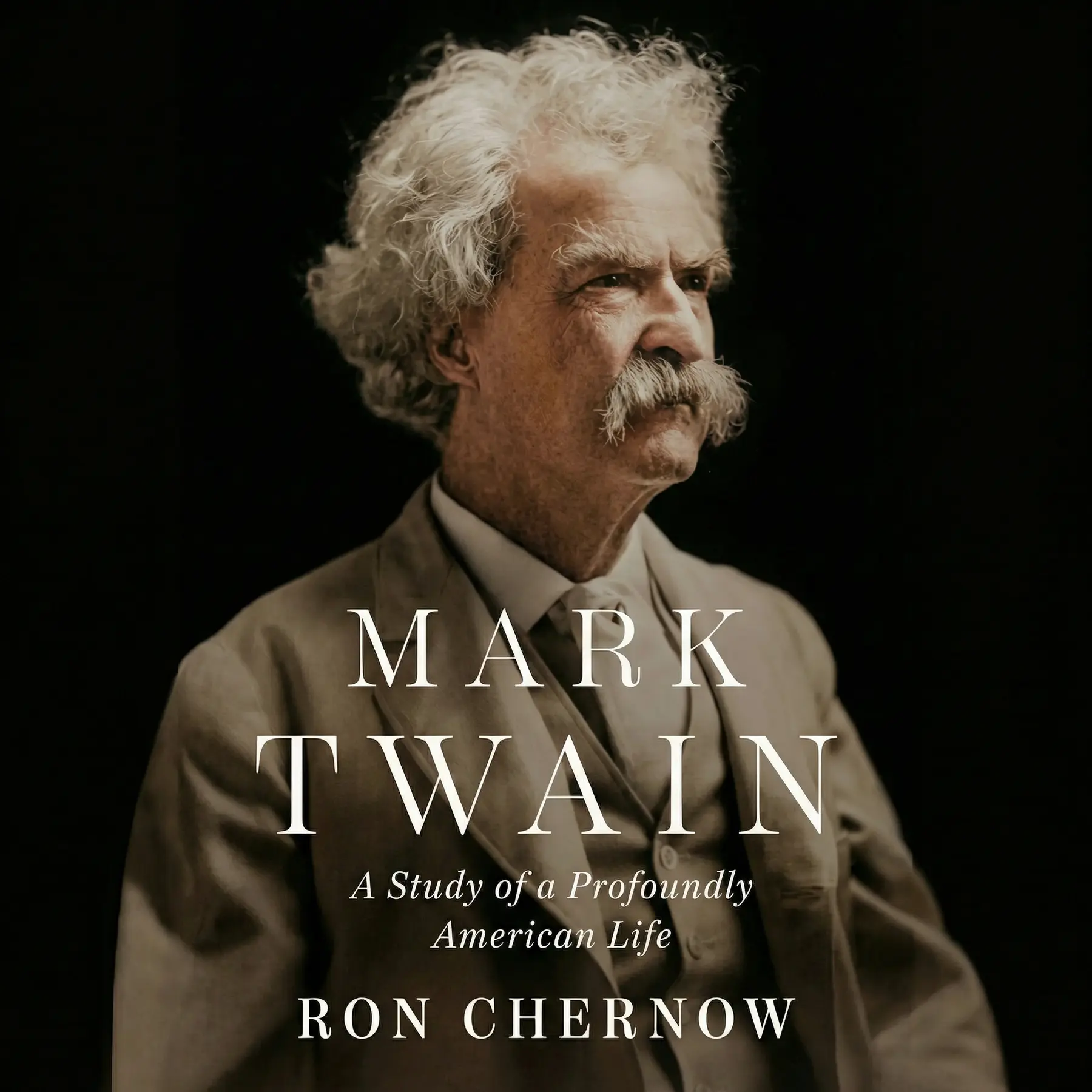
Listeners find this biography of Mark Twain remarkably thorough and well-documented, with superior writing and fascinating people throughout. Additionally, the book keeps the audience's attention from start to finish. However, the scale gets mixed reviews, as many find it too long at 1200 pages, and the tempo is criticized for being repetitive at times. While the work is very comprehensive, some listeners find it too detailed.
Ron Chernow has done it again by taking a legendary figure and peeling back the layers of myth to find the vulnerable, often infuriating man underneath. Frankly, I thought I knew Mark Twain, but this biography paints a far more complex picture of Samuel Clemens than the witticisms in the white suit suggest. The connection Chernow draws between Twain’s publishing efforts and his relationship with Ulysses S. Grant was particularly fascinating. It’s a massive undertaking at over 1,000 pages, but the prose is so elegant that the time flies by. You see the Gilded Age through the eyes of its greatest satirist. The research is deep and exhaustive. I was especially moved by the descriptions of his family life in Hartford; his devotion to Livy was the anchor of his chaotic life. This is easily the definitive biography of an American icon.
Show moreAfter hearing so much buzz about this, I finally dove in, and I’m just stunned by the scale of the research. Reading this felt like stepping onto a Mississippi steamboat alongside Sam Clemens himself. Chernow’s framing of Twain’s life between the two appearances of Halley’s Comet provides a poetic structure to a life that was otherwise quite messy. The way the author explores Twain’s transition from a young man in a slave-holding town to a national conscience is handled with incredible nuance. The writing is vivid and energetic. It’s rare to find a biography that captures both the humor and the deep melancholy of its subject so effectively. Yes, it’s a thick book, but every chapter adds a new layer to our understanding of the American identity. Absolutely essential reading for any fan of literature.
Show moreHow does a boy from a slave-holding river town become the most influential voice in American letters? Chernow answers this question with a staggering amount of detail and grace. Not gonna lie, I was worried about the length, but the author’s ability to weave Twain’s personal letters into the narrative makes it feel surprisingly intimate. You feel his excitement on the Mississippi and his crushing despair in the wake of his family’s health crises. The book brilliantly demonstrates how Twain’s identity was forged in the 'cultural crosscurrent' of Hannibal. It’s more than just a life story; it’s a history of 19th-century America. I loved the bits about his friendship with Helen Keller and his late-life political activism against imperialism. It’s a monumental achievement that honors the complexity of its subject. Chernow remains the king of the biography.
Show moreChernow’s ability to weave thousands of letters into a cohesive narrative is unparalleled in modern biography. This isn't just a collection of anecdotes; it's a deep psychological profile of Sam Clemens. The truth is, Twain was a deeply flawed man—selfish, impulsive, and often bitter—but Chernow makes you root for him anyway. The sections on his time in Nevada and San Francisco are riotously funny and perfectly capture the 'wild, uproarious energy' of the West. I was also impressed by the detailed account of his publishing house. Even though the business stuff is dense, it shows how desperately Twain wanted to be a tycoon. The book is a beautiful tribute to a man who basically invented the modern celebrity. If you have the patience for the page count, you’ll be rewarded with a masterpiece.
Show moreBeyond the white suit and the cigars, Chernow reveals a man plagued by grief and terrible investments. This biography is a masterclass in character study. It doesn't just focus on the literary triumphs like Huckleberry Finn; it dives into the domestic tragedies that shaped the author’s later pessimism. The death of his daughter Suzy and the struggles with Jean’s epilepsy are handled with such profound empathy. I appreciated how much space was given to his wife, Livy, who clearly acted as his moral and literary compass. Without her, Twain might have been a much darker, less disciplined writer. Some sections on his global speaking tours felt a bit long-winded, but the insights into his creative process made it worth the slog. It’s an intimate portrait of a man who was his own worst enemy.
Show moreThe final chapters paint a surprisingly dark picture of America’s favorite humorist, and that’s where this book really shines. Most people think of Twain as a jolly grandpa, but Chernow exposes the 'bottom of fury' that fueled his fun. Personally, I found the exploration of his later years—the loneliness, the cynicism, and his obsession with his 'angel-fish' club—to be the most revealing parts of the narrative. It’s a tragic arc. He went from being the most famous man in the world to a grieving father living in a self-imposed exile. The book is definitely long, and some of the financial details could have been trimmed. Still, the way Chernow contextualizes Twain within the Gilded Age is brilliant. You really understand why he was such a polarizing and yet beloved figure. It’s a heavy read but a rewarding one.
Show moreSam Clemens was a walking paradox—a skeptic who fell for every 'get rich quick' scheme in the book. This biography captures that duality perfectly. One moment he’s the world-wise satirist, and the next he’s a naive investor losing a fortune on a typesetting machine that never works. Gotta say, I appreciated how Chernow didn't shy away from Twain’s darker moods or his occasional lapses into racism. It makes the 'reconstructed' Twain of later years feel much more earned. The relationship with Livy is the heart of the book, and her role as his editor is fascinating. My only gripe is that the pacing stumbles in the middle when he’s traveling back and forth to Europe. A bit more focus on the writing of the major novels would have been nice. Overall, it’s a stellar, if slightly ponderous, work.
Show moreFinally finished this behemoth after three weeks of dedicated reading. It was a journey. While I found the Missouri secession error on page 66 a bit distracting, the rest of the book is an absolute treasure trove of information. Chernow’s background with the Grant biography really pays off here, as the scenes between the two men are some of the best in the book. The tragedy of Twain’s daughters, particularly Suzy’s death while he was away on tour, is written with such heartbreak that it stayed with me for days. It’s a very detailed look at a very loud life. Some might find the 1,200 pages a deterrent, but if you want to understand the man behind the mustache, there’s no better source. It’s a bit repetitive regarding his debts, but the prose keeps you moving.
Show moreIs it possible for a biography to be too thorough? In my experience with Chernow, he usually finds the right balance, but this one felt like it needed a much heavier editorial hand. While the detail is impressive, the pacing slows to a crawl during the endless descriptions of Twain’s failed business ventures and the Paige typesetter debacle. Furthermore, as a historian from the Midwest, I found it jarring to see the author claim Missouri seceded from the Union on page 66. That’s a significant factual blunder that makes me question other nuances regarding Twain’s early years in Hannibal. The book is well-written, and Chernow captures Twain’s voice beautifully when quoting his letters. However, the repetitive nature of Twain’s financial mismanagement became tedious after the first five hundred pages. It’s a good book, just incredibly overstuffed.
Show moreI wanted to love this, but 1,200 pages of financial mismanagement and domestic brooding is simply exhausting. Look, Chernow is a talented writer, but this book is bloated beyond belief. I felt like I was reading the same story of a failed business scheme over and over again. By the time we got to the 'angel-fish' years near the end of his life, the tone became quite unsettling and, quite frankly, a bit creepy. The author spends so much time on the minutiae of Twain’s daily schedule that the genius of his actual writing gets lost in the shuffle. I also noticed the historical error regarding Missouri’s secession, which is disappointing for a biographer of this stature. It lacks the tight narrative drive that made his Hamilton biography so compelling. It’s just too much information for the sake of information.
Show more
Ishmael Beah

James Herriot


Barack Obama


Masaji Ishikawa

Ben Macintyre

Virginia Woolf

AUDIO SUMMARY AVAILABLE
Get the key ideas from Mark Twain by Ron Chernow, plus 5,000+ more titles in English and Thai.