
Alexander Hamilton
Ron Chernow
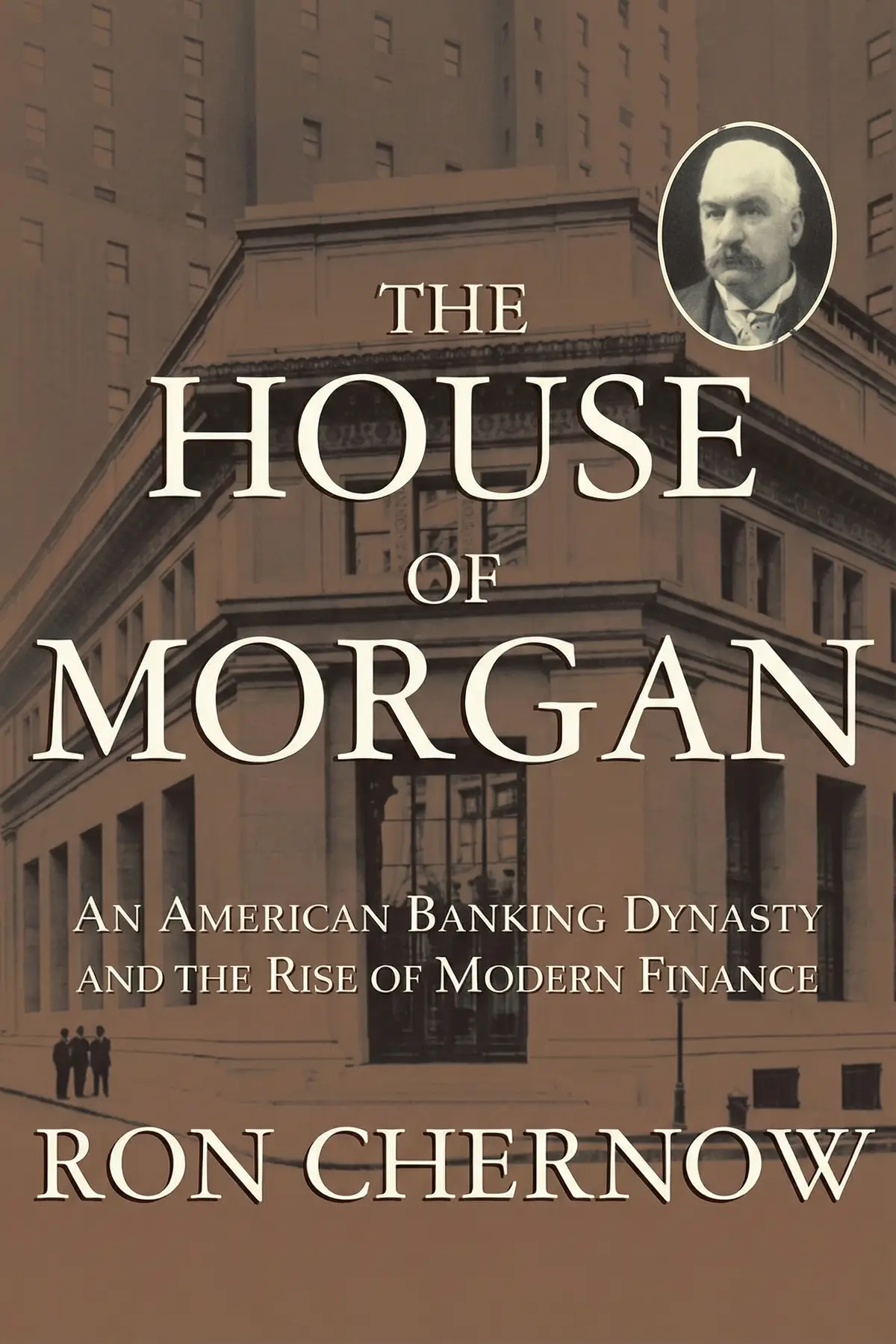
Explore the history of the legendary Morgan banking dynasty. This summary traces the family’s ascent from Victorian London to the pinnacle of American finance, revealing how they shaped the global economy.
1 min 42 sec
When we think about the modern financial landscape, it’s easy to see it as a collection of faceless corporations and digital algorithms. But for a significant portion of the nineteenth and early twentieth centuries, the world’s economy didn’t revolve around code; it revolved around a name: Morgan. In the epic chronicle of The House of Morgan, we are invited into the smoky boardrooms and grand libraries where a single family essentially acted as the world’s central bank before such institutions even existed.
This isn’t just a story about numbers or balance sheets. It is a story about power, character, and the evolution of the American dream from the perspective of its most elite architects. We are going to trace a journey that begins in the rigid, high-collar world of Victorian London and moves through the explosive industrial growth of the United States, eventually landing in the complex, regulated world of modern finance. The throughline here is the concept of ‘Gentlemanly Banking’—a code of conduct and a system of personal loyalty that governed the flow of billions of dollars across the globe.
As we explore this history, notice how the influence of the House of Morgan wasn’t just about accumulating wealth; it was about imposing order on the chaotic, often destructive forces of raw capitalism. From the railroads that crisscrossed the American continent to the massive industrial mergers that created household names like General Electric and U.S. Steel, the Morgan imprint is everywhere. By looking at how this dynasty rose, adapted, and eventually transformed under the weight of its own power, we gain a unique perspective on the forces that continue to drive our global economy today. Let’s dive into the four generations of the House of Morgan and see how they built the framework of the financial world we live in.
2 min 13 sec
The Morgan legacy didn’t start in New York but in the prestigious banking circles of London. Discover how Junius Morgan established the family’s reputation for uncompromising integrity.
2 min 04 sec
J.P. Morgan revolutionized American business by replacing cutthroat competition with orderly consolidation. This process redefined the corporate landscape and created the first billion-dollar company.
1 min 52 sec
Before the creation of the Federal Reserve, the United States relied on the House of Morgan to prevent economic collapse. Learn how Pierpont saved the nation during the Panic of 1907.
2 min 00 sec
The onset of World War I shifted the focus of the House of Morgan from industrial consolidation to global diplomacy and government finance.
2 min 01 sec
The 1929 market crash and the subsequent Great Depression brought a crushing end to the era of the all-powerful Morgan partners, leading to permanent structural changes.
1 min 55 sec
In the decades following the Great Depression, the House of Morgan had to reinvent itself. It transformed from an aristocratic partnership into a modern, corporate powerhouse.
1 min 44 sec
The story of the House of Morgan is more than just a history of a bank; it is the history of how the modern world was funded. Through the lens of four generations, we’ve seen the evolution of financial power from the hands of visionary—and often polarizing—individuals into the hands of vast, regulated institutions. The journey began with Junius Morgan’s Victorian ethics, peaked with Pierpont’s industrial consolidation and his role as a national savior, and ultimately faced the transformative pressure of the Great Depression and government intervention.
The throughline of this entire narrative is the persistent tension between the need for financial order and the public’s fear of concentrated power. The Morgans believed that their private management of the economy was a public service, providing the stability and capital necessary for progress. Yet, their very success created a system so large and influential that it eventually required the oversight of the state. This transition from ‘Gentlemanly Banking’ to ‘Institutional Finance’ is the foundation upon which our current global economy is built.
As you reflect on this history, the actionable takeaway is to understand that the institutions that govern our lives today didn’t appear out of nowhere. They are the result of specific historical choices made by people who believed in the power of consolidation and the importance of reputation. Today, while we may use apps and algorithms, the fundamental principles of trust, credit, and the pursuit of stability remain as relevant as they were in Pierpont’s library. The House of Morgan reminds us that finance is not just about money—it’s about the people and the principles that direct the flow of that money to shape the future. Thank you for listening to this exploration of one of history’s most influential dynasties.
The House of Morgan provides an expansive look at the four generations of the Morgan family and the financial empire they constructed. It details the transition from the era of private, personal banking—where a single man's reputation could stabilize a nation—to the modern age of regulated institutional finance. The book promises a deep understanding of how the Morgans facilitated the growth of American industry, their pivotal role in funding world wars, and the legislative shifts that eventually divided their massive influence. Through this narrative, you will see the evolution of Wall Street and the foundational moments of the current global financial system.
Ron Chernow is an American best-selling author and journalist. His biography, Washington, won the Pulitzer Prize in 2011 – and his one-volume chronicle Alexander Hamilton inspired the hit musical Hamilton, for which he served as a historical consultant.
Ron Chernow
Ron Chernow
Ron Chernow
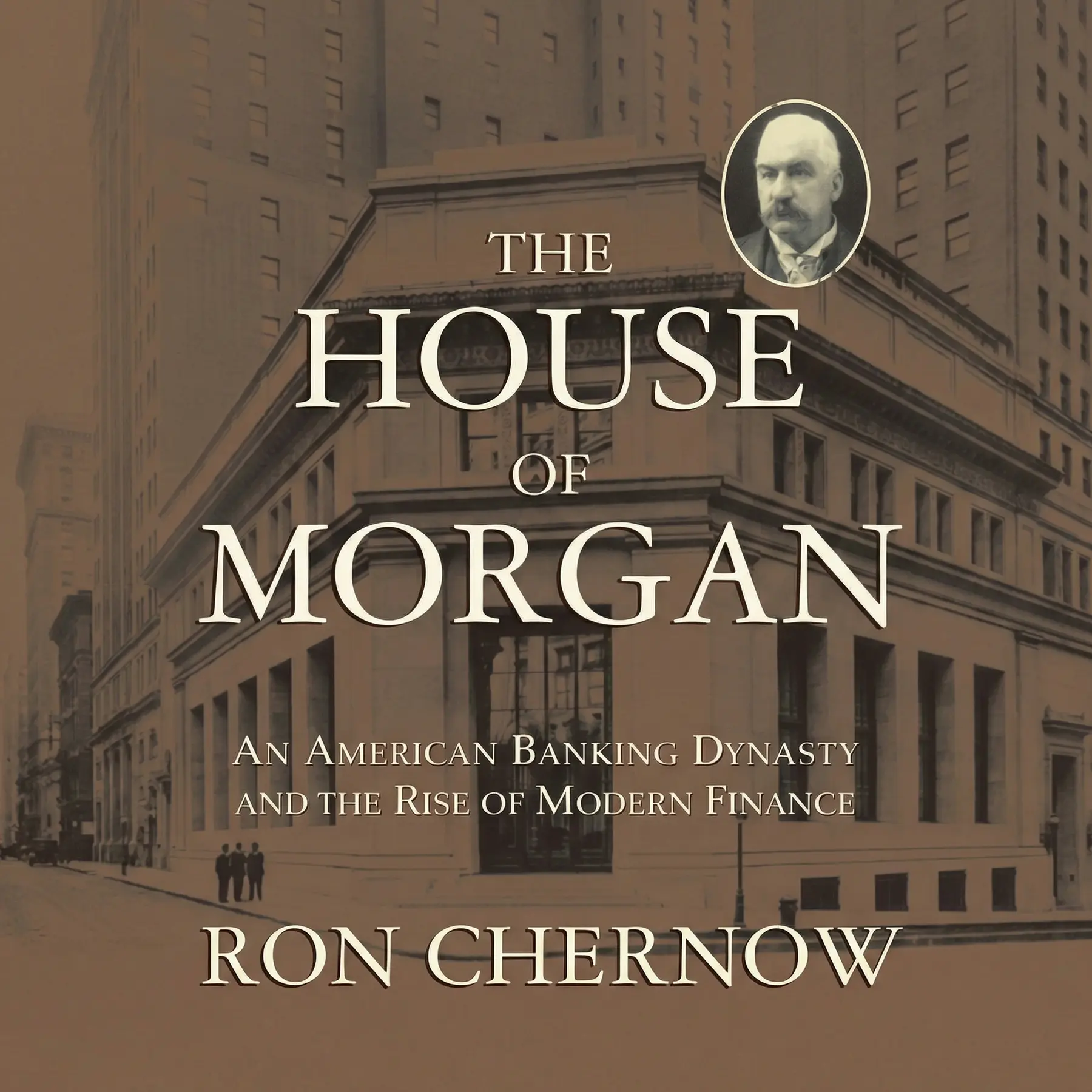
Listeners describe this volume as an excellent and erudite account that is deeply investigated and explores neglected chapters of the American past. Additionally, they praise the superb prose and find the book immersive, with one listener remarking that it unfolds like a cinematic thriller. Nevertheless, opinions are divided regarding the word count, as several listeners believe the work is too protracted.
Picked this up after hearing it described as an action-packed movie in book form. While it’s definitely a long haul, Chernow’s ability to turn a dry subject like merchant banking into a gripping narrative is nothing short of wizardry. The transformation of J.P. Morgan from a mere financier into the "Monopoly Man" of American industry is fascinating. You get a real sense of the weight of 23 Wall Street and the power these men wielded over global stability. It’s more than a business book; it’s a panoramic view of America's rise to superpower status. Frankly, I didn’t expect to care about gold standards or reparations, yet I couldn't stop turning the pages. This is historical storytelling at its finest.
Show moreWow, this is a masterclass in how to write a "biography" of an institution. Chernow weaves the story of the House of Morgan into the very fabric of American history, from the Civil War to the late 20th century. I loved the details about Anne Morgan’s activism and her father’s complicated reaction to her independence. It provides a rare glimpse into the private lives of the ultra-wealthy that goes beyond mere muckraking or conspiracy theories. The book is massive, but every chapter feels earned through rigorous research and sharp characterization. This is essential reading for anyone trying to understand the evolution of modern finance and the power of the banking elite.
Show moreThe chapter on the 1929 crash alone makes this book worth the price of admission. Chernow captures the frantic atmosphere of Wall Street with the precision of a master storyteller. It’s fascinating to see how the bank transitioned from a "private gentleman’s club" to a modern, aggressive financial engine. I appreciated that he didn't shy away from the darker aspects of their history, like their dealings with fascist regimes. The book humanizes these titans without excusing their greed or their thirst for undue power. It’s a dense, rewarding experience that changed how I look at the skyscrapers of Lower Manhattan. Highly recommended for history buffs who enjoy a deep dive.
Show moreEver wonder how a single family could essentially prop up the entire U.S. economy? Chernow provides a meticulously researched answer that spans over a century of financial dominance. The book is structured into three distinct eras, and I found the "Baronial Age" particularly compelling for its focus on the larger-than-life personalities of George Peabody and Pierpont Morgan. Truth is, the final section on the "Casino Age" felt a bit rushed and lacked the same human focus that made the early chapters shine. Despite the intimidating thickness, the prose remains fluid and accessible for those without a finance degree. It’s a foundational piece of American history that reveals the hidden hands behind the industrial giants we know today.
Show moreAfter hearing so much about Chernow’s later biographies, I decided to start with his debut. This isn't just a list of transactions; it’s a deeply human look at a dynasty that feared and courted power in equal measure. He does an incredible job humanizing figures like Jack Morgan, who lived in the perpetual shadow of his formidable father. I was surprised by how much I enjoyed the early chapters in London, witnessing the firm's transition into an American powerhouse. Some of the technical details about the Glass-Steagall Act were a bit dense, but they were necessary for context. A solid, learned read for anyone interested in how money shapes the world.
Show moreAs someone who usually avoids "business books," I found this surprisingly readable and engaging. The early history of the bank feels like a classic novel, filled with yachts, art collections, and backroom deals that shaped the fate of nations. Chernow's descriptions of the 1907 panic and the eventual creation of the Federal Reserve are particularly enlightening. I gotta say, the sheer scale of information is a lot to digest, and I had to take breaks between sections. Some might find it overly long, but the depth of detail is what makes the story feel authentic and lived-in. It’s a learned tome that manages to stay lively for most of its 700+ pages.
Show moreFinally got around to reading this classic, and it’s easy to see why it won the National Book Award. Chernow has a unique knack for making the complex world of finance understandable to a general audience. The way he traces the lineage from Peabody’s London to the high-stakes world of 1980s Wall Street is incredibly clever. Personally, I found the "Diplomatic Age" the most intriguing, especially the bank's role in funding the Allied effort during WWI. There are moments where the detail becomes overwhelming, specifically regarding the various Morgan offshoots. Still, the prose is elegant and the insights into American character are profound.
Show moreThis book is a marathon, not a sprint, and it requires a certain level of patience to fully appreciate. Chernow’s debut is remarkably polished, showing early signs of the biographical brilliance he’d later apply to Grant and Washington. He manages to turn a history of credit and capital into a saga of ambition and changing social mores. I particularly enjoyed the contrast between the rigid, old-school values of the earlier Morgans and the "greed is good" era of the 1980s. While it might be about 100 pages too long, the untold stories of the partners are genuinely engrossing. It’s a thorough, authoritative account that stands the test of time.
Show moreNot what I expected given the high praise for Chernow's newer work. The first half is undoubtedly five-star material, focusing on the eccentricities and power plays of the elder Morgans. However, the narrative loses its way once it enters the post-war "Casino Age" of the 1980s. The focus shifts from fascinating individuals to a dizzying array of corporate raiders and leveraged buyouts. To be fair, the research is impeccable, and the writing is top-notch throughout. It just becomes a bit of a slog toward the end when the "House" starts to splinter into various independent entities. It’s worth reading, but be prepared for the momentum to dip significantly in the final third.
Show moreLook, I really wanted to enjoy this because I’m a fan of Chernow’s Hamilton biography, but this was a struggle. The subject matter is just too dry to sustain interest over such a massive page count. While the early sections on Pierpont Morgan were interesting, the book quickly descends into a labyrinth of banking regulations and corporate mergers. I found myself skimming long passages about international reparations and loan structures just to get back to the people. It’s undoubtedly well-written and researched, but it lacks the narrative drive of a focused biography. For me, it felt more like a textbook than a compelling history, and it eventually became a chore to finish.
Show more
James Shapiro
Pankaj Mishra
Charles C. Mann
Ben Macintyre

Fay Bound Alberti
Ron Chernow
Andrew Ross Sorkin
AUDIO SUMMARY AVAILABLE
Get the key ideas from The House of Morgan by Ron Chernow, plus 5,000+ more titles in English and Thai.







