

5 min 50 sec
All-in On AI: How Smart Companies Win Big with Artificial Intelligence
Discover how leading organizations move beyond pilot programs to integrate artificial intelligence into their core identity. This guide explores the essential human leadership and cultural shifts required for achieving true technological dominance.
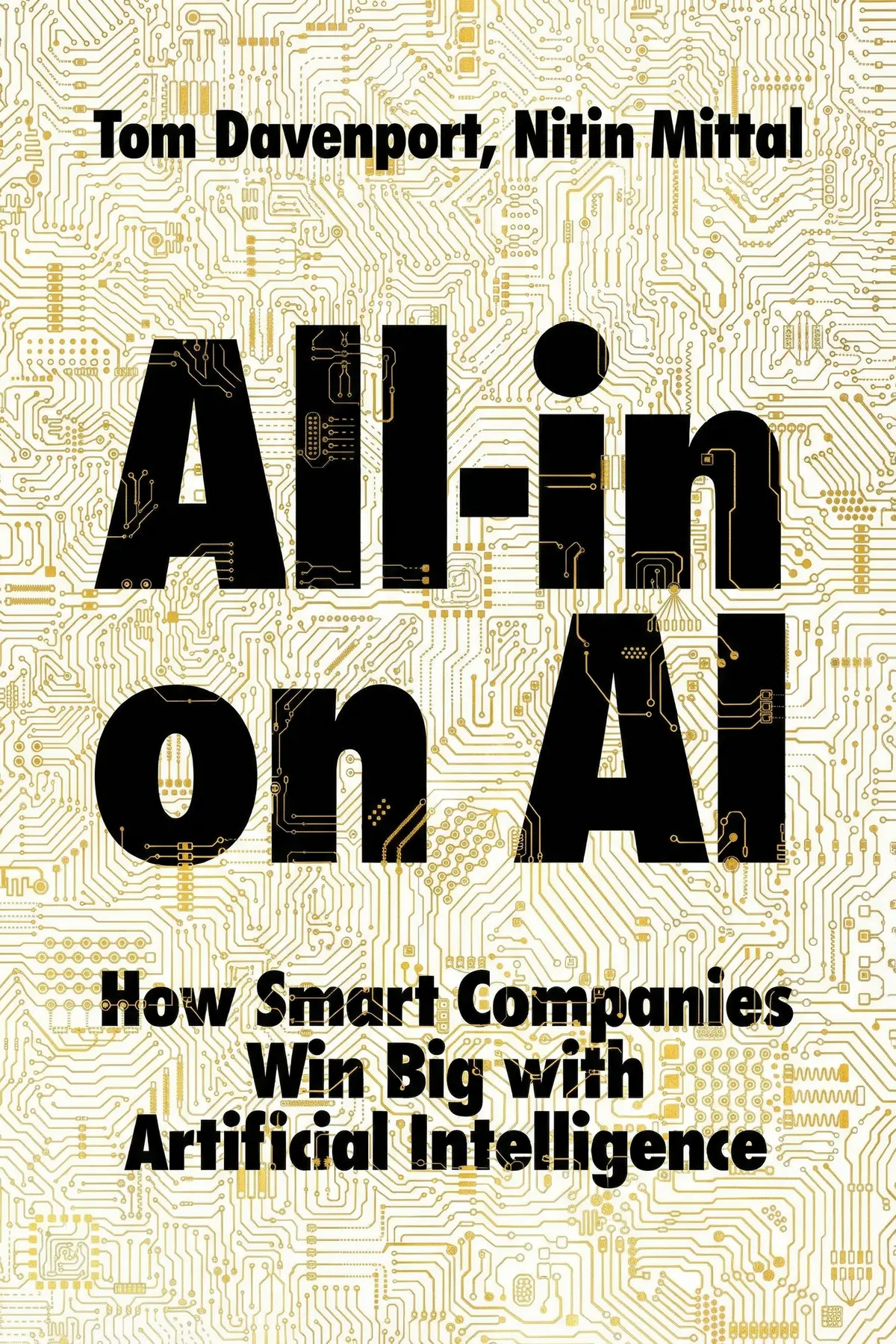
Table of Content
1. Introduction
55 sec
Artificial intelligence is often framed as a mysterious force—a collection of complex algorithms that live in servers and operate beyond human understanding. But for companies that are truly going all-in, the story is remarkably different. It is, at its core, a human story. While technology provides the engine, the fuel and the steering are provided by the people within the organization.
In this summary, we will explore how modern leaders are not just buying software, but are reshaping their company culture, talent pools, and strategic visions to thrive in an era where data is a primary asset. We will move beyond the technical jargon to understand the mindset required to lead an AI-first company and why the most successful digital transformations are the ones that prioritize human intelligence above all else.
2. Leadership and the Culture of Trial
1 min 24 sec
Discover how top-tier executives move beyond traditional management to foster an environment where every employee is encouraged to test new ideas with technology.
3. The Power of Data Fluency
1 min 17 sec
Learn why simply having the best software isn’t enough if your team doesn’t understand the language of information and analytics.
4. Preparing for a Future of Constant Change
1 min 16 sec
Explore how the integration of automation is not a one-time event, but a continuous evolution that transforms career paths and goals.
5. Conclusion
58 sec
To wrap things up, the journey toward becoming an AI-driven organization is less about the code and more about the culture. It requires leaders who are willing to gamble on experimentation and a workforce that is empowered through constant education. By treating data literacy as a core competency and fostering an environment where innovation is shared rather than hoarded, companies can unlock the true potential of their technological investments.
As you think about your own organization or career, consider how you can start speaking the language of data and encouraging a culture of trial and error. In the end, the most successful digital transformations are those that put people at the center, recognizing that while machines can process information, only humans can provide the vision and the heart to make that information truly meaningful. The path forward is not about humans versus machines, but humans empowered by machines to do their best work yet.
About this book
What is this book about?
All-in On AI explores the strategies used by high-performing organizations to gain a massive competitive edge in the modern economy. While many firms merely dabble in small-scale automation or isolated pilot programs, authors Tom Davenport and Nitin Mittal showcase companies that have restructured their entire operating models around machine learning and deep data analytics. The book argues that the real differentiator in the digital age is not just the sophistication of the algorithms, but how effectively people—from the executive suite to front-line workers—interact with these tools. It provides a comprehensive roadmap for building a culture that values data literacy, curiosity, and constant experimentation, ensuring that technology serves a broader, more strategic business purpose. By examining real-world case studies from global banking to the entertainment industry, the authors provide a compelling vision for the future of work. This future is one where human intuition and machine intelligence do not compete, but instead operate in a powerful tandem. Readers will learn how to move past the hype of technology to find practical, scalable ways to integrate intelligence into every facet of their operations.
Book Information
About the Author
Tom Davenport
Tom Davenport is a highly respected academic figure and author whose work primarily centers on business process innovation and analytics. Nitin Mittal is a prominent business strategist who focuses on the intersection of technological progress, data science, and artificial intelligence to drive organizational growth.
Ratings & Reviews
Ratings at a glance
What people think
Listeners find that perspectives on the level of detail differ, as some feel the long sequences of examples can seem redundant or too broad. At the same time, many value the thorough look at how established firms such as Shell and Capital One effectively incorporate AI into their primary operations. Furthermore, they appreciate the emphasis on leadership and corporate culture, with one listener highlighting that the work offers "incredible amounts of valuable information" for anyone aiming to keep pace with evolving technology. The organized layout is also often lauded as an approachable introduction for students and non-technical leaders who are starting to investigate the real-world uses of machine learning.
Top reviews
Chan
Finally, a book that addresses the cultural shift required for technological transformation. Too many AI books focus on the algorithms, but Davenport and Mittal correctly identify that people are the real obstacle. I found the analysis of how legacy companies like Shell have evolved into AI-first organizations absolutely fascinating. This isn't just about the technology; it's about the leadership, behavior, and mindset needed to stay competitive in a changing market. Truth is, the transition to AI is expensive and difficult, yet this book provides a much-needed blueprint for those willing to take the leap. Every chapter builds on the last, providing a comprehensive look at the successes and setbacks of those who went all-in. It’s an essential guide for any leader who doesn’t want their company to become a relic of the past.
Show moreBook
Wow, this was exactly what I needed to help my team understand the scope of the transition we’re facing. The book is incredibly thorough when it comes to illustrating how AI recalibrates an entire organization’s identity. I loved the emphasis on how successful companies have been working with data analytics and RPA for years before ever touching AI. It reminds us that there are no shortcuts to becoming an intelligent enterprise. Gotta say, the writing style is very polished and easy to digest, which is rare for a business book these days. It provides a clear vision of the future of work and encourages readers not to give up despite the inevitable failures. This is a must-read for anyone who wants to ride the wave instead of being buried by it.
Show moreJulian
As a business student looking for a foothold in the machine learning space, this was a helpful roadmap. Davenport and Mittal don't get bogged down in the math, which I appreciated. Instead, they focus on how legacy giants like Shell and Capital One have restructured their entire internal culture to support automation. To be fair, some of the lists of potential use cases felt like filler after a while. I found myself skimming the middle sections where it felt more like a Deloitte brochure than an academic text. However, the overarching message about leadership mindset is crucial for anyone trying to stay relevant. It’s a solid entry point for managers who are just beginning to navigate the AI landscape before diving into more technical resources.
Show moreCharles
Does your company actually have an AI strategy, or are you just running a few disconnected experiments? This book forces you to confront that question head-on. It’s well-structured for anyone in the early years of their career or managers who need to understand the business implications of machine learning. The authors do a great job explaining why data availability and storage are the foundations of any 'all-in' approach. To be fair, the section detailing 40 pages of use cases was a bit much, but the surrounding chapters on talent and culture made up for it. It’s a very accessible read that demystifies the path from traditional business to an AI-powered organization. While it’s not a technical manual, it’s a great strategic overview.
Show moreYuki
After hearing several mentions of this book in my professional circle, I finally sat down with it. It offers a decent high-level view of how large corporations integrate AI into their core operations rather than just treating it as a side project. The case studies on Capital One are particularly insightful because they show the long-term commitment required for success. Look, the writing is clear and well-structured, which makes it an easy read for a busy executive. But the 40-page list of applications across different sectors felt incredibly repetitive and lacked any real 'how-to' depth. I think it’s a fair 3-star read that functions well as an introductory survey. It just lacks that extra punch needed to make it truly extraordinary for those already working in the field.
Show moreWyatt
Picked this up because I wanted to see what 'all-in' really looked like in a corporate setting. The insights into how large corporations leverage data are interesting, particularly the parts regarding continuous employee learning and ethical policies. However, the book often becomes tedious due to its extensive cataloging of potential applications. It feels like the authors were trying to hit a word count by listing every possible way a computer could help a business. Personally, I expected more practical advice for startups or mid-sized companies rather than just focusing on the giants with infinite budgets. It’s an okay read if you’re looking for high-level examples, but don't expect to walk away with a specific implementation plan.
Show morePang
The chapter on organizational culture was the highlight for me. It’s refreshing to see authors acknowledge that the human element—leadership and mindset—is just as important as the code. While the book is well-tailored for non-experts, it can be a bit dry in the middle. Specifically, the lengthy sections categorizing companies and their various strategies felt a bit clinical. In my experience, these types of business books often struggle to balance breadth and depth, and this one leans heavily toward breadth. It’s a decent resource for college students or entry-level managers who need a broad survey of the field. Just be prepared to skim through some of the more repetitive use-case lists to find the real gems regarding strategy and talent management.
Show moreNiramai
The title promised a deep dive, but I walked away feeling like I'd just sat through a very long PowerPoint presentation. Published right before the generative AI explosion, the content feels slightly dated despite the late 2022 timestamp. I've followed Davenport for years, so I expected more rigorous analysis than a repetitive catalog of industry use cases. It jumps around quite a bit, making the second half feel like a total drag to finish. Not gonna lie, I could have gotten the same value from a few well-researched blog posts or a ChatGPT summary. While the section on ethics was okay, the sheer volume of 'what if' scenarios for various industries became tedious. It’s probably fine for a complete novice, but if you have any existing AI knowledge, you might find it underwhelming.
Show moreKae
Not what I expected. The title 'All-in On AI' suggests a revolutionary look at the future, but the content is actually quite basic. Most of the examples are high-level summaries of what big companies have already been doing for the last five years. It’s especially frustrating that it was published right before the massive breakthroughs of 2023, making much of the advice feel a step behind. The second half was a total drag because it repeated the same core concepts over and over again. To be honest, it should have remained a white paper or a short presentation. If you’re already familiar with ML or work in the tech space, you won’t find anything shattering or even remotely interesting here. It’s definitely more suited for those who are completely new to the topic.
Show moreBam
I felt like I was reading a 200-page promotional pamphlet for Deloitte. One of the authors is a leader there, and it shows in the way the text focuses so heavily on their internal practices. Frankly, the book is a slog of repetitive lists that provide very little actionable advice for someone actually trying to implement these systems. It lacks clarity and feels like it was rushed to print to capitalize on the AI hype. The narration doesn't follow a logical pattern, jumping from industry to industry without ever digging beneath the surface. If you want to know which companies are using AI, you can find a better list for free on the internet in five minutes. This was a massive disappointment from a writer I usually respect.
Show moreReaders also enjoyed
AI 2041: Ten Visions for Our Future
Kai-Fu Lee
7 Powers: The Foundations of Business Strategy
Hamilton Helmer

A Bigger Prize: How We Can Do Better Than the Competition
Margaret Heffernan
AUDIO SUMMARY AVAILABLE
Listen to All-in On AI in 15 minutes
Get the key ideas from All-in On AI by Tom Davenport, plus 5,000+ more titles in English and Thai.
- 5,000+ titles
- Listen as much as you want
- 7-day free trial
- Cancel anytime







