

A Long Way Gone: Memoirs of a Boy Soldier
Ishmael Beah
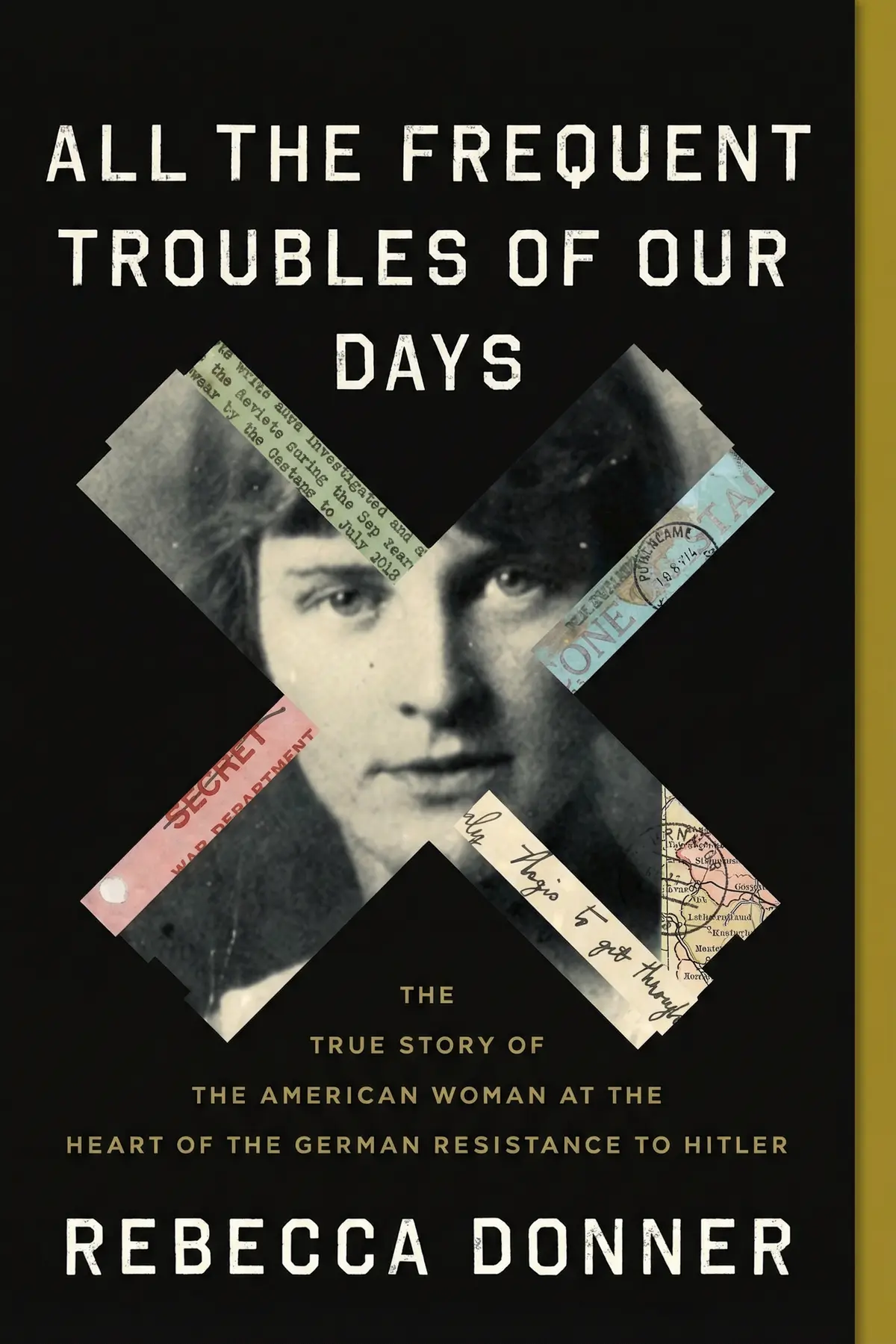
Discover the harrowing true account of Mildred Harnack, an American academic in Berlin who led a daring underground resistance movement to sabotage the Nazi regime from within during World War II.
2 min 02 sec
Imagine being a young boy in Berlin in the 1930s, navigating streets where the air is thick with tension and the shadows seem to watch every move. This was the reality for a child known as Young Don. Though his roots were American, his world was a German capital rapidly descending into darkness. Every week, he went for English lessons with a woman named Mildred Harnack. But these weren’t standard grammar drills. Before he left, his father would sternly remind him never to take the same path twice. Mildred herself would quiz him on the landmarks he’d passed, ensuring he was alert to his surroundings. And before he walked out the door, she would quietly tuck a thin piece of paper between the pages of his schoolbooks.
That eleven-year-old was a courier for one of the most dangerous and essential networks in the city. He was a small link in a chain of resistance led by Mildred Fish Harnack, an American academic who had become the beating heart of an underground movement. At a time when many choose silence or complicity, Mildred and her husband, Arvid, chose the path of greatest resistance. They watched as the vibrant, intellectual Berlin they loved was systematically dismantled by the rise of Adolf Hitler and the Nazi party. They saw civil liberties vanish, neighbors turn on neighbors, and the machinery of death begin to turn.
This isn’t just a dry historical account; it is a visceral journey into the life of a woman who transitioned from a lover of literature to a soldier in the shadows. We are going to explore how an English teacher from Wisconsin found herself at the center of a web of spies, how her group tried to warn the world of the coming storm, and why their desperate messages often fell on deaf ears. It is a story of profound bravery, intellectual defiance, and a love that endured even under the shadow of the guillotine. As we walk through these events, we will see the true cost of standing up for humanity when the rest of the world has gone mad.
2 min 16 sec
Two brilliant minds meet in a Wisconsin lecture hall, beginning a partnership that would eventually lead them from quiet academia into the dangerous heart of 1920s German politics.
2 min 12 sec
The fragile freedoms of post-war Germany begin to evaporate as economic desperation pushes the public toward a charismatic but dangerous political movement that promised order through absolute control.
2 min 11 sec
Following a suspicious fire at the parliament building, the Nazi party maneuvers to dismantle the constitution, effectively turning a democracy into a legal dictatorship overnight.
2 min 11 sec
Denied her university platform, Mildred finds a new way to reach the minds of Berlin’s working class, using a night school to foster critical thinking and dissent.
2 min 15 sec
The resistance begins in the shadows, using the power of the printed word to counter state propaganda and attempting to wake a sleeping public to the reality of their situation.
2 min 19 sec
The Harnacks navigate a treacherous path, posing as loyal citizens while infiltrating the highest levels of the Nazi bureaucracy to gather vital intelligence.
2 min 10 sec
As the threat of a global conflict looms, the Circle connects with other underground groups, sharing high-stakes military data and preparing for the worst.
2 min 15 sec
In a desperate bid for allies, the resistance enters into a complicated and ultimately tragic relationship with Soviet intelligence, setting the stage for their downfall.
2 min 12 sec
An amateurish mistake by Soviet intelligence provides the Gestapo with the key to unlocking the resistance, leading to a frantic and ill-fated escape attempt.
2 min 28 sec
The captured resistance members face the full brutality of the Gestapo as the regime seeks to humiliate them and erase their efforts through a public spectacle of treason.
2 min 15 sec
A mockery of justice concludes with a personal intervention from Hitler himself, ensuring that Mildred’s defiance is met with the most absolute of punishments.
2 min 07 sec
The story of the Harnacks survives through a hidden letter and the memories of a cellmate, eventually revealing a hidden chapter of the anti-Nazi movement.
1 min 51 sec
The story of Mildred Harnack is more than just a historical footnote; it is a profound testament to the power of individual conscience. For over a decade, she lived in a world where the simple act of speaking the truth was a capital offense. She saw her life’s work at the university destroyed, her students targeted, and her friends disappear into the night. Yet, she never chose the easy path of silence. Along with Arvid and their companions in the Circle, she proved that even in the most absolute of dictatorships, the human spirit cannot be completely extinguished.
Their efforts were often met with indifference or incompetence from the very powers they sought to assist. The tragedy of the ‘Red Orchestra’ is a reminder of the catastrophic consequences of intelligence failures and political paranoia. But beyond the espionage and the secret codes, the throughline of this story is one of unwavering moral clarity. Mildred didn’t fight because she was a professional spy; she fought because she was a human being who could not stand by while her world was consumed by hate.
Today, as we reflect on this remarkable tale, the lesson remains clear: the preservation of liberty requires constant vigilance and the courage to speak up when others are being silenced. Mildred Harnack’s final moments, spent translating poetry in a prison cell, illustrate a woman who found peace in her integrity. She faced the ‘frequent troubles’ of her time with a grace and a bravery that continue to inspire. Her life reminds us that even when the darkness seems overwhelming, a single voice of resistance can echo through history, ensuring that the truth is never truly forgotten.
This narrative explores the incredible life and ultimate sacrifice of Mildred Harnack, a woman whose name was nearly lost to history. Moving from the quiet campus of the University of Wisconsin to the volatile streets of 1920s Berlin, Mildred and her husband Arvid found themselves at the epicenter of a global catastrophe. As the Nazi party rose to power and dismantled German democracy, the Harnacks refused to remain passive observers. What begins as a story of academic intellectualism quickly transforms into a high-stakes espionage thriller. The book details how Mildred utilized her position as a teacher to recruit like-minded individuals, forming a resistance cell known as the Circle. You will see how this group moved from distributing forbidden literature to gathering top-secret military intelligence intended to stop the German war machine. It is a profound exploration of moral courage, the complexities of international espionage, and the devastating price paid by those who dared to defy Hitler on his own doorstep. Through the lens of Mildred’s journey, we gain a unique perspective on the German resistance and the tragic failures of global intelligence that sealed their fate.
Rebecca Donner is an accomplished writer whose diverse body of work includes articles and essays featured in the New York Times and Bookforum. She has authored the novels Sunset Terrace and Burnout. Beyond her literary publications, Donner has shared her expertise in the classroom, having taught writing at prestigious institutions such as Columbia University, Barnard College, and Wesleyan University.
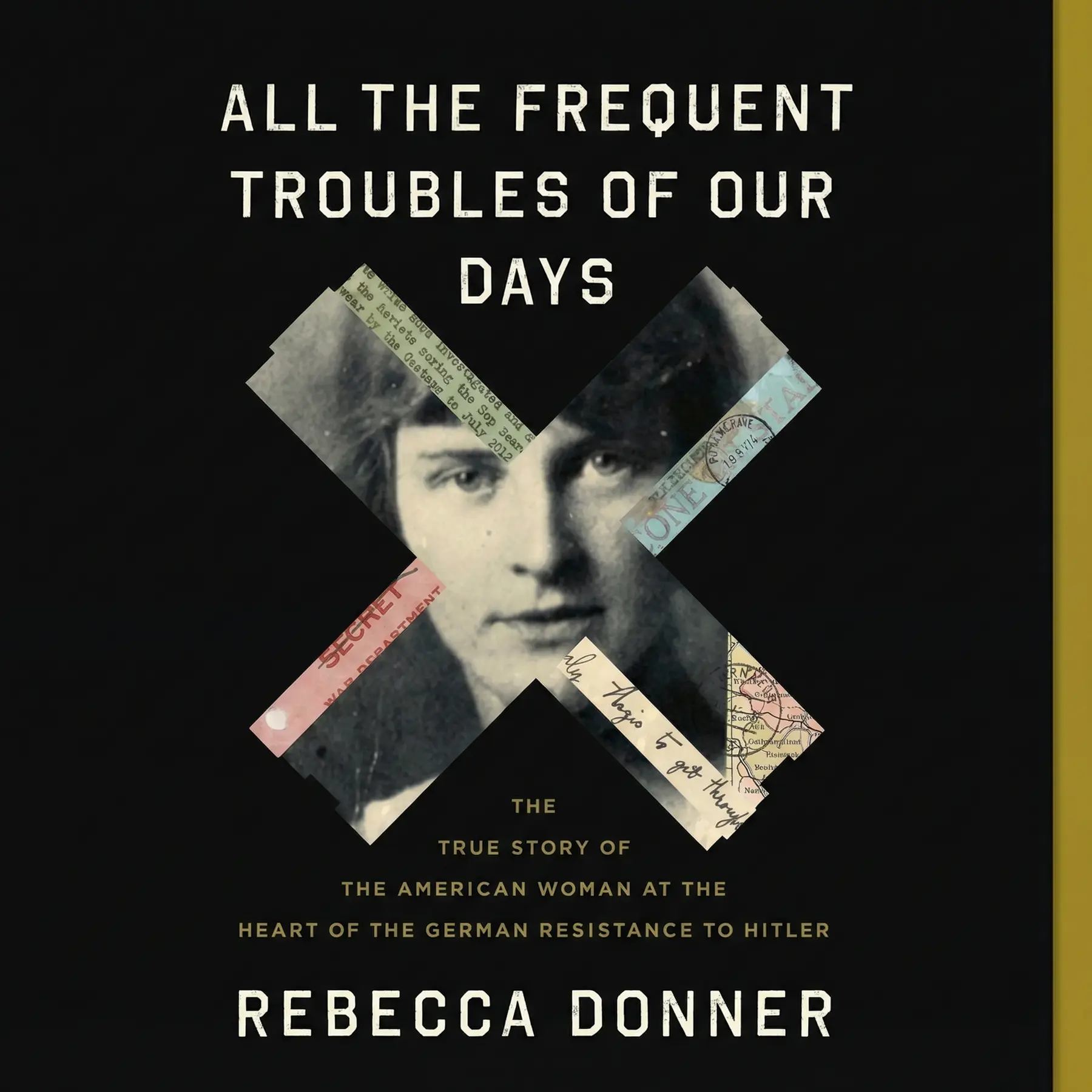
Listeners find the book exceptionally readable, with one listener depicting it as a slow-burn thriller, and value its well-researched historical investigation into good and evil. Furthermore, the prose quality is commended, with one listener highlighting that it was written by the subject’s niece. The account receives positive feedback, as one review notes its uniquely personal chronicling of Mildred's journey. Listeners regard the work as crucially important, with one identifying parallels to modern fascism movements. Conversely, the emotional depth gets mixed responses, with one listener characterizing it as profoundly upsetting.
Picking this up, I wasn't expecting to be so thoroughly gutted by a work of nonfiction. Rebecca Donner has crafted a breathtakingly intimate portrait of her great-grandniece, Mildred Harnack, using primary sources that have never seen the light of day. The access to private letters and interviews with people like Donald Heath Jr. lends the narrative a level of authenticity that most historians can only dream of. It’s a slow-burn thriller that tracks the terrifyingly swift erosion of democracy in Weimar Germany. Watching Mildred transition from a literature scholar to a key figure in the resistance was both inspiring and deeply tragic. The author doesn’t shy away from the gritty reality of the 'Red Orchestra' or the brutal end Mildred met at the hands of the regime. Frankly, the level of detail regarding her final days translating Goethe in a cold cell while shackled is something that will stay with me for a long time. It is an essential, if profoundly upsetting, piece of history.
Show moreWow. I am completely overwhelmed after finishing this. As someone who has read a lot about WWII, I was shocked that I had never heard Mildred Harnack’s name before. This book corrects that historical oversight with a vengeance. Donner’s connection to the subject matter is palpable, yet she maintains a scholarly rigor that makes the story feel grounded and real. The depiction of the resistance group, which the Gestapo labeled the Rote Kapelle, was eye-opening. They weren't just 'reds' spying for the Soviets; they were intellectuals, students, and workers trying to save the soul of their country. The way the author illustrates the 'rolling process' of democracy's destruction is a chilling reminder of how quickly things can change. This isn't just a book about the past; it feels like a necessary warning for the present. The ending is absolutely devastating, but Mildred’s conviction is a light that shines through the darkness. Highly recommended for everyone.
Show moreThe way Rebecca Donner tells this story is nothing short of masterful. Instead of a standard chronological slog, she gives us a visceral, fast-paced account of life under the Third Reich. I loved the inclusion of the actual scraps of paper and notes used by the resisters; it made the danger they faced feel incredibly tangible. Mildred Harnack comes across as a complex, brilliant, and fiercely principled woman who refused to take the easy way out. The sections involving her husband Arvid and his attempts to warn the world about Hitler’s plans were gripping. It’s infuriating to read how their warnings were ignored by both Stalin and the West. Not gonna lie, I had to take breaks because the tension was so high, even knowing how it ends. This is a brilliant examination of good and evil, and the terrifying bureaucracy that facilitates the latter. A must-read for anyone interested in the human side of history.
Show moreThis isn't your typical dry history book. It reads like a high-stakes espionage novel, which is all the more impressive because every word is backed by intense scholarship. I was particularly moved by the portrayal of the German working class and their struggle against the regime. It’s often forgotten that many Germans fought back from the beginning, and Donner does a great job highlighting their contributions. The focus on Mildred as a woman of letters, even in the face of death, was incredibly poignant. Her translation of Goethe’s poems while in prison is a testament to the power of the human spirit. Personally, I didn't mind the present-tense narration or the short chapters—I thought they added to the 'ticking clock' feel of the book. It’s a profoundly moving account of a woman who chose her convictions over her safety. This book deserves every award it has won.
Show moreDevastating. Enlightening. Crucial. This book is a masterclass in narrative nonfiction. Mildred Harnack was a hero in every sense of the word, and Rebecca Donner has done her legacy a great service. The use of private letters and interviews makes the history feel incredibly fresh and personal. I was struck by the parallels to modern movements and the warning of how easily a government can be toppled by a single 'crackpot' if the checks and balances fail. The story of the Rote Kapelle is complex, but Donner manages to navigate the web of spies and dissidents with skill. It is a heartbreaking read, especially the final chapters, but it’s one that everyone should experience. This is historical writing at its absolute best.
Show moreEver wonder how ordinary people find the courage to face absolute evil? This book provides a meticulously researched answer through the life of Mildred Harnack. I found the 'collage' style of writing—utilizing snippets of memos, diary entries, and short vignettes—to be a fresh way to digest such a heavy subject. It almost feels like you are looking at a scrapbook of a life being dismantled in real-time. To be fair, the staccato rhythm might frustrate readers who prefer a traditional, flowing biography, but I think it mirrors the fragmented, paranoid life of a resistance fighter. The present-tense narration creates a sense of immediate danger that keeps the pages turning. While some of the name-dropping of various resistance members in the Circle got a bit dense, the core story of Mildred and Arvid’s bravery is undeniable. It’s a haunting look at the 'frequent troubles' of a dark era.
Show moreAs a history buff, I really appreciated how Donner utilized private family archives to flesh out Mildred’s life. Most accounts of the German resistance are quite dry, but this felt uniquely personal and vivid. I was particularly fascinated by the details regarding Mildred’s literary lectures and how her choice of socially conscious writers led to her losing her professorship. It shows that her resistance wasn't a sudden choice, but a continuation of her lifelong values. Truth is, the middle section of the book gets a little bogged down with the technicalities of Soviet encryption and the various 'circles' of the resistance. I found myself flipping back to the index a few times to keep all the names straight. Also, the author’s attempt to intuit the characters' inner thoughts felt a bit speculative for a work of nonfiction. However, the emotional payoff in the final third of the book is massive. It’s a beautifully written tribute to an American hero.
Show moreFinally finished this and I'm still processing the sheer weight of it. Mildred Harnack’s journey from a graduate student in Wisconsin to a resistance leader in Berlin is expertly chronicled here. I particularly liked the sections on the 'English Club' and how literature was used as a tool for political awakening. The book does a great job of showing the contrast between the idealistic resisters and people like Martha Dodd, whose 'airhead' behavior in the midst of such horror was genuinely frustrating to read about. Gotta say, the author’s family connection really shines through in the intimate details she’s able to provide. My only real complaint is that the pacing felt a bit uneven; it starts slow, gets very dense in the middle with the 'Red Orchestra' details, and then speeds up at the end. Despite that, it’s a crucial historical examination that feels very relevant to the current global political climate.
Show moreTo be fair, the research put into this biography is staggering, but the execution left me feeling a bit cold. Donner clearly has a personal stake in the story, yet she chooses to write in a present-tense, cinematic style that felt at odds with the historical gravity of the subject. My biggest gripe was the structure; there are hundreds of tiny sub-chapters, some only a paragraph long, which made the reading experience feel incredibly disjointed. I also felt like the book included far too much 'History 101' about the rise of the Nazis that most people interested in this niche would already know. At times, Mildred felt like a background character in her own biography because so much space was dedicated to general German history or secondary figures like Martha Dodd. It's a fascinating story that probably could have been 100 pages shorter without losing its impact. A solid effort, but the stylistic choices were distracting for me.
Show moreLook, the research is clearly five-star level, but the storytelling didn't quite work for me. The author uses a very experimental, fragmented layout that felt like I was reading a collection of disorganized notes rather than a cohesive biography. I found the constant jumping between characters and the short, staccato vignettes to be quite confusing. One moment we are with Mildred in Berlin, and the next we're getting a brief paragraph about a courier I don't remember being introduced to. This name-dropping becomes tiresome after a while. I also found the author's treatment of Mildred's personal life, specifically her medical issues and pregnancy, to be vaguely worded and confusingly framed. While I appreciate the author's passion and the incredible primary sources she unearthed, I wish the presentation had been more traditional. It’s an important story, but the 'disarray' style of storytelling took away from the overall impact for me.
Show moreIshmael Beah

James Herriot

Pankaj Mishra

Barack Obama

Masaji Ishikawa

Charles C. Mann
Ben Macintyre
AUDIO SUMMARY AVAILABLE
Get the key ideas from All the Frequent Troubles of Our Days by Rebecca Donner, plus 5,000+ more titles in English and Thai.







